



Have you ever thought about how important it is to store tubes correctly in labs? Imagine a place where every sample is kept safe, organized, and easy to find.
Today’s labs need advanced storage for tubes, not just simple containers. Tube racking systems are more than just holders. They are key parts of the lab, keeping important research safe and precise.
Research places a big bet on good storage for tubes. They know that the right storage is key to keeping experiments reliable. Labs need systems that can handle all kinds of tubes and samples, no matter the research.
Key Takeaways
- Professional tube storage ensures sample protection and research continuity
- Advanced racking systems enhance laboratory efficiency
- Diverse storage options accommodate multiple tube sizes and types
- Quality storage solutions minimize contamination risks
- Technology drives innovation in laboratory tube management
Introduction to Tube Storage Solutions
Laboratories need precise and efficient tubing storage systems. These systems are key to keeping biological samples safe. This lets researchers work with confidence and accuracy.
Modern science needs advanced storage solutions. These solutions protect delicate specimens and make workspaces more efficient. Tubing storage has grown a lot to meet these needs.
Importance of Proper Storage
Good tube storage is crucial for keeping samples quality high. It prevents:
- Sample contamination
- Temperature changes
- Sample loss
- Risks of cross-contamination
Benefits for Laboratories
Advanced tubular storage systems bring many benefits to labs:
- They make things more organized
- They improve how work flows
- They save space
- They help track samples better
Overview of Available Options
Laboratory experts have many tubing storage options. These range from small desktop racks to big systems for lots of samples.
| Storage Type | Temperature Range | Capacity |
|---|---|---|
| Ultra-Low Temperature Racks | -150°C to +100°C | 24-138 tubes |
| Standard Laboratory Racks | +4°C to +25°C | 48-96 tubes |
| Specialized Research Racks | -80°C to +140°C | 24-138 tubes |
Choosing the right tubing storage solution is important. It depends on the research needs, sample types, and the environment.
Types of Tubes Commonly Used in Labs
Laboratory professionals use many types of tubes for important research and tests. Keeping these tubes stored properly is key to keeping samples safe. This is true across many scientific fields.
There are two main types of tubes: glass and plastic. Each has special features that make it good for certain lab tasks.
Glass and Plastic Tube Characteristics
- Glass Tubes:
- High chemical resistance
- Can handle high temperatures
- Strong and durable
- Plastic Tubes:
- Light and affordable
- Resists UV light
- Works well in different conditions
Tube Sizes and Capacities
Tubes come in many sizes to meet various research needs. They can be from 50 mm to 200 mm long and 10 mm to 38 mm wide. The bottom of the tube can be flat, round, or conical, depending on the task.
Specialized Tubes for Specific Applications
For different biological tests, labs use special tubes. Blood collection tubes, for example, have different colors to show what they’re for:
- Blue tubes: Have sodium citrate for blood clot studies
- Red tubes: No anticoagulant, for serum
- Green tubes: Heparin for quick blood tests
- Lavender tubes: EDTA for blood cell tests
- Grey tubes: For glucose and lactic acid tests
Good storage and warehousing of these tubes keep them ready for use. This is crucial for both scientific research and medical tests.
Key Features of Quality Tube Storage Racks
Laboratory experts know how crucial it is to pick the right tube racks. These racks must be durable, organized, and versatile. They are more than just holders for tubes.

Today’s labs need storage systems that can handle tough conditions. These systems must keep samples safe and organized. Key features include:
- Exceptional durability for long-term use
- Precise tube positioning and organization
- Compatibility with multiple tube types and sizes
- Space-efficient design
Durability and Longevity
Top-notch tube racks are made from materials like polypropylene. This material is strong and resistant to chemicals. Professional-grade racks can handle extreme temperatures from -20°C to -80°C, keeping samples safe.
Space Efficiency and Organization
Modern tube racks are designed to save space. They have features like:
- Stackable configurations
- Wavelike layouts for easy access
- Numbered tube positions
- Non-slip silicone feet for stability
Compatibility with Various Tube Types
Tube storage systems need to be versatile. Modern racks fit different tube sizes, like 1.5 mL and 2.0 mL. This helps researchers work more efficiently.
Selecting the right tube racking solution can significantly enhance laboratory efficiency and sample preservation.
Materials Used in Tube Storage Solutions
Laboratory experts know how important materials are for tubular storage systems. The right material can greatly improve research efficiency and keep samples safe.
Comparing Metal and Plastic Racks
Materials have different benefits for tube storage. It’s important for researchers to think about their needs when choosing between metal and plastic racks.
- Metal Racks:
- Exceptional durability
- Higher weight capacity
- Long-term structural integrity
- Plastic Racks:
- Lightweight design
- Chemical resistance
- Lower cost
Corrosion Resistance Considerations
Keeping tubes safe from corrosion is key. Stainless steel and specialized polymers are best for fighting off chemical damage and environmental issues.
Eco-Friendly Options
Today’s labs focus on green storage solutions. They use recyclable materials and energy-saving ways to make their storage systems.
- Recycled plastic composites
- Biodegradable rack materials
- Low-carbon manufacturing techniques
Innovative material selection can dramatically improve laboratory storage efficiency and environmental responsibility.
Customization Options for Tube Racks
Laboratory researchers need storage for tubes that can change with their research. Customizing tubing storage is key for today’s labs. It helps keep things organized and boosts research speed.
Adjustable Racks for Different Sizes
Now, there are smart designs for tube storage that fit many sizes. You can pick racks with:
- Interchangeable grid setups
- Removable dividers
- Flexible ways to position
- Adjustable compartment sizes
Branding and Labeling Possibilities
Storage systems for tubes now have better ways to identify things. Cutting-edge racks come with cool customization options like:
- Laser-etched labels
- 2D Data-Matrix codes
- Color-coded systems
- Custom rack labels
Modular Systems for Growing Labs
Storage solutions that grow with your lab are available. They have modular designs that can change and grow.
| Rack Feature | Customization Capability |
|---|---|
| Temperature Resistance | -20°C to Ultra-Low Temperatures |
| Material Certification | FDA Approved, USP XXII Compliant |
| Contamination Control | RNase/DNase Free Production |
| Identification Standard | ECC200 Data-Matrix Coding |
Labs can now find storage that fits their exact needs. This ensures the best sample management and keeps things organized.
Best Practices for Storing Tubes
Storing laboratory tubes needs careful attention and planning. Good tubular inventory management keeps samples safe, prevents contamination, and keeps research quality high. It’s important for researchers to have solid strategies to protect their valuable biological samples.
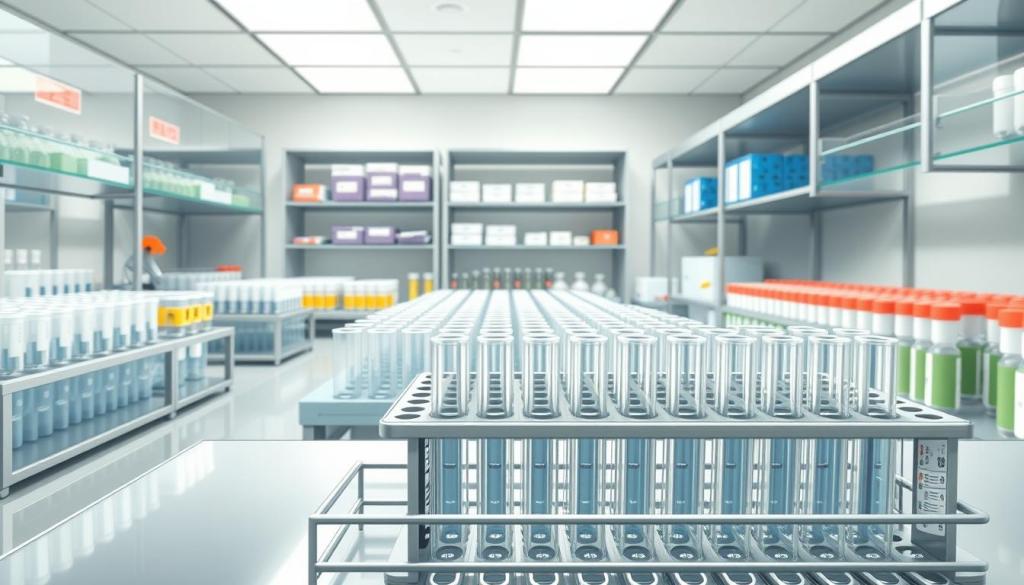
Successful pipe storage and tube management rely on several key factors. Laboratory professionals must consider these carefully.
Optimal Temperature and Environment Control
Keeping the environment just right is key for preserving samples. Researchers should:
- Store tubes in temperature-controlled environments
- Avoid direct sunlight and extreme temperature changes
- Use cryogenic storage for very sensitive samples
- Keep an eye on humidity levels all the time
Contamination Prevention Strategies
To stop sample contamination, we need to act ahead:
- Use clean handling techniques
- Use color-coded labels
- Store tubes with the right desiccants
- Do regular checks
Handling and Accessibility Tips
Good tube management means smart storage and handling:
| Storage Method | Recommended Use | Key Considerations |
|---|---|---|
| Vertical Storage | Flexible tubes | Space-saving design |
| Horizontal Storage | Rigid tubes | Prevents deformation |
| Rack Systems | Multiple tube types | Organized accessibility |
By following these best practices, labs can improve their tubular inventory management. This ensures sample integrity and research reliability.
Safety Considerations in Tube Storage
Safety is key in biological labs when dealing with tubular storage systems. Proper handling and storage of test tubes can lower accident risks. It also helps prevent exposure to harmful substances.
Risk Management in Laboratory Settings
Managing risks for tube racking involves several important steps:
- Check test tubes for cracks or chips before use
- Use specific test tube racks to keep tubes upright
- Don’t overcrowd tubes in storage systems
- Follow clear labeling protocols
Compliance with Safety Standards
Labs must follow strict safety rules for tubular storage systems. Personal protective equipment (PPE) is vital for a safe work area:
- Always wear safety goggles
- Use protective gloves when handling tubes
- Wear lab coats to avoid chemical exposure
- Use the right tube holders and tongs
Employee Training and Awareness
Training is crucial for safe tube handling. Employees need to know:
- How to heat and handle tubes correctly
- The right way to dispose of used test tubes
- Emergency steps for broken glass or chemical spills
- The importance of keeping tube racking systems clean and organized
Safety in the laboratory is not just a protocol—it’s a commitment to protecting human life and scientific research.
Maintenance of Tube Storage Systems
Keeping tube warehousing and pipe racks in good shape is key for lab work. Labs spend a lot on these systems. So, regular care is vital for their long-term use.
Looking after lab storage needs a careful plan. This ensures it works well and safely. Important steps include:
- Conduct routine visual inspections
- Implement thorough cleaning protocols
- Address wear and tear proactively
- Train personnel on proper handling
Regular Inspections and Critical Checks
Regular checks are crucial for tube warehousing upkeep. Labs should set a regular time for checking pipe racks and storage. Important things to look at include:
- Checking structural integrity
- Verifying rack stability
- Identifying potential corrosion
- Examining connection points
Cleaning Protocols for Different Materials
Each storage material needs its own cleaning method. Stainless steel racks might need special cleaners, while plastic needs gentler ones. Labs must create cleaning plans for each material to avoid contamination and keep equipment in top shape.
Addressing Wear and Tear
Acting early on wear and tear stops equipment failures. By tracking wear and replacing parts before they fail, labs keep running smoothly. Replacing old parts of pipe racks or storage stops research from being disrupted.
Regular maintenance is not an expense, but an investment in laboratory reliability and research continuity.
Innovations in Tube Storage Technology
The world of storing tubes is changing fast. New tech is making it easier to manage and keep samples safe in labs. This is a big deal for scientists.
New storage tech for labs is making a big splash. It’s all about keeping samples safe and making research better.
Automated Systems and Solutions
Now, labs have automated storage that cuts down on mistakes. These systems are super precise and efficient. They include:
- Robotic retrieval mechanisms
- High-density storage configurations
- Integrated tracking technologies
Smart Monitoring for Temperature and Humidity
Smart tech now keeps an eye on temperature and humidity. Cutting-edge sensors help labs keep everything just right. This is a big step forward.
- Continuous temperature monitoring
- Humidity level tracking
- Automated alert systems
Future Trends in Lab Storage Solutions
New trends in tube storage are all about being green, efficient, and keeping samples safe. We can look forward to:
- Environmentally friendly refrigeration systems
- Enhanced sample traceability
- Increased storage density
- Improved sample integrity preservation
The future of storing tubes looks bright. Labs will get smarter, more efficient systems. This will change how research is done.
Selecting the Right Storage for Your Laboratory
Choosing the best tubing storage is a big decision. Lab managers need to think about many things. They must pick a solution that fits their research needs well.
Good tube storage is more than just keeping things organized. It affects how well research is done, keeps samples safe, and makes the lab run smoothly.
Critical Factors for Tube Storage Selection
When looking at tube storage, there are important things to check:
- How much sample you need to store (5 mL to 50 mL)
- If the tubes fit together right (13 mm and 16 mm)
- How long the storage lasts (glass or plastic)
- If it can handle different temperatures and chemicals
- How well it keeps things clean
Assessing Laboratory Space and Workflow
The storage you choose must fit your lab’s layout and how things get done. Think about these things:
- How much room you have
- How often you need to get tubes
- What kind of organization you need
- If you might need more space later
Expert Consultation Strategies
Talking to experts can really help you choose the right storage. They can:
- Help figure out what you really need
- Suggest the best storage options
- Show ways to make things more efficient
- Tell you about new tech trends
Choosing the right tube storage is not just about space – it’s about protecting your research’s most valuable assets.
Conclusion and Future Directions in Tube Storage
The world of science is always changing, and so is how we store tubes. Now, advanced systems for storing tubes are key for keeping samples safe and research accurate. Labs need to see that storing samples right is not just about organization. It’s a must for doing great science.
New tech is changing how we handle samples. Today’s tube storage uses smart sensors, auto-classification, and control over the environment. These tools cut down on mistakes, lower contamination risks, and make research better. Labs that use these systems are leading the way in science.
Labs are now focusing on being green. Scientists are making storage that’s good for the planet and works well. By choosing green materials and energy-saving tech, labs can do better science and care for the environment.
As science keeps exploring new areas, tube storage will keep being a key part. It’s important to invest in top-notch, modern storage. This ensures samples stay good, results are reliable, and science keeps moving forward.
FAQ
Why is proper tube storage crucial in biological laboratories?
Proper tube storage keeps samples safe and prevents contamination. It also makes lab work more efficient. This ensures the accuracy of scientific research.
What are the key considerations when choosing tube storage racks?
When picking storage racks, look for durability and size flexibility. They should fit different tube sizes and be easy to organize. The material should be high-quality and able to handle various temperatures.
How do different tube materials impact storage requirements?
Plastic and glass tubes need different storage. Plastic tubes work best with flexible, light racks. Glass tubes require sturdy, stable racks to avoid breakage.
What safety precautions are important in tube storage?
Keeping samples safe involves several steps. Follow safety standards, use protective gear, and control temperatures. Regular training on safe handling is also key.
How can laboratories optimize their tube storage systems?
To improve storage, invest in modular systems and adjustable racks. Use clear labels and maintain consistent conditions. Regularly check and maintain equipment to protect samples.
What are the emerging trends in tube storage technology?
New trends include automated systems and smart monitoring for temperature and humidity. There’s also digital tracking and eco-friendly solutions to boost efficiency and reduce environmental impact.
How often should tube storage racks be maintained?
Check racks every quarter and clean them every six months. Fix any damage or wear immediately to keep samples safe.
What are the best practices for preventing sample contamination during storage?
To avoid contamination, control the environment and use sealed containers. Follow strict handling rules and organize racks to prevent cross-contamination. Train staff on proper sample management.
Can tube storage systems be customized for specific research needs?
Yes, modern systems can be tailored to fit your research. They offer adjustable racks, specialized sizes, and branding options. This flexibility helps as your research grows.
What role do temperature and environmental conditions play in tube storage?
Temperature and environment are key to keeping samples intact. Keep temperatures steady, protect from light, and control humidity. This ensures the quality of your research.





Leave a Comment
Your email address will not be published. Required fields are marked *