



Are we ready to rethink scientific research and its power to change human health? The world of mammalian cell culture is a new frontier. It sparks a lot of debate and curiosity among scientists and the public.
A recent study found that people have mixed feelings about biotechnology ethics. A survey of 1,874 people showed interesting views on mammalian cell research. With 67.2% having university degrees, the conversation about new science shows a deep understanding of its potential benefits.
The mix of mammalian cell culture and public opinion is complex. About 54.1% of those surveyed knew about advanced cell technologies. And 95.3% were eager to help science by donating samples.
Key Takeaways
- Public awareness of mammalian cell research continues to grow
- Educational background significantly influences scientific perspectives
- Younger demographics show greater openness to biotechnology innovations
- Ethical considerations remain crucial in scientific advancement
- High willingness to participate in potential medical research
Introduction to Mammalian Cell Use
Mammalian cells are key in today’s biomedical research and drug making. They give us deep insights into how life works, diseases, and how to treat them.
Mammalian cells are complex and different from simple bacteria. Their detailed structure and function are crucial for scientific studies.
Definition of Mammalian Cells
Mammalian cells are unique living units. They have special traits that set them apart from other cells. These cells can be sorted by where they come from and how they grow:
- Adherent cells: Growing on flat surfaces
- Suspension cells: Free-floating in solution
- Embryonic-derived cells: Categorized by developmental origin
Importance in Biological Research
Studying mammalian cells is vital for scientific progress. They are important in many areas of drug making and research:
- Drug screening for efficacy and toxicity
- Vaccine production
- Gene therapy investigations
- Monoclonal antibody manufacturing
Specialized cell lines, like Chinese Hamster Ovary (CHO) cells, have changed research. They help scientists study proteins and develop new products. This lets researchers dive deep into how cells work.
The complexity of mammalian cells offers researchers a more nuanced understanding of biological processes compared to simpler cellular models.
Scientists use many methods to study mammalian cells. They use biological, chemical, and physical ways to learn about cells. This helps them make new discoveries and find new treatments.
Historical Context of Mammalian Cell Research
The world of biological research has changed a lot thanks to mammalian cell studies. Scientists have made huge steps from simple experiments to complex stem cell research. They keep finding new ways to understand cells.
The history of mammalian cell research is filled with amazing scientific wins. These wins have changed how we see human biology. They came from studying genetically modified organisms and new ways to grow cells.
Pioneering Milestones in Cell Culture Development
There have been many important moments in mammalian cell research:
- In 1961, Ernest McCulloch and James Till found stem cells in bone marrow
- In 1998, James Thomson isolated the first human embryonic stem cells
- Shinya Yamanaka made a big leap in 2006 by turning adult cells into stem cells
Groundbreaking Discoveries in Cellular Science
Research has grown with key discoveries that showed what cells can do:
| Year | Discovery | Scientific Impact |
|---|---|---|
| 1988 | First Umbilical Cord Blood Stem Cell Transplant | Opened new ways to treat diseases |
| 2012 | Nobel Prize for Stem Cell Reprogramming | Confirmed new ways to study cells |
These big steps in stem cell research and studying genetically modified organisms are key. They promise new ways to fight serious diseases.
Advantages of Using Mammalian Cells
Mammalian cells are a game-changer in science, offering new ways to study human biology and find medical treatments. They are seen as a key to unlocking new medical breakthroughs.
These cells are a big deal in many areas of science. They are a treasure for researchers all over the world.
Biological Relevance to Human Physiology
Mammalian cells give us a deep look into how our bodies work. They are very similar to human cells, helping scientists study complex processes with great detail.
- Reflect human genetic characteristics
- Enable precise disease modeling
- Support comprehensive research strategies
Enhanced Drug Development Capabilities
Drug making is getting better thanks to mammalian cells. More than half of today’s medicines are made using these cells.
| Mammalian Cell Advantage | Research Impact |
|---|---|
| Post-translational Processing | Highest protein functional activity |
| Protein Expression | Up to 5 g/ml concentration |
| Glycosylation Accuracy | Human-like modifications |
Potential for Disease Modeling
Scientists use mammalian cells to make detailed disease models. Chinese Hamster Ovary (CHO) cells are especially important for making proteins like interferon and erythropoietin.
More and more people see mammalian cell research as a way to solve big medical problems. It helps connect lab findings to real treatments.
Concerns and Controversies Surrounding Mammalian Cells
Research on mammalian cells raises big debates on ethics and animal welfare. It’s a tough spot for scientists, who must weigh scientific gains against moral duties.
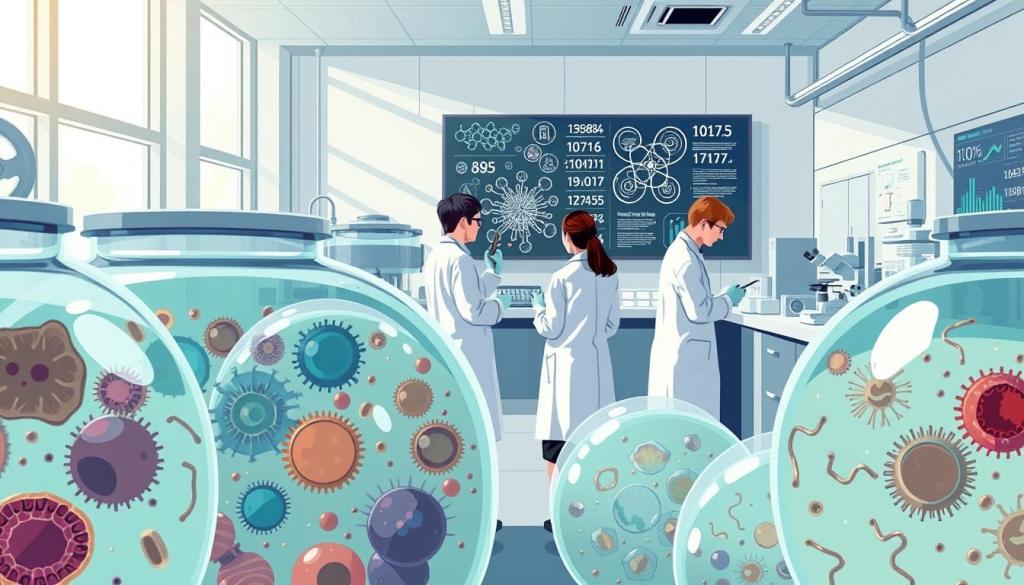
Debates in mammalian cell research go beyond just science. Researchers face tough moral choices when working with animal cells.
Exploring Ethical Dilemmas in Cell Research
There are several key ethical issues in mammalian cell research:
- Potential exploitation of animal subjects
- Moral status of research organisms
- Cognitive capabilities of research animals
- Minimizing animal suffering
*The moral obligations towards non-human animals depend significantly on their cognitive abilities and capacity for emotional experiences.*
Public Perception of Animal Welfare
Research shows animals like pigs are smart and can feel emotions. They can:
- React to emotional states of other pigs
- Understand basic symbolic language
- Exhibit self-awareness
- Demonstrate strategic social behaviors
The scientific world knows this and has set strict rules to protect animal welfare.
| Research Aspect | Ethical Considerations | Mitigation Strategies |
|---|---|---|
| Interspecies Chimera Research | Moral status of hybrid organisms | NIH funding moratorium |
| Stem Cell Experiments | Potential organ generation | Strict regulatory oversight |
| Animal Cognitive Assessment | Recognizing animal intelligence | Enhanced research protocols |
Responsible scientific practice demands continuous evaluation of ethical boundaries and proactive approaches to animal welfare.
Survey Results on Public Opinion
Public views on mammalian cell research have grown more complex lately. Studies show that people have different opinions on biological research. These views vary among different groups of people.
Recent surveys on mammalian cell research have given us interesting insights. They show how society understands and thinks about this research.
Overview of Recent Survey Findings
An in-depth look at the surveys shows that opinions vary a lot. The main points are:
- Total surveys analyzed: 53 publications from 1987 to 2020
- Geographic coverage: Four continents represented
- Studies categorized into pre-CRISPR and post-CRISPR periods
Demographic Insights into Opinions
The study found important trends in how people view mammalian cell research:
| Demographic Factor | Impact on Perception |
|---|---|
| Education Level | Strong correlation with research understanding |
| Age Group | Younger populations more receptive to advanced research |
| Scientific Background | Higher acceptance of genetic modification techniques |
The surveys show that ethical considerations are key in shaping opinions. People tend to support research for treating diseases more than for enhancements.
Understanding public perception is essential for responsible scientific advancement and community engagement.
One key finding is that gene therapy for treating diseases is widely supported. However, genetic enhancements face strong opposition across different groups.
Perspectives from the Scientific Community
The scientific community is key in moving forward with biomedical research and drug development. Researchers are always looking for new ways to study mammalian cells. They aim to make progress while keeping ethics in mind.
Scientists have complex views on studying mammalian cells. They see both the good and the bad. Some main points include:
- Critical importance of transparent research methodologies
- Commitment to ethical standards in cellular studies
- Recognition of public concerns about research practices
Scientists’ Views on Mammalian Cell Usage
Researchers see mammalian cell studies as very important. They believe these studies can greatly help us understand life. Their views are influenced by new findings and ethical issues.
“Our goal is to advance medical knowledge while maintaining the highest ethical standards.” – Dr. Elena Rodriguez, Cell Biology Research Institute
Influence on Research Funding and Support
Funding for studying mammalian cells depends on many things. This includes how the public sees it and how good the science is. Scientists try hard to show the value of their work to those who might support it.
| Research Area | Funding Potential | Public Perception |
|---|---|---|
| Adult Stem Cell Research | High | Generally Positive |
| Embryonic Stem Cell Research | Moderate | Controversial |
| Gene Editing Research | Growing | Mixed Opinions |
Recent polls show 49% of people are excited about new biomedical research. Scientists are working hard to explain complex research to the public. This helps keep support for important drug development projects going.
Educational Initiatives on Mammalian Cells
Learning about stem cell research and biotechnology ethics needs good education. It should mix science with public understanding. The science world sees education as key to making people aware of complex research.
New educational programs are making mammalian cell research easier to understand. They reach out to many people, helping everyone learn about science.
Public Awareness Strategies
Good education makes stem cell research clear and fun. Important steps include:
- Interactive museum exhibits explaining cellular research
- Online webinars with top biotechnology experts
- Community science workshops
- Digital platforms on biotechnology ethics
Student Education Programs
Universities and research places are creating special programs for students. These focus on:
- Getting students into labs early
- Teaching ethics in research
- Hands-on learning
- Guidance from experienced researchers
“Education is the most powerful weapon we can use to transform scientific understanding” – Research Leadership Council
The BRAIN Initiative shows how investing in education helps science grow. It uses money for public outreach and student training. This way, researchers keep moving forward in mammalian cell research.
Regulatory Landscape Governing Use of Mammalian Cells
The world of biotechnology ethics is complex. It needs strict rules to ensure science moves forward responsibly. Researchers working with mammalian cells must follow strict rules. These rules protect science and keep people safe.
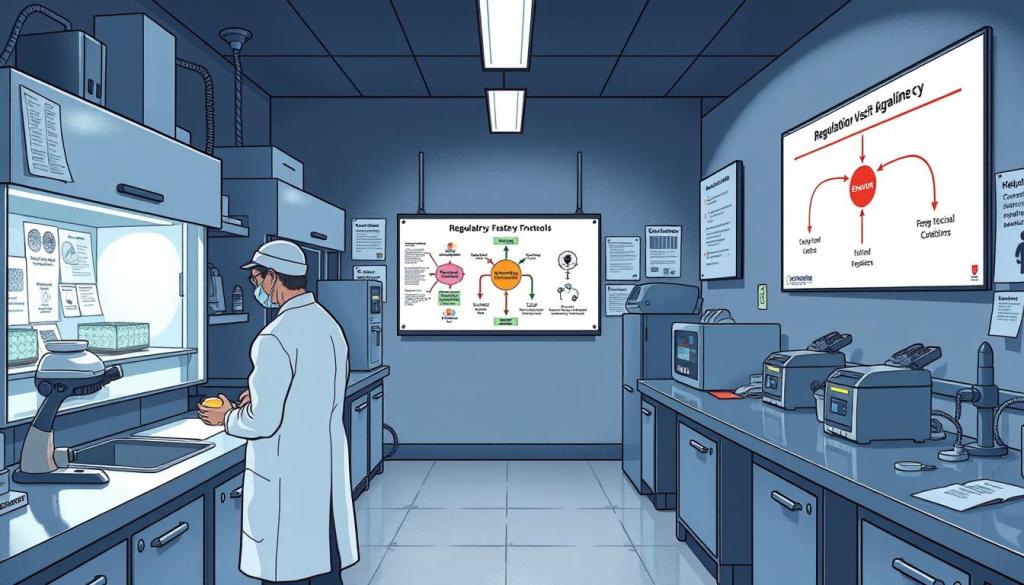
Groups that watch over research are key. They make sure scientists follow the rules for genetically modified organisms and cell technology. These rules help keep ethics high and risks low.
Key Regulatory Oversight Mechanisms
- Comprehensive review processes for research protocols
- Strict authentication requirements for cell lines
- Mandatory documentation of research methodologies
- Periodic assessments of scientific practices
Research Compliance Requirements
Science places must have strong systems to follow the rules. Authentication of cell lines is key to reliable research. Scientists must:
- Do thorough mycoplasma testing
- Check cell line origins
- Get the right informed consent
- Keep detailed records of their work
“Responsible research needs careful attention to ethics and rules.” – Scientific Research Ethics Committee
The rules for biotechnology keep changing. This shows how fast ethics and science are moving. Scientists must stay flexible and always aim for the highest standards.
Alternatives to Mammalian Cells
The world of biomedical research is changing fast. New ways to study cells are being found. These new methods help scientists learn more and answer public worries about using mammalian cells.
Many non-mammalian cell models are being tested. They bring new benefits to research:
- Microbial cell systems
- Plant-based cell cultures
- Synthetic biology platforms
- Yeast expression systems
Emerging Non-Mammalian Research Models
Yeast systems are becoming more popular in research. Saccharomyces cerevisiae and Pichia pastoris are great at making proteins. They have several advantages:
- They are very strong for big-scale production
- They make proteins well
- They are cheaper to use in research
Comparative Research Effectiveness
| Cell Model | Protein Production | Research Applications |
|---|---|---|
| Yeast Systems | High yield | Hormone, vaccine production |
| Plant Cells | Moderate yield | Therapeutic protein research |
| Synthetic Biology | Customizable | Advanced molecular engineering |
More and more people are supporting these new cell models. Scientists keep working on better non-mammalian methods. They aim to solve ethical issues while keeping research high-quality.
Future Directions in Mammalian Cell Research
The world of stem cell research and drug development is changing fast. New technologies are opening doors to medical breakthroughs. They help us understand how cells work and how to fix them.
New research is looking into big changes in mammalian cell technology:
- Advanced 3D cell culture techniques
- Organ-on-a-chip microfluidic systems
- Precision genome editing methods
- Single-cell analysis technologies
Emerging Technologies and Innovations
The field of drug development is making huge strides. Scientists are using advanced tools like CRISPR-Cas9. They’re working on treatments that target specific problems.
The complexity of biologics modalities is rapidly increasing, necessitating high-throughput screening of millions of multi-specific combinations.
Influence on Personalized Medicine
Stem cell research is pushing personalized medicine forward. It lets doctors tailor treatments to each patient. This helps us understand and treat diseases in new ways.
| Technology | Potential Impact |
|---|---|
| Single B Cell Technologies | High-throughput isolation of antibody-secreting cells |
| CHO Cell Culture | Recombinant protein therapeutic production |
| Genome Editing | Precise genetic modification |
By 2023, mammalian cell research will lead to major breakthroughs. These could change how we treat diseases, offering hope for better treatments.
Case Studies Highlighting Public Responses
Mammalian cell research has always sparked a lot of talk. It shows how science and society interact. These studies show the complex views on animal welfare and new research.
Looking at famous research projects helps us understand public views on science. These projects show how people see the goals of research.
Notable Research Project Reactions
People have reacted differently to mammalian cell research. Some key points from studies are:
- 67% of participants said cell therapy prices matter a lot
- About 60% support embryonic stem cell research with rules
- Patients want more info about their treatments
Lessons from Public Engagement
Teams have learned to talk openly about their work. How people see research matters a lot. They need to explain their methods clearly.
Being open builds trust between scientists and the public.
| Research Area | Public Acceptance | Key Concerns |
|---|---|---|
| Embryonic Cell Research | Low | Ethical Considerations |
| Gene Therapy | Moderate | Treatment Cost |
| Cell Therapy | Growing | Safety Regulations |
Dealing with animal welfare issues early on can reduce opposition. Researchers must think about ethics and science together to keep trust.
Conclusion: The Path Forward
The world of mammalian cell culture research is complex. It mixes science and ethics. With 627,000 article accesses and 1,113 citations, it shows a lot of interest. Researchers must balance pushing science forward and listening to society.
Ethics are key in mammalian cell culture research. The science world must be open, check samples well, and control quality. Rules for consent, documentation, and tests are vital for keeping research honest and earning trust.
For mammalian cell research to succeed, scientists, policymakers, and the public must work together. Open talks, strong ethics, and showing the benefits of research are crucial. This way, we can make discoveries that change health and science.
Balancing Research Needs and Public Concerns
The future of mammalian cell culture depends on tackling risks and showing its value. Public education, clear goals, and ethics are key. They help bridge the gap between science and what people think.
Encouraging Informed Discussions
Researchers need to find new ways to advance science while respecting ethics. Keeping cell lines real, avoiding contamination, and documenting everything helps. This builds trust and starts important talks about mammalian cell research’s future.
FAQ
What are mammalian cells and why are they important in research?
Mammalian cells are cells from mammals that are key in research. They are similar to human cells, making them great for studying human health and diseases. Scientists can grow them in labs to study how cells work and interact.
What are the primary ethical concerns surrounding mammalian cell research?
Ethical worries include animal welfare, using animal cells for science, and moral issues. Researchers follow strict rules to protect animals and do responsible science.
How do mammalian cells contribute to drug development?
Mammalian cells help test drugs because they mimic human cells well. This lets scientists check how drugs work and if they’re safe. It helps make better medicines.
What recent technological advances have improved mammalian cell research?
New tech includes 3D cell cultures, organ-on-a-chip, CRISPR, and better stem cell work. These tools help create detailed models of human cells and diseases.
How do public perceptions impact mammalian cell research?
What people think affects funding, rules, and support for science. Teaching about the benefits and ethics of mammalian cell research helps get public support.
Are there alternatives to using mammalian cells in research?
Yes, like plant cells, microbes, synthetic biology, and computer models. But mammalian cells are still best for many studies because they’re closer to human biology.
What regulatory bodies oversee mammalian cell research in the United States?
The NIH, FDA, and IRBs set rules for mammalian cell research. They make sure science is done right and safely.
How might mammalian cell research impact personalized medicine?
This research helps make medicine more tailored to each person. It gives insights into genetics and disease, leading to better treatments for each patient.






Leave a Comment
Your email address will not be published. Required fields are marked *