



Have you ever wondered how scientists achieve microscopic precision in liquid handling? This precision can make or break groundbreaking research.
Laboratory equipment is key to scientific discovery. Serological pipettes and graduated pipettes lead in precise liquid measurement. These tools help researchers transfer liquids accurately across many scientific fields.
Serological pipettes and graduated pipettes are vital in labs. They help scientists measure and transfer liquids with great precision. They handle volumes from less than 1 milliliter to 50 milliliters.
Knowing the differences between these pipettes can greatly improve research. Scientists use them for tasks like cell culture and chemical analysis. They also use them for preparing reagents.
Key Takeaways
- Serological pipettes are crucial for precise liquid handling in laboratories
- Pipettes come in various sizes and materials to suit different research needs
- Proper pipetting techniques can reduce experimental errors
- Different pipette types serve specialized scientific applications
- Regular calibration ensures optimal performance of laboratory pipettes
Understanding Serological Pipettes
Serological pipettes are key tools in labs for moving liquids and measuring volumes. They are made to handle milliliter amounts with great precision. This makes them vital in many scientific fields.
Laboratory experts value serological pipettes for their flexibility and consistent results. These tools are known for their unique design and practical use.
Definition and Purpose
A serological pipette is a special pipette for general liquid handling. It has:
- Multiple graduation marks along the length
- Ability to transfer liquid volumes between 1 mL to 50 mL
- Calibrated with “To Deliver” (TD) marks
Common Applications in Laboratories
Scientists use serological pipettes in many areas, including:
- Cell culture work
- Microbiology research
- Chemical preparation
- Biological sample handling
Advantages Over Other Pipetting Tools
Serological pipettes have unique benefits for tasks that don’t need super precision. Their design allows for:
- Flexible volume measurement
- Easy liquid dispensing
- Reduced risk of contamination
The versatility of serological pipettes makes them crucial in today’s science. They offer a dependable way for accurate and efficient liquid handling.
Key Features of Serological Pipettes
Precision instruments are vital in labs, with serological pipettes being key for precise liquid handling. They meet the high standards of scientific research and medical use.
Scientists use calibrated pipettes for consistent results in many fields. These tools are essential in today’s labs.
Design and Material Composition
Serological pipettes are made from clear polystyrene. This offers several benefits:
- They are very clear for easy checking
- Light but strong
- Resistant to chemicals
- Work well in many lab settings
Volume Capacity Options
Disposable pipettes are available in various sizes for different needs:
- Small volumes: 1 mL to 10 mL
- Medium volumes: 10 mL to 25 mL
- Large volumes: 25 mL to 50 mL
Sterility and Packaging
Keeping samples safe is crucial in labs. Serological pipettes are sterilized to ensure this:
- Gamma irradiation sterilization removes all contaminants
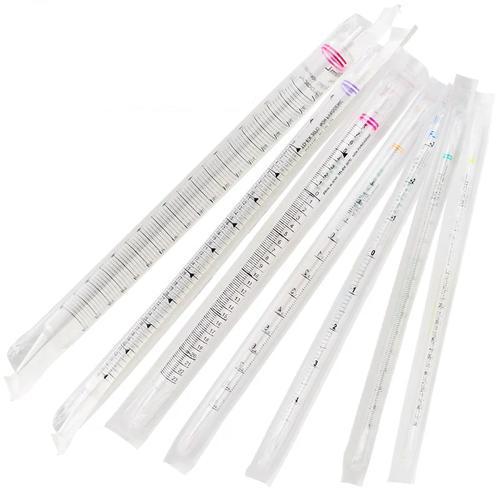
- They come in individual packs to avoid mixing
- Color-coded bands show the volume
- They are used once to lower contamination risks
These tools are made for high accuracy and dependability in important scientific tasks. They are used in cell culture and medical testing.
Graduated Pipettes: An Overview
Graduated pipettes are key tools in labs for precise volume measurement. They are used in many scientific fields. These tools help in accurately handling liquids, making research more reliable.
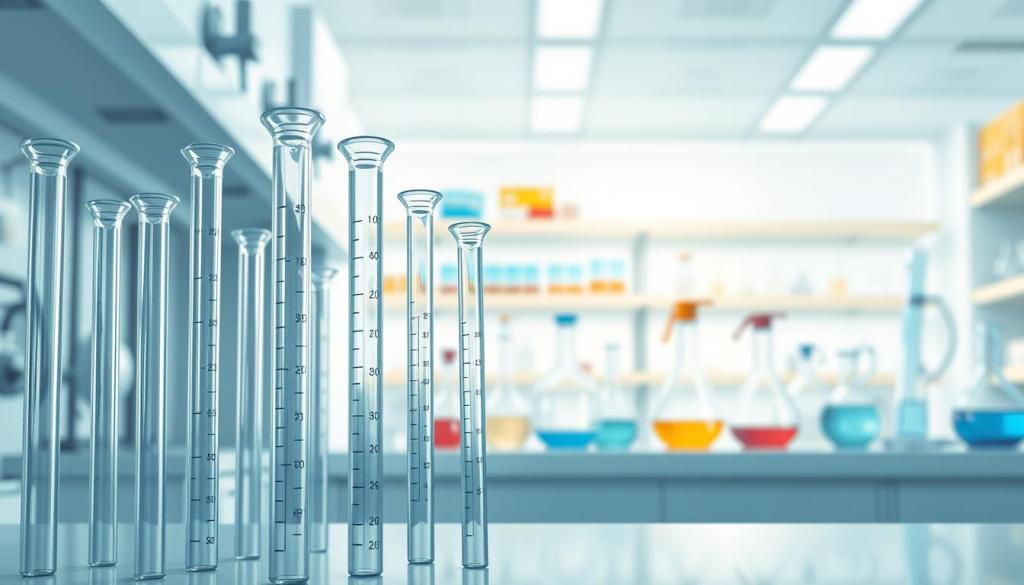
Scientists and lab workers use graduated pipettes for their precise liquid handling. These tools have clear graduation marks. This makes it easy to see and measure liquid volumes.
Definition and Specific Uses
Graduated pipettes are special lab tools with volume markings. They help in accurately transferring and measuring liquids. They are crucial in many scientific research areas:
- Cell culture preparations
- Molecular biology experiments
- Microbiology sample handling
- Chemical solution preparation
Types of Graduated Pipettes
There are different types of graduated pipettes for various research needs:
- Volumetric pipettes: For precise single-volume measurements
- Serological pipettes: For flexible volume transfers
- Mohr pipettes: With slight variations in precision
Accuracy and Precision Considerations
Getting accurate volume measurements is important. Researchers need to focus on several factors. These include pipette calibration, handling techniques, and environmental conditions.
Graduated pipettes can measure volumes from 0.1 mL to 25 mL. This makes them versatile for many scientific tasks.
Key Characteristics of Graduated Pipettes
Graduated pipettes are key tools in labs, crucial for moving liquids. They help scientists measure and pour liquids with great accuracy.
These pipettes can handle big volumes, from 5 mL to 25 mL. Their design makes them flexible and precise for many experiments.
Scale Graduations and Volume Measurement
The markings on graduated pipettes are vital for accurate liquid handling. They help researchers:
- Measure volumes easily with clear marks
- Dispense liquids consistently
- Choose the right volume for their experiments
Material Choices: Glass vs. Plastic
Scientists can pick between glass and plastic pipettes based on their needs. Each has its own benefits:
| Material | Characteristics | Best Applications |
|---|---|---|
| Borosilicate Glass | High chemical resistance | Precise chemical experiments |
| Plastic | Lightweight, disposable | Cell culture, quick protocols |
Ease of Use and Handling
Today’s graduated pipettes focus on ease of use. Ergonomic features and clear markings make tasks easier and more accurate.
- Comfortable grip designs
- Clear volume graduations
- Lightweight construction
Comparing Serological and Graduated Pipettes
Laboratory professionals need precise pipetting devices for accurate liquid measurements. Knowing the differences between serological and graduated pipettes is key. It greatly affects the quality of research and experiments.
Scientific research needs precision, and the right pipetting tool is essential. Serological and graduated pipettes have unique features for laboratory work.
Distinctive Design and Functional Variations
The main differences between serological and graduated pipettes are:
- Serological pipettes are blow-out pipettes with specific liquid transfer methods
- Graduated pipettes have multiple volume measurement options
- Accuracy levels differ between these pipettes
Selecting the Appropriate Pipette
Researchers must think about several things when choosing between serological and graduated pipettes:
- What volume range do you need?
- How precise does your experiment need to be?
- What liquid transfer method do you use?
| Characteristic | Serological Pipettes | Graduated Pipettes |
|---|---|---|
| Accuracy | High precision | ±0.4% to ±0.6% accuracy |
| Volume Range | 1-50 mL typically | 0-25 mL standard range |
| Transfer Technique | Blow-out method | Drain-out technique |
Addressing Common Misconceptions
Many researchers think all pipetting devices are the same. Serological pipettes and graduated pipettes are different. They need special handling and understanding.
Precision in liquid transfer starts with choosing the right pipetting device for your lab needs.
Understanding the unique features of different pipettes helps lab professionals improve experimental accuracy and reliability.
Best Practices for Using Pipettes
Precision is key in lab work. Calibrated pipettes are vital tools that need careful use and upkeep for accurate results. Scientists must learn specific techniques to get the most out of these instruments.

Lab professionals must grasp the importance of pipette use to keep experiments reliable. Here are some tips to help researchers get the best results with their lab tools.
Techniques for Accurate Pipetting
Accurate liquid transfer relies on a few important techniques:
- Hold the pipette vertically at a 90-degree angle
- Maintain consistent pipetting speed
- Use gentle, controlled suction methods
- Pre-wet the pipette tip for improved accuracy
- Match pipette size to liquid volume
Cleaning and Maintenance Tips
Proper care of lab tools is essential for their long-term use:
- Clean pipettes after each use with the right solutions
- Do regular calibration checks
- Store pipettes upright
- Replace worn or damaged parts right away
Avoiding Contamination
Keeping labs clean is vital for sensitive work:
| Contamination Prevention Strategy | Key Considerations |
|---|---|
| Use sterile, disposable tips | Reduces cross-contamination risks |
| Change tips between samples | Prevents chemical or biological transfer |
| Handle pipettes with clean gloves | Minimizes external contamination |
By following these best practices, lab procedures with calibrated pipettes will be more reliable and accurate.
Applications in Various Laboratory Settings
Serological pipettes and graduated pipettes are key in many scientific places. They help with precise measurements and handling of samples. This is crucial for accurate and reliable research.
Scientific places need special pipetting methods to keep experiments right. Serological pipettes are great for complex liquid transfers. They offer high precision.
Research Laboratories
In research labs, serological pipettes are vital for important work. Scientists use them for:
- Cell culture maintenance
- Molecular biology experiments
- Sample preparation and dilution
- Precise reagent mixing
Clinical Laboratories
Clinical labs need precise liquid handling. Graduated pipettes help with:
- Blood sample preparation
- Chemical analysis
- Pharmaceutical testing
- Pathology research
Educational Institutions
Academic labs teach students basic science skills with serological and graduated pipettes. These tools help students learn:
- Technical skills in liquid handling
- Understanding of measurement precision
- Laboratory safety protocols
- Experimental methodology
Every lab has its own needs for pipetting. This shows why choosing the right liquid transfer tools is key for good science results.
Innovations in Pipetting Technology
The world of laboratory equipment is changing fast, especially with pipetting devices. Modern microliter pipettes are now more precise, automated, and easier to use for scientists.
New pipetting technology has changed how scientists work in labs. The latest improvements focus on three main areas:
- Enhanced precision and accuracy
- Streamlined workflow integration
- Intelligent automation capabilities
Advances in Pipette Design
New pipette designs focus on being comfortable and easy to use. They are now lighter and better balanced, helping to prevent hand fatigue. Integrated electronic systems also offer real-time calibration and volume tracking for consistent results.
The Role of Automation
Automation is changing how liquids are handled in labs. Advanced pipetting systems can:
- Perform repeat dispensing from single aspirations
- Automatically adjust for environmental variations
- Integrate with complex laboratory workflows
Future Trends in Pipetting Solutions
New technologies are making pipetting devices even better. Scientists will soon have access to more advanced tools that combine:
| Technology | Key Feature | Impact |
|---|---|---|
| Smart Sensors | Real-time volume tracking | Improved accuracy |
| Computer Integration | Automated calibration | Consistent performance |
| Ergonomic Design | Reduced user fatigue | Enhanced productivity |
The future of pipetting technology looks bright. We can expect even smarter, more user-friendly, and precise tools that will change how scientists work.
Conclusion: The Importance of Choosing the Right Pipette
Laboratory professionals know that picking the right serological pipettes is key for research. The accuracy of liquid transfer affects the results of experiments. So, choosing the right instrument is essential for reliable scientific work.
Understanding the differences between pipette types is important for accurate pipetting. Researchers need to think about the volume range, material, and what they need for their research. Each type of pipette has its own benefits that can make experiments more reliable and data more accurate.
Choosing the right pipette means looking at things like sterility, design, and the risk of contamination. Scientists should look for pipettes that reduce mistakes, work well consistently, and fit their research needs. The right pipette can make experiments better and lab work more efficient.
In the end, pipettes are not just simple tools. They are precise instruments that help scientists make new discoveries. By learning about pipettes and choosing the right ones, researchers can improve the quality and trustworthiness of their work.
FAQ
What are serological pipettes used for in laboratory settings?
Serological pipettes are used for precise liquid transfer and volume measurement. They are key in cell culture, molecular biology, and chemical experiments. Accurate liquid handling is crucial in these tasks.
How do graduated pipettes differ from serological pipettes?
Graduated pipettes have visible volume markings for direct readings. Serological pipettes have less prominent graduations. They serve different purposes, with graduated pipettes for less precise measurements and serological for more accurate ones.
What volume ranges are available for serological pipettes?
Serological pipettes range from 0.1 ml to 50 ml. This variety helps researchers choose the right pipette for their needs. It ensures precise liquid handling across different volumes.
How important is sterility when using laboratory pipettes?
Sterility is very important in laboratory pipettes, especially in cell culture, microbiology, and clinical research. Many serological pipettes are made sterile and single-use to prevent contamination and ensure experiment integrity.
What materials are commonly used in pipette construction?
Pipettes are made from plastic (like polystyrene) and glass. Plastic ones are disposable and affordable. Glass ones are durable and often used for precise or chemical applications.
How can researchers ensure accurate pipetting?
Accurate pipetting needs proper technique. This includes a consistent angle, smooth movements, and the right pipette for the volume. Regular calibration, proper storage, and following guidelines are also key for precision.
What are the main applications of pipettes in different laboratory settings?
Pipettes are vital in research labs for experiments, in clinical labs for testing, and in education for teaching. They are essential in molecular biology, biochemistry, microbiology, and medical research.
Are there emerging technologies in pipetting?
Yes, new technologies include automated systems, electronic pipettes, and smart pipettes. These aim to boost precision, reduce errors, and enhance efficiency in labs.
How should pipettes be maintained and cleaned?
Maintenance includes regular cleaning with the right solutions and avoiding contamination. Store pipettes in racks and follow cleaning protocols. Disposable ones should be thrown away after use. Reusable ones need thorough cleaning and calibration.
What factors should be considered when choosing a pipette?
Consider the volume range, accuracy, liquid type, use frequency, and lab application. Evaluate material compatibility, sterility, and precision needs for your experiments.




Leave a Comment
Your email address will not be published. Required fields are marked *