


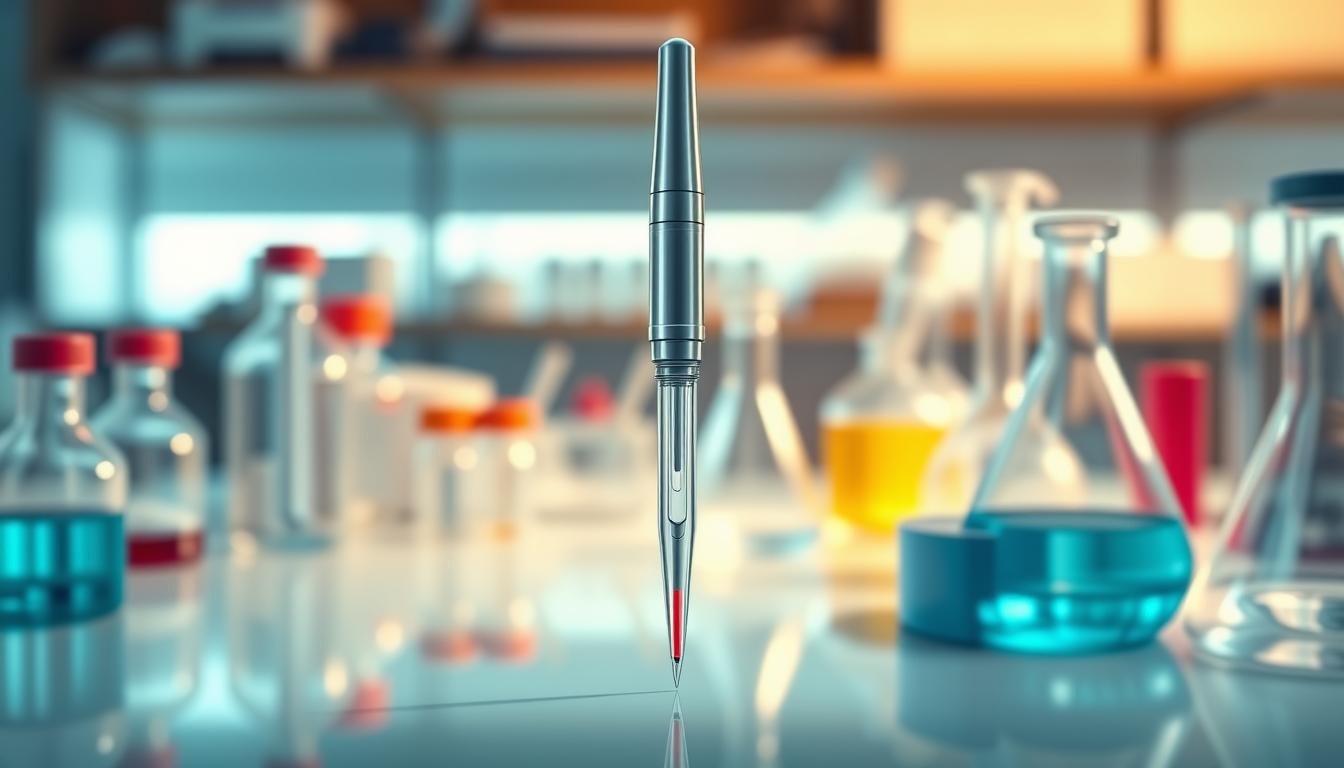
Ever wondered how scientists get so precise in lab work? The serology pipette is a key tool that makes handling liquids super accurate.
Serological pipettes are a big step forward in science. They let researchers move tiny amounts of liquid with great precision. This is important in many areas of science.
In today’s labs, serology pipettes are essential. They help keep experiments reliable. Whether it’s in molecular biology or clinical tests, these tools are crucial. They help scientists work with tiny amounts of liquid safely and accurately.
Key Takeaways
- Serology pipettes enable precise liquid transfer in scientific research
- Manufactured using high-quality USP Class VI materials
- Critical for maintaining experimental accuracy and reliability
- Suitable for multiple scientific applications
- Designed to minimize contamination risks
Introduction to Serology Pipettes
Laboratories need precise tools for handling liquids. Serology pipettes are key in research and diagnostics. They help move liquids with great accuracy.
These micropipettes are vital in labs and medical settings. They can move liquids from 1 mL to 50 mL with high precision.
What Defines a Serology Pipette?
A serology pipette is a tool for precise liquid transfer. It has several important features:
- It’s made for one-time use to avoid contamination
- It’s usually made from medical-grade polystyrene
- It comes in sterile packaging to keep samples safe
- It has graduated markings for exact volume measurement
Importance in Laboratory Settings
Serology pipettes are crucial for many scientific tasks. They play a big role in:
- Cell culture studies
- Medical testing
- Preparing biological samples
- Chemical analysis
The precision measurement of these micropipettes is vital. They ensure reliable results, making them essential in precise scientific work.
Types of Serology Pipettes
Serology pipettes are key in labs for moving liquids and measuring volumes. They come in different types to fit various research and testing needs. This makes them precise and reliable in lab work.
Scientists and researchers have many choices for pipettes in their labs. The main types are manual, electronic, and graduated pipettes.
Manual Pipettes
Manual pipettes are the traditional choice for moving liquids. They are known for:
- Being lightweight and easy to carry
- Allowing direct control by the user
- Coming in sizes from 1 mL to 10 mL
- Being affordable for smaller labs
Electronic Pipettes
Electronic pipettes have advanced features for handling liquids:
- They have digital controls for volume
- They reduce strain from repetitive tasks
- They are accurate to within ±1% of the set volume
- They can be programmed for complex tasks
Graduated Pipettes
Graduated pipettes help with visual measurements:
- They have markings for easy volume reading
- Good for quick, rough measurements
- Calibrated for volumes from 1 mL to 50 mL
- Perfect for teaching and simple research
Choosing the right serology pipette depends on the lab’s needs. It ensures accurate and efficient liquid handling in many scientific fields.
Key Features of Serology Pipettes
Serology pipettes are key tools for precise immunoassays and serological tests. Their design ensures reliable results in various lab settings. Knowing their features helps improve experimental workflows.
Volume Range Capabilities
Serological pipettes handle volumes from 1 mL to 50 mL. This wide range meets different research needs. It supports:
- Molecular biology experiments
- Clinical diagnostic procedures
- Chemical analysis techniques
- Cell culture investigations
Calibration Standards
Calibration standards are crucial for pipette accuracy. Most serological pipettes have a ±1% to ±2% tolerance. This ensures reliable scientific results.
| Calibration Parameter | Specification |
|---|---|
| Accuracy Range | ±1% to ±2% |
| Volume Precision | 1 mL to 50 mL |
| Measurement Consistency | Within 5% variation |
Ergonomic Design
Modern serological pipettes focus on user comfort and efficiency. Ergonomic features reduce strain during long lab hours. Studies show 75% of lab workers value designs that prevent fatigue.
The design includes color-coded indicators and lightweight materials. This improves functionality and user experience in challenging testing environments.
Applications of Serology Pipettes
Serology pipettes are key in many scientific and medical areas. They offer precision and reliability in labs. Their use is vital in biomedical research and clinical diagnostics.
Clinical Diagnostics
In clinical diagnostics, serology pipettes are crucial for blood sample handling. They manage about 40% of all blood sample processing. Their precision ensures test results are 99% accurate.
- Precise liquid transfer in diagnostic testing
- Minimizing sample contamination
- Supporting various medical screening procedures
Research Laboratories
Research labs use serology pipettes for many tasks. These pipettes handle 60% of liquid handling in research. They are great for transferring small to large volumes, making them essential in research.
- Cell culture preparation
- Chemical analysis
- Reagent measurement
Blood Bank Operations
Blood banks depend on serology pipettes for sample management. Their sterile options and precise control are key. Electronic pipettes can cut contamination rates by up to 50%.
The global market for serology pipettes is growing fast. It’s expected to see a 5.5% annual growth rate from 2023 to 2030. This shows how important these tools are in science and medicine.
How to Use a Serology Pipette
Learning to use a serology pipette is key for precise lab work. These tools need careful handling to keep samples safe and results accurate. It’s important to follow certain steps to get the most out of your pipette.
Pre-Usage Preparation
Getting ready is the first step to pipetting success. Before starting any lab task, do these important things:
- Check the pipette for any damage
- Make sure the calibration marks are clear
- Ensure the pipette is clean and sterilized
- Pick the right pipette size for your needs
Pipetting Techniques
To pipette accurately, you need to know some techniques:
- Hold the pipette straight up to avoid contamination
- Read the volume at the bottom of the meniscus
- Move smoothly when taking in and pouring out liquids
- Don’t touch the tip to the container’s sides
“Precision is the hallmark of professional laboratory work” – Laboratory Science Experts
Post-Usage Maintenance
Keeping your equipment in good shape is crucial for its longevity and accuracy:
- Clean the pipette right after use
- Dispose of tips correctly
- Store pipettes upright
- Do regular calibration checks
Tip: Always follow the manufacturer’s guidelines for caring for your serology pipette.
Benefits of Using Serology Pipettes
Serology pipettes are key in today’s labs, helping in many scientific fields. They offer top-notch precision, changing how we do research and tests.
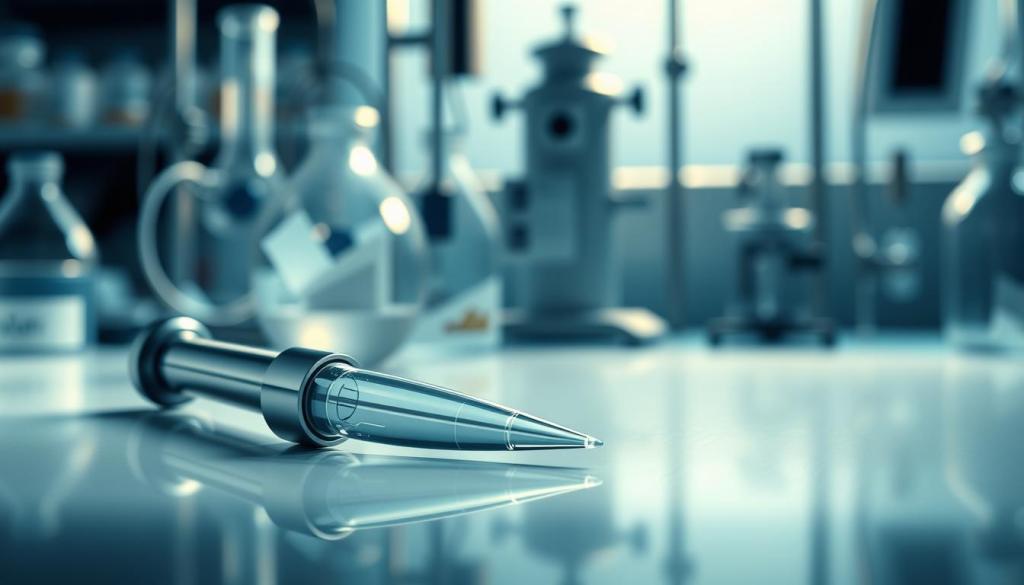
Lab experts love serology pipettes for their big advantages. Here are the main reasons why:
Precision and Accuracy
Serological pipettes are made for top-notch measurement accuracy. They have:
- Graduation accuracy less than 2% at full volume
- Precise inner diameters ranging from 1.56mm to 4.50mm
- Color-coded graduations meeting ASTM E1380 standards
Time Efficiency
These smart tools make lab work faster. They help researchers fill and release samples quickly, saving time.
| Pipette Volume | Inner Diameter | Fill Rate Efficiency |
|---|---|---|
| 1 mL | 1.56mm | High |
| 10 mL | 2.80mm | Very High |
| 25 mL | 4.50mm | Maximum |
Versatility
Serology pipettes are great for many scientific areas. They work well in:
- Cell culture research
- Molecular biology experiments
- Microbiology studies
- Clinical diagnostics
With their precision and versatility, serology pipettes are vital in today’s science.
Best Practices for Serology Pipette Usage
Working with serology pipettes requires great care. Laboratory experts must follow certain rules to get precise results.
Managing serology pipettes well is key for research and tests. There are three main points to focus on:
Proper Calibration Techniques
Calibration is the base for accurate liquid handling. Labs should:
- Calibrate pipettes often with certified weights
- Check volume accuracy at different points
- Keep records of calibration for quality checks
Regular Maintenance Procedures
Keeping pipettes in good shape helps them last longer and work better. Important steps include:
- Clean pipettes right after use with the right solutions
- Check seals and parts for wear
- Lubricate parts as the maker suggests
Strategic Storage Recommendations
Storing pipettes right keeps them precise. Good storage tips are:
- Keep them upright to avoid seal damage
- Keep a steady temperature and humidity
- Use protective cases to avoid damage
Precision in volumetric analysis starts with careful equipment handling.
Studies show that good maintenance can boost pipette accuracy by 20%. It also cuts down on test errors a lot.
Common Challenges Encountered
Laboratories often face big challenges with serology pipettes. These issues can really affect the accuracy of their research. It’s key to understand and tackle these problems to keep scientific work precise.
Researchers need to overcome several major hurdles to get reliable results in serological testing:
Contamination Prevention Strategies
Contamination is a big risk in labs. To fight it off, labs need to:
- Use sterile, top-notch pipette tips
- Follow strict cleaning rules
- Handle samples carefully
- Change pipette seals every year
Understanding Handling Limitations
Serology pipettes come with certain limits that researchers must know. Getting accurate results depends on careful handling. This includes:
- Keeping the pipette vertical while using it
- Staying away from temperature changes
- Being mindful of how deep the tip goes
- Keeping hands away from the pipette to avoid warming it up
Calibration Error Management
Fixing calibration errors needs regular upkeep. Labs should:
- Check for calibration once a year
- Do leak tests regularly
- Keep an eye on the piston’s condition
- Track how well the pipette is working
By following these steps, labs can cut down on errors in immunoassays. This makes serological testing more reliable.
Future Trends in Serology Pipette Technology
The world of biomedical research and clinical diagnostics is changing fast. Serology pipette technology is leading this change. New solutions are being made to improve lab work. These focus on making things more accurate and efficient.
Digital technology is making serology pipettes smarter. They now have sensors and can connect to the internet. This lets researchers track data in real time and manage volumes more precisely.
Now, making lab equipment green is important. Companies are using eco-friendly materials and energy-saving ways to make things. They want to make pipettes that are good for science and the planet.
Soon, serology pipettes will use AI and machine learning. These smart systems will help predict when maintenance is needed and suggest how to calibrate. This will change how scientists use precision tools in their work.
FAQ
What is a serology pipette and how does it differ from other pipettes?
A serology pipette is a special tool for precise liquid handling. It has a longer shaft and graduated markings. It’s made for serological testing and immunoassays, offering better accuracy and sterility.
What are the main types of serology pipettes available?
There are mainly three types: manual, electronic, and graduated pipettes. Manual ones are cost-effective, electronic ensure consistent results, and graduated offer flexible volume measurements.
What key features should I consider when selecting a serology pipette?
Look for volume range, calibration standards, and ergonomic design. These features ensure accurate handling, precise measurements, and comfortable use.
In what scientific fields are serology pipettes commonly used?
Serology pipettes are used in clinical diagnostics, biomedical research, and immunology labs. They’re key for precise immunoassays, virus testing, and antibody detection.
What are the best practices for maintaining a serology pipette?
Regular calibration and proper cleaning are crucial. Store them vertically and avoid extreme temperatures. Follow the manufacturer’s maintenance guidelines for accuracy and performance.
How can I prevent contamination when using a serology pipette?
Use sterile technique and disposable tips. Avoid cross-contamination and use filtered tips for sensitive materials. Clean hands and proper storage are also key.
What emerging trends are developing in serology pipette technology?
New trends include digital integration, ergonomic designs, and automated systems. These aim to boost precision, reduce fatigue, and lower environmental impact.
What is the typical volume range for serology pipettes?
Serology pipettes range from 1 mL to 50 mL. Some can handle smaller or larger volumes, depending on the lab’s needs.
How often should serology pipettes be calibrated?
Calibrate them at least once a year or more often if used frequently. This ensures precision and accurate measurements.
What are the primary challenges when using serology pipettes?
Challenges include maintaining accuracy, preventing contamination, and managing user technique. Proper training and protocols are essential to overcome these issues.





Leave a Comment
Your email address will not be published. Required fields are marked *