



Ever thought about the tiny helpers that keep science precise and clean? Sterile disposable serological pipettes are the unsung heroes in labs. They bring top-notch accuracy and keep things germ-free.
These lab pipettes are key for scientists in many fields. Made from top-notch polystyrene, they’re perfect for moving liquids with great care.
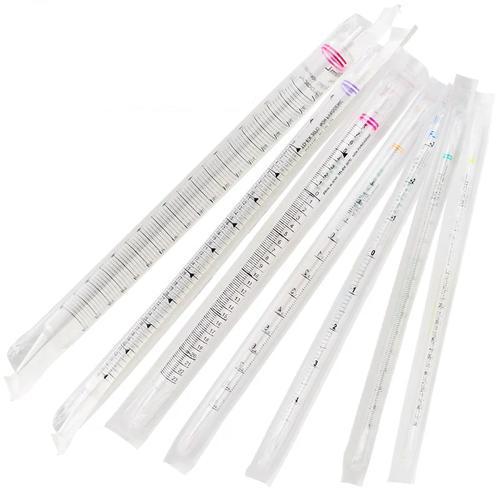
With colors for each size and wrapped up, they make handling samples easy and safe. They help avoid mixing up samples and keep lab work at its best.
Key Takeaways
- Sterile disposable serological pipettes ensure maximum accuracy in scientific research
- Individual sterile packaging prevents potential contamination
- Color-coded volumes enable quick and easy identification
- Polystyrene construction provides durability and reliability
- Essential tool for diverse laboratory procedures
Introduction to Sterile Disposable Serological Pipettes
Scientific research needs precise liquid handling. Serological pipets are key in this area. They help researchers move liquids accurately in many fields.
Sterile disposable serological pipettes are essential in labs. They help measure and move liquids precisely. These tools are great for handling sensitive biological samples safely.
Definition and Purpose
Serological pipets are made for transferring liquids. They can handle volumes from 0.1 to tens of milliliters with great accuracy. Their main uses are:
- Evenly distributing cells in solutions
- Transferring cell colonies
- Creating density gradients for cell purification
- Conducting precise liquid measurements
Importance in Laboratory Procedures
Serological pipettes are very important in labs. They help keep things sterile and ensure consistent results. Researchers rely on them for many experiments.
| Pipette Size | Accuracy | Common Applications |
|---|---|---|
| 1 mL | ±2% | Microvolume transfers |
| 5 mL | ±2% | Cell culture techniques |
| 10 mL | ±2% | Solution preparation |
| 25 mL | ±2% | Large volume transfers |
Lab experts know choosing the right pipette is crucial. Sterile disposable serological pipettes prevent contamination. They work well in many research settings.
Advantages of Using Sterile Disposable Serological Pipettes
Laboratory experts use disposable pipets for precise and clean scientific research. These micropipettes bring key benefits that improve experiment accuracy and trustworthiness in many fields.
Today’s labs see big pluses in using sterile disposable serological pipettes. These tools give scientists many advantages that make their work smoother.
Enhanced Accuracy and Precision
Sterile disposable pipets offer top-notch performance thanks to their design. They have:
- Consistent volume measurements from 1 mL to 50 mL
- Precise graduations from 0.01 mL to 1 mL
- Unique tip designs for quicker liquid release
- USP Class VI polystyrene for dependable results
Reduced Risk of Contamination
Micropipettes cut down on cross-contamination with smart design:
- Individually wrapped packaging
- Gamma-sterilized certification
- Polyester fiber plug protection
- Single-use design to stop pathogen spread
These advanced disposable pipets are key to keeping labs clean and results reliable.
Materials Used in Sterile Disposable Serological Pipettes
Sterile disposable serological pipettes are vital in lab research. Their material is key to their performance and reliability. Scientists use these tools for precise volume transfers in many fields.
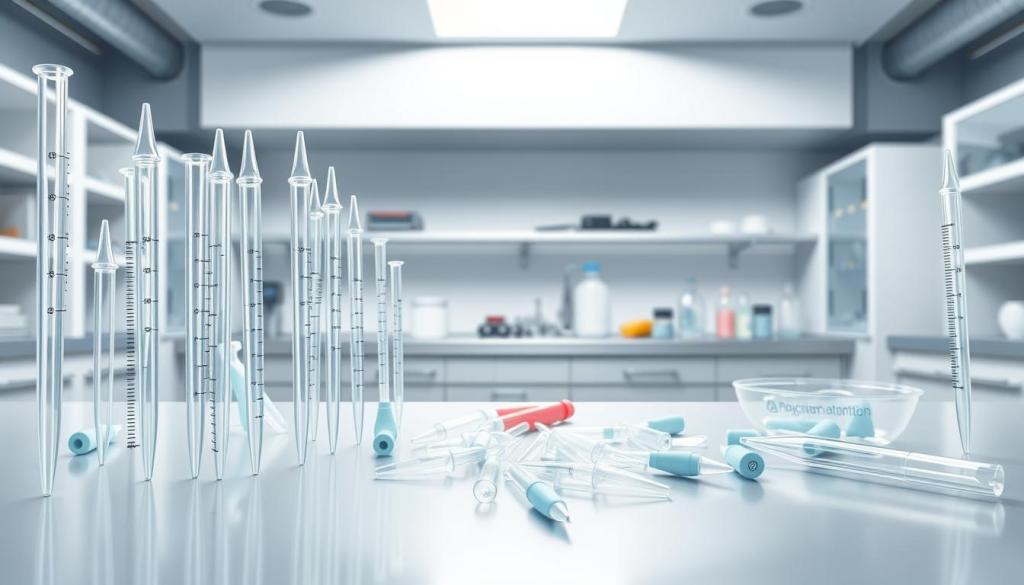
The main material for these tools is polystyrene. This plastic is special because it offers many benefits for pipettes:
- Exceptional clarity for visual inspection
- High chemical resistance
- Lightweight and durable construction
- Consistent dimensional stability
Plastic Properties and Selection
Polystyrene’s structure is perfect for pipette tips. It’s clear, allowing researchers to see liquid volumes. Its uniform composition means tips are consistent.
Environmental Considerations
Lab workers are now focusing on being green. Even though disposable tips are key for safety, makers are looking at eco-friendly options:
- Developing recyclable plastic compounds
- Reducing plastic waste through optimized manufacturing
- Investigating biodegradable material options
Today, research needs both precision and care for the environment in lab supplies.
Common Applications in the Laboratory
Sterile pipets are key in today’s labs. They help with precise liquid handling in many fields. These tools let researchers move and handle liquids with great care and trustworthiness.
Labs use sterile pipetting for many important tasks. It keeps experiments clean and accurate. These tools help scientists do fine work with steady results.
Cell Culture Techniques
In cell culture labs, sterile pipets are vital for several steps:
- Preparing media for cell growth
- Passing and subculturing cells
- Adding reagents with exact amounts
- Keeping things sterile during tests
Scientists count on these pipets to keep critical environmental conditions for cells. This helps avoid contamination that could ruin their findings.
Sample Collection and Transfer
Sterile pipetting is key in managing samples:
- Moving biological samples between containers
- Diluting strong solutions
- Preparing microbiological samples
- Measuring liquid volumes with precision
The accuracy of serological pipets lets scientists work with liquids from 1 mL to 50 mL. Pre-sterilized plastic pipets cut down on contamination risks. This makes them crucial in delicate research settings.
Selecting the Right Sterile Disposable Serological Pipette
Choosing the right serological pipettes is key for precise and reliable results in labs. Lab pipettes vary in size and design, fitting different scientific needs.
Scientists need to think about several factors when picking sterile disposable serological pipettes. This ensures the best performance and accuracy in their work.
Volume and Size Considerations
Serological pipettes come in various volumes for different lab needs:
- 1 mL pipettes for small volume transfers
- 5 mL and 10 mL pipettes for medium-volume tasks
- 25 mL and 50 mL pipettes for larger liquid measurements
Tip Design Selection
Different tip designs affect how well you can transfer liquids:
| Tip Type | Recommended Use | Precision Level |
|---|---|---|
| Standard Tip | General liquid transfers | High |
| Wide Tip | Viscous liquids | Moderate |
| Filter Tip | Preventing aerosol contamination | Very High |
When picking lab pipettes, researchers should look at liquid viscosity, required precision, and specific experimental protocols. This helps choose the best one.
Disposable serological pipettes have big benefits. About 70% of labs prefer them to cut down on contamination risks and keep experiments reliable.
Storage and Handling Best Practices
Keeping sterile disposable serological pipettes in good shape is key for lab work. The right storage and handling keep these tools clean and working well.
Optimal Storage Conditions
Sterile disposable serological pipettes need certain conditions to stay quality. Here are the best storage settings:
- Temperature range: 15-25°C (59-77°F)
- Humidity: Less than 70% relative humidity
- Protection from direct sunlight
- Storage in clean, dust-free environments
Handling Procedures to Maintain Sterility
When using plastic transfer pipettes, labs must be very careful to avoid contamination:
- Always open individually wrapped pipettes just before use
- Use sterile gloves during handling
- Avoid touching the tip or shaft of the pipette
- Perform liquid transfers in clean, designated workspace
| Storage Consideration | Recommended Practice |
|---|---|
| Container Type | Original sealed packaging |
| Shelf Life | Up to 2 years when stored properly |
| Sterility Preservation | Gamma irradiation or electron beam sterilization |
Pro Tip: Always check sterile disposable serological pipettes for packaging integrity before use. Discard any pipettes with compromised packaging to prevent potential contamination.
Regulatory Standards and Compliance
Laboratory experts follow strict rules to make sure sterile pipets are of high quality. The world of science needs precision in all parts of lab work. This is especially true for pipette tips and sterile pipets.
Understanding the rules is key. It helps ensure lab equipment meets the highest standards.
FDA Guidelines for Lab Consumables
The U.S. Food and Drug Administration sets important rules for lab supplies. They focus on several main points:
- Strict manufacturing protocols
- Material safety standards
- Performance consistency
- Contamination prevention measures
ISO Certification Implications
ISO certification is a big deal for quality in sterile pipets. It covers a few important areas:
- Manufacturing under ISO 9001:2008 standards
- Accuracy certification at +/- 2% at full volume
- Sterilization through gamma irradiation
- Precise calibration for consistent performance
When picking pipette tips, labs should look for products that follow these strict rules. Meeting these standards is crucial. It ensures the reliability and integrity of scientific and clinical work.
Cleaning and Disposal Practices
Keeping labs safe and protecting the environment is key when handling sterile pipetting tools. It’s important to dispose of disposable pipets correctly to avoid contamination and harm to our planet.
Labs need to follow strict rules for throwing away different types of disposable pipets. This ensures everyone stays safe and meets legal standards.
Safe Disposal Methods for Non-Contaminated Pipets
- Segregate pipets from other laboratory waste
- Use dedicated containers lined with sturdy trash bags
- Orient pipets in a single direction
- Clearly mark containers as “waste pipettes only”
- Tie trash bags closed and transfer to labeled cardboard boxes
- Transport boxes directly to designated dumpsters
Handling Biologically Contaminated Pipets
Tools used for sterile pipetting that touch biological materials need special disposal steps:
- Segregate contaminated pipets immediately
- Use biohazard bags for collection
- Consider autoclave treatment
- Utilize medical waste hauler services
- Submerge contaminated tips in disinfectant
By sticking to strict disposal rules, labs can lower environmental risks. They also keep their sterile pipetting work safe and clean.
Proper disposal of disposable pipets is not just a regulatory requirement, but a critical component of responsible scientific research.
By using these detailed disposal steps, research places can handle their waste well. This keeps people and the planet safe.
Innovations and Developments in Serological Pipettes
The world of lab tools is changing fast, with micropipettes and volume transfer pipettes leading the way. Scientists and makers are making these tools better and more useful. They aim to meet the needs of today’s science.
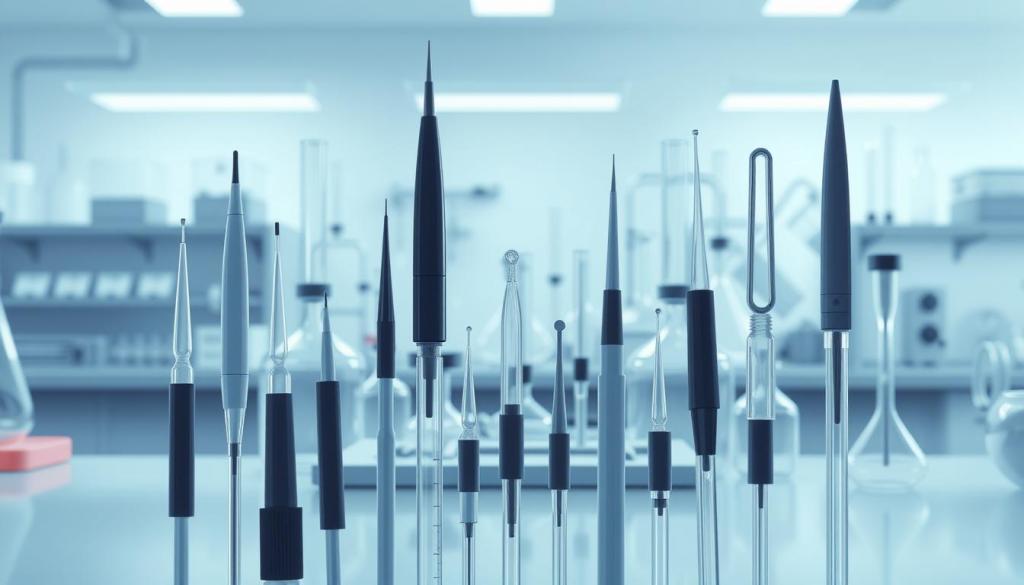
New tech is changing how labs handle liquids. The latest advancements focus on several important areas:
- Smart digital integration with real-time volume tracking
- Enhanced ergonomic designs to reduce user fatigue
- Improved material technologies for sustainability
- Advanced precision measurement capabilities
Emerging Technological Trends
New ideas are shaping the future of volume transfer pipettes. Scientists are working on pipettes with digital features. These include:
- Automatically logging sample volumes
- Providing real-time calibration alerts
- Connecting with lab management systems
- Ensuring top accuracy in handling liquids
Sustainability and Advanced Materials
Thinking about the planet is leading to big changes in micropipettes. Makers are looking into eco-friendly materials. They want to make tools that are precise and kind to the environment.
The future of lab tools is about being smart, green, and very accurate.
Conclusion: The Role of Sterile Disposable Serological Pipettes in Modern Labs
Sterile disposable serological pipettes are key in today’s labs. They help with precision, cut down on contamination, and make work easier. These pipettes are a big step forward in how we do research, making it more accurate.
These pipettes have changed how labs work. They come pre-sterilized, which means less chance of contamination. They work well in many areas, like cell culture and microbiology, helping scientists do their jobs better.
Science keeps getting better, and so do pipettes. Now, they’re designed to be easy to use, with features like automation and exact volume control. By choosing the right pipettes and following best practices, labs can keep their work reliable and consistent.
As research gets more complex, these pipettes will keep being important. They help us learn more in fields like medicine and biology. Their development shows a focus on doing science better, with more precision and quality.
FAQ
What are sterile disposable serological pipettes?
Sterile disposable serological pipettes are single-use tools for precise liquid handling. They are made from polystyrene and come in individual packages. This ensures they are always sterile, which is key for accurate scientific research.
Why are sterile disposable pipettes preferred in laboratory settings?
They are preferred because they prevent cross-contamination and ensure accuracy. They also save time by not needing deep cleaning. Their design means they are always sterile, reducing errors in experiments.
How do I choose the right serological pipette for my research?
Choosing the right pipette depends on several factors. Consider the volume needed, the type of liquid, and the precision required. Think about the liquid’s viscosity and the tip design too.
Are sterile disposable serological pipettes environmentally friendly?
Traditional disposable pipettes can harm the environment. But, many are now making more eco-friendly options. You can help by recycling, using biodegradable materials, and disposing responsibly.
How should sterile disposable pipettes be stored?
Store them in a clean, dry place at room temperature. Keep them away from sunlight and extreme temperatures. Use their original packaging until you need them, and store in a clean area.
What safety regulations apply to sterile disposable serological pipettes?
They must follow FDA guidelines and often have ISO certification. These rules ensure they meet high standards for sterility and quality in labs.
Can serological pipettes be used for different types of liquids?
They are versatile but best for certain liquids. They work well with water, cell culture media, and many lab reagents. But, check if they’re safe for very thick or corrosive liquids.
What recent innovations exist in serological pipette technology?
New features include better designs, integration with lab systems, and advanced materials. Some are even exploring smart pipettes with digital displays.
How do I prevent contamination when using serological pipettes?
Use proper technique to avoid contamination. Open packaging carefully, don’t touch the tip, and work in a clean area. Always follow strict protocols and wear protective gear.
What makes polystyrene the preferred material for these pipettes?
Polystyrene is clear, resistant to chemicals, and strong. It’s great for precise measurements and stays stable in different temperatures. Its smooth surface helps with accurate liquid transfer.




Leave a Comment
Your email address will not be published. Required fields are marked *