



Have you ever wondered how a single drop of blood can unlock the mysteries of human immune response? Peripheral blood mononuclear cells (PBMC blood) represent a fascinating microscopic world that holds incredible scientific potential.
These specialized cells are the unsung heroes of our immune system. They include lymphocytes, monocytes, and dendritic cells. Each cell plays a critical role in defending our body against infections and understanding disease mechanisms.
Peripheral blood mononuclear cells represent a remarkable toolkit for medical researchers. They offer insights into immune function, disease progression, and potential therapeutic interventions. Their unique characteristics make them invaluable in understanding complex biological processes.
Key Takeaways
- PBMCs comprise multiple cell types crucial for immune response
- Lymphocytes dominate PBMC blood composition
- Cell isolation requires precise scientific techniques
- High-quality PBMC samples require careful processing
- Research applications span multiple medical disciplines
What are PBMCs and Their Importance
PBMCs are key players in our immune system. They make up about 30% of white blood cells. This makes them crucial for understanding how our immune system works.
Definition of PBMCs
PBMCs are a mix of blood cells with a single, round nucleus. They include several important cell types:
- T cells (45-70% of lymphocytes)
- B cells (5-15% of lymphocytes)
- Natural Killer (NK) cells (5-10% of lymphocytes)
- Monocytes (10-30% of total sample)
- Dendritic cells (approximately 1% of composition)
Role of PBMCs in Immune Response
These cells are our body’s first line of defense. They help detect and fight off threats. CD4+ helper T cells (25-60% of activated cells) help coordinate our immune response. CD8+ killer T cells (5-30% of activated cells) directly attack and destroy infected or abnormal cells.
“PBMCs are the sentinels of our immune system, constantly monitoring and protecting against potential health threats.”
Applications in Clinical Research
Researchers use PBMCs to study chronic illnesses and autoimmune conditions. They also help in developing new treatments. A single blood donation can give researchers millions of PBMCs for their studies.
Components of PBMC Blood
Peripheral blood mononuclear cells (PBMCs) are key to our immune system. They help us understand how our bodies work and fight diseases. By using advanced techniques, scientists can learn more about these cells.
Types of Cells in PBMCs
There are many types of cells in PBMCs, each with its own role:
- Lymphocytes (70-90% of PBMCs):
- T cells (45-70% of lymphocytes)
- B cells (5-15% of lymphocytes)
- Natural killer (NK) cells (5-10% of lymphocytes)
- Monocytes (10-30% of PBMCs)
- Dendritic cells (about 1% of PBMCs)
Cellular Function in Immunology
Lymphocytes and monocytes team up to protect us from harm. T cells target specific threats, B cells make antibodies, and NK cells kill infected cells. Monocytes turn into macrophages to fight infections and start inflammation.
Significance in Disease Studies
Scientists study PBMCs to understand diseases. By looking at how lymphocytes and monocytes work together, they can find new ways to diagnose and treat diseases. This includes autoimmune disorders and cancer.
Collection Methods for PBMCs
Peripheral blood mononuclear cell (PBMC) collection is key in biomedical research and clinical diagnostics. The quality of blood processing and cell separation is crucial for accurate results.
Researchers use advanced techniques to get PBMCs from whole blood. They aim to keep cells intact and free from contamination. They follow detailed blood processing protocols to isolate specific cells.
Venipuncture Technique
The process starts with a venipuncture. Trained professionals take blood samples using special tubes. These tubes help separate cells efficiently.
- Keeping the collection area clean is important.
- Using the right anticoagulant-treated tubes is key.
- Handling samples carefully helps keep cells in good shape.
Blood Collection Tubes
Choosing the right tubes is essential for PBMC isolation. Different tubes work for different cell separation methods:
- Density gradient medium (DGM) tubes
- Special tubes for centrifugation
- Tubes with specific density gradients (1.077 g/ml)
Processing Blood for PBMC Isolation
The heart of PBMC extraction is precise blood processing. Density gradient centrifugation is the top method for cell separation. It involves:
- Centrifugation at 1000 x g for 20 minutes
- Creating distinct blood layers
- Extracting the PBMC layer carefully
Researchers can get about 8 x 10^5 cells per milliliter of whole blood. Modern methods can reach up to 13 x 10^5 cells per milliliter.
Challenges in PBMC Collection
Blood processing and cell separation are complex in biomedical research. Researchers face many challenges that affect the quality of peripheral blood mononuclear cell (PBMC) samples.
The quality of PBMC samples depends on several important factors. These factors can greatly affect the results of research:
- Processing time after blood collection
- Storage temperature
- Handling techniques
- Anticoagulant selection
Variability in Sample Quality
Studies show how sample quality can change. Total white blood cell counts can decrease by about 6% in 24 hours. Different cells degrade at different rates:
- Monocyte counts change a lot at 48 hours
- Basophil counts vary at 6 and 24 hours
- Lymphocyte counts stay mostly the same at first
Impact of Pre-analytical Conditions
Pre-analytical conditions greatly affect cell separation and blood processing quality. Research shows that delays over 24 hours can harm PBMC viability and research quality.
Solutions for Enhanced Collection
Researchers can improve collection by using smart strategies:
- Standardize processing protocols
- Keep processing time within recommended limits
- Keep temperatures optimal
- Use proven isolation methods
Precision in blood processing is key for keeping cells intact and research valid.
By using strict quality control, researchers can get reliable, high-quality PBMC samples. These samples are crucial for advanced scientific studies.
Storage and Preservation of PBMCs
Keeping peripheral blood mononuclear cells (PBMCs) safe is key in hematology research. The right way to separate and store these cells is vital. It affects how well they work over time.
Cryopreservation Fundamentals
To keep PBMCs safe, researchers must follow strict steps. Important things to remember include:
- Optimal cell concentration: 0.5 – 10 x 10^6 cells/mL
- Controlled freezing rate: Approximately -1°C per minute
- Recommended storage temperature: Below -135°C in liquid nitrogen vapor
Temperature Impact on Cell Stability
Temperature is very important for keeping PBMCs alive. Studies show that processing blood quickly after it’s collected helps cells stay healthy. Waiting too long can really hurt cell performance.
- Processing within 8 hours keeps 83% of PBMCs alive
- Waiting 24 hours cuts that number to 53%
- Cell health falls from 96% to 92% with longer processing times
Duration of Viability
How long PBMCs stay alive depends on careful handling and storage. It’s important to avoid room temperature and use the right cryoprotectants like DMSO. This helps keep cells in good shape.
Proper cryopreservation is not just a technique, but an art of maintaining cellular integrity for future research.
For storing, use 10% DMSO with 90% fetal bovine serum. Also, follow a slow cooling process to protect cells during freezing.
PBMC Culture and Expansion
Peripheral blood mononuclear cells (PBMCs) are key in hematology research. They help us understand how immune cells work. By using special in vitro methods, we can grow and study these cells.
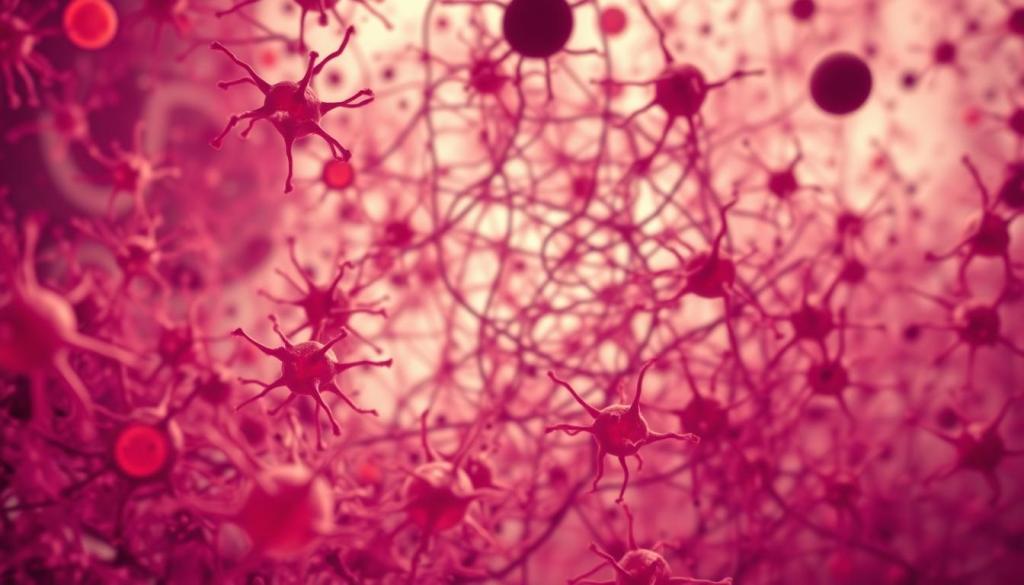
To grow PBMCs, we need to control many things. This ensures the cells stay healthy and grow well. We focus on:
- Keeping cell density at 500,000 cells/mL
- Using the right culture medium
- Controlling temperature and CO2 levels
- Checking cell shape regularly
Conditions for In Vitro Culturing
Culturing immune cells needs careful attention. We follow specific steps to help cells grow and survive:
- Prepare special PBMC medium
- Add the right growth factors
- Keep everything clean and sterile
- Watch how cells grow
Factors Influencing Cell Growth
Many things affect how PBMCs grow. Reprogramming efficiency can change a lot. It depends on the cell type and the experiment setup.
| Growth Factor | Impact on PBMCs | Typical Concentration |
|---|---|---|
| IL-2 | Lymphocyte Proliferation | 10-50 ng/mL |
| GM-CSF | Monocyte Activation | 5-20 ng/mL |
| IL-4 | B Cell Differentiation | 10-30 ng/mL |
Applications in Vaccinology
PBMC culture is vital for making vaccines. It helps us study how the immune system reacts. This way, we can create better treatments and prevent diseases.
Ethical Considerations in PBMC Research
Ethical research practices are key to responsible science, especially in hematology and blood processing. The world of PBMC research needs strict ethics to protect people and keep research honest.
Researchers face many ethical challenges. They must balance scientific progress with protecting individual rights. This includes:
- Keeping participant privacy and confidentiality safe
- Having clear and informed consent
- Following strict rules and guidelines
- Keeping high standards in research
Informed Consent in Blood Collection
Getting real informed consent is a big ethical rule in PBMC research. People need to know:
- Why their blood is being taken
- The risks and benefits
- They can leave the study anytime
- How their samples will be used
Regulatory Guidelines and Compliance
Research places must follow many rules for working with people. These rules help keep participants safe and make sure research is valid.
| Regulatory Aspect | Key Requirements |
|---|---|
| Institutional Review Board (IRB) | Comprehensive study protocol review |
| Data Protection | Anonymization of personal information |
| Consent Documentation | Detailed, clear, and comprehensible forms |
Impact of Ethical Practices on Research Integrity
Following ethics makes research more believable and reliable. By sticking to strict ethics, scientists make sure their work is open, repeatable, and trustworthy.
“Ethical research is not just a regulatory requirement, but a moral imperative in scientific investigation.”
Sticking to ethics in hematology and blood processing research helps science grow and keeps human dignity safe.
PBMCs in Personalized Medicine
Personalized medicine is changing healthcare, with PBMCs at the forefront. These immune cells help tailor treatments to each patient. They are key to understanding how patients react to treatments and creating targeted therapies.
PBMCs are vital in advanced medical research, especially in hematology and immunotherapy. They give insights into each patient’s immune system:
- Most PBMCs are lymphocytes, about 70-90%
- CD3+ T cells make up 45-70% of lymphocytes
- CD4+ helper T cells are 25-60% of active immune cells
Role in Cancer Immunotherapy
Cancer immunotherapy has made big strides with PBMC analysis. Scientists can spot immune cell traits that show how well treatments work. They can also make personalized CAR-T cell therapies without needing a donor match.
PBMC Analysis for Biomarker Discovery
New methods in biomarker discovery use PBMC profiles to track disease. They can spot small changes in immune cells that hint at health risks or treatment success. Flow cytometry helps tell healthy from damaged white blood cells, leading to new diagnostic ways.
Tailoring Treatments Based on PBMC Data
Doctors can craft treatments based on PBMC analysis. This method leads to more accurate treatments, fewer side effects, and better results for patients. Making induced pluripotent stem cells from PBMCs also opens up new areas in personalized medicine, like disease modeling and drug testing.
PBMCs and Infectious Diseases
Peripheral blood mononuclear cells (PBMCs) are key in studying infectious diseases. They help researchers understand how pathogens work and how our bodies fight them off.
In hematology, PBMCs are important for both diagnosis and research. Their special makeup lets scientists look into how our immune system reacts to different infections.
Application in Viral Research
Viral research uses PBMCs to study how viruses work. Scientists can follow how our immune system reacts by looking at these cells closely:
- Tracking viral infection progression
- Measuring cytokine production
- Analyzing immune cell activation patterns
PBMC Functionality during Infections
When we get sick, PBMCs change in important ways. Cellular composition shifts show us how our immune system is responding:
- T cells make up about 70-80% of PBMCs
- Natural killer cells are 5-10% of lymphocytes
- Monocytes are 10-30% of the sample
Investigating Immune Response to Pathogens
With new methods, scientists can study how immune cells work together. By looking at how PBMCs react, they can find new ways to treat infections.
Understanding PBMC dynamics provides critical insights into host-pathogen interactions.
Research keeps finding new ways to use PBMCs to fight off infections.
Future Trends in PBMC Research
The world of peripheral blood mononuclear cell (PBMC) research is changing fast. New technologies in cell separation and hematology are leading the way. These advancements are helping us learn more about immune cells and how they work. They also open up new possibilities for medical treatments.
Innovations in Collection Techniques
New methods are making it easier to collect and study PBMCs. Scientists are working on better ways to separate and analyze these cells:
- Microfluidic devices for targeted cell isolation
- Single-cell sequencing technologies
- High-resolution imaging systems
- Automated cell sorting platforms
Advancements in PBMC Analysis
New tools are giving us deeper insights into immune cells. Some of the key advancements include:
- Genomic profiling with enhanced resolution
- Metabolic network reconstruction
- Proteomics mapping of cellular interactions
| Technological Advancement | Potential Impact |
|---|---|
| Single-cell Sequencing | Detailed immune cell characterization |
| Metabolic Network Models | Disease mechanism understanding |
| Proteomics Profiling | Biomarker discovery |
Potential for Clinical Applications
The future of PBMC research holds great promise for medicine. Personalized medicine is becoming a reality. It uses detailed cell information to create tailored treatments.
As technology gets better, scientists expect big breakthroughs. They hope to better understand how our immune system works. This could lead to new ways to treat serious diseases.
Comparison of PBMCs to Other Blood Components
Blood processing in hematology shows interesting differences between peripheral blood mononuclear cells (PBMCs) and other blood parts. Knowing these differences is key for researchers to get clear insights into how cells work and how our immune system responds.
Researchers use PBMCs as a special cell fraction with unique traits. These traits make them different from whole blood, serum, and plasma. These cells are a vital tool in advanced medical studies.
Distinctions from Whole Blood
PBMCs are quite different from whole blood in several important ways:
- Concentration: PBMCs have about 2 million cells per milliliter in blood samples
- Cellular composition: They focus on specific immune cells
- Separation technique: They need density gradient centrifugation
Differences from Serum and Plasma
Serum and plasma have liquid parts, but PBMCs are live cells important for studying the immune system. The buffy coat layer, with more PBMCs, forms during centrifugation because of density differences.
Benefits of Using PBMCs in Research
PBMCs bring big benefits to scientific studies:
- They allow for precise analysis of immune cells
- They have less variation between donors
- They help study specific cell responses better
Hematology researchers see PBMCs as key for getting detailed insights not possible with whole blood analysis. This makes them very valuable for understanding complex immune processes.
Conclusion: Importance of PBMCs in Biomedical Research
Peripheral blood mononuclear cells (PBMCs) are key in biomedical research. They show great promise in many fields, from immunology to personalized medicine. PBMC blood research helps us understand the human immune system and diseases better.
Researchers have learned a lot about PBMCs. They found out that lymphocytes make up 70-90% of these cells. This includes different types like CD4+ helper T cells and CD8+ killer T cells. These cells are very important for studying the immune system.
The study of PBMCs is crucial for future medical science. New methods like flow cytometry help us study these cells more. By studying PBMCs, scientists can find new ways to diagnose and treat diseases.
Science needs ongoing curiosity and hard work. By focusing on PBMCs, researchers can make big discoveries. These discoveries could change how we understand and treat diseases. The study of PBMCs is a big step towards new medical breakthroughs.
FAQ
What are Peripheral Blood Mononuclear Cells (PBMCs)?
PBMCs are a group of immune cells found in the blood. They include lymphocytes, monocytes, and dendritic cells. These cells help fight infections and keep the immune system working right.
How are PBMCs collected from blood?
PBMCs are collected through a blood draw. The blood is then processed using a method called density gradient centrifugation. This method separates the immune cells from other blood parts.
What are the main cell types in PBMCs?
The main cells in PBMCs are lymphocytes, monocytes, and dendritic cells. Each type has a special job in the immune system. They help produce antibodies and fight off pathogens.
Why are PBMCs important in medical research?
PBMCs are key in medical research. They help us understand the immune system and how diseases work. They are especially useful in studying infectious diseases and cancer treatments.
How are PBMCs stored for research purposes?
PBMCs are frozen for long-term storage. This is called cryopreservation. Freezing them at very low temperatures helps keep them alive and working for a long time.
What challenges exist in PBMC collection and processing?
Collecting and processing PBMCs can be tricky. It’s important to keep the samples intact and prevent damage. Researchers must follow strict protocols to get the best results.
Can PBMCs be cultured and expanded in a laboratory?
Yes, PBMCs can be grown in the lab. This is done using special media and growth factors. It’s important for research, like making vaccines and studying immune cells.
What ethical considerations are important in PBMC research?
Ethical rules are crucial in PBMC research. This includes getting consent from donors and following guidelines. It’s important to protect privacy and use samples responsibly.
How do PBMCs contribute to personalized medicine?
PBMCs help make treatments more personal. They give insights into how each person’s immune system works. This is especially useful in cancer treatment and immunotherapy.
What future innovations are expected in PBMC research?
New technologies will change PBMC research. Things like single-cell sequencing and advanced devices will give us new insights. This could lead to big medical breakthroughs.






Leave a Comment
Your email address will not be published. Required fields are marked *