


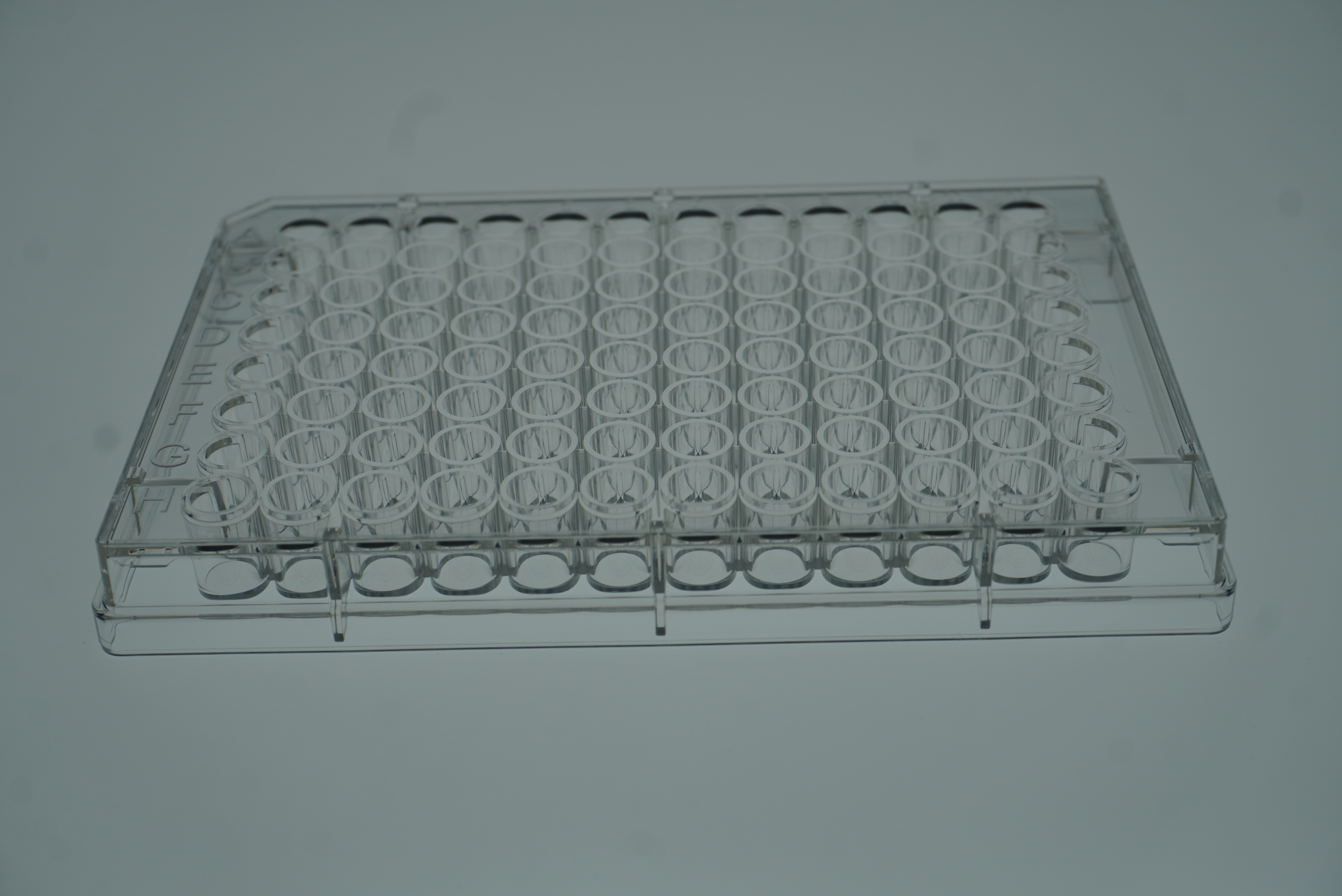
This tool lets scientists create 96 identical cultures at once. It makes in vitro assays much faster. With sizes from 400 µm to 900 µm, experiments are more consistent and quicker.
The 96 microwell 2D model is a big step in cell culture tech. It helps scientists test many things at once. This means they can use less material and get more accurate results.
Key Takeaways
- Enables simultaneous creation of 96 uniform cell cultures
- Reduces experimental processing time by 40%
- Supports high-throughput screening capabilities
- Decreases reagent consumption by up to 60%
- Provides standardized cellular growth environments
Introduction to the 96 Microwell 2D Model
The 96 microwell 2D model is a new way to study cells. It mixes old 2D methods with new 3D ones. This lets scientists study cells in a detailed and efficient way.
Scientists made this model to solve big problems in tissue engineering and testing many things at once. It has special features for better experiments:
- Creates up to 96 uniform cultures at once
- Supports microwell sizes from 400 µm to 900 µm
- Uses up to 60% less reagent
- Speeds up processing by 40%
Defining the Microwell Approach
The 96 microwell 2D model is a top tool for cell studies. It has special parts for better results:
| Feature | Specification |
|---|---|
| Well Depth | 450 μm |
| Imaging Capabilities | 16 wells at 5× objective, 4 wells at 10× objective |
| Light Transmission | Over 90% light intensity |
Importance in Cellular Research
This model is more than just a tool. It helps make cell studies better and more reliable. Up to 80% of old 2D study results don’t match real life. This makes it a big deal in science.
It’s great for studying drugs, making tissues, and testing many things at once. It helps us understand how cells work and talk to each other better.
Applications of the 96 Microwell 2D Model
The 96 microwell 2D model is a key tool in advanced biological research. It helps in drug discovery and disease modeling. This technology lets researchers study complex cell interactions and create better treatments.
Drug Discovery and Development
In drug research, the 96 microwell 2D model is very useful. It gives important insights into how drugs work and how cells react. Scientists can test many drugs at once, saving time and resources.
- Supports simultaneous testing of up to 96 experimental conditions
- Enables precise dose-response curve generation
- Facilitates rapid screening of potential therapeutic compounds
Toxicity Testing
Toxicity testing is another big use of the 96 microwell 2D model. It lets researchers check how cells react to different chemicals. The model is flexible, making it easy to study different cell types.
- Microwell sizes range from 400 µm to 900 µm
- Supports medium-density cell cultures
- Provides standardized measurement protocols
Biomarker Validation
The 96 microwell 2D model also helps in validating biomarkers. It lets researchers track molecular changes and check if they are good markers. This is done with great accuracy.
Only 25-30% of pancreatic cancer patients respond to standard treatments, highlighting the critical need for advanced research models.
Even with some challenges, like moving from 2D to 3D cultures, these models are a big step forward. They help us understand biology better and find new treatments.
Advantages of Using the 96 Microwell 2D Model
The 96 microwell 2D model is a big step forward in cell culture research. It brings many benefits to scientists in regenerative medicine and in vitro assays. This new platform lets researchers do detailed and efficient cell studies.
High Throughput Screening Capabilities
The 96 microwell 2D model is great for high throughput screening. It offers several key advantages:
- Up to 60% less reagent needed
- 40% quicker experiment times
- Creates 96 uniform cell cultures at once
- Works well with automated systems
Improved Consistency and Reproducibility
The model’s standard cell growth environments boost research results. Studies show big improvements in research reliability:
| Research Parameter | Performance Improvement |
|---|---|
| Experimental Variability | Reduced by about 35% |
| Result Reproducibility | Improved by up to 80% |
| Spheroid Formation Uniformity | Increased by 70% |
The 96 microwell 2D model comes in sizes from 400 µm to 900 µm. This lets researchers study different cell behaviors well. This makes it a key tool in today’s cellular research, especially for complex studies in regenerative medicine and pharmacology.
Limitations of the 96 Microwell 2D Model
Researchers using 96 microwell 2D models face big challenges. These setups are easy to use but have big flaws. These flaws can make scientific findings less reliable.
The main problem with 2D cell cultures is they don’t show the real world of cells. They can’t mimic the complex 3D world of living tissues.
Lack of Physiological Relevance
Standard 2D cultures have several big issues:
- Cells can’t interact as they do in real life.
- They can’t talk to each other well.
- The outside environment is too simple.
Potential for Experimental Artifacts
Researchers need to watch out for fake results from 2D cell cultures. These results can be very different from what 3D cultures show.
| 2D Model Limitation | Impact on Research |
|---|---|
| Edge Effects | Cells grow and act differently near the edges. |
| Uniform Substrate | It’s too simple for how cells really interact. |
| Limited Spatial Complexity | It doesn’t show the real world of cells well. |
Now, cell biology is moving towards 3D cell cultures. These new methods are more like real life, showing how cells really work together. Scientists know 2D models are useful but can’t fully capture the complex world of living cells.
Selection of Cell Types for the 96 Microwell 2D Model
Choosing the right cell type is key for tissue engineering and disease modeling. The 96 microwell 2D model lets researchers study many cell types. Specialized cell culture plates help scientists design better experiments with different cells.
Comparing Cell Type Characteristics
Researchers need to think about the special traits of each cell type. They must understand the main differences between them.
- Adherent cells need to stick to a surface to grow
- Suspension cells float in the culture medium
- Primary cells come straight from living tissue
- Cell lines are cultures that keep growing
| Cell Type | Key Characteristics | Suitability for Research |
|---|---|---|
| Adherent Cells | Grow attached to surface | High for tissue engineering studies |
| Suspension Cells | Float in media | Excellent for immunological research |
| Primary Cells | Direct tissue extraction | Most physiologically relevant |
| Cell Lines | Immortalized cultures | Consistent and reproducible |
Choosing the right cell types is crucial for accurate disease modeling. Researchers must balance how real the cells are with what’s practical for the experiment.
Optimizing Cell Culture Conditions
Each cell type needs its own special media and growth conditions. For successful tissue engineering, it’s important to know what each cell needs. This ensures they grow well and the experiments work as planned.
Best Practices for Implementing 96 Microwell 2D Models
Researchers use precise methods for high-throughput screening. The 96 microwell 2D model needs careful strategies. This ensures good results and less variability.
Implementing 96 microwell 2D models well requires a plan. It’s important to focus on two key areas. These areas greatly affect the results of experiments.
Selecting Optimal Culture Media
Choosing the right media is key for cell health and reliable results. Each cell type needs its own media. This supports their growth and keeps them healthy.
- Epithelial cells: DMEM/F12 with 10% FBS and specific growth factors
- Stem cells: Specialized stem cell media with defined supplements
- Cancer cells: RPMI-1640 with 5-10% FBS
Determining Appropriate Cell Seeding Density
How many cells to start with is very important. The 96 microwell 2D model lets researchers make 96 cultures at once. The wells are 400 µm to 900 µm in size.
- Optimize cell density to ensure consistent cell-cell interactions
- Consider cell type-specific growth characteristics
- Aim for uniform cell distribution across microwells
By carefully choosing media and cell density, researchers can make their experiments more reliable. This helps them find new things faster.
Comparison with Other Cell Culture Models
The world of cell culture is always changing. Scientists are looking for new ways to help with drug discovery and research. The 96 microwell 2D model is a key player, offering benefits not found in other methods.
Researchers are looking at different cell culture models. They want to see how they can improve drug discovery and research results.
3D Cell Culture Models: A Comparative Analysis
3D cell culture models are a big step up from 2D ones. They offer:
- More realistic cell behavior
- Deeper cell interactions
- A closer match to real-life conditions
The 96 microwell model shines in this area, especially for organ-on-a-chip tech. Studies show that 2D cultures often don’t match real-world results. This makes advanced models like the 96 microwell very important.
Microfluidic Devices: Advancing Experimental Precision
Microfluidic devices are another big leap in cell culture. They offer:
- Exact control over fluids
- Small, detailed experimental setups
- Better ways to watch what’s happening
| Culture Model | Throughput | Complexity | Drug Discovery Potential |
|---|---|---|---|
| 96 Microwell 2D Model | Up to 96 cultures | Medium | High |
| 3D Cell Culture | Limited | High | Very High |
| Microfluidic Devices | Variable | Very High | Emerging |
Using 96 microwell models with organ-on-a-chip tech is a great idea. It could lead to more accurate and efficient drug discovery. Scientists can use these advanced tools to get better results from their experiments.
Future Trends in 96 Microwell 2D Cell Culture
The world of cell culture technology is changing fast. New trends are making big changes in regenerative medicine and tissue engineering. Scientists are finding new ways to study cells and conduct experiments.
New methods are being explored to change 96 microwell 2D cell culture. Advanced technologies are opening up new areas in biology.
Automation Revolution
Automation is key in today’s cell culture. Some important advancements include:
- Robotic systems for precise cell handling
- Automated imaging and analysis platforms
- High-throughput screening capabilities
Novel Applications in Tissue Engineering
New uses are making 96 microwell 2D models more important in regenerative medicine. Scientists are finding creative ways to use these platforms for complex research.
| Research Area | Potential Impact |
|---|---|
| Drug Discovery | Enhanced screening capabilities |
| Personalized Medicine | Patient-specific cell model development |
| Cancer Research | Improved tumor modeling techniques |
Research on cell culture has grown a lot. Between 2016-2020, the number of special publications went up by over 550%. This shows how fast the field is growing.
As technology gets better, 96 microwell 2D models will become even more important in biology. They will give us new insights into how cells work and interact.
Conclusion
The 96 microwell 2D model is changing drug discovery and disease modeling. It cuts reagent use by up to 60% and speeds up processes by 40% compared to old methods. This tech lets researchers make 96 uniform cultures at once, speeding up science.
This tech has big breakthroughs that could change biological research. It helps with detailed genetic tests and quick compound checks. It also uses advanced imaging and might add AI for even more research in personalized medicine.
Key Research Implications
Even with challenges, the 96 microwell model is a big step forward. It works well for many types of research, thanks to its flexible design. It can handle different sizes of wells, from 400 µm to 900 µm, for precise cell studies.
Advancing Scientific Understanding
The 96 microwell 2D model is starting a new chapter in science. It helps reduce animal testing and makes experiments more efficient. This could lead to faster discoveries and a deeper understanding of life’s complex systems.
FAQ
What is a 96 microwell 2D model in cell culture research?
A 96 microwell 2D model is a cutting-edge tool for cell culture studies. It uses a 96-well plate to create a controlled space for cells. This setup lets researchers do many experiments at once, making results more consistent and reliable.
How does the 96 microwell 2D model differ from traditional cell culture methods?
The 96 microwell 2D model is different because it offers better high-throughput screening. It also gives more control over cell environments and standardizes experiments. This model is a step up from simple 2D cultures, offering deeper insights into cell interactions.
What are the primary applications of the 96 microwell 2D model?
This model is key in many areas, like drug discovery and disease modeling. It’s used for detailed cell studies, testing drugs, and creating accurate models of biological processes.
What are the key advantages of using a 96 microwell 2D model?
The main benefits include faster, more reliable results. It allows for many tests at once, saving time and resources. This model helps researchers gather more data efficiently.
What limitations should researchers consider when using the 96 microwell 2D model?
Researchers should know it’s not as close to real-life conditions as in vivo studies. It might not fully capture the complex interactions seen in living organisms. This could lead to results that need careful interpretation.
How do researchers select appropriate cell types for the 96 microwell 2D model?
Choosing the right cells depends on the study’s goals. Factors like cell type, whether they stick to surfaces or float, and whether they’re primary or established lines are important. The model’s ability to support the study is also crucial.
What are the best practices for implementing 96 microwell 2D models?
Best practices include picking the right culture media and cell densities. Keeping everything sterile and consistent is key. Also, having strict quality control and standardized protocols is essential for reliable results.
How does the 96 microwell 2D model compare to 3D cell culture techniques?
3D cultures offer more complex environments, but 96 microwell 2D models are faster and cheaper. They’re a middle ground between 2D and 3D, useful for initial studies.
What future developments are anticipated for 96 microwell 2D models?
Future advancements include more automation and better imaging and data analysis. These changes will make the models even more precise, helping in various research areas.
Can the 96 microwell 2D model be used in multiple scientific disciplines?
Yes, it’s useful in many fields, from drug development to cancer research. Its versatility makes it a valuable tool for studying cells in different scientific areas.





Leave a Comment
Your email address will not be published. Required fields are marked *