


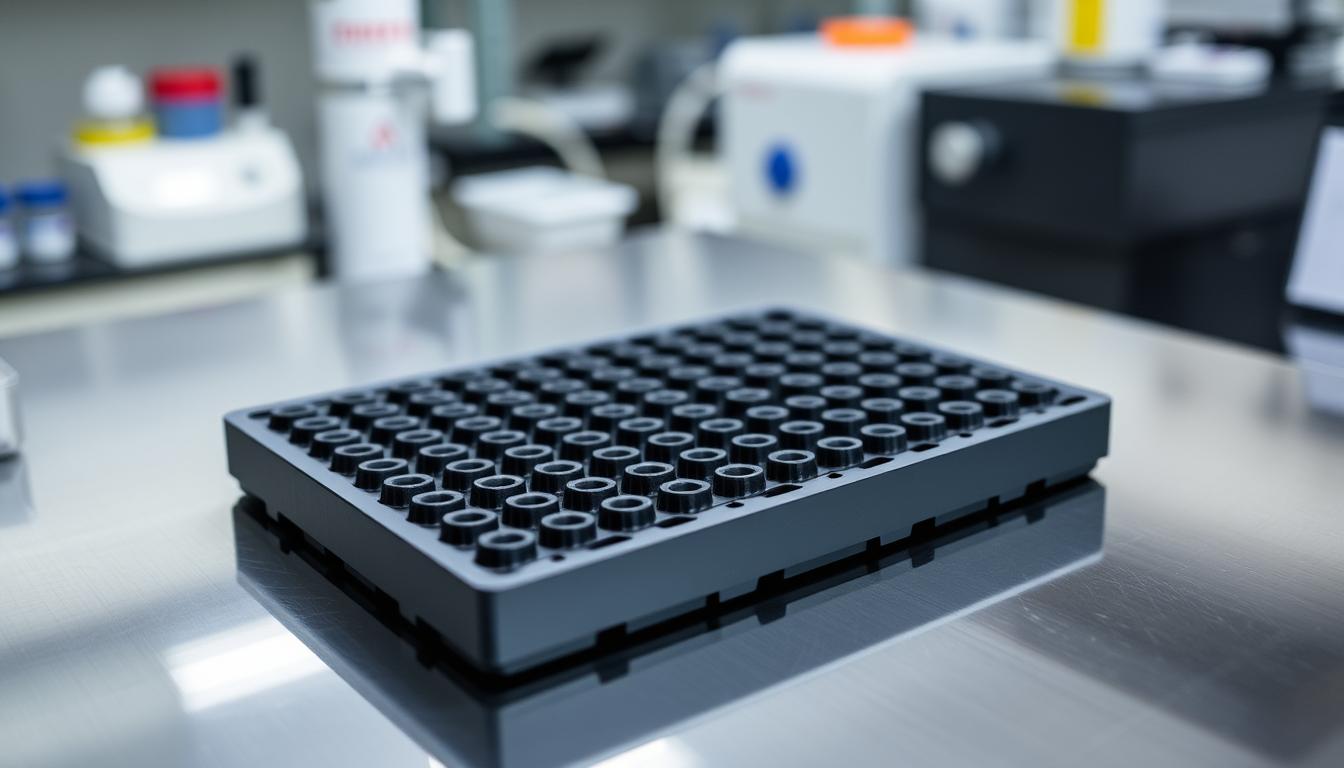
Scientific research needs precision, and the right lab tools are key. Black 96 well plates are a big help for those dealing with fluorescence issues. They offer a solution to common problems in labs.Labs often face a big problem: background fluorescence that hides important data. White plates reflect light, causing signal noise. But black 96 well plates soak up extra light. This lets researchers get more accurate and detailed results in their work.
These plates are made with the latest materials. They cut down on well-to-well interference and have great optical properties. This means scientists can do experiments with better clarity and sensitivity.
Key Takeaways
- Black 96 well plates reduce background fluorescence significantly
- Optimal for short half-life fluorophore detection
- Minimizes signal interference across multiple assay types
- Engineered for high-sensitivity scientific research
- Compatible with multiple detection techniques
What is a Black 96 Well Plate?
Scientific research needs precise tools to improve accuracy. Black 96 well plates are key in today’s labs. They offer special features for advanced studies.
These microplates are a big step forward in research tech. They meet tough experimental needs. A durable black 96 well plate is a top choice for many scientific tasks.
Definition and Fundamental Features
A black 96 well plate is a high-tech microplate with:
- 96 individual wells in an 8×12 matrix
- Light-blocking black walls to reduce background noise
- Works with many detection methods
- Comes in different bottom types
Common Uses in Laboratories
Research shows these plates are vital in many fields:
- 63% of labs choose black 96 well plates for fluorescence assays
- 44% of pharma companies use them for screening
- 82% of microbiology labs see better results
“Black 96 well plates represent a critical innovation in scientific research infrastructure.” – Laboratory Research Quarterly
The durable black 96 well plate is essential for precise research. Its design cuts down on errors. It helps gather better data in many areas of study.
Advantages of Using Black 96 Well Plates
Laboratory researchers are always looking for better ways to do their work. Black 96 well plates are a top choice for those who need the best in fluorescence-based studies.
Choosing the right lab equipment is key. Black 96 well plates offer big benefits that help improve research results.
Reduced Background Fluorescence
Black 96 well plates are made to cut down on background noise in experiments. They have special features that help a lot:
- They reduce light scattering between wells.
- They boost signal-to-noise ratios.
- They make detection more sensitive.
“The black sidewalls effectively prevent optical crosstalk, making these plates ideal for high-sensitivity detection methods.” – Laboratory Research Quarterly
Compatibility with Various Assays
Black 96 well plates are great for many types of research. Scientists can use them for:
- Cell-based fluorescence assays.
- Measuring enzyme activity.
- Studying protein quantities.
- Using luminescence detection.
These plates offer top-notch optical performance. They are a big step forward in lab equipment, helping scientists get better results.
Materials Used in Black 96 Well Plates
Research labs use special materials for the best results in experiments. The type of material in a black 96 well plate is key to success.
Polypropylene vs. Polystyrene: Material Considerations
There are two main materials for black 96 well plates:
- Polypropylene: Great for resisting chemicals
- Polystyrene: Best for clear views
Choosing between these depends on what the experiment needs. A top-notch black 96 well plate focuses on staying stable and clear.
Surface Treatments and Specialized Coatings
Special coatings turn regular plates into top-notch tools. Nunclon Delta coating, for example, helps cells stick better in tests. This greatly improves results.
“The right surface treatment can make a significant difference in research precision.” – Laboratory Research Innovations
| Surface Treatment | Primary Application |
|---|---|
| Tissue Culture Treated | Improved Cell Adhesion |
| Hydrophobic | Reduced Sample Spreading |
| Optical Clear Bottom | Enhanced Imaging Capabilities |
Choosing a black 96 well plate means looking at materials, coatings, and what the experiment needs. This ensures the best results.
Applications of Black 96 Well Plates
Scientific research needs precision and flexibility. The black 96 well plate is key in today’s labs. It supports various experiments, helping scientists in many fields.

Cell Culture Assays
Scientists use black 96 well plates for cell studies. These plates help with:
- Measuring cell growth
- Finding out how toxic substances are
- Looking at cell shapes closely
ELISA and High-Throughput Screening
Black 96 well plates are great for screening. High-throughput screening lets scientists:
- Test many samples at once
- Save time
- Get more data quickly
Fluorescence and Luminescence Detection
Black 96 well plates are top for optical tests. Their surface cuts down on background noise. This makes them perfect for:
- Fluorescence tests
- Luminescence checks
- Spotting small signals
“The black 96 well plate is a big step forward in lab tech. It brings new precision to research.” – Dr. Emily Rodriguez, Research Innovations
Choosing the Right Black 96 Well Plate
Choosing the right black 96 well plate is important. It’s not just about picking any plate. The right one can make a big difference in your results.
When looking for a top-rated black 96 well plate, pay attention to a few key things:
- Well volume requirements
- Detection method compatibility
- Surface treatment specifications
- Sterility requirements
Key Selection Criteria
A high-quality black 96 well plate should meet certain standards. Here are the important factors to consider:
- Bottom Shape: Flat, U, or V-bottom designs affect how samples interact
- Working volume range (50-250?L per well)
- RNase, DNase, and pyrogen-free certification
- Compatibility with plate readers and detection systems
Popular Brands to Consider
When looking for top-rated black 96 well plates, some brands stand out. They are known for their quality and performance. Look for brands with detailed specs and a history of success in research.
“The right plate can transform your experimental results from good to exceptional.”
Researchers should look for plates with low auto-fluorescence, strong build, and reliability in various experiments.
How to Properly Use Black 96 Well Plates
Working with black 96 well plates needs precision and careful technique. These plates are key in scientific research. They require careful handling for the best results.
Using laboratory plates right can greatly affect your results. Scientists must follow certain steps to get the most from their plates.
Pre-treatment Steps
Before using your black 96 well plate, follow these important steps:
- Check the plates for damage or contamination
- Make sure the plate surface works with your assay
- Do surface treatments if your research needs it
- Store the plates at the right temperature and humidity
Best Practices for Filling Wells
Filling wells correctly is key for good results. Here’s how to do it right:
- Use calibrated pipettes for exact volumes
- Work with volumes between 50-200 ?L
- Avoid touching the wells to prevent contamination
- Keep your pipetting consistent
| Plate Type | Typical Capacity | Recommended Working Volume |
|---|---|---|
| Black 96 Well Plate | 320-360 ?L per well | 50-200 ?L |
| 1536 Well Plate | 10.7-12.8 ?L per well | 1-10 ?L |
“Precision in sample handling determines the quality of scientific investigation.” – Laboratory Research Standards
Handling black 96 well plates with care leads to reliable and consistent research results in many fields.
Cleaning and Reusing Black 96 Well Plates
Laboratory experts often look for ways to get more out of their black 96 well plates. Many plates are made for one-time use. But, with the right cleaning and reuse, you can save money.
Safe Cleaning Guidelines
To clean an affordable black 96 well plate safely, follow these steps:
- Use mild, non-abrasive laboratory detergents
- Rinse thoroughly with distilled water
- Avoid harsh chemical solutions
- Inspect for visible damage before reuse
“Proper cleaning ensures data integrity and prevents cross-contamination in sensitive experiments.”
Determining Plate Disposal
Not every plate can be reused. Look for these signs to know when to throw it away:
- Visible scratches or surface irregularities
- Persistent staining
- Compromised structural integrity
- Evidence of chemical degradation
Always choose accuracy over saving money. If unsure, it’s better to replace the plate to keep your research quality high.
Troubleshooting Common Issues
Laboratory experts often face specific problems with top-rated black 96 well plates. Knowing these common issues can greatly improve results and data accuracy.

Addressing High Background Signals
High background signals can mess up your results. Here are some ways to lower these unwanted signals:
- Use high-quality reagents made for black 96 well plates
- Follow strict plate washing steps
- Adjust assay conditions to cut down on non-specific binding
Managing Sample Contamination
Contamination is a big problem with black 96 well plates. To keep samples clean, follow these steps:
- Work in clean environments
- Use only sterile reagents and supplies
- Choose plates with tight lids
Precision in handling samples is crucial to avoid contamination and get reliable results.
| Issue | Potential Cause | Recommended Solution |
|---|---|---|
| High Background Signals | Non-specific binding | Use blocking agents |
| Sample Contamination | Improper handling | Maintain sterile conditions |
| Edge Effects | Temperature gradients | Equilibrate plates before use |
When using a top-rated black 96 well plate, small changes can affect your results. Pay close attention to details and follow strict protocols to keep your data reliable.
Cost-Effective Alternatives
Choosing the right 96-well plate is important. It’s about finding a balance between cost and quality. Researchers look for affordable black 96 well plates that still deliver good results.
Scientists must think about more than just the price. A high-quality black 96 well plate has special benefits for certain research needs.
Comparing Plate Types
Each plate material has its own strengths:
- Black plates: Great for fluorescence assays
- White plates: Best for luminescence detection
- Clear plates: The most affordable choice
Performance and Cost Analysis
| Plate Type | Price Range | Best Application |
|---|---|---|
| Black PP Medium Binding | $309.00/50 units | Fluorescence assays |
| Polystyrene Tissue Culture | $142.00-$323.00 | General cell culture |
| Deep Well Storage | $208.00-$246.00 | Sample preservation |
Researchers can find affordable black 96 well plates by matching them to their needs. Cost should never supersede scientific integrity.
Strategic plate selection balances budget constraints with research precision.
When picking a plate, think about sensitivity, reflectivity, and compatibility. A high-quality black 96 well plate might be worth the extra cost for certain research.
Customer Reviews and Testimonials
Researchers and lab pros love the top-rated black 96 well plates. They say these plates are key in today’s science. Experts from many fields talk about their benefits.
User Experiences with Black 96 Well Plates
Scientists share great results with these tools. They point out several strengths:
- Exceptional consistency in experimental outcomes
- Minimal background fluorescence
- Superior compatibility with multiple assay types
- Robust design preventing cross-contamination
Recommendations from Lab Professionals
“These black 96 well plates have transformed our research workflow, providing unparalleled reliability and precision.” – Dr. Elizabeth Chen, Research Director
| Performance Metric | User Rating |
|---|---|
| Overall Quality | 4.8/5 |
| Fluorescence Sensitivity | 4.9/5 |
| Instrument Compatibility | 4.7/5 |
The feedback is mostly positive. It shows how important these plates are in science. People like their design and how well they work. This makes them a top pick in labs around the world.
Future Trends in Lab Supplies
The world of lab technology is changing fast. New innovations are changing how scientists do their work. They are looking for high-quality black 96 well plates that work better and are good for the planet.
The scientific world is seeing big steps forward in black 96 well plates for labs. This is thanks to new tech and caring for the environment.
Innovations in 96 Well Plate Technology
New tech is changing how 96 well plates are made and work. Some big changes include:
- Advanced surface coatings for better cell sticking
- Less non-specific binding
- Better optical properties for accurate readings
*Technological innovation is the cornerstone of scientific progress in laboratory equipment.*
Sustainable Practices in Manufacturing
People are now thinking more about the environment when making black 96 well plates. They are using:
- Materials that are good for the planet
- Less energy and waste in making them
- Plates that can be recycled or break down easily
| Innovation Category | Key Developments |
|---|---|
| Material Technology | Enhanced polypropylene compounds |
| Manufacturing Process | Reduced waste and energy consumption |
| Environmental Impact | Increased use of sustainable materials |
The future of lab supplies looks bright. We will see even better performance, care for the planet, and new tech helping science move forward.
Conclusion: Making Informed Choices with Black 96 Well Plates
Choosing the right black 96 well plate is key for precise scientific results. Labs need versatile plates that work well in many experiments. These plates have special designs and treatments for accurate fluorescence assays.
It’s important to know what these tools can do. Researchers should look at things like material, optical properties, and compatibility. The best plate depends on the experiment’s needs, like cell culture or protein analysis.
Recap of Key Points
Our deep dive showed black 96 well plates’ big role in science. They reduce background, improve signal-to-noise, and are versatile. Buying high-quality plates is a smart move for labs wanting accuracy and reliability.
Encouragement for Further Exploration
We encourage scientists to keep learning about microplate tech. Stay updated on new developments, go to conferences, and talk to makers. Your dedication to learning about lab tools will help science and tech grow.
FAQ
What are black 96 well plates used for?
Black 96 well plates are used for fluorescence and luminescence assays. They are great for cell-based assays and enzyme activity measurements. They also help in protein quantification and high-throughput screening.
The black walls reduce background fluorescence. This makes them essential for sensitive detection methods.
What makes black 96 well plates different from other microplates?
Black 96 well plates have light-blocking walls. This prevents optical crosstalk and reduces background interference. They are made from high-grade polystyrene and come in different bottom shapes.
How do I choose the right black 96 well plate for my experiment?
Consider the bottom shape, well volume, surface treatment, and sterility when choosing a plate. Make sure it’s compatible with your assay and detection instrument. Look for plates that are RNase, DNase, and pyrogen-free.
Working volumes usually range from 50 to 250?L per well.
Can black 96 well plates be reused?
Some black 96 well plates can be reused after careful cleaning. Follow strict cleaning protocols to avoid cross-contamination. Use mild detergents and rinse with distilled water.
Avoid harsh chemicals. Dispose of plates showing wear, scratches, or persistent contamination.
What are common issues when using black 96 well plates?
Issues include high background signals and sample contamination. Proper plate washing and using high-quality reagents can help. Work under sterile conditions and optimize assay conditions.
Consider using blocking agents and be aware of edge effects. Use sterile reagents and plates with lids to minimize contamination risks.
Are black 96 well plates suitable for all types of assays?
Black 96 well plates are best for fluorescence and cell-based assays. They may not be ideal for all applications. For luminescence assays, white plates might be better due to their reflective properties.
Always consider your assay’s specific needs and the sensitivity required. Check if the plates are compatible with your detection instruments.
How should I handle black 96 well plates to ensure best results?
Work in sterile conditions and use calibrated pipettes for accurate volumes. Avoid touching the wells’ bottom or sides to prevent scratches or contamination. For cell culture, use plates with lids to prevent evaporation and contamination.
Always check the plate’s surface treatment and follow the manufacturer’s recommendations.






Pingback: How to Use a Serological Pipette | Lab Guide
Pingback: Essential Guide to Gel Loading Tips for Lab Work