


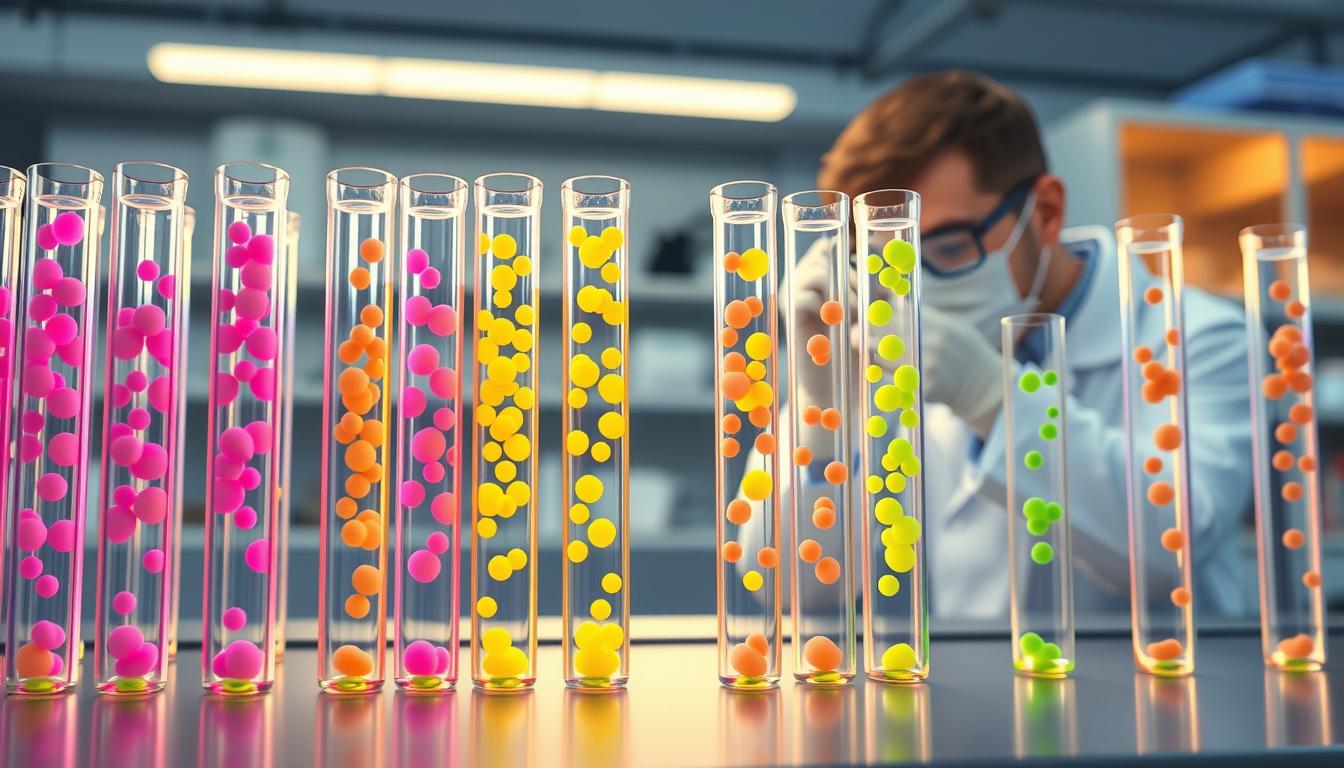
Ever thought about how scientists figure out tiny life forms in a simple glass tube? Culture tubes are key players in science, making complex studies simple and controlled.
Culture tubes are vital in labs, helping scientists study tiny life with great detail. These special containers are key for studying microbes, leading to big scientific breakthroughs in many fields.
Each tube creates a special space for tiny life to grow and be studied. Scientists use these tools for all sorts of experiments, from finding new medicines to studying the environment.
Key Takeaways
- Culture tubes are essential tools in scientific research
- They enable controlled microbiological studies
- Different tube types support various research needs
- Precise environmental conditions are crucial for accurate results
- Culture tubes facilitate discoveries across multiple scientific fields
Introduction to Culture Tubes
Culture tubes are key in scientific research. They offer a controlled space for bacteria to grow and for studying microbes. These containers are vital for experiments, storing samples, and watching microbial growth.
Scientific labs use these precise tools for many research tasks. Culture tubes vary in material and design, fitting different scientific needs.
Definition and Purpose
A culture tube is a basic lab tool. It helps:
- Control bacteria growth
- Keep a sterile space for microbiology studies
- Watch how microbes interact
- Support experiments with nutrient agar slants
Common Materials Used in Culture Tubes
Scientists make culture tubes from two main materials:
- Glass Tubes
- Borosilicate glass
- Resists heat well
- Can handle temperatures up to 300°C
- Plastic Tubes
- Polystyrene
- Polypropylene
- Often thrown away after use
The choice between glass and plastic depends on the research needs. It also depends on the experiment’s conditions and temperature changes during the study.
Types of Culture Tubes
Scientists use different culture tubes for studying microbes. Each type is made for specific needs, helping microbes grow well for research.
Glass vs. Plastic Culture Tubes: A Comparative Overview
Choosing between glass and plastic tubes is key for researchers. Each has its own benefits for studying microbes:
- Glass Culture Tubes:
- Excellent chemical resistance
- High-temperature tolerance
- Ideal for autoclaving
- Superior for long-term experiments
- Plastic Culture Tubes:
- More affordable
- Lightweight and shatter-resistant
- Disposable options reduce contamination risks
- Suitable for high-throughput applications

Specialized Culture Tubes for Microbial Studies
Now, there are advanced culture tubes for specific microbial studies. These tubes meet various research needs, like growing anaerobic bacteria or fungi.
Some key specialized tubes are:
- Anaerobic Culture Tubes: For microbes that need no oxygen
- Fungal Culture Tubes: With nutrients just for fungi
- Bioreactor Tubes: With filters for controlled growth
Choosing the right culture tube is crucial for successful microbial studies. Researchers must think about the tube’s material, how clean it is, and what the study needs for the best results.
Applications of Culture Tubes
Culture tubes are key in scientific research. They help scientists in microbiology and biotechnology. These tools let them study complex biological systems with great detail.
Scientific labs use sterile glass tubes for many important tasks. These tasks help us learn about tiny organisms and how they work. The use of test tube culture has changed how we see these tiny worlds.
Microbiology Laboratory Techniques
In microbiology labs, culture tubes are very important:
- They help grow pure microbial strains.
- They are used for growth studies.
- They help test how microbes react to antibiotics.
- They store samples of bacteria and fungi.
Biotechnology Research Applications
Biotechnology researchers use sterile glass tubes for their work:
- They study protein expression.
- They do genetic engineering.
- They work on cell cultures.
- They use them for molecular research.
These special containers help control and watch biological materials. They help make new scientific discoveries.
Culture tubes are the heart of modern science. They help us understand complex biology through careful experiments.
Selecting the Right Culture Tube
Choosing the right culture tube is key for successful bacterial isolation. It’s also important for using microbiology equipment well. Scientists must look at many factors to get the best results and keep samples safe.
Critical Selection Factors
When picking culture tubes, researchers should think about a few important things:
- Material composition (glass or plastic)
- Tube size and capacity
- Temperature resistance
- Chemical compatibility
- Sterilization requirements

Recommended Tube Sizes for Different Applications
The size of the tube you need depends on your research. Different sizes are good for different microbiology techniques:
| Tube Capacity | Typical Application | Recommended Material |
|---|---|---|
| 5-10 mL | Bacterial isolation | Borosilicate glass |
| 15-20 mL | Cell culture studies | Polystyrene |
| 25-50 mL | Environmental sample processing | High-quality polypropylene |
Researchers should choose tubes that fit their experiments well. Thermal shock resistance, clearness, and keeping samples clean are very important in choosing microbiology equipment.
Selecting the right culture tube is not just about size—it’s about creating the optimal environment for scientific discovery.
Best Practices for Using Culture Tubes
Laboratory experts know culture tubes are key in microbiological research. Handling and keeping these vessels right can greatly affect results and stop contamination.
Doing well in microbiological culture work means following strict rules for sterilization and handling. Researchers need to have solid plans to keep their work safe and accurate.
Sterilization Techniques
Sterilizing culture tubes is a big deal. It involves several important steps:
- Autoclaving at high temperatures and pressures
- Dry heat sterilization for heat-resistant materials
- Chemical sterilization using special solutions
- UV radiation for surface cleaning
Handling Guidelines
When working with culture tubes, follow these key steps:
- Always use aseptic technique
- Work in a laminar flow hood
- Keep away from open air
- Use sterile tools for moving things around
Storage Recommendations
| Tube Type | Storage Conditions | Maximum Storage Time |
|---|---|---|
| Empty Sterile Tubes | Cool, dry place | 12 months |
| Inoculated Tubes | Controlled temperature | 24-72 hours |
| Frozen Cultures | -80°C freezer | Several years |
Stopping contamination is crucial in microbiological culture work. Researchers must stick to high standards to make sure their work is reliable and accurate.
Culture Tube Design Features
Laboratory researchers know that the right culture tube is key. It can greatly affect the results of experiments. Design features are vital for precise scientific work, especially in studying nutrient agar slant and bacteria growth.
Culture tubes have advanced design elements that boost lab performance. These features help researchers get more accurate and reliable results.
Cap Types and Their Functionality
Different cap designs have specific roles in science:
- Screw caps seal well for long storage
- Push caps are fast for quick access in experiments
- Foam plugs let gases pass while keeping out contaminants
Graduated Markings: Precision in Experimentation
Graduated markings on culture tubes are crucial for keeping experiments accurate. These precise measurements help researchers:
- Monitor exact volume changes
- Ensure consistent sample prep
- Make reproducible nutrient agar slant techniques
Features like angled bottoms and side arms make culture tubes even more useful. They support advanced research in many fields.
Maintaining Culture Integrity
Keeping microbial cultures in top shape needs careful attention and strict lab practices. Researchers must use detailed strategies to keep their biological samples safe during inoculation and handling.
Preventing Contamination Risks
Contamination is a big problem in labs. To fight it, scientists use:
- Sterile lab supplies
- Strict aseptic techniques
- Clean work areas
- Right personal protective gear
Monitoring Growth Conditions
Keeping cultures alive depends on the right environment. Important steps include:
- Keeping temperature steady
- Managing humidity
- Controlling gas exchange
- Using spectrophotometry to check growth
It’s also key to keep detailed records of all conditions. This helps in making sure results are the same and spotting any changes in growth.
Essential Quality Control Practices
Keeping cultures safe needs a careful quality control plan. Regular checks on cultures, detailed notes, and sticking to set protocols are vital for good science.
Innovations in Culture Tube Technology
Scientific research is always pushing the limits of lab equipment. Sterile glass tubes and test tube cultures are seeing big changes. These changes make experiments more precise and efficient.
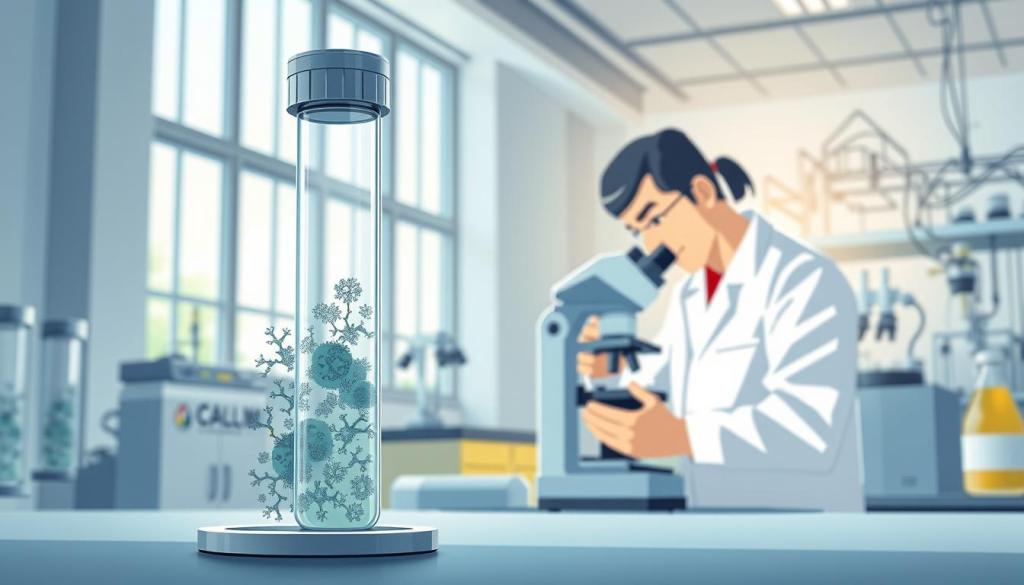
New lab innovations are changing how scientists design experiments. The latest in culture tube tech focuses on a few key areas:
- Enhanced material compositions
- Smart sensor integration
- Improved thermal resistance
- Miniaturized design capabilities
Material Science Breakthroughs
Scientists are making sterile glass tubes with amazing new features. These tubes have:
- Ultra-transparent glass
- Less gas getting through
- Super chemical resistance
- Clearer views
Emerging Laboratory Trends
Test tube cultures are getting better for fast, automated research. Microfluidic platforms allow for complex setups. They can do things like:
- Manage many cells at once
- Control exact amounts
- Watch cells grow in real time
- Change conditions easily
The future of lab research is in smart, adaptable culture tubes that meet complex challenges.
These new tools are changing research in microbiology, biotech, and pharma. They give scientists amazing new ways to explore and discover.
Conclusion: The Importance of Culture Tubes in Research
Culture tubes are key in scientific discovery. They help researchers study the tiny world of microbes. These tools are vital for studying bacteria and cells, driving new discoveries in many fields.
The technology behind culture tubes has grown a lot. Now, they can even monitor things like pH and temperature in real time. This makes them even more important for scientists.
Nowadays, making labs more eco-friendly is a big goal. There are biodegradable culture tubes and devices that use less. This shows scientists care about the planet while still doing great research.
Scientists in many areas use culture tubes for important work. They help in microbiology and biotechnology, among others. As these tools get better, scientists can make even more groundbreaking discoveries.
FAQ
What are culture tubes and why are they important in scientific research?
Culture tubes are key tools in labs for growing and studying tiny living things. They help scientists keep these tiny organisms safe and controlled. This makes it easier to study and understand them.
What materials are typically used to manufacture culture tubes?
Culture tubes are made from two main things: glass and plastic. Glass is good because it doesn’t react with chemicals and can handle high temperatures. Plastic is lighter and cheaper, but it depends on what the scientist needs.
How do I choose the right culture tube for my research?
Choosing the right tube means thinking about your experiment and what you need. Consider the type of microorganism, the growth media, and if you need to control gas or light. Also, think about the tube’s size and material for the best results.
What are the most common sterilization techniques for culture tubes?
There are three main ways to sterilize culture tubes: autoclaving, dry heat, and chemicals. Autoclaving uses steam, dry heat uses high temperatures, and chemicals use disinfectants. The choice depends on the tube and what the scientist needs.
What are specialized culture tubes, and when are they used?
Specialized tubes are for specific studies, like anaerobic or fungal growth. They help scientists create the right environment for their research. For example, anaerobic tubes are for bacteria that don’t like oxygen.
How can researchers prevent contamination in culture tubes?
To avoid contamination, scientists must follow strict rules. They use special hoods, wear protective gear, and sterilize everything. They also handle tubes carefully and keep their work area clean.
What recent innovations have impacted culture tube technology?
New advancements have made culture tubes better. They are clearer, last longer, and let less gas through. There are also smart tubes with sensors for monitoring and working with automated systems.
What are the primary applications of culture tubes in scientific research?
Culture tubes are used a lot in labs for many things. They help keep cultures pure, study growth, and test how bacteria react to antibiotics. They are essential for many kinds of research.
Leo Bios
Hello, I’m Leo Bios. As an assistant lecturer, I teach cellular and
molecular biology to undergraduates at a regional US Midwest university. I started as a research tech in
a biotech startup over a decade ago, working on molecular diagnostic tools. This practical experience
fuels my teaching and writing, keeping me engaged in biology’s evolution.






Leave a Comment
Your email address will not be published. Required fields are marked *