



Ever curious about how scientists unlock the secrets of bacterial growth? Bacterial cell culture is a key area in science. It connects theory with real-world uses in microbial fermentation.
Growing microorganisms in a controlled environment is the heart of bacterial cell culture. Scientists carefully adjust temperature, nutrients, and air to grow specific bacteria. This is for both scientific study and industrial use.
Knowing how to culture bacteria is vital for many scientists. It helps in medical research and biotechnology. These techniques offer deep insights into how microbes work, genetic changes, and new technologies.
Key Takeaways
- Bacterial cell culture requires precise environmental control
- Temperature ranges significantly impact bacterial growth
- Different bacterial strains have unique cultivation requirements
- Sterile techniques are essential for successful microbial fermentation
- Cell culture methods support advanced research and industrial applications
- Proper handling minimizes contamination risks
Introduction to Bacterial Cell Culture
Bacterial cell culture is a key method in today’s science. It lets researchers study how bacteria grow and work in detail. This process helps us learn about microbes and basic biology.
Scientists use this method for many studies. It helps in medical and environmental research. They can see how bacteria grow and what they do.
Definition and Importance
Bacterial cell culture grows bacteria in special food. This helps us:
- Learn about bacterial growth
- Find new medical treatments
- Study how cells work
- Make biotech products
Historical Context
The start of bacterial cell culture was in the late 1800s. Scientists like Louis Pasteur and Robert Koch changed how we see microbes.
“Every great advance in science has issued from a new audacity of imagination.” – John Dewey
Applications in Various Fields
Bacterial cell culture is important in many areas:
| Field | Application |
|---|---|
| Medical Research | Creating vaccines and antibiotics |
| Biotechnology | Making enzymes and industrial products |
| Environmental Science | Studying how microbes interact with the environment |
| Food Industry | Checking food safety and making probiotics |
By studying bacterial growth and cell biology, scientists find new ways to explore and innovate.
Types of Bacterial Cell Culture Methods
Bacterial cell culture techniques are key in bioprocess engineering. They let researchers study and control microbial growth. Different methods offer unique benefits for various research goals and bioreactor designs.
Scientists have created several main ways to grow bacterial populations. Each method has its own features and uses:
Batch Culture: Controlled Growth Cycle
Batch culture is a basic way to grow bacteria. It uses a closed system with fixed nutrients. The main points are:
- Limited nutrient supply
- Finite growth period
- Complete consumption of initial nutrients
- Predictable growth phases
Continuous Culture: Sustained Bacterial Growth
Continuous culture keeps bacteria growing by adding nutrients constantly. It’s great for long-term studies and keeping bacterial populations stable.
- Steady nutrient introduction
- Consistent cell density maintenance
- Advanced bioreactor design requirements
- Ideal for metabolic studies
Stationary Culture: Minimal Movement Approach
Stationary culture grows bacteria with little shaking. It’s good for certain research needs. This method supports unique growth in bioprocess engineering.
- Reduced environmental disruption
- Specialized growth conditions
- Limited nutrient exchange
- Specific research scenarios
Knowing these bacterial cell culture methods helps researchers pick the best approach for their studies. This ensures accurate and reliable results in microbiology.
Essential Equipment for Bacterial Cell Culture
Preparing bacterial growth media and doing industrial biotechnology research need special lab tools. It’s important to pick and keep the right equipment for the best bacterial growth.
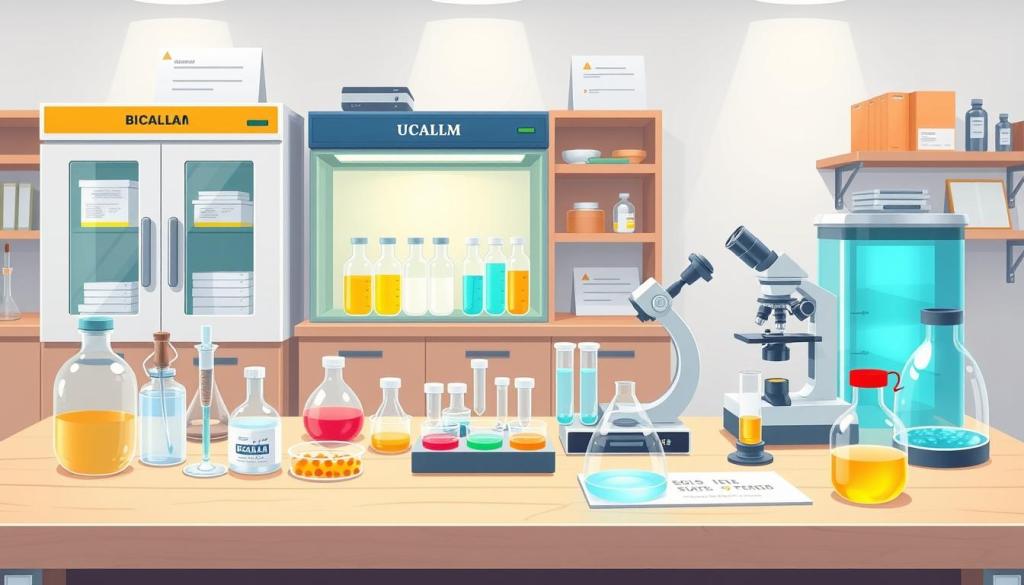
Knowing the key equipment for bacterial cell culture is key. It helps keep things clean and controlled. The right tools are crucial for good research results.
Sterilization Equipment
Autoclaves are vital for killing off bad stuff. They use steam to sterilize tools, media, and containers.
- Eliminate microorganisms through high-temperature steam
- Ensure complete sterilization of research materials
- Prevent cross-contamination in bacterial growth media
Environmental Control Systems
Keeping the environment just right is important for bacterial cell culture. Incubators keep the temperature, humidity, and gas levels perfect for growth.
| Equipment | Key Function | Temperature Range |
|---|---|---|
| Microbiological Incubator | Bacterial growth environment | 25-42°C |
| CO2 Incubator | Controlled atmospheric conditions | 37°C |
| Refrigerated Incubator | Low-temperature cultivation | 4-25°C |
Culture Media Preparation Tools
Special tools help make bacterial growth media for industrial biotechnology. These tools help make sure the culture environment is the same every time.
- pH meters for media composition
- Analytical balances
- Magnetic stirrers
- Sterile filtration systems
Investing in top-notch equipment is key for keeping bacterial cell cultures healthy. Choosing and caring for the right tools is essential for good microbiology research.
Culture Media for Bacterial Growth
Bacterial growth media are key in microbiology research. They provide the nutrients needed to grow and study bacteria. Scientists use special media to support bacteria’s metabolic processes and create the best conditions for growth.
The history of making bacterial growth media is fascinating. Louis Pasteur made the first liquid culture medium in 1860. Robert Koch then created the first solid medium, changing how we study bacteria.
Nutrient Broth: Liquid Culture Foundation
Nutrient broth is a basic liquid medium for growing bacteria. It has:
- Peptone
- Meat extract
- Salt
- Water
Agar Plates: Solid Growth Surface
Agar plates are used for growing bacteria on a solid surface. Agar, from seaweed, is the main ingredient in these plates.
Selective and Differential Media
Special media are used to focus on certain bacteria. They can be made by adding:
- Antibiotics
- Chemical inhibitors
- Specific nutrients
- Growth factors
Precise media composition is crucial for successful bacterial cultivation and research.
| Media Type | Primary Purpose | Key Characteristics |
|---|---|---|
| Nutrient Broth | General bacterial growth | Liquid medium with basic nutrients |
| Agar Plates | Colony isolation | Solid surface for bacterial growth |
| Selective Media | Isolate specific bacteria | Contains inhibitors for unwanted strains |
| Differential Media | Distinguish bacterial species | Reveals unique metabolic characteristics |
Choosing the right bacterial growth media is vital for good microbiology research. It helps us understand complex metabolic pathways.
Aseptic Techniques in Bacterial Cell Culture
Keeping things sterile is key in bacterial cell culture. Aseptic techniques protect against contamination. This is vital for research integrity and results.
Researchers must follow strict protocols to avoid contamination. Here are some important steps for a clean environment:
- Thorough hand washing and disinfection
- Wearing appropriate personal protective equipment (PPE)
- Using sterile tools and consumables
- Working in designated clean areas
Importance of Aseptic Practices
Aseptic techniques are vital in bacterial cell culture. They prevent contamination risks. If microorganisms get in, it can:
- Damage experimental results
- Waste valuable research time
- Lead to financial losses in industrial biotechnology
Common Aseptic Techniques
Researchers use several methods to keep things sterile:
| Technique | Purpose | Key Considerations |
|---|---|---|
| Laminar Flow Hood | Create sterile workspace | Filtered air circulation |
| Alcohol Disinfection | Surface sterilization | 70% ethanol recommended |
| Flame Sterilization | Tool decontamination | Use for metal implements |
Contamination Prevention Strategies
Stopping contamination needs a detailed plan in bacterial cell culture. Consistent practices and meticulous attention to detail are crucial. This keeps the environment sterile in industrial biotechnology research.
Important strategies include reducing movement, using disposable materials, and strict lab protocols. These steps help limit contamination sources.
Monitoring Bacterial Growth and Viability
Tracking bacterial growth is key to understanding how cells work and their metabolic paths. Researchers use advanced methods to study how bacterial populations grow and stay alive. These techniques help scientists learn about how microbes interact with each other.

Methods of Measuring Bacterial Growth
Scientists use many ways to count bacteria and check their health. Some important methods include:
- Direct cell counting
- Biomass determination
- Metabolic activity assays
- Viability staining methods
Optical Density Measurements
Spectrophotometry is a fast way to measure bacterial amounts. It works by seeing how much light is absorbed. The Pearson correlation coefficient between optical density and speckle grain size demonstrates a strong negative relationship (-0.896), showing accurate growth tracking.
Colony Forming Units (CFU)
CFU is a top way to count living bacteria. It counts how many bacteria can grow on solid media. Studies show a strong link (0.838) between pH and CFU, showing how important environment is for growth.
Modern techniques can process bacterial colony images in 11-21 seconds with an average relative error of just 0.2%.
Now, with time-lapse microscopy and fluorescent protein tracking, scientists can watch bacteria grow for hundreds of generations. This gives them deep insights into cell biology and metabolic pathways.
Common Bacterial Strains Used in Culture
Bacterial cell culture is key in molecular biology and biotechnology. Scientists use specific bacteria for many research needs, especially for making proteins. Knowing the traits of these bacteria is vital for good results.
Many bacterial strains are great for science and industry. We’ll look at some top ones used in labs.
Escherichia coli: The Workhorse of Molecular Biology
E. coli is the top pick for bacterial cell culture. Strains like BL21 have changed how we study protein expression. They are known for:
- Being free from certain enzymes
- Being good at making proteins
- Using a T7 system for gene expression
Bacillus subtilis: Industrial Biotechnology Powerhouse
Bacillus subtilis is key in industrial biotech and research. It’s great for:
- Studying how bacteria form spores
- Making industrial enzymes
- Looking into bacterial cell cycles
Staphylococcus aureus: Medical Research Significance
Staphylococcus aureus is vital in medical research. Scientists use it to learn about:
- How bacteria interact with hosts
- How bacteria become resistant to antibiotics
- How bacteria and hosts interact
Each bacterial strain has special abilities for science. They help make big discoveries in cell culture and protein making.
Challenges in Bacterial Cell Culture
Bacterial cell culture is complex and requires careful attention. It’s a key part of microbial fermentation and bioprocess engineering. The growth of bacteria is delicate and depends on many factors.
- Contamination risks from multiple sources
- Nutrient availability and limitations
- Metabolic byproduct accumulation
- Environmental condition management
Contamination Issues in Bacterial Cultures
Contamination is a major problem in bioprocess engineering. It can come from dirty equipment, bad reagents, or mistakes in handling. Mycoplasma contamination, or “crabgrass” of cell cultures, can really mess up cell function and add a lot of uncertainty to research.
Nutrient Limitations and Growth Constraints
Bacteria need the right nutrients to grow well. If nutrients run out, it can stop their growth. It’s up to researchers to make sure the media they use supports good bacterial growth in fermentation.
| Contamination Source | Potential Impact | Prevention Strategy |
|---|---|---|
| Laboratory Equipment | Introduced microbial species | Rigorous sterilization protocols |
| Reagent Impurities | Growth inhibition | High-quality media preparation |
| Personnel Handling | Cross-contamination | Strict aseptic techniques |
Metabolic Byproduct Management
Byproducts from bacterial metabolism can slow down growth and change how cells work. Using techniques like fed-batch and perfusion systems helps manage this. It keeps bacterial cultures stable and productive.
Innovations in Bacterial Cell Culture Techniques
The world of bacterial cell culture is changing fast. New technologies are making big waves in industrial biotechnology. These changes are set to shake up how we do science and make products.

Today’s bioreactors are much more advanced. They let scientists control bacterial growth better than ever before. This means research can be done more efficiently and with better results.
Automation and High-Throughput Methods
New automation in bacterial cell culture is making a big splash. It brings many benefits:
- Less chance of mistakes in lab work
- Better data collection and analysis
- More experiments can be done at once
- Research results are more consistent
Microfluidics Revolution
Microfluidics is changing industrial biotechnology in big ways. It lets scientists work at a tiny scale. This means they can:
- Control tiny environments with great precision
- Study single cells
- Use less resources
- Speed up their research
Advanced Culture Media Innovations
New culture media are key to improving bacterial cell culture. Chemically defined media and special supplements help grow bacteria better. They also help make more products.
The global market for bacterial cell culture is growing fast. This is thanks to new bioreactor designs and research methods. As scientists work together more, we can look forward to even more breakthroughs.
Ethical Considerations in Bacterial Cell Culture
Bacterial cell culture is key in industrial biotechnology. It needs strict ethical rules for responsible research. This mix of science and ethics is complex for researchers to handle.
Scientific groups know how vital it is to keep high ethical standards in bacterial research. They must find a balance between progress and safety for humans and the environment.
Responsibility in Research
Ethical research in bacterial cell culture needs clear guidelines:
- Transparent documentation of research methods
- Rigorous data management protocols
- Adherence to institutional review boards
- Comprehensive risk assessment procedures
“With great scientific power comes great ethical responsibility” – Research Ethics Committee
Biosafety Level Considerations
Biosafety levels protect researchers and environments in bacterial cell culture. They ensure safe handling of dangerous microorganisms.
Environmental Impact
Industrial biotechnology must think about the environment in bacterial cell culture. It should follow responsible practices like:
- Proper disposal of bacterial cultures
- Comprehensive environmental risk assessments
- Minimizing potential genetic contamination
- Developing sustainable research protocols
The Presidential Commission for the Study of Bioethical Issues stresses the need for public involvement and clear science in new biotech areas.
Future Trends in Bacterial Cell Culture
The world of bacterial cell culture is changing fast. New technologies and research methods are leading the way. These changes are making big impacts in biotechnology and medical research.
Scientists are exploring new areas in bacterial cell culture. This includes:
- Synthetic biology for complex genetic engineering
- Advanced metabolic pathway design
- Precision bioprocessing techniques
- Personalized therapeutic applications
Synthetic Biology Applications
Synthetic biology is changing bacterial cell culture. Researchers are creating custom bacterial strains. These strains can make complex proteins more efficiently, saving money and increasing production.
Personalized Medicine Contributions
Bacterial cell culture is key in making targeted medical treatments. Customized bacterial strains help solve specific health problems. They are used in creating personalized treatments, especially in antibiotic production and precision medicine.
Enhanced Biomanufacturing Techniques
Artificial intelligence and advanced tools are improving biomanufacturing. Scientists can now better control bacterial growth and predict metabolic behaviors. This makes antibiotic production more accurate.
These trends show the exciting future of bacterial cell culture. They promise to solve complex scientific and medical challenges, leading to breakthroughs in the years to come.
Conclusion: The Future of Bacterial Cell Culture
The world of bacterial cell culture is changing fast. Microbial fermentation is leading to big steps in science and biotech. Scientists are working hard to solve big problems in cell culture, like keeping cultures clean and making them more efficient.
Bioprocess engineering is key to controlling bacterial growth better. New methods like droplet transfer are showing great promise. They help study bacteria one cell at a time. Scientists are also working on ways to catch contamination early, using tools like PCR and ELISA.
Key Insights for Future Research
The future of bacterial cell culture needs teams working together. They should mix microbiology with new tech. By learning more about bacterial growth, especially in tough places, scientists can make big strides in medicine, biotech, and the environment.
Research Call to Action
It’s time for scientists to focus on better bacterial cell culture methods. They should look into new ways to keep cultures safe and efficient. This includes finding better ways to detect contamination and create media that supports all kinds of bacteria. The way forward is through teamwork, new tech, and a deeper understanding of bacteria.
FAQ
What is bacterial cell culture?
Bacterial cell culture is a key method in microbiology. It grows and keeps bacterial cells in a lab setting. This method is vital for studying bacteria, doing research, and making biotechnologies like proteins and antibiotics.
What are the primary methods of bacterial cell culture?
There are three main ways to culture bacteria. Batch culture grows bacteria in a fixed media volume. Continuous culture keeps the growth environment steady by adding new media. Stationary culture has little nutrient exchange and slow growth.
What equipment is essential for bacterial cell culture?
You need autoclaves for sterilizing, incubators for the right temperature, and biosafety cabinets for cleanliness. Also, spectrophotometers for growth checks, pipettes, and sterile containers are key. Sterilization and control are crucial for success.
How do I prevent contamination in bacterial cell cultures?
To avoid contamination, follow strict aseptic practices. Wash hands well, wear protective gear, and work in a biosafety cabinet. Use sterile materials and keep work areas clean. Handling cultures carefully is also important.
What are some common bacterial strains used in laboratory cultures?
Escherichia coli is often used for protein production. Bacillus subtilis is key for studying sporulation and biotechnology. Staphylococcus aureus is important in medical research. Each strain has its own needs and uses.
How can I measure bacterial growth?
You can count cells directly, use spectrophotometry, or the CFU method. These methods help track bacterial numbers and growth. They show how well bacteria are doing.
What are the common challenges in bacterial cell culture?
Challenges include contamination, limited nutrients, and metabolic byproducts. To overcome these, use special media and monitor conditions closely. This helps maintain healthy growth.
What are emerging trends in bacterial cell culture?
Trends include automation, high-throughput methods, and microfluidics. There’s also a focus on defined media and advanced bioreactors. These advancements boost efficiency and open new research and industrial possibilities.
What ethical considerations are important in bacterial cell culture?
Ethics include responsible research, following guidelines, and considering environmental impact. It’s important to be aware of the potential risks of working with bacteria, especially genetically modified ones.
How is bacterial cell culture contributing to future medical technologies?
It’s driving progress in personalized medicine, synthetic biology, and biomanufacturing. It’s helping create custom bacterial strains for diagnostics and engineered pathways for protein production. It’s also improving bioprocessing techniques.





Leave a Comment
Your email address will not be published. Required fields are marked *