


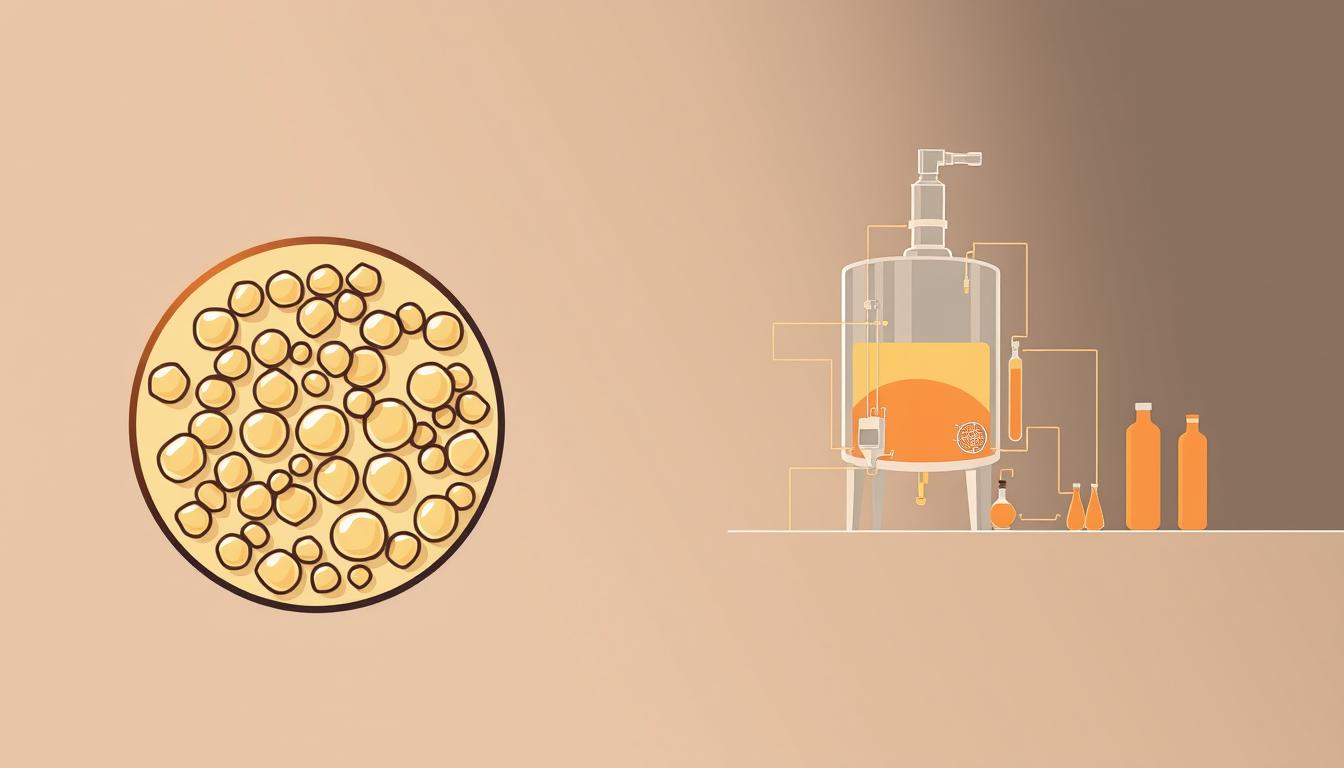
Ever thought about how ancient cultures made simple foods last for months? The secret lies in fermentation. It turns basic ingredients into tasty, long-lasting foods through a special microbial process.
Fermentation is a cool metabolic process. Microorganisms break down big organic compounds into simpler ones. For centuries, it’s helped preserve foods like fruits, veggies, milk, and grains. It also adds unique flavors and boosts nutrition.
So, what is fermentation really? It’s a natural way to keep food fresh. Microscopic life forms turn carbs into alcohol or acids under the right conditions. The perfect temperature for many fermentations is between 68-72°F.
Key Takeaways
- Fermentation is a metabolic process dating back at least 10,000 years
- Microorganisms like bacteria and yeasts are essential to fermentation
- The process transforms food, enhancing flavor and nutritional value
- Ideal fermentation temperatures range from 50-72°F
- Fermentation occurs naturally without oxygen
Definition of Fermentation Process
Fermentation is a fascinating metabolic process that has changed human food production for thousands of years. It involves microorganisms breaking down complex substances into simpler compounds without oxygen. Scientists found that over 25% of bacteria and archaea use fermentation as a key survival method.
The core of fermentation is its ability to convert nutrients without needing oxygen. At its most fundamental level, fermentation is a metabolic process where organisms generate energy through chemical transformations.
Basic Explanation of Fermentation
Fermentation happens when microorganisms change sugars and other compounds into different substances. This process yields fascinating results:
- Produces 2-4.5 ATP per glucose molecule
- Generates over 50 different metabolic end products
- Uses 46 chemically-defined substrates
Historical Context of Fermentation
“Fermentation has been a cornerstone of human civilization for approximately 13,000 years.” – Scientific Fermentation Research
Key historical milestones include:
- 1826: First ethanol production from corn
- 1850s: Scientific understanding of fermentation mechanisms
- 1897: Eduard Buechner extracts fermentation-capable fluid from yeast
Importance in Food Production
Fermentation transforms raw ingredients into diverse food products. It plays a crucial role in creating beloved foods like:
- Yogurt
- Cheese
- Bread
- Beer
- Pickles
Beyond taste, fermentation enhances nutritional value. It increases vitamin levels and neutralizes anti-nutrients. This makes foods more digestible and nutritionally rich.
Key Microorganisms Involved in Fermentation
Fermentation is a complex process driven by amazing microorganisms. They turn raw ingredients into different products. These tiny creatures are key in making flavors, preserving food, and starting important chemical reactions.
The world of fermentation microorganisms is very diverse. Each type has its own special abilities in the transformation process.
Role of Fermentation Yeasts
Fermentation yeast is a main player in many biochemical processes. These single-celled organisms are crucial in making alcohol. They turn sugars into ethanol through special enzymatic reactions.
- Produce ethanol in beer and wine production
- Facilitate bread rising through carbon dioxide generation
- Enable complex flavor development in fermented products
Types of Fermentation Bacteria
Fermentation bacteria are another important group of microorganisms. Lactic acid bacteria, for example, are key in making many fermented foods and drinks.
- Lactobacillus species convert pyruvate into lactic acid
- Crucial in producing yogurt, kimchi, and other cultured products
- Contribute to probiotic development
Other Microbial Contributors
There are also other microorganisms involved in fermentation. Acetobacter bacteria are important in making acetic acid. Some fungal species add to the unique outcomes of fermentation.
Microbial fermentation has been a human practice for over 10,000 years, transforming food preservation and production.
The world of fermentation microorganisms is fascinating. It continues to intrigue scientists and food producers. It offers endless possibilities for innovation and discovery.
Types of Fermentation Processes
Fermentation changes carbohydrates into acids and alcohols through microbes. It creates different products for various industries.
Microorganisms are key in fermentation. They turn sugars and starches into valuable compounds. Knowing about different fermentation types helps in improving food production.
Alcoholic Fermentation
Alcoholic fermentation uses yeasts to make ethanol and carbon dioxide from sugars. It’s used to make drinks like wine and beer. These drinks can have up to 15% alcohol before the yeast stops working.
- Primary microorganism: Saccharomyces cerevisiae
- Typical alcohol yield: 12-15%
- Common products: Beer, wine, spirits
Lactic Acid Fermentation
Lactic acid fermentation turns sugars into lactic acid with bacteria. It’s important for making foods that are good for your gut.
- Key microorganisms: Lactobacillus species
- Primary products: Yogurt, kimchi, sauerkraut
- Nutritional benefits: Enhanced vitamin availability
Acetic Acid and Mixed Fermentation
Acetic acid fermentation makes vinegar from alcohol. Mixed fermentation mixes different microbes to create unique flavors in foods and drinks.
| Fermentation Type | Primary Microorganism | Key Products |
|---|---|---|
| Alcoholic | Saccharomyces cerevisiae | Wine, Beer |
| Lactic Acid | Lactobacillus | Yogurt, Kimchi |
| Acetic Acid | Acetobacter | Vinegar |
Fermentation is not just a process, but an art that transforms simple ingredients into complex, flavorful products.
Science Behind the Fermentation Process
Fermentation is a cool biochemical change that has changed how we make food and our understanding of science. It’s all about microorganisms turning sugars into different products through complex ways.
The science of fermentation is all about how tiny organisms make energy without using oxygen. This is key for making many different products in many fields.
Biochemical Pathways of Fermentation
The fermentation process has several important steps:
- Glycolysis: Breaking down glucose into pyruvate
- Turning pyruvate into specific products
- Making energy with ATP
- Recharging NAD+ for more work
Energy Production Mechanisms
Microorganisms make energy without oxygen in fermentation. Saccharomyces cerevisiae, a common yeast, turns glucose into ethanol and gets a bit of energy.
“Fermentation transforms simple sugars into complex, valuable products through remarkable microbialalchemy.” – Microbiology Research Journal
Critical Factors Influencing Fermentation
Many things affect how well fermentation works:
| Factor | Impact on Fermentation |
|---|---|
| Temperature | Changes how microbes work and how fast they go |
| pH Level | Affects how enzymes work and if microbes can survive |
| Oxygen Concentration | Changes what microbes make and how |
| Nutrient Availability | Helps microbes grow and make products |
Knowing these details helps experts make fermentation better for food and medicine.
Applications of Fermentation
Fermentation is a versatile process with many uses. It helps make tasty foods and important scientific discoveries. This ancient method is still changing our world today.
Fermentation is used in many important areas. Each area uses special microbiological processes to make valuable products and solutions.
Fermentation in Food and Beverage Production
Fermentation turns simple ingredients into amazing foods. Examples include:
- Cheese production
- Wine and beer brewing
- Bread making
- Yogurt and kefir creation
“Fermentation is not just a process, but an art that transforms simple ingredients into complex flavors and nutritional powerhouses.”
Pharmaceutical Applications
The pharmaceutical industry uses fermentation a lot. It helps make important medical compounds. Key products include:
- Antibiotics
- Insulin
- Vaccines
- Growth hormones
Biofuel Production
Fermentation is key for green energy. It helps make new biofuels. Examples include:
- Bioethanol
- Biodiesel
- Biohydrogen
- Butanol
| Industry | Fermentation Products | Key Benefits |
|---|---|---|
| Food | Cheese, Wine, Bread | Enhanced Flavor, Preservation |
| Pharmaceuticals | Antibiotics, Insulin | Medical Treatments |
| Energy | Bioethanol, Biodiesel | Sustainable Fuel Sources |
Fermentation is a powerful process. It drives innovation in many fields.
Benefits of Fermentation
Fermentation is a powerful way to change food for better health. It uses microbes to make foods more nutritious. This can greatly improve our well-being.
Fermentation products offer many health benefits. They improve nutrition and wellness in many ways. Knowing these benefits helps us choose better foods.
Nutritional Enhancements
Fermentation makes nutrients easier for our bodies to use. It breaks down hard-to-digest compounds. This leads to:
- Improved mineral absorption
- Less anti-nutrients like phytic acid
- More vitamins and minerals available
Probiotics and Gut Health
Fermented foods are full of good bacteria. They help our digestive system a lot. Studies show they can even fix our gut microbiome:
- They help with bloating and constipation
- Boost our immune system
- May lower inflammation
Preservation of Food
Fermentation is also great for keeping food fresh. It’s a natural way to make food last longer. This keeps the nutrients in the food.
“Fermentation transforms ordinary foods into nutritional powerhouses through microbial magic.”
| Fermented Food | Key Health Benefit |
|---|---|
| Yogurt | Improves digestive health |
| Kimchi | Reduces inflammation |
| Kefir | Enhances immune function |
| Kombucha | Supports gut microbiome |
Adding fermented foods to our diet can greatly improve our health. It uses natural, ancient methods to do so.
Fermentation Techniques and Methods
Fermentation is a cool process that changes raw ingredients into something new. It uses microbes. Over time, we’ve gone from old ways to new, high-tech methods. This shows how versatile fermentation microbiology is.
Looking into fermentation examples, we see a world of food and science. We have old traditions and new tech. It’s all about how we make food better.
Traditional Fermentation Techniques
For centuries, people have used traditional fermentation. These methods include:
- Natural salt-based preservation
- Wild yeast cultivation
- Ambient temperature fermentation
- Hand-crafted starter cultures
“Fermentation is an art passed through generations, preserving food and creating unique flavors.”
Modern Industrial Fermentation
Industrial fermentation has changed how we make food. It uses advanced tech. The main features are:
- Controlled environment fermentation
- Precise microbial strain selection
- Temperature and pH monitoring
- Large-scale production capabilities
Fermentation in Home Cooking
More people are trying fermentation at home. They’re into fermentation microbiology. Making yogurt, pickles, and sourdough bread is easy to start with.
With basic tools, you can learn to ferment. It’s a way to connect with old traditions. Plus, you get to make tasty, healthy foods.
Common Fermented Foods and Beverages
Fermentation turns simple ingredients into amazing foods and drinks. These examples show how microbes can make unique products. They delight our taste and help our health.

Fermented foods have been around for thousands of years. They are full of different microbes. Studies find that fermented foods have at least 10^6 microbes per gram.
Bread and Beer: Ancient Fermentation Classics
Sourdough bread is a great example of fermentation. The process:
- Reduces carbs that can upset digestion (FODMAPs)
- Makes digestion easier
- Boosts nutritional value
Yogurt and Kefir: Probiotic Powerhouses
Kefir is a standout in fermentation research. It has many good microbes. Studies have looked at its health benefits.
Sauerkraut and Kimchi: Fermented Vegetable Delights
These veggies are tasty and might be good for you. Fermentation makes them full of:
- Organic acids
- Ethanol
- Bacteriocins
Fermentation turns food into something special. It adds complex flavors and health perks through microbial magic.
Global Fermentation Insights
| Fermented Food | Origin | Key Microorganisms |
|---|---|---|
| Kefir | Caucasus Region | Lactobacillus kefiri, Lactococcus lactis |
| Sauerkraut | China | Lactic acid bacteria |
| Tempeh | Indonesia | Rhizopus oligosporus |
5% to 40% of our food is fermented. These foods and drinks are key to global nutrition and health.
Conclusion and Future of Fermentation
The fermentation process is key for global food, health, and sustainability. It shows promise in solving many challenges in nutrition and the environment. It also helps in industrial growth.
Genomics and metagenomics have changed how we see fermentation. They help pick and improve microbes. This leads to better food and new health products.
Sustainable practices are now a big part of fermentation. It uses less waste and energy. This makes it important for reducing greenhouse gases and helping the planet.
Looking ahead, fermentation will change many industries. It’s not just for food anymore. It’s also for medicine and more. Fermentation is a big help for our health and the planet.
FAQ
What exactly is the fermentation process?
Fermentation is when tiny living things break down big molecules into smaller ones. They do this without using oxygen. This process makes energy, acids, gases, or alcohol.
It changes sugars into alcohol, acids, or gases. This happens through the work of yeasts, bacteria, or other tiny organisms.
How does fermentation differ from regular metabolism?
Fermentation happens without oxygen, unlike regular breathing. It breaks down glucose to make energy, but less than breathing does. This way, organisms can still get energy when there’s no oxygen.
What are the most common types of fermentation?
There are two main types: alcoholic and lactic acid fermentation. Alcoholic fermentation makes ethanol and carbon dioxide. It’s used in making bread and alcohol.
Lactic acid fermentation creates lactic acid. It’s key for making yogurt, cheese, and preserving foods like pickles and sauerkraut.
Which microorganisms are typically involved in fermentation?
Yeasts and bacteria are the main players in fermentation. Saccharomyces cerevisiae (baker’s yeast) is key for making alcohol. Lactic acid bacteria, like Lactobacillus, are important for fermented dairy and veggies.
What industries rely most heavily on fermentation?
Fermentation is vital in many fields. It’s used in food and drink, medicine, biofuels, and biotech. It helps make bread, beer, wine, cheese, yogurt, medicines, and green energy.
What health benefits are associated with fermented foods?
Fermented foods are good for your health. They improve digestion, help absorb nutrients better, and boost probiotics. They might also support your immune system.
They help balance your gut, reduce inflammation, and offer enzymes and nutrients.
How does temperature affect the fermentation process?
Temperature is very important in fermentation. Each microorganism works best at a certain temperature. Too cold slows it down, and too hot can kill it.
Most fermentation happens between 20-40 degrees Celsius. This depends on the microbes and what you’re making.
Can individuals practice fermentation at home?
Yes, you can! Home fermentation is getting more popular. People make kombucha, sourdough, pickles, sauerkraut, and yogurt at home.
To do this, you need basic tools, know about keeping things clean, and be patient. Letting microbes work their magic takes time.






Leave a Comment
Your email address will not be published. Required fields are marked *