



Ever wondered how scientists move tiny amounts of liquid with great care? Serological pipettes are key in labs for this task. They are vital for today’s research.
Serological pipettes are tools for precise liquid measurement and transfer. They help scientists work with tiny amounts of liquid, from less than 1 milliliter to 50 milliliters. This is done with high accuracy.
These pipettes are more accurate than regular ones. They can measure within ±1% of the total volume. This makes them essential for tasks like cell culture, chemical analysis, and making reagents.
Lab experts use these tools for reliable liquid handling. They come in disposable plastic and reusable glass. This makes them flexible for different research needs.
Key Takeaways
- Serological pipettes measure liquid volumes from 1 mL to 50 mL
- Accuracy within ±1% of total volume
- Used in multiple laboratory applications
- Available in disposable and reusable formats
- Critical for precise scientific research
Introduction to Serological Pipettes
Scientific labs need precise tools for handling liquids. Serological pipettes are key for accurate research and experiments. They are vital for moving liquids with great precision in many scientific fields.
So, what are serological pipettes? They are special lab tools for transferring and measuring liquids with high accuracy. Unlike regular pipettes, serological pipettes have unique features that make them essential in science.
Key Characteristics of Serological Pipettes
Serological pipettes are used in many research areas. They have special traits that make them stand out:
- Can transfer liquid volumes from 0.1 to 50 milliliters
- Available in both glass and plastic configurations
- Offer graduated markings for precise measurement
- Come in sterile and non-sterile options
Importance in Laboratory Settings
These tools are vital in many scientific tasks, including:
- Cell culture research
- Reagent preparation
- Sample dilution
- Microbial studies
Labs choose serological pipettes based on their needs. Precision and preventing contamination are key when picking between glass and plastic.
Types of Serological Pipettes
Serological pipettes are key tools in labs, coming in many types to fit different research needs. Knowing about these types helps scientists pick the best one for their work.
Graduated vs. Non-Graduated Pipettes
Labs use two main types of serological pipettes based on how they measure:
- Graduated Pipettes: Have lines for exact volume readings
- Non-Graduated Pipettes: Smooth inside, no lines for clean liquid transfer
Sterile vs. Non-Sterile Options
Scientists can pick between sterile and non-sterile pipettes for their experiments:
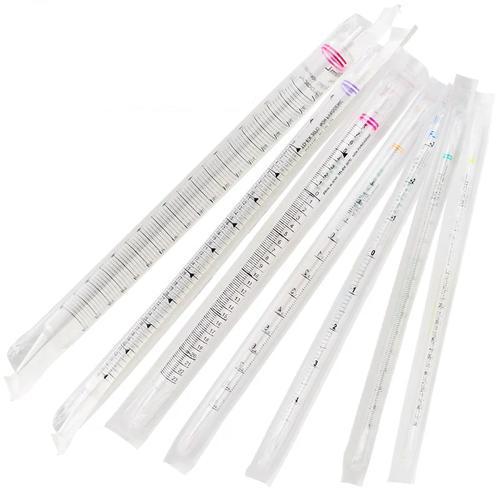
- Sterile pipettes are sterilized with gamma-rays
- Wrapped individually to keep them clean
- Best for delicate tasks like cell culture
| Pipette Type | Volume Range | Sterilization | Typical Use |
|---|---|---|---|
| Bacterial Pipettes | 1-10 mL | Gamma-ray | Microbiology research |
| Open-End Pipettes | 1-50 mL | Optional | High-viscosity liquid transfer |
| Droppers | Variable | Disposable | Pure liquid transfer |
Choosing the right serological pipettes is key for accuracy and fewer mistakes in experiments.
Material Composition of Serological Pipettes
Serological pipette makers pick materials carefully for the best lab performance. They use glass and plastic, each with special traits for science.
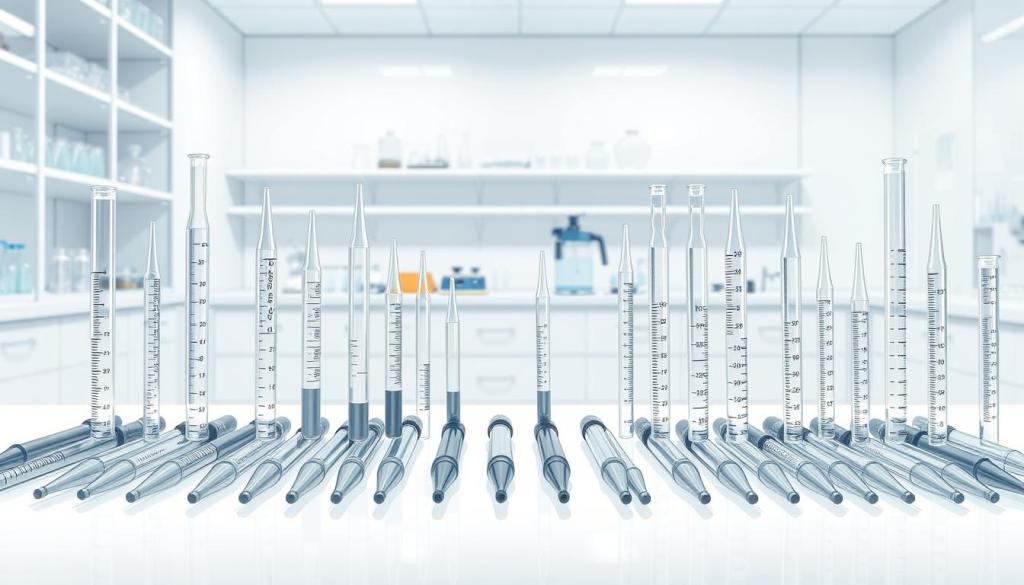
Polystyrene: The Primary Plastic Material
Today’s serological pipettes are mostly made from polystyrene. This material is loved for its many benefits. It’s clear, resistant to chemicals, light, and affordable.
- Optically clear transparency
- Chemical resistance
- Lightweight design
- Cost-effective production
Detailed Material Characteristics
Manufacturers focus on precise specs for their pipettes:
| Material Property | Polystyrene Specification |
|---|---|
| Composition | USP Class VI polystyrene |
| Sterilization Method | Gamma irradiation |
| Purity Standard | RNase/DNase free, non-pyrogenic |
| Disposability | Single-use |
Glass Serological Pipettes: A Traditional Alternative
Even though plastic is common, glass pipettes still have their place. Glass pipettes offer unique benefits like better heat handling and certain chemical tests.
Manufacturers keep improving, making materials for advanced labs. The choice between glass and plastic depends on the research, protocols, and budget.
Uses of Serological Pipettes in the Laboratory
Serological pipettes are key in scientific research. They offer precision and reliability in many lab tasks. These tools are vital for accurately transferring and measuring liquids.
Labs depend on serological pipettes for many important tasks. About 75% of labs use them a lot in cell culture. This shows how crucial they are in science.
Cell Culture Applications
In cell culture, serological pipettes are essential. Scientists use them for:
- Transferring cell suspensions
- Preparing nutrient media
- Managing delicate cell populations
- Maintaining sterile conditions
Their accuracy of ±1% lets researchers work with cells confidently. This means they can handle cells with little to no error.
Volume Transfer in Assays
Serological pipettes are also used for precise volume transfer in assays. Most labs choose them for their exceptional measurement capabilities. They can handle volumes from 1 mL to 50 mL, meeting many research needs.
Interestingly, 90% of lab technicians say these pipettes lower contamination risks. Their graduated markings and controlled handling make them essential in microbiology, pharmaceutical, and biotechnology.
How to Properly Use Serological Pipettes
Learning how to use serological pipettes is key for precise lab work. These tools are essential in science, needing careful use for reliable results.
Researchers must follow certain steps when using serological pipettes. This ensures the integrity of their experiments. Knowing the right technique boosts the accuracy of liquid transfers and research outcomes.
Step-by-Step Pipette Handling Guide
- Check the serological pipette for damage or contamination
- Choose the right pipette size for your needs
- Use a pipet-aid or pipette controller for precise handling
- Hold the pipette straight up when taking liquid
- Read the volume at the bottom of the meniscus for accurate measurement
Best Practices for Accurate Measurement
Here are some key tips for using serological pipettes:
- Always use disposable tips for sterility
- Calibrate pipettes yearly for accuracy within ± 5%
- Handle pipettes only above graduation marks
- Avoid touching the pipette tip to prevent contamination
Understanding volume ranges is part of the technique. Serological pipettes can handle volumes from 0.1 ml to 25 ml. Common sizes are 5 ml, 10 ml, and 25 ml. The smallest marked increment affects accuracy, usually 0.1 ml for smaller pipettes.
Precision in serological pipette techniques separates exceptional scientific work from ordinary laboratory practices.
Maintenance and Care for Serological Pipettes
Keeping serological pipette tips in good shape is key for accurate lab results. Lab experts need a solid plan to care for these vital tools.
Good upkeep includes several important steps. These steps help keep serological pipettes working right and avoid mistakes in experiments.
Cleaning Procedures for Serological Pipettes
Here’s how to keep serological pipette tips clean:
- Use the right cleaning solutions for the pipette material
- Rinse well with distilled or deionized water
- Let them dry completely before putting them away
- Check for any damage or dirt
Proper Storage Techniques
Storing them right helps keep serological pipette tips accurate:
- Store them upright in special stands
- Avoid direct sunlight and extreme temperatures
- Keep them dust-free and away from contaminants
- Keep the environment temperature steady
| Maintenance Activity | Recommended Frequency |
|---|---|
| Visual Inspection | Before and after each use |
| Comprehensive Cleaning | Weekly |
| Calibration Check | Every 3-6 months |
Professional labs know that regular care of serological pipette tips is crucial. It ensures precise and reliable results in experiments.
Understanding the Calibration of Serological Pipettes
Serological pipette calibration is key to accurate lab work. It ensures that liquid handling is precise. This is vital for the integrity of scientific research and results.
Laboratory experts know that serological pipettes need regular upkeep. The Clinical and Laboratory Standards Institute suggests calibrating them every 3-6 months. This helps avoid errors in volume measurement.
Why Calibration Matters
Accurate calibration of serological pipettes is crucial for several reasons:
- Ensures consistent liquid transfer volumes
- Prevents experimental data contamination
- Maintains scientific research integrity
- Meets regulatory laboratory standards
Calibration Procedure
The calibration process for serological pipettes involves several steps:
- Clean the pipette thoroughly
- Check for any physical damage
- Weigh dispensed water at specific temperatures
- Compare measured volumes against standard specifications
- Document and record calibration results
Environmental factors like temperature and atmospheric pressure can greatly affect pipette performance during calibration. Labs must control these conditions for accurate measurements.
Professional labs use special equipment to check the accuracy of serological pipettes. They make sure each instrument meets strict scientific standards for volume dispensing and transfer.
Safety Considerations When Using Serological Pipettes
Laboratory safety is crucial in scientific research, especially with serological pipettes. It’s important to take protective steps to keep both people and the environment safe during liquid handling.
Having good safety protocols in place helps avoid risks in the lab. Here are key tips for a safe work area when using serological pipettes.
Personal Protective Equipment Requirements
Wearing the right personal protective equipment (PPE) is key for serological pipette work. Lab workers should always have:
- Disposable latex or nitrile gloves
- Lab coat or protective apron
- Safety glasses or face shield
- Closed-toe shoes
Handling Hazardous Materials Safely
Working with dangerous substances needs extra care. Serological pipette techniques require careful handling to prevent contamination and manage materials safely.
| Material Type | Handling Procedure | Disposal Method |
|---|---|---|
| Non-Contaminated Pipettes | Standard waste collection | Regular laboratory waste |
| Biohazardous Materials | Use designated biohazard containers | Autoclave and specialized waste removal |
| Chemical Contaminants | Neutralize before disposal | Chemical waste management protocol |
Lab protocols for serological pipette techniques should focus on safety. They should aim to reduce contamination risks and protect workers from hazards.
Statistics show the importance of safe handling. Improper pipette use can raise error rates by 10-15% in liquid transfers. By sticking to strict safety rules, researchers can lower risks and keep a safe work environment.
Common Mistakes in Using Serological Pipettes
Laboratory experts must grasp the importance of serological pipette accuracy. This is to avoid mistakes in experiments. Accurate measurements are key to keeping research trustworthy and results reliable.
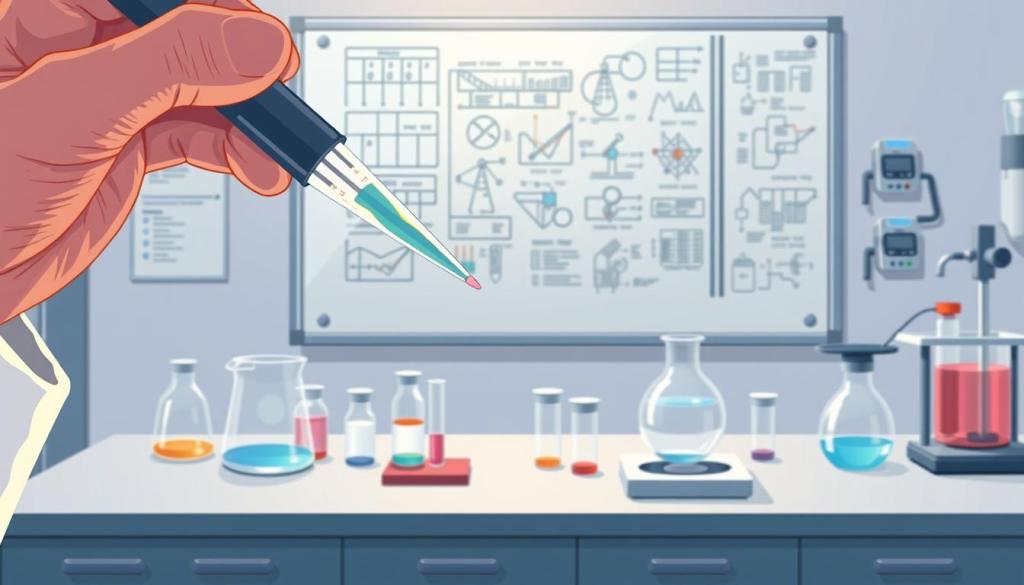
Researchers often make mistakes that affect serological pipette accuracy:
- Overfilling liquid beyond the pipette’s calibrated volume range
- Underfilling which results in incomplete sample transfer
- Misreading graduated markings on the pipette
- Introducing air bubbles during liquid aspiration
Risks of Overfilling and Underfilling
Using a 10 mL serological pipette for 1 mL of liquid can cause big measurement errors. Precision requires matching the pipette size to the specific volume needed. Overfilling can lead to contamination, while underfilling might mean not getting the whole sample.
Measurement Misreading Challenges
Reading pipette graduations accurately needs focus. Factors that affect precision include:
- Eye-level alignment with pipette markings
- Proper lighting conditions
- Understanding meniscus positioning
- Consistent pipetting technique
To avoid these issues, lab professionals should:
- Regularly calibrate equipment
- Practice consistent techniques
- Keep equipment in top shape
Advantages of Using Serological Pipettes
Serological pipettes are key in labs, offering unmatched precision and flexibility. Their design is crucial for scientists needing accurate liquid handling.
So, what are serological pipettes and why do scientists love them? These tools bring big benefits to many research areas:
- Exceptional volume dispensing capabilities ranging from 1 mL to 50 mL
- Less than 2% inaccuracy at full volume
- Color-coded graduations meeting ASTM E1380 standards
- Precise liquid handling for critical scientific procedures
Versatility in Volume Dispensing
Serological pipettes are used in many lab settings. They come in various sizes, like 1 mL, 2 mL, 5 mL, 10 mL, and 25 mL. Their design makes filling and emptying faster than old methods.
Enhanced Precision in Experiments
Scientists love serological pipettes for their high precision. Made to ISO standards, these pipettes have:
- Clear black graduations preventing measurement ambiguity
- Aerosol barrier filters reducing over-pipetting risks
- Non-pyrogenic and sterile characteristics
- Calibration to exacting “to deliver” (TD) standards
These features help scientists do experiments with confidence. They reduce errors and make data more reliable.
Conclusion
Knowing what serological pipettes are is key for lab experts. These tools are vital in many fields, like molecular biology and clinical tests. They help move exact amounts of liquid, which is crucial in labs.
Serological pipettes are more than just tools. They show the importance of accuracy in science. Their design, like color-coded tips and sterilization, helps researchers. They are used for cell studies, chemical tests, and teaching.
Key Performance Insights
Serological pipettes are designed for precision. They come in sizes from 1 mL to 50 mL, fitting many needs. Being used once helps avoid contamination. Their clear, safe material makes it easy to see when moving liquids.
Future Laboratory Practices
As science grows, so will serological pipettes. Lab workers need to use them right, keep them calibrated, and follow safety rules. Knowing how to use these tools well helps scientists get better results.
FAQ
What exactly are serological pipettes?
Serological pipettes are precise tools for moving liquids in labs. They are long and have marks for measuring. This makes them great for accurate and clean liquid transfers.
What are the main types of serological pipettes?
There are many types of serological pipettes. You can find graduated and non-graduated ones. They also come in sterile and non-sterile versions. Materials like glass and plastic are used, and they hold from 1 mL to 50 mL.
How do serological pipettes differ from standard micropipettes?
Serological pipettes are longer and have marks all the way down. They’re made for moving more liquid than micropipettes. They’re key in cell culture and medical research for handling big volumes.
What materials are serological pipettes typically made from?
They’re usually made from glass or plastic. Glass ones are good for chemicals and are clear. Plastic ones are lighter, cheaper, and often used once.
How do I ensure accurate measurements with serological pipettes?
For accurate measurements, hold the pipette straight and avoid air bubbles. Use the right pipette for the job and calibrate it often. Proper storage is also key.
What safety precautions should be taken when using serological pipettes?
Wear gloves and safety glasses and work in a well-ventilated area. Follow safe handling practices. Training in pipetting is also important to avoid contamination.
How often should serological pipettes be calibrated?
Labs usually calibrate them once or twice a year. This depends on how often they’re used and the manufacturer’s advice. Things like temperature and pressure can affect accuracy.
Can serological pipettes be reused?
Some glass ones can be cleaned and used again. But many labs prefer disposable plastic ones to avoid contamination. Reusable ones need careful cleaning and sterilization to stay accurate.
What are the most common applications of serological pipettes?
They’re used in cell culture, microbiology, and medical research. They’re also used in biochemistry and clinical diagnostics. They’re crucial for precise liquid handling in many fields.
How do I choose the right serological pipette for my experiment?
Choose based on the volume you need, the liquid’s viscosity, and your experiment’s needs. Consider the material, sterility, and graduation marks. Make sure it fits your research.





Leave a Comment
Your email address will not be published. Required fields are marked *