


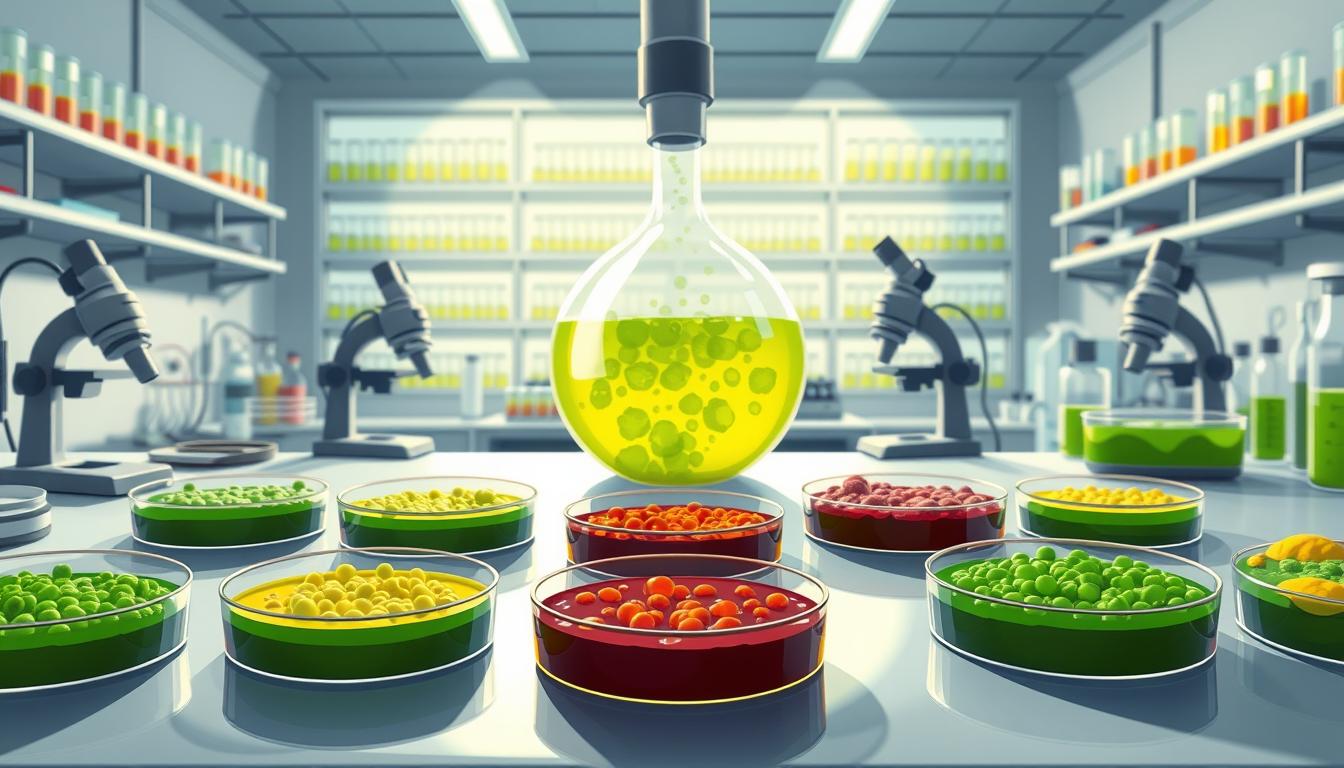
Have you ever wondered how tiny microorganisms can thrive in tough environments? What do bacteria need to survive and multiply in places that are hard for most living things?
Bacterial growth is a complex process that depends on many environmental factors. These tiny organisms can adapt to a wide range of conditions, from freezing cold to very hot. Understanding what bacteria need to survive shows their amazing resilience and biological complexity.
Bacteria need specific conditions to grow and survive. These include the right temperature, nutrients, water, and pH levels. Each type of bacteria has its own needs for survival and reproduction. Scientists are still learning about these complex mechanisms that let bacteria thrive in different ecosystems.
Key Takeaways
- Bacteria require specific environmental conditions to grow and survive
- Temperature, nutrients, and water are critical for bacterial reproduction
- Different bacterial species have unique growth requirements
- Bacterial adaptability allows them to survive in extreme environments
- Understanding bacterial needs is crucial for multiple scientific disciplines
Understanding Bacteria: A Brief Overview
Bacteria are tiny living things that are all around us. They play big roles in our world and in our bodies. These tiny cells are key to the health of our planet.
Bacteria are tiny, single-celled beings without a nucleus. They are incredibly small but very complex. They have been on Earth for billions of years. They can live in extreme places, like hot springs and icy Antarctica.
Definition of Bacteria
Bacteria are tiny, single-celled beings without a nucleus. They are very small, from 0.2 to 10 micrometers. They live almost everywhere on Earth. Humans have about 10 times more bacterial cells than human cells.
Types of Bacteria
Bacteria come in many types based on their looks and how they live:
- Shape: Cocci (spherical), Bacilli (rod-shaped), Spirochetes (spiral)
- Oxygen needs: Aerobes, Anaerobes, Facultative organisms
- Staining: Gram-positive and Gram-negative
Importance in Ecosystems
Bacteria are vital to our planet. They help break down nutrients, decompose, and live in harmony with other life forms. Some bacteria can even clean up pollutants, like the Ideonella sakaiensis bacteria that breaks down plastic.
“Bacteria are not merely microscopic entities, but essential architects of life’s complex systems.” – Environmental Microbiologist
| Bacterial Characteristic | Description |
|---|---|
| Reproduction Method | Binary Fission |
| Average Size | 0.2 to 10 micrometers |
| Global Prevalence | Found in virtually every ecosystem |
Essential Nutrients for Bacterial Growth
Bacteria need a mix of nutrients to live and grow. Knowing what they need helps us understand how they survive in different places.
Bacteria need certain nutrients to work right and grow. These nutrients fall into two main groups:
Macronutrients: The Building Blocks
Macronutrients are key for bacteria and are needed in big amounts. They include:
- Carbon: The most common element in bacteria
- Nitrogen: Key for making proteins and DNA
- Phosphorus: Important for energy and cell functions
- Oxygen: Needed for many chemical reactions
- Hydrogen: Helps with energy and keeping the right pH
- Sulfur: Important for protein structure
Micronutrients: Trace Elements
Micronutrients are also crucial, but in smaller amounts. They include:
- Iron: Essential for enzymes
- Zinc: Helps with protein making
- Copper: Important for electron transport
- Manganese: Helps with many metabolic processes
Nutrient Sources
Bacteria get these nutrients from many places, like:
- Breaking down organic matter
- From host organisms
- From mineral-rich substrates
- Through chemical reactions with their surroundings
*”Nutrients are the lifeline of bacterial survival and growth.”*
The right mix of nutrients is key for bacterial success. It lets them reproduce, adapt, and thrive in different environments.
The Role of Temperature in Bacterial Survival
Temperature is key for bacteria to grow and survive. Each type of bacteria likes different temperatures. This helps scientists understand how bacteria behave and adapt.
- Psychrophiles: Cold-loving bacteria that grow at temperatures as low as 0°C
- Psychrotrophs: Bacteria preferring temperatures between 4°C and 25°C
- Mesophiles: Bacteria with optimal growth between 20°C and 45°C
- Thermophiles: Heat-loving bacteria growing between 50°C and 80°C
- Hyperthermophiles: Extreme heat-tolerant bacteria thriving at 80°C to 110°C
Optimal Temperature Ranges
The best temperature for bacteria to grow is between 5°C and 63°C. This is why it’s called the “danger zone” in food safety. Bacteria like E. coli and Salmonella grow fast at 37°C, which is human body temperature.
Effects of Temperature Extremes
“Temperature is a critical environmental signal that influences microbial development and virulence.” – Microbiology Research
Extreme temperatures can harm bacteria. They start to die at about 65°C. This is why cooking food well is important to stop foodborne illnesses.
Thermophilic and Psychrophilic Bacteria
Some bacteria can handle very high or very low temperatures. Thermophilic bacteria live in hot springs and can survive up to 110°C. Psychrophilic bacteria live in Arctic waters and thrive at near-freezing temperatures. These examples show how bacteria can adapt to different environments.
The Impact of pH on Bacterial Growth
Bacterial metabolism is greatly affected by pH levels. This creates a complex environment that decides if microbes can survive and grow. Different bacteria have special ways to live in various pH conditions, from very acidic to very alkaline.

The pH scale is key to understanding how bacteria grow. Most bacteria like neutral environments, between pH 5 and 8. Bacterial metabolism responds uniquely to different pH ranges, showing the amazing diversity of microbial life.
Importance of pH Levels in Bacterial Survival
pH levels greatly affect bacterial metabolism by changing enzyme function and cell processes. Different bacterial species have evolved special ways to survive in tough pH environments:
- Neutrophiles: Grow best around pH 7.0
- Acidophiles: Thrive in low pH environments
- Alkaliphiles: Survive in high pH conditions
Acidophiles vs. Alkaliphiles: Extreme pH Adaptations
Some bacteria show amazing pH tolerance:
- Ferroplasma species survive in pH ranges from 0 to 2.9
- Vibrio cholerae grows optimally at pH 8.0
- Natronobacterium can survive at pH levels up to 10.5
Understanding the pH Scale
The pH scale goes from 0 to 14, with neutral pH at 7. Bacterial metabolism adapts differently across this range, showing the incredible resilience of microbial life. For example, Lactobacillus can handle acidic environments between pH 3.5 and 6.8. This shows the amazing versatility of bacterial adaptation.
Water: The Key Component for Bacteria
Water is vital for bacteria to live and grow. It’s needed for their basic functions. This shows how bacteria can adapt to different environments.
Water does more than just keep bacteria hydrated. They have clever ways to survive in dry places. Some bacteria can even last over 24 hours in tiny water droplets.
Role of Water in Metabolism
Bacteria need water for many important tasks:
- Transporting nutrients across cell membranes
- Facilitating chemical reactions
- Maintaining cellular structure
- Regulating internal temperature
Effects of Water Availability
How much water there is affects bacteria a lot. Microbial communities show amazing strength. They can live in very wet or very dry places. For example, one plant leaf can have about 10 million bacteria.
Desiccation Resistance in Bacteria
Some bacteria can handle being very dry. They make protective spores to survive without water. This lets them live in places like deserts or dry foods.
Oxygen Requirements for Different Bacteria
Bacteria show a wide range of oxygen needs. Some need lots of oxygen, while others can’t survive with any. This shows how adaptable life can be.
Bacteria have found ways to live in many oxygen levels. They can be divided into several groups based on their oxygen needs:
- Aerobic Bacteria: Need oxygen to live
- Anaerobic Bacteria: Live only without oxygen
- Facultative Anaerobes: Can live with or without oxygen
- Microaerophiles: Need a little oxygen to survive
Oxygen Adaptation Strategies
Bacteria are very good at using oxygen in different ways. Some need lots of oxygen, while others can’t handle even a little.
| Bacterial Type | Oxygen Tolerance | Growth Characteristics |
|---|---|---|
| Obligate Aerobes | Require 21% oxygen | Dependent on aerobic respiration |
| Microaerophiles | 1-10% oxygen | Specific low-oxygen requirements |
| Facultative Anaerobes | Adaptable to oxygen levels | Flexible metabolic processes |
| Strict Anaerobes | Less than 0.5% oxygen | Oxygen-intolerant metabolism |
Microaerophiles in Focus
Campylobacter jejuni is a great example of microaerophiles. They need very little oxygen, between 1-10%. This shows how complex bacterial ecosystems can be.
Environmental Factors Influencing Bacterial Growth
Bacterial ecology is a complex study of how environment affects bacteria. Different conditions impact how bacteria grow, spread, and adapt.
Bacteria are very good at surviving in many environments. They adapt to challenges in ways that create special places for them to live.
Light Conditions and Bacterial Adaptation
Light is key for bacteria, especially for those that make their own food from sunlight. Some, like cyanobacteria, need light to live:
- Phototrophs use light as their main energy source
- Photoautotrophs grow using light and carbon dioxide
- Some bacteria have special pigments to catch light
Salinity and Bacterial Survival
Salt levels greatly affect where bacteria live. Bacteria adapt to salt in many ways, showing a wide range of life:
| Bacterial Type | Salt Tolerance | Growth Environment |
|---|---|---|
| Extreme Halophiles | 20-30% salt concentration | Hypersaline lakes |
| Moderately Halophilic Bacteria | 5-20% salt concentration | Brackish waters |
| Osmotolerant Organisms | Up to 10% salt concentration | Variable marine environments |
Pressure Requirements in Bacterial Ecosystems
Bacteria can live in extreme pressure places, showing amazing adaptability. Deep-sea bacteria have special ways to survive huge pressure.
Studies show bacteria can live in places with very high and very low pressure. Their ability to adapt shows how strong microbial life is in many places.
How Bacteria Reproduce
Bacterial reproduction is a fascinating process. It allows these tiny organisms to grow quickly and adapt to different places. Understanding how bacteria reproduce helps us see their amazing survival skills.

Bacteria have incredible ways to reproduce. They can create huge numbers in very short times. The main way they reproduce is through binary fission. This method lets them grow really fast when conditions are right.
Asexual Reproduction: Binary Fission
Binary fission is the most common way bacteria reproduce. It happens when one bacterial cell splits into two identical cells. This process is very fast:
- Some bacterial species can divide every 10-15 minutes
- A single bacterium can produce millions of cells in hours
- Escherichia coli can have a new generation in just 20 minutes
Alternative Reproductive Strategies
While binary fission is common, other ways help bacteria mix their genes:
- Transformation: Direct DNA transfer between bacterial cells
- Transduction: Gene transfer through bacteriophages
- Conjugation: Direct genetic material exchange between bacteria
Population Growth Dynamics
Bacterial growth follows a clear pattern with different stages:
- Lag phase: Initial adaptation period
- Log phase: Exponential growth
- Stationary phase: Balanced cell creation and death
- Death phase: Population decline due to resource depletion
The amazing ability of bacteria to reproduce quickly shows their importance in ecosystems. It also shows how they can quickly adapt to new environments.
The Importance of Bacterial Communication
Bacteria have a complex way of talking to each other. This helps them work together and survive tough places. It’s key to understanding how they cause infections and stay alive.
Bacteria use smart ways to talk and react to their world. This shows how they can outsmart us in understanding their behavior.
Quorum Sensing: The Bacterial Language
Quorum sensing is how bacteria talk by sending chemical signals. This lets them act as a group. Key points include:
- They can tell how many are around
- They can turn genes on and off together
- They can start specific actions based on their numbers
Biofilm Formation: Collaborative Bacterial Strategies
Biofilms are how bacteria protect themselves in infections. They form strong communities. These communities offer big benefits:
- They are more resistant to antibiotics
- They keep out harmful things
- They help bacteria live longer
Survival Implications
Learning about how bacteria talk gives us important clues about diseases. Bacteria are very good at adapting because of their communication. This makes it hard to treat their infections.
| Communication Method | Primary Function | Impact on Infections |
|---|---|---|
| Quorum Sensing | Population Coordination | Virulence Regulation |
| Biofilm Formation | Collective Defense | Antibiotic Resistance |
Scientists keep studying these intricate bacterial communication systems. They hope to find new ways to fight tough bacterial infections.
The Role of Genetic Adaptation in Bacteria
Bacterial evolution is a journey of genetic change and survival. Microorganisms have developed ways to adapt quickly to new environments. They use advanced genetic mechanisms for this.
Bacteria have special abilities for genetic adaptation. They can survive in many different and tough conditions. Their ability to change genetic information quickly is key to their survival.
Horizontal Gene Transfer: A Genetic Survival Strategy
Horizontal gene transfer is a strong tool for bacterial adaptation. It includes:
- Allows fast sharing of genetic info between different bacteria
- Is responsible for 5-10% of a typical bacterial genome
- Helps bacteria adapt quickly to new challenges
Mutation and Evolutionary Dynamics
Mutations are key to bacterial evolution. Some important points are:
- Mutation rates vary from 10^-10 to 10^-6 per base pair per generation
- Stress can make mutations more common
- Some bacteria show adaptive mutation patterns
Adapting to Environmental Changes
Bacterial populations are very flexible genetically. They can quickly change their genes to survive in tough environments. This includes facing antibiotics and extreme conditions.
Genetic adaptation is not just a survival mechanism, but a complex evolutionary dance of molecular interactions.
Human Interaction with Bacteria
Bacteria are key in our lives, offering health benefits and posing threats. The bond between humans and bacteria is complex and fascinating. It shows a dynamic ecosystem that still surprises scientists.
Beneficial Bacteria in Daily Life
Our bodies host trillions of microorganisms that help us in many ways. The human microbiome has about 100 trillion bacterial cells. This is more than the number of human cells.
These tiny helpers do important jobs:
- Supporting digestive system health
- Enhancing immune system responses
- Producing essential nutrients
- Protecting against harmful bacterial infections
Pathogenic Bacteria and Their Impact
Not all bacteria are good for us. Some can cause serious health problems. These harmful bacteria can enter our bodies in many ways.
They can lead to diseases that are mild or very dangerous. Knowing about these bacteria helps us create better treatments.
“The human microbiome is a complex ecosystem that plays a crucial role in maintaining health and preventing disease.” – Microbiome Research Institute
Antibiotic Resistance Challenges
The rise of antibiotic-resistant bacteria is a big health issue worldwide. Using antibiotics too much has made bacteria stronger. They now resist treatments that used to work.
- Develop targeted treatment strategies
- Reduce unnecessary antibiotic prescriptions
- Invest in research for alternative bacterial control methods
There are about 1,000 different bacterial species in our ecosystem. Scientists are still learning about the complex relationships between humans and these tiny creatures.
Conclusion: The Significance of Understanding Bacterial Needs
Learning about what bacteria need to grow and survive shows how complex they are. Bacteria can live in many places, from inside us to extreme environments. They come in different sizes, from 0.5 to 5.0 μm.
Studying what bacteria need helps us understand public health and how to protect the environment. Our bodies have many types of bacteria that are important for our health. Bacteria have ways to adapt and resist, making it crucial to keep studying them.
Future Research Directions
Future studies will look into how bacteria talk to each other, adapt genetically, and resist antibiotics. Scientists want to find new ways to control bacteria in medicine, farming, and nature. It’s important to track how bacteria change and find ways to stop health problems.
Implications for Health and Environment
Bacteria have a big effect on our health and the environment. By studying bacteria, we can make better treatments and prevent diseases. Working together across different fields is key to understanding these tiny but mighty organisms.
FAQ
What are bacteria?
Bacteria are tiny, single-celled organisms. They are called prokaryotes. They come in many shapes and play key roles in our world.
They live almost everywhere on Earth. They help break down nutrients, decompose, and form symbiotic relationships.
What do bacteria need to grow?
Bacteria need several things to grow. They need nutrients, the right temperature, and the correct pH levels. They also need water and specific oxygen conditions.
Each type of bacteria has its own needs. This lets them live in different places.
How do bacteria reproduce?
Most bacteria reproduce by dividing in two. This is called binary fission. It’s a way of asexual reproduction.
This method helps them grow fast when conditions are right. Some bacteria can divide every 20 minutes.
Are all bacteria harmful?
No, not all bacteria are bad. Many are good for us and the environment. They help with digestion, make nutrients, and work in biotechnology.
They also keep our ecosystems balanced.
How do bacteria survive in extreme environments?
Bacteria have special ways to survive in harsh places. Some live in very hot or cold temperatures.
Others can form spores to protect themselves. They also have special ways to handle extreme pH levels or salt.
What is quorum sensing?
Quorum sensing is a way bacteria talk to each other. They use chemical signals to know how many there are.
Then, they can change how they behave. This helps them work together, like forming biofilms or becoming more harmful.
How do bacteria become resistant to antibiotics?
Bacteria can become resistant to antibiotics in a few ways. They can share genes with other bacteria or change their own genes.
This makes them hard to kill. It’s a big problem in medicine.
What role do bacteria play in human health?
Bacteria have many roles in our health. Good bacteria in our gut help us digest food and keep our immune system strong.
But, bad bacteria can cause infections and diseases. It’s important to understand how bacteria interact with us.
How do environmental factors affect bacterial growth?
Many things in the environment affect how bacteria grow. Temperature, pH, water, oxygen, and light are all important.
Each type of bacteria has special ways to survive in different places. From deep-sea vents to our bodies.
Can bacteria communicate with each other?
Yes, bacteria can talk to each other. They use chemical signals for quorum sensing.
This helps them work together. They can form biofilms and respond to challenges as a group.






Leave a Comment
Your email address will not be published. Required fields are marked *