


Ever thought about how your body fixes and keeps tissues in shape? Fibroblasts, tiny cells, are key to this process. They help build and keep our body’s complex structures.
Fibroblasts are important cells that help keep tissues healthy. They make proteins and create special chemical signals. This helps our body work right.
So, what do fibroblasts make? They produce important stuff like collagen and growth factors. These help our body heal and grow back stronger.
Key Takeaways
- Fibroblasts are crucial for maintaining tissue structure and function
- These cells generate complex extracellular matrix proteins
- Fibroblasts create specialized signaling environments
- They play significant roles in wound healing and tissue repair
- Fibroblast secretions vary across different tissue types
Introduction to Fibroblasts
Fibroblasts are key cells that keep our bodies strong. They are the main builders of connective tissues in many organs. These cells are vital for our body’s structure.
Fibroblasts are special cells that help fix and keep tissues healthy. They focus on the extracellular matrix (ECM). This matrix is crucial for supporting organs and tissues.
Defining Fibroblast Characteristics
Fibroblasts are great at making collagen and elastin. They help keep tissues healthy in several ways:
- They make important structural proteins.
- They keep the ECM in good shape.
- They help with tissue growth and repair.
- They aid in healing wounds.
Critical Roles in Tissue Maintenance
Fibroblasts do more than just hold things together. They play a big role in keeping tissues healthy. They are responsible for:
- Making collagen types I, III, and IV.
- Creating proteoglycans and glycosaminoglycans.
- Controlling how tissues feel and move.
- Reacting to changes in their environment.
*”Fibroblasts are the silent architects of our body’s structural framework, continuously working to maintain tissue integrity and support healing processes.”*
Fibroblasts can change and grow, like turning into myofibroblasts when we heal. This shows how important they are for keeping our bodies balanced and helping with repairs.
Components Secreted by Fibroblasts
Fibroblasts are amazing cells that keep tissues healthy. They make many important things that help tissues work right. These cells are like factories, producing a wide range of substances.
Extracellular Matrix Proteins
Fibroblasts create a network of proteins outside cells. This network is key for tissue strength. They also make glycosaminoglycans, which keep tissues elastic and moist.
- Collagen types I, III, and IV
- Fibronectin
- Laminins
- Proteoglycans
Growth Factors and Cytokines
Fibroblast growth factors are vital for cell talk. They help cells grow, change, and fix tissues. This is crucial for healing and keeping tissues healthy.
| Protein Category | Primary Function | Biological Impact |
|---|---|---|
| Collagen | Structural Support | Tissue Strength |
| Fibronectin | Cell Adhesion | Wound Healing |
| Growth Factors | Cell Signaling | Tissue Regeneration |
Fibroblasts are the master architects of tissue maintenance, orchestrating complex cellular interactions through their sophisticated secretion processes.
Studies show fibroblasts are very good at making things tissues need to stay healthy. They can change what they make based on what’s happening around them. This makes them very important in our bodies.
Fibroblast Activity in Wound Healing
Wound healing is a complex process where fibroblasts are key. They help repair tissues by working through various stages of healing. This includes inflammation, proliferation, and remodeling.
Fibroblasts are vital in wound healing. They change and adapt in each stage of tissue repair. This makes them crucial for healing wounds.
Role in Collagen Production
Fibroblasts are important in making collagen during wound healing. They create proteins that help fix and strengthen tissues. This is essential for healing wounds.
- Synthesize type I and III collagen
- Facilitate tissue regeneration
- Support wound closure mechanisms
Contribution to Inflammatory Response
Fibroblasts play a big role in the inflammatory response. They release cytokines that help bring immune cells to the wound. This starts the healing process.
“Fibroblasts are not passive observers but active participants in wound healing dynamics.” – Cellular Biology Research
| Wound Healing Stage | Fibroblast Function |
|---|---|
| Inflammation | Cytokine release and immune cell recruitment |
| Proliferation | ECM protein synthesis |
| Remodeling | Collagen reorganization |
Fibroblasts work closely with other cells to repair tissues. They do this through molecular signals and rebuilding structures. This ensures wounds heal efficiently.
Significance of Fibroblasts in Connective Tissue
Fibroblasts are key to keeping our body’s connective tissues strong and working right. They are the most common cells in these tissues. They make and change the proteins outside cells, which is vital for tissue health.

Diverse Tissue Influence
Fibroblasts have a big impact on many parts of our body. They affect:
- Skin
- Lung
- Heart
- Kidney
- Liver
- Eye
Matrix Metalloproteinases and ECM Remodeling
Matrix metalloproteinases are important enzymes made by fibroblasts. They help change the proteins in the extracellular matrix. This process is key for rebuilding tissues and keeping cells talking to each other.
Cellular Interactions
Fibroblasts work closely with other cells to keep tissues in good shape. They make important stuff like:
- Collagen (mainly Type I)
- Glycoproteins
- Growth factors
Fibroblasts are the architectural engineers of our body’s connective tissues, continuously adapting and maintaining structural integrity.
They can quickly respond to signals and move to damaged areas. This makes them crucial for fixing tissues and keeping our body working well.
Fibroblasts and Their Role in Fibrosis
Fibrosis is a complex process where tissue structure changes due to too much collagen. This alters the tissue’s function and healing.
Fibrosis involves complex cell interactions that affect wound healing and tissue growth. Fibroblasts are key in this, making too much of the tissue’s matrix.
Mechanisms of Fibrosis Development
Fibrosis happens through several main ways:
- Persistent inflammatory responses
- Continuous activation of fibroblasts
- Uncontrolled collagen production
- Disruption of normal tissue architecture
“Fibroblasts transform from passive repair cells to active disease-driving agents during fibrotic processes.” – Cellular Pathology Research
Consequences of Excessive Secretion
When fibroblasts overwork, they make too much of the tissue’s matrix. This causes several big problems:
- Tissue stiffening
- Reduced organ functionality
- Impaired wound healing processes
- Potential development of chronic conditions
Myofibroblasts, a type of fibroblast, play a big role in fibrotic diseases. They keep making collagen and other matrix components. This keeps the tissue from healing properly and can cause permanent damage.
Understanding these complex cell interactions is key to managing fibrotic conditions. It helps in developing new treatments for better wound healing and tissue growth.
Factors Influencing Fibroblast Secretion
Fibroblasts are dynamic cells that respond to various environmental stimuli. They modulate their secretion of growth factors and cytokines. Understanding these interactions gives insights into cellular behavior and tissue maintenance.
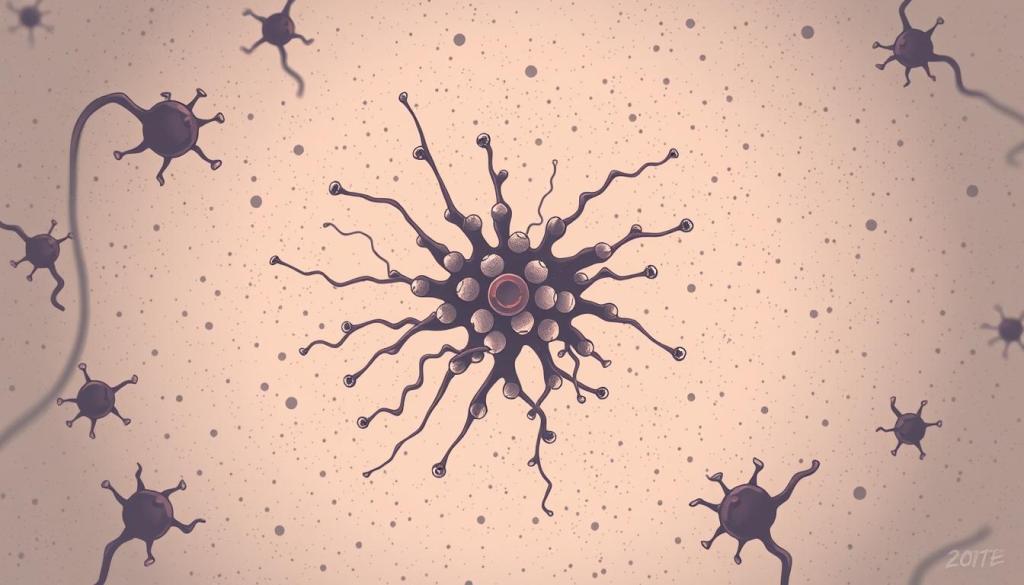
Many factors influence fibroblast secretion patterns. This creates a complex cellular communication network. These triggers include mechanical and chemical signals that deeply affect cellular activity.
Mechanical Stimuli
Mechanical forces are key in fibroblast activation. Researchers found that physical stress can change cellular behavior significantly. This includes:
- Tissue stretching
- Compression forces
- Wound-induced mechanical tension
Chemical Signals and Environmental Factors
Chemical signals greatly affect fibroblast growth factors and cytokine release. Key molecular regulators include:
- Transcription growth factor-alpha and beta (TGF-A and TGF-B)
- Platelet-derived growth factor (PDGF)
- Epidermal growth factor (EGF)
- Tumor necrosis factor (TNF)
Fibroblasts show remarkable adaptability in responding to environmental cues. They play a critical role in tissue homeostasis.
Research shows that fibroblasts generate tissue-level mechanical forces. They do this through interactions with the extracellular matrix. These interactions are part of complex cellular communication mechanisms.
| Stimulus Type | Cellular Response | Impact on Secretion |
|---|---|---|
| Mechanical Stress | Increased Protein Production | Enhanced Growth Factor Release |
| Inflammatory Cytokines | Activation of Signaling Pathways | Modulated Cytokine Expression |
| Tissue Injury | Fibroblast Transformation | Accelerated Repair Mechanisms |
The intricate balance of fibroblast responses highlights their fundamental role in maintaining tissue health and responding to environmental challenges.
Fibroblasts in Aging and Degenerative Diseases
The aging process changes how fibroblasts work. They can’t repair tissues as well as they used to. This affects the health of the extracellular matrix proteins.
- Total dermal fibroblasts decrease by an average of 35% in older individuals
- DNA damage accumulates approximately 100,000 times per cell daily
- Reactive oxygen species contribute significantly to cellular aging
Changes in Secretion Profiles with Age
Older fibroblasts make fewer extracellular matrix proteins. They make 50% less collagen. This weakens tissue structure and its ability to heal.
Impact on Tissue Health and Regeneration
The aging process changes how fibroblasts work:
| Aging Effect | Cellular Impact |
|---|---|
| Reduced Stem Cell Function | Decreased tissue repair capabilities |
| Increased Pro-inflammatory Cytokines | 30% higher inflammatory response |
| DNA Repair Mechanism Decline | Accumulation of cellular mutations |
The genetic patterns of centenarians suggest that effective DNA repair mechanisms can mitigate age-related cellular deterioration.
Learning about these changes helps us understand aging better. It also shows ways to keep tissues healthy as we age.
Therapeutic Applications of Fibroblast Products
Fibroblasts are at the forefront of regenerative medicine and cosmetic treatments. They have the power to restore tissues and rejuvenate skin. Studies from 2000 to 2023 have uncovered their amazing potential.
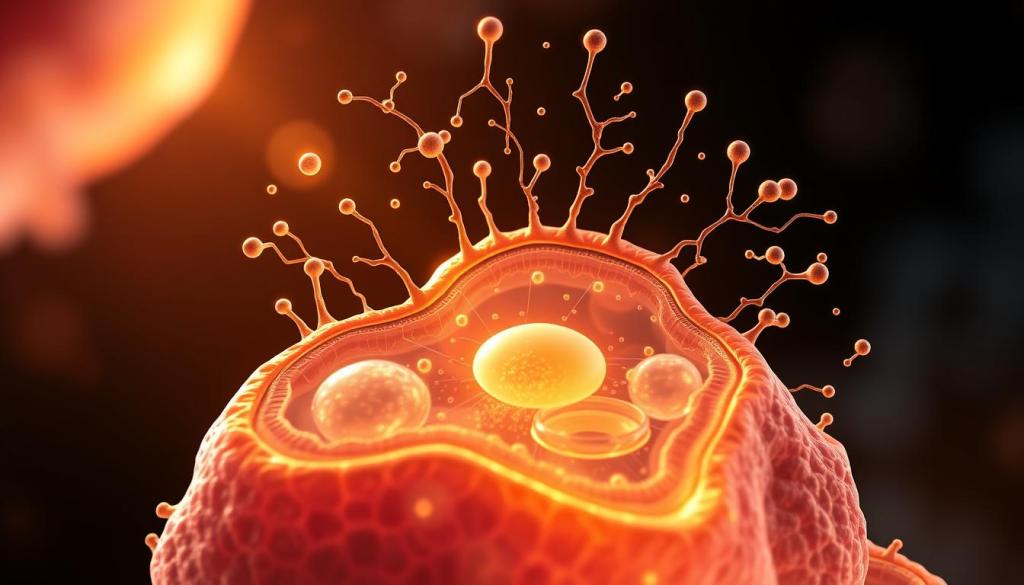
Scientists have deeply explored fibroblast-based therapies. They found out how crucial they are for healing and rebuilding tissues. From 820 papers, 35 met strict criteria, showing the focus of fibroblast research.
Potential in Regenerative Medicine
Fibroblasts are key in regenerative medicine because of their abilities:
- Rapid collagen production for tissue repair
- Accelerated wound healing mechanisms
- Elastin synthesis supporting tissue elasticity
- Inflammation management during recovery
Use in Cosmetic Procedures
Cosmetic treatments use fibroblasts for skin renewal. The FDA has approved certain products for aesthetic use. These products show great promise in beauty treatments.
| Therapeutic Category | Key Capabilities |
|---|---|
| Wound Healing | Accelerated tissue regeneration |
| Skin Rejuvenation | Enhanced collagen production |
| Scar Reduction | Improved elastin synthesis |
Fibroblasts represent nature’s sophisticated repair mechanism, offering unprecedented opportunities in medical and aesthetic interventions.
Genetic studies highlight fibroblasts’ vital role in wound healing. Their diversity allows for specific treatments for various tissues. This marks a new era in regenerative medicine.
Research Advances on Fibroblast Function
The study of cellular biology has made big strides in understanding fibroblasts. Recent studies have shown how complex these cells are in different tissues.
Single-cell RNA sequencing has changed how we see what fibroblasts produce. It shows that fibroblasts in different organs are very different. This challenges old ideas about these cells.
Recent Discoveries in Cellular Behavior
Research has uncovered important details about fibroblast function:
- Less than 12% of fibroblast markers are shared across different tissue types
- Glycosaminoglycans secretion varies dramatically between different fibroblast populations
- Distinct gene expression profiles exist in fibroblasts from skin, lung, and liver tissues
Future Directions in Fibroblast Studies
New research paths are leading to exciting discoveries about fibroblasts:
- Personalized medicine approaches targeting specific fibroblast subtypes
- Advanced tissue engineering techniques
- Detailed mapping of intercellular communication networks
“Fibroblasts are not just passive components, but dynamic cellular actors with profound implications for tissue health and regeneration.”
Scientists believe that understanding what fibroblasts secrete will lead to new treatments. These could help in many medical areas.
Conclusion
Fibroblasts are key to understanding how tissues heal and change. They are complex, with most genes unique to each tissue. These cells are vital for fixing and changing the structure of tissues.
They do this by balancing the production of matrix metalloproteinases. This balance is crucial for keeping tissues working right.
Key Insights into Fibroblast Function
Fibroblasts do more than just keep tissues stable. They are very adaptable and can change to fit different needs. Most PDGFRα+ cells in tissues are fibroblasts.
They can express specific markers for different tissues. This shows their role in maintaining and changing tissues.
Future Implications and Research Directions
Studying how fibroblasts work could lead to new treatments. They play a big part in healing wounds and changing tissues. This could help in making new therapies.
Research is ongoing to learn more about fibroblasts. This could unlock new ways to heal and improve medical care.
Fibroblasts are important in cell biology. They help us understand how tissues are maintained and repaired. Their role in producing and changing the extracellular matrix is key to understanding how cells talk to each other and how tissues work.
FAQ
What exactly are fibroblasts?
Fibroblasts are special cells in our body. They help make and keep the stuff around our cells together. They are key in fixing and growing tissues by making proteins like collagen and elastin.
What are the primary components fibroblasts secrete?
Fibroblasts make many important things. They create proteins like collagen and elastin. They also make growth factors and other stuff that help keep tissues healthy and repair them when needed.
How do fibroblasts contribute to wound healing?
Fibroblasts help fix wounds by going to the damaged area. They make collagen and other proteins. They also release factors that help grow new tissue, which is crucial for healing.
Can fibroblast activity lead to potential health issues?
Yes, too much activity from fibroblasts can cause problems. It can lead to scarring and hardening of tissues. This can harm organs and cause issues in diseases like liver and lung problems.
How do fibroblasts change with age?
As we get older, fibroblasts don’t work as well. They make less collagen and elastin. This can make tissues less elastic and affect how well we heal wounds.
What factors influence fibroblast secretion?
Many things affect how fibroblasts work. This includes things like movement, chemicals, and growth factors. These factors can change how much and what fibroblasts make.
Are there potential therapeutic applications for fibroblast-secreted products?
Yes, there are. Products made by fibroblasts could help in many ways. They might help heal wounds, make skin look better, and even treat diseases.
What recent research advances have been made in understanding fibroblasts?
Scientists have learned a lot about fibroblasts lately. They know more about how they work and what they do. This knowledge could lead to new ways to help our bodies heal and grow.






Leave a Comment
Your email address will not be published. Required fields are marked *