



Ever wondered how scientists measure tiny amounts with great precision? The answer is a small but powerful tool called a cuvette. But what is a cuvette, and why is it so important in science today?
A cuvette is a special transparent container for spectroscopic tests. These small, precise vessels help researchers analyze liquid samples with high accuracy. With over 260 different SKUs for absorbance measurements, cuvettes are key in labs all over the world.
The standard cuvette is 12.5 x 12.5 mm outside, but 10 x 10 mm inside. These exact sizes let scientists do detailed spectrophotometric analyses in many fields. This includes biochemistry and environmental research.
Key Takeaways
- Cuvettes are specialized containers for scientific sample analysis
- Multiple sizes and types exist for different research needs
- Precision is critical in cuvette design and usage
- Cuvettes enable accurate spectroscopic measurements
- Materials vary to support different wavelength ranges
Understanding Cuvettes and Their Functionality
Cuvettes are special lab tools for precise optical measurements. They are key in scientific research and analysis. These tools help scientists analyze samples with great accuracy.
Scientists use cuvettes for detailed spectroscopic studies. They are more than just containers for samples. They connect samples to advanced analytical tools.
Definition of a Cuvette
A cuvette is a clear container made for optical measurements. Typically measuring 10mm in central diameter, they help in light transmission and absorption studies.
Types of Cuvettes
- Standard cuvettes: Most common, holding approximately 3mL
- Semi-micro cuvettes: Accommodate 0.35-1.7mL samples
- Sub-micro cuvettes: Handle 20-350 µL volumes
- Macro cuvettes: Larger capacity, ranging 7-35mL
Common Materials Used
| Material | Wavelength Range | Key Characteristics |
|---|---|---|
| Quartz | 190-2500 nm | Excellent UV transmission, expensive |
| Polystyrene | 340-800 nm | Cost-effective, visible light range |
| PMMA | 280-800 nm | Low light absorption, versatile |
The choice of cuvette material affects measurement accuracy.
“Choosing the right cuvette is as critical as the experiment itself”
– shows how important material selection is in spectroscopic analysis.
Researchers must pick the right cuvette type and material for their studies. This ensures the best results in various scientific investigations.
Importance of Cuvettes in Spectroscopy
Spectroscopic research needs precise cuvette measurements for accurate analysis. These containers are key for light transmission through samples. This helps scientists gather important data in many fields.
Cuvettes do more than hold samples. They are vital optical tools for detailed chemical and biological studies.
Role in Light Transmission
The success of cuvettes in light transmission depends on several factors:
- Material transparency ranges from 340 to 2,500 nanometers
- UV quartz cuvettes offer extended transmission from 190 to 2,500 nm
- Path lengths typically range from 1 mm to 100 mm
Applications in Chemical Analysis
“Precision in measurement is the cornerstone of scientific discovery.” – Scientific Research Principles
Cuvette measurements are key in many analytical processes, including:
- Biochemical research
- Pharmaceutical development
- Environmental testing
- Medical diagnostics
Impact on Measurement Accuracy
The quality of cuvettes affects spectroscopic measurement accuracy. Small flaws like scratches can greatly affect results.
| Cuvette Type | Measurement Precision |
|---|---|
| Quartz Cuvettes | High UV light transmission |
| Glass Cuvettes | Limited UV range |
Researchers must choose the right cuvettes for their experiments. This ensures reliable and consistent scientific results.
Types of Cuvettes and Their Uses
Laboratory researchers use various cuvette types for precise spectroscopic measurements. It’s important to know the differences in cuvette types and materials. This knowledge is key to getting accurate scientific results.
Standard and Micro Cuvette Variations
Cuvettes come in standard and micro volumes, each for different research needs. Standard cuvettes usually have:
- Volume of about 3 mL
- Optical path length of 10 mm
- Outer dimensions of 12.5 x 12.5 x 45 mm
Specialized Cuvettes for Spectroscopic Analysis
Each spectroscopic technique needs its own cuvette design. For example, fluorescence spectroscopy needs cuvettes with special optical properties.
| Cuvette Material | Wavelength Range | Transmission Rate |
|---|---|---|
| Quartz | 190-2500 nm | 83% |
| Polystyrene | 340-800 nm | Varies |
| PMMA | 280-800 nm | Up to 80% |
Choosing the Right Cuvette Material
Choosing the right cuvette material is crucial for accurate spectroscopic measurements. Important factors include:
- Wavelength transmission capabilities
- Sample compatibility
- Potential chemical interactions
The right cuvette can make the difference between reliable data and inconclusive results.
Researchers must carefully choose cuvette types and materials for their experiments. They need to consider wavelength needs, sample volume, and material interactions.
Selecting the Right Cuvette for Experiments
Choosing the right cuvette is key for accurate scientific measurements. Researchers need to look at many factors for the best results in spectroscopic experiments.
Critical Factors in Cuvette Selection
Scientists must think about several important things when picking cuvettes. The material, path length, and optical properties are crucial for precise measurements.
- Material transparency for specific wavelength ranges
- Sample volume requirements
- Spectrophotometer compatibility
- Temperature resistance
- Chemical compatibility
Spectrophotometer Compatibility
Different cuvette samples need specific optical features. Researchers must match cuvette specs with their spectrophotometer’s needs for accurate results.
| Cuvette Material | Wavelength Range | Transmission Rate |
|---|---|---|
| Optical Glass | 340nm – 2,500nm | 82% at 350nm |
| ES Quartz | 190nm – 2,500nm | 83% at 220nm |
| Polystyrene | 380nm – 780nm | 75% at 500nm |
Sample Property Considerations
The interaction between cuvette samples and experimental conditions needs careful thought. Path length and optical properties greatly affect measurement accuracy.
Selecting the right cuvette is not just about compatibility, but about understanding the intricate relationship between sample, instrument, and measurement goals.
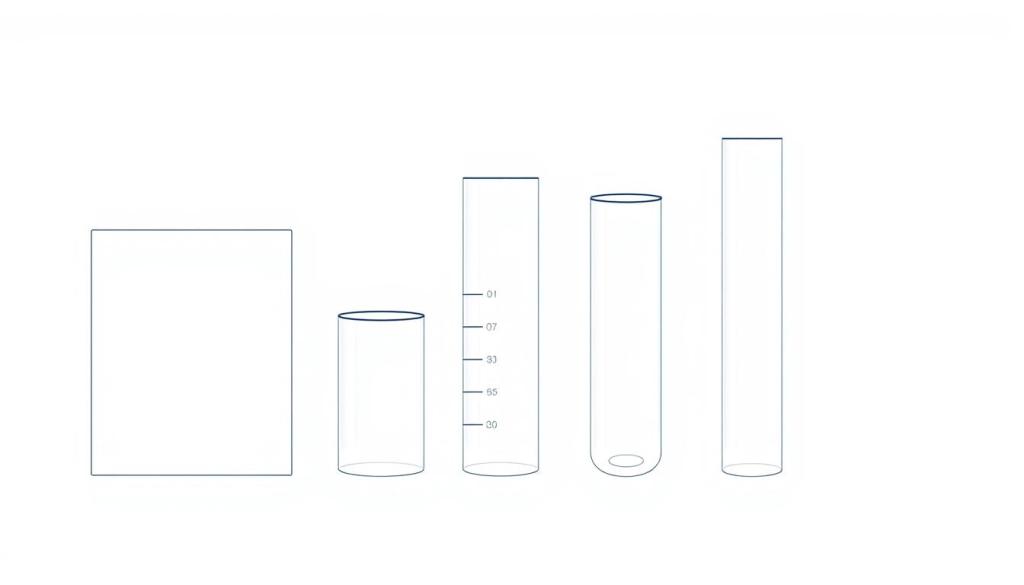
By carefully looking at cuvette specs and sample characteristics, researchers can improve their spectroscopic experiments. This leads to reliable and reproducible results.
Proper Handling of Cuvettes in the Laboratory
Laboratory precision relies on careful cuvette handling. Researchers need to know how to keep these delicate tools in top shape. This ensures accurate spectroscopic measurements.
Cleaning Standards and Best Practices
Cleaning cuvettes right is key for accurate measurements. Fingerprints can mess up readings, so cleaning is crucial.
- Use only highly pure cleaning solvents
- Rinse with diluted hydrochloric acid after use
- Avoid ultrasonic cleaners that can damage delicate surfaces
- Soak sticky samples in diluted sulfuric acid
Avoiding Contamination
Keeping cuvettes clean is vital. Researchers must follow strict rules to keep them in good condition.
| Contamination Prevention Technique | Recommended Practice |
|---|---|
| Glove Usage | Always wear gloves when handling cuvettes |
| Contact Area | Touch only frosted sides of absorption cuvettes |
| Grip Method | Hold by top section using fingers |
Storage Recommendations
Storing cuvettes right is key to keeping them in good shape. It helps prevent damage during measurements.
- Store completely dry cuvettes in protective cases
- Keep quartz cuvettes in transport boxes
- Avoid storing in sample holders or instruments
- Use plastic racks for short-term storage only
Precision in cuvette handling is not just a practice—it’s a scientific imperative.
Careful attention to cleaning, handling, and storage ensures the longevity and reliability of laboratory cuvettes.
Common Mistakes When Using Cuvettes
Laboratory researchers often face challenges with cuvette measurements and samples. Knowing the common mistakes can greatly improve the accuracy and reliability of experiments.
Researchers need to watch out for several key errors that can ruin scientific results:
Misalignment in Optical Path
Getting the cuvette aligned right is key for precise spectroscopic readings. If it’s not aligned, the data can vary a lot. Studies show that wrong positioning can cause errors of 15-20% in cuvette samples.
- Check instrument calibration regularly
- Ensure cuvette is correctly seated in spectrophotometer
- Verify optical path consistency
Ignoring Temperature Effects
Temperature changes can greatly affect cuvette measurements. Molecular interactions and chemical reactions are very sensitive to temperature.
| Temperature Range | Potential Impact |
|---|---|
| 0-10°C | Minimal molecular movement |
| 20-30°C | Optimal reaction conditions |
| 40-50°C | Potential protein denaturation |
Inadequate Sample Volume
Not having enough sample can cause big measurement errors. Semi-micro cuvettes usually hold 0.35 – 1.75 mL of sample solution. It’s important to measure and prepare the right amount of sample.
“Precision in sample preparation is the cornerstone of reliable scientific research.” – Laboratory Safety Protocols
By following strict protocols, many common mistakes can be avoided. Over 60% of lab incidents could be prevented with better equipment handling and attention to detail.
Innovations in Cuvette Technology
Scientific research is always pushing the limits of lab tools, including cuvettes. New cuvette types and materials are being developed. These advancements aim to improve precision and expand what we can analyze.
Developments in Material Science
New materials in cuvettes have changed spectroscopic analysis. Scientists have made big leaps:
- Specialized plastics for UV-transparent disposable cuvettes
- Enhanced quartz cuvettes that can handle a wider range of light
- Chemical-resistant materials for tough experimental conditions
Advancements in Optical Design
Improvements in optical design have made cuvettes more useful. Now, we have flow-through cuvettes with amazing abilities:
- They allow for real-time analysis and continuous monitoring
- They use less sample, saving resources
- They reduce the risk of contamination
Future Trends in Cuvette Utilization
New trends in cuvette tech focus on working with advanced scientific tools. Micro-volume cuvettes are key, letting researchers use tiny amounts of sample. This keeps accuracy high.
The future of cuvette technology is about being precise, efficient, and adaptable to complex research needs.
These new developments will change spectroscopic research. They offer more reliable, versatile, and advanced tools for many scientific fields.
Comparing Cuvettes to Other Lab Equipment
Laboratory researchers often use many tools for scientific tests. Cuvettes are special tools with unique features. They are different from common lab containers like test tubes. Knowing how to use cuvettes is key for precise scientific tests.

Distinctive Features of Cuvettes
Cuvettes are made for spectroscopic tests. They have several benefits over regular lab tools:
- Standardized optical path length (typically 10 mm)
- Transparent walls for precise light transmission
- Consistent dimensional specifications
- Specialized material compositions
Complementing Scientific Instruments
Cuvettes are vital for advanced analytical tools. They work well with spectrophotometers, fluorometers, and other optical devices. Their exact shape ensures reliable and consistent scientific data.
Limitations of Alternative Equipment
Test tubes might seem similar, but they can’t replace cuvettes in spectroscopy. Test tubes don’t have the optical precision needed for light transmission tests. Their uneven surfaces and variable thickness can cause big errors in measurements.
“Precision in scientific measurement begins with selecting the right equipment.” – Laboratory Research Insights
Choosing between cuvettes and other lab tools requires careful thought. Each material has its own benefits: quartz for wide wavelength range, and plastic for cost-effective visible-range tests.
Conclusion: The Essential Role of Cuvettes in Laboratory Settings
Understanding what a cuvette is is key in today’s science. These tools have changed how we do spectroscopic analysis. They help measure samples accurately and reliably.
Cuvettes are used in many scientific fields. They let researchers do precise optical experiments consistently.
The technology behind cuvettes has grown a lot. Now, we have disposable cuvettes made from polystyrene and acrylic. They make labs safer and work more efficiently. They’re crucial for spectrophotometry and fluorometry.
Future Research Directions
Lab researchers are always looking to make cuvettes better. They want to improve how well they measure things. New technologies might make cuvettes work better, last longer, and handle chemicals better.
They hope these changes will help with even more complex tests. This will show how important cuvettes are in finding new scientific facts.
Scientific Impact
Cuvettes are vital for connecting theory with real-world science. They keep getting better, showing scientists’ dedication to better methods. As science grows, cuvettes will help us discover more.
FAQ
What exactly is a cuvette?
A cuvette is a special container used in labs for measuring light. It’s made of clear materials like glass or plastic. It holds liquids for tests, letting light through for precise measurements in science and chemistry.
What are the primary uses of cuvettes in scientific research?
Cuvettes help scientists study liquid samples in spectroscopy. They help figure out what’s in a sample, do chemical tests, and measure light. This is key in biochemistry, molecular biology, and environmental science.
What materials are typically used to make cuvettes?
Cuvettes are made from glass, quartz, plastic, and fused silica. Each material is chosen for its properties, fitting different needs in spectroscopy.
How do I choose the right cuvette for my experiment?
Pick the right cuvette by thinking about sample size, light range, and material. Also, consider the spectroscopy method and the spectrophotometer type. Temperature sensitivity and chemical resistance are also important.
What are the common types of cuvettes available?
There are standard, micro, fluorescence, and disposable cuvettes. Each is for specific uses, like small samples or special tests.
How should cuvettes be cleaned and maintained?
Clean cuvettes with the right solvents and avoid scratches. Use soft wipes and rinse with distilled water. Store them in clean, dust-free places for best results.
What are some common mistakes when using cuvettes?
Mistakes include scratches, wrong solvents, and not checking for dirt. Also, wrong alignment and ignoring temperature changes can mess up measurements.
Can cuvettes be reused, or are they disposable?
Some cuvettes, like quartz or glass, can be cleaned and reused. But plastic and special cuvettes are usually for one-time use to avoid contamination.
What innovations are happening in cuvette technology?
New cuvettes have better materials and designs. There are smaller cuvettes for less sample, and ones that don’t stick to samples. They also work with automated systems for better results.
How do cuvettes differ from standard test tubes?
Cuvettes are made for light measurements, unlike test tubes. They have the right length and are clear for light. They meet strict quality standards for accurate tests.






Leave a Comment
Your email address will not be published. Required fields are marked *