


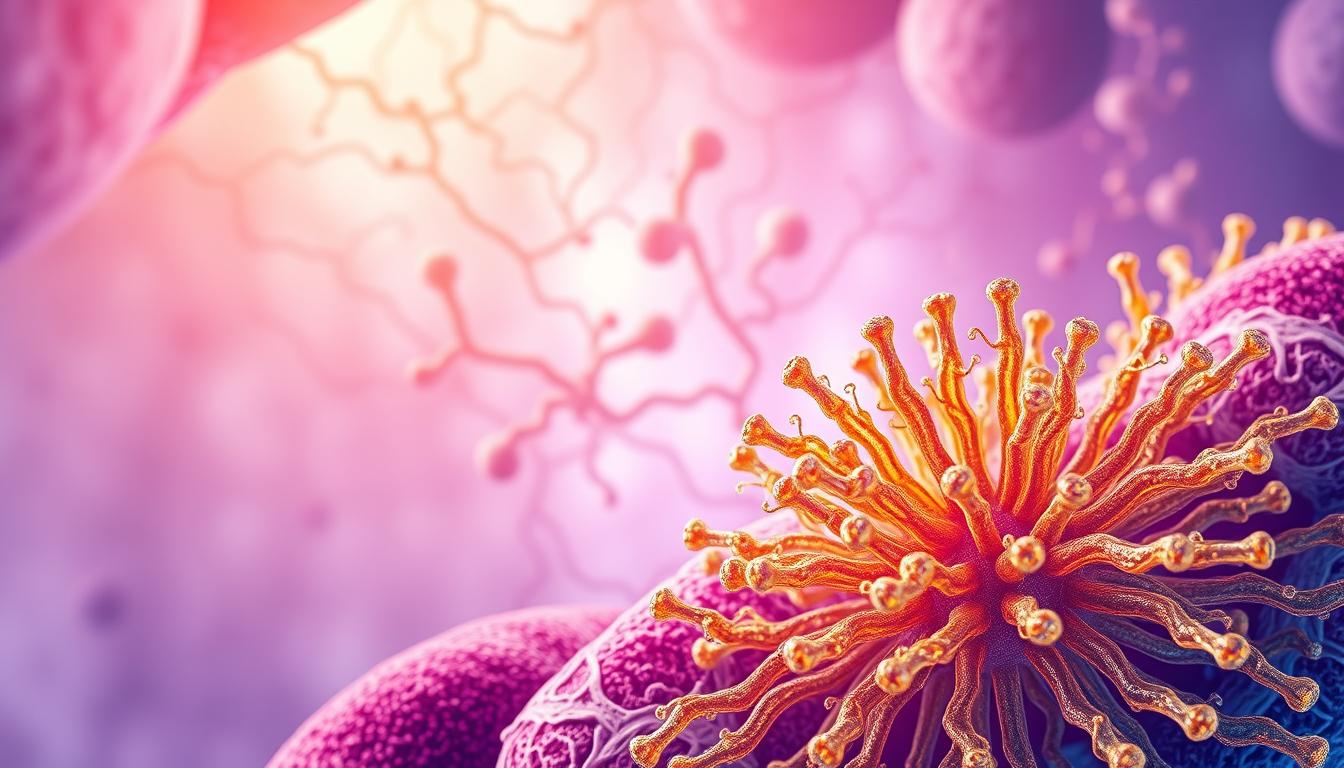
Have you ever wondered how your body repairs damaged tissues or maintains its structural integrity? The answer lies in specialized cells that work tirelessly behind the scenes.
First identified in 1858 by Rudolf Virchow, these versatile cells play a dual role in creating the extracellular matrix while acting as cellular messengers. They produce collagen I – the most abundant protein in the human body – forming the structural foundation of connective tissues.
These remarkable cells demonstrate unique characteristics across different organs, adapting their functions to meet specific tissue needs. Their ability to transition between states makes them crucial players in wound healing and disease processes.
Key Takeaways
- Essential for tissue structure and repair through extracellular matrix production
- First discovered in 1858 by Rudolf Virchow
- Produce collagen I, the most abundant human protein
- Exhibit different characteristics across various organs
- Play critical roles in both healing and disease processes
What Are Fibroblasts?
Medical science has long studied the master builders of our connective tissues. These specialized cells create the framework that supports organs and facilitates healing.
Definition and Basic Characteristics
These spindle-shaped cells demonstrate remarkable versatility. They produce collagen and elastin, forming the extracellular matrix that gives tissues strength and flexibility.
Scientists recognize two primary states: active and quiescent. Activated cells show basophilic cytoplasm and increased protein production, while resting fibrocytes appear paler.
Key markers help identify these cells in research:
- VIM (vimentin) for structural identification
- PDGFRA for growth factor response
- FSP1 for specific subpopulations
First Identification and Naming
Rudolf Virchow first described them in 1858 as “Spindelzelle.” He observed their unique shape in connective tissues during microscopic studies.
By 1895, Ernst Ziegler coined the term “fibroblast” while studying granulation tissue. His work revealed their crucial role in wound repair processes.
Santiago Ramón y Cajal advanced understanding through keloid research. His 1896 observations showed how these cells contribute to abnormal scar formation.
The 20th century brought major breakthroughs. Establishment of the 3T3 cell line in 1963 enabled growth factor discoveries and advanced tissue engineering.
Modern research continues to explore their signaling functions. These cells not only build tissue frameworks but also communicate with neighboring cells through cytokine secretion.
The Role of Fibroblasts in Tissue Homeostasis
Tissue balance depends on a delicate interplay of structural support and cellular communication. Specialized cells maintain this equilibrium by producing the extracellular matrix (ECM) and crafting signaling environments for neighboring cells.
Extracellular Matrix Production
The ECM is a complex network of proteins and sugars that provides tissues with strength and flexibility. Key components include:
| ECM Component | Function |
|---|---|
| Collagen I & III | Provides tensile strength |
| Elastin | Enables tissue recoil |
| Proteoglycans | Retains water for hydration |
| Fibronectin | Anchors cells to the ECM |
Lysyl oxidase enzymes crosslink collagen fibers, reinforcing the ECM. Meanwhile, matrix metalloproteinases (MMPs) carefully remodel the matrix by breaking down old proteins, balanced by their inhibitors (TIMPs).
Signaling Niche Creation
Beyond structure, these cells secrete growth factors like TGF-β and Wnt to guide stem cell behavior. In skin and intestines, such signals determine whether stem cells remain dormant or regenerate tissue.
Mechanical forces also matter. Cells sense stiffness through integrins, adjusting their activity to maintain tissue function. This feedback loop ensures organs like lungs stay elastic yet resilient.
“The ECM isn’t just a scaffold—it’s a dynamic instructor for cellular behavior.”
Disruptions in this system can lead to fibrosis or impaired healing. Research continues to explore how ECM stiffness influences diseases like cancer and arthritis.
Fibroblast Heterogeneity Across Organs
Different organs demand unique structural support, shaping specialized cell populations. Recent single-cell studies reveal less than 20% gene overlap between heart, muscle, and intestinal cells, highlighting their adaptability.
Skin vs. Lung Specializations
Dermal fibroblasts split into papillary (CD26+SCA1−) and reticular (DLK1+SCA1−) types. Papillary cells aid wound healing, while reticular cells drive fibrosis. In contrast, lung lipofibroblasts produce surfactant, critical for alveolar repair.
Cardiac and Skeletal Muscle Variations
Cardiac fibroblasts regulate electrical signals via Connexin-43, ensuring steady heartbeats. Skeletal muscle hosts fibro-adipogenic progenitors (FAPs), which balance repair and fat storage. Bladder and intestinal cells further differ in tenascin-C expression, tailoring ECM roles.
- Species-specific markers: PI16 and COL15A1 help identify organ origins.
- Challenges: Cross-organ comparisons are complicated by embryonic origins.
- Tissue engineering: Customizing ECM components could improve organ grafts.
“Heterogeneity isn’t noise—it’s a blueprint for organ function.”
Key Functions of Fibroblasts
Behind every tissue’s strength and flexibility lies a dynamic cellular workforce. These specialized builders shape the extracellular matrix while responding to mechanical cues and guiding stem cell behavior.
Scaffold Formation and ECM Remodeling
The extracellular matrix acts as a living blueprint for tissue architecture. Specialized enzymes like MMPs carefully remodel collagen networks, while lysyl oxidase strengthens fiber connections.
Key remodeling processes include:
- Controlled breakdown of old collagen by metalloproteinases
- Realignment of elastin fibers during tissue stretching
- Proteoglycan adjustments to maintain tissue hydration
Mechanical Force Generation
αSMA+ smooth muscle-like fibers enable powerful contractions. Myofibroblasts can generate up to 12kPa of force—equivalent to lifting small coins with cellular hands.
| Force Type | Measurement Method | Biological Impact |
|---|---|---|
| Contractile | Traction microscopy | Wound closure |
| Tensile | Atomic force microscopy | Tissue polarization |
| Shear | Microfluidic assays | Angiogenesis regulation |
MRTF-A/SRF pathways translate mechanical stress into gene expression changes. This matrix-sensor system maintains tissue identity through HOX code activation.
Progenitor Cell Differentiation
These versatile cells can transform into adipocytes or osteocytes when triggered by BMP signals. Bone marrow niches particularly rely on this progenitor cell potential.
“Mechanical memory in the ECM guides stem cell fate decisions during regeneration.”
Senescent variants develop distinct secretory profiles that influence tissue aging. Meanwhile, EMT transitions allow temporary activation during injury before reverting to resting states.
Fibroblasts in Wound Healing
When skin gets injured, a hidden army of cells springs into action. These specialized builders orchestrate repair through precise stages—inflammation, proliferation, and remodeling—guided by signals like *TGF-β* and *PDGF*.
From Quiescence to Activation
Resting cells awaken when *TGF-β* increases focal adhesion size by 40%, anchoring them to the wound site. Growth factors trigger collagen production, while macrophages direct their movement through cytokine crosstalk.
Acute wounds show efficient activation, but 50% of chronic wounds fail to resolve. Persistent *αSMA+* cells create stiff scar tissue instead of healthy matrix.
Myofibroblast Transformation
Activated cells evolve into myofibroblasts, gaining smooth muscle-like fibers. These contract at 12kPa force, pulling wound edges together. Yet, their refusal to apoptose fuels fibrosis.
“Fetal wounds heal scarlessly thanks to hyaluronic acid and MMP9—a blueprint for regenerative medicine.”
Emerging therapies target this process. CAR-T cells disrupt stubborn myofibroblasts, while 3D bioprinting replicates fetal ECM composition for scar-free grafts.
Fibroblast Plasticity and Lineage Potential
The hidden potential of specialized cells extends far beyond basic structural support. These adaptable builders can transform into adipocytes, osteocytes, or even endothelial-like cells, guided by epigenetic memory and environmental cues.
Epigenetic mechanisms allow certain *cell types* to regain developmental HOX codes during regeneration. Skin cells, for example, reactivate embryonic pathways to rebuild tissue architecture. Meanwhile, 30% of lung myofibroblasts originate from pericytes—a testament to their diverse origins.
Differentiation isn’t always fixed. Some *mesenchymal cells* follow rigid paths (like tenocytes), while others exhibit plasticity. Injury context matters: BMP4 triggers adipocyte reprogramming, whereas Hedgehog signaling drives tendon repair.
“Plasticity isn’t random—it’s a calculated response to tissue demands.”
Metabolic shifts play a role too. Activated cells switch to glycolysis, fueling rapid ECM production. Single-cell analyses reveal trajectories where *stromal cells* transition into osteoblasts during heterotopic ossification.
- Mechanosensing: *YAP/TAZ* pathways translate stiffness into osteogenic signals.
- Transdifferentiation: Rare conversions into endothelial cells aid vascular repair.
- Therapy: Harnessing *progenitor cell* potential could revolutionize regenerative medicine.
Cancer-associated variants exploit this plasticity, adapting *gene expression* to support tumor growth. Research now targets these pathways to block fibrosis and improve healing.
Historical Discoveries in Fibroblast Research
Scientific breakthroughs often begin with careful observation of the seemingly ordinary. Rudolf Virchow’s 1858 identification of “spindle-shaped cells” marked the first chapter in understanding connective tissue biology. His work laid the foundation for Ernst Ziegler’s 1895 naming of these structural architects.
The early 20th century brought revolutionary methods. Alexis Carrel’s 1912 chick heart cultures demonstrated cell survival outside the body, while Todaro and Green’s 3T3 line (1963) standardized research models. These advances enabled discoveries like:
- Contact inhibition principles (Abercrombie, 1950s)
- Finite replication limits (Hayflick, 1965)
- Multipotent mesenchymal potential (1999)
Growth factor research transformed understanding. Gospodarowicz’s 1974 FGF isolation revealed how cells communicate during healing. Nobel laureates like Ramón y Cajal and Dulbecco further connected structural biology to health disease processes.
“Every tissue sample holds historical lessons—we just need the tools to read them.”
Modern single-cell sequencing resolves century-old debates about heterogeneity. Early microscopy observations now find validation in molecular profiles. Yet questions remain about embryonic origins and functional plasticity.
This historical context informs current cell synthesis research, bridging nineteenth-century sketches to twenty-first-century omics data. Each era’s limitations shaped subsequent breakthroughs in unexpected ways.
Single-Cell RNA Sequencing and Fibroblast Subtypes
Modern biology has unlocked cellular mysteries through advanced sequencing technologies. Single-cell RNA sequencing reveals hidden diversity among structural cells, exposing unique subtypes with specialized roles.
Universal Markers: Pi16 and Col15a1
Two markers stand out across tissues: Pi16 and COL15A1. Research shows Pi16+ cells maintain niches during injury, while COL15A1 marks 60% of PDGFRα+ populations. These conserved signatures help track cells in healing and disease.
Key findings about these markers:
- Pi16+ cells persist through tissue stress, suggesting repair roles
- COL15A1 stabilizes blood vessels in multiple organs
- Both markers show cross-species conservation in synovial tissues
Organ-Specific Transcriptional Profiles
Different tissues host distinct cell populations with unique gene expression patterns. Liver stromal cells differ dramatically from lung counterparts, though they share core functions.
| Technology | Advantage | Limitation |
|---|---|---|
| Drop-seq | High-throughput profiling | Lower gene coverage |
| SmartSeq2 | Full-length transcripts | Higher cost per cell |
| Spatial transcriptomics | Location context | Resolution limits |
Technical challenges remain. Batch effects can distort data, while doublet exclusion methods struggle with dense tissues. Emerging solutions include:
- Algorithmic correction for technical noise
- Multimodal data integration
- Diagnostic marker panels for clinical use
“Single-cell atlases are rewriting our understanding of stromal cell biology.”
Disease-specific clustering patterns now guide precision medicine. Researchers correlate RNA sequencing profiles with patient outcomes, paving the way for targeted therapies.
Fibroblasts in Skin Health
The skin’s remarkable ability to regenerate depends on specialized cells working beneath the surface. These builders maintain the human skin structure while responding to injuries with precision.
Dermal Papilla and Hair Follicle Regeneration
Dermal fibroblasts in the papilla express CD133 and alkaline phosphatase, key markers for hair growth. They secrete Wnt and SHH signals, creating a niche for follicle regeneration.
Lef1+ papillary cells drive hair neogenesis, while reticular cells support the basement membrane. Differences in migration speed are notable:
- Oral mucosa cells migrate 3x faster than dermal types
- Acomys ECM contains 40% more tenascin-C, reducing scarring
- CD90+ cells communicate with keratinocytes to balance repair
Scarless Healing in Fetal Models
Fetal wound healing avoids scars due to unique ECM composition. Higher FGF expression and efficient senescent cell clearance create a regenerative environment.
“Fetal fibroblasts prioritize regeneration over fibrosis—a blueprint for scar-free therapies.”
CTHRC1 recruits anti-inflammatory immune cells, while stretch-activated channels guide mechanical responses. Advances in 3D epidermal-dermal models now replicate these processes for burns and ulcers.
Fibroblasts in Fibrotic Diseases
Fibrotic diseases represent a silent epidemic, accounting for nearly half of all deaths in developed nations. When tissue repair processes malfunction, excessive scarring disrupts organ function, creating progressive and often irreversible damage.
Aberrant ECM Deposition
The TGF-β/SMAD signaling cascade drives abnormal matrix accumulation. Activated myofibroblasts produce 3-5 times more collagen than normal cells, creating stiff scar tissue. This process involves:
- Persistent αSMA expression increasing contractile force
- Reduced MMP activity preventing normal ECM turnover
- ECM stiffness triggering IL-11 production in a vicious cycle
Early-stage fibrosis shows reversible changes, while advanced cases develop cross-linked collagen resistant to breakdown. The autotaxin-LPA pathway further amplifies scarring by activating profibrotic growth factors.
Therapeutic Challenges
Current anti-fibrotic drugs only delay progression by 30-40%. Treatment failures often stem from:
| Challenge | Potential Solution |
|---|---|
| Patient heterogeneity | AI-based stratification |
| Epigenetic memory | HDAC/BET inhibitors |
| Senescent cell accumulation | Senolytic combinations |
“CAR-T cell therapy reduced collagen I by 70% in murine models—a breakthrough suggesting immune cells can reprogram fibrotic niches.”
Emerging approaches target multiple pathways simultaneously. ROCK inhibitors address mechanical signaling, while Wnt modulators attempt to restore developmental repair patterns. The future lies in personalized therapeutic targets identified through single-cell profiling.
Cross-Tissue Commonalities in Fibroblast Biology
Across diverse organs, specialized cell types share fundamental biological principles despite their unique adaptations. Research reveals a 90-gene signature that distinguishes these structural builders from mural cells, highlighting universal functions in tissue maintenance.
Conserved PDGFRα+ progenitor populations exist in multiple tissues. These mesenchymal cells maintain positional memory through HOX codes, ensuring organs retain their architectural identity during repair. Single-cell studies show:
- Pi16+ and COL15A1+ markers across heart, skin, and lung
- Shared EMT regulatory networks in wound responses
- Identical metabolic shifts during activation
Stress response pathways like HSF1/NRF2 operate uniformly. Stromal cells activate these defenses against oxidative damage, whether in liver fibrosis or pulmonary inflammation. Evolutionary analysis confirms these mechanisms predate mammalian divergence.
| Conserved Mechanism | Functional Impact |
|---|---|
| ECM tugging | Polarizes stem cell niches |
| Circadian regulation | Times collagen secretion |
| Apoptosis resistance | Extends repair capacity |
“Positional memory isn’t just about location—it’s a molecular fingerprint guiding regeneration.”
These cross-tissue insights open new avenues for treating health disease states. Targeting shared pathways could improve therapies for fibrosis while reducing organ-specific side effects.
Fibroblasts as Progenitors for Mesenchymal Lineages
Hidden within connective tissues lie cells with extraordinary developmental potential. These structural builders demonstrate progenitor cell capabilities, transforming into adipocytes, chondrocytes, or osteocytes when triggered by specific signals.
About 25% of bone marrow adipocytes originate from these versatile mesenchymal cells. HOXA13 guides distal limb patterning, while BMP2 drives osteoblast differentiation. Such plasticity makes them valuable targets for regenerative medicine.
Defining Mesenchymal Potential
Mesenchymal stromal cells (MSCs) and fibroblasts share surface markers like CD90 and CD105. However, MSCs show broader differentiation capacity. Key distinctions include:
| Characteristic | Fibroblasts | MSCs |
|---|---|---|
| CD73 Expression | Variable | Consistent |
| Tri-lineage Potential | Limited | Strong |
| Immunomodulation | Moderate | Potent |
Lineage tracing studies using R26R mice reveal that 36% of kidney cell populations derive from EMT transitions. FSP1+ variants contribute significantly to fibrogenesis.
Differentiation Pathways
Adipogenesis requires PPARγ activation and lipid accumulation. Chondrocyte development follows distinct stages:
- Condensation: N-cadherin mediates cell aggregation
- Matrix production: TGF-β induces collagen II
- Hypertrophy: VEGF promotes vascular invasion
“Metabolic switching to glycolysis fuels rapid ECM production during differentiation—a bottleneck in therapeutic applications.”
Pericyte transitions involve PDGFRβ signaling. Age reduces differentiation efficiency by altering gene expression profiles. Emerging reprogramming strategies aim to reverse this decline.
These findings reshape our understanding of stromal cells in tissue maintenance. Harnessing their plasticity could revolutionize treatments for osteoporosis and cartilage defects.
Fibroblast-Immune Cell Interactions
The immune system’s frontline responders don’t work alone—they rely on silent partners hidden in tissues. These structural collaborators produce 80% of local IL-6 and guide defensive strategies through precise signaling.
Cytokine Secretion
TLR-NFκB pathways activate when immune cells detect threats. This triggers rapid cytokine release, including:
- IL-6 for lymphocyte activation
- CXCL8 (IL-8) for neutrophil recruitment
- TGF-β for regulatory T-cell development
Senescent variants amplify responses through SASP factors. Their 100+ secreted molecules create chronic inflammation in diseases like rheumatoid arthritis.
| Cell Type | Key Signal | Biological Effect |
|---|---|---|
| M1 Macrophages | TNF-α | Boosts MMP production |
| M2 Macrophages | IL-10 | Promotes tissue remodeling |
| Th17 Cells | IL-17 | Induces antimicrobial peptides |
Positional Information Encoding
CXCL12 chemokine acts like molecular GPS for lymphocytes. It positions B-cells in splenic niches and guides memory T-cells to infection sites.
“3D imaging reveals how stromal cells create immunological highways—directing traffic while filtering dangerous elements.”
Checkpoint proteins like PD-L1 modulate responses. This interaction explains why some tumors evade detection and autoimmune diseases persist.
Emerging therapies target these pathways. CAR-T cells now engineer immune cells to recognize pathological signaling patterns, offering hope for fibrosis reversal.
Fibroblasts in Developmental Biology
Positional memory in cells begins long before birth, encoded by ancient genetic programs. During embryogenesis, specialized builders acquire regional identities through HOX gene expression patterns that persist into adulthood. These molecular blueprints guide tissue formation across species.
HOX Codes and Regional Identity
The HOXA13 gene exemplifies this system. Mutations cause hand-foot-genital syndrome, disrupting limb and urogenital development. Avian models show how dermal signals dictate feather versus scale patterning through expression specific Wnt pathways.
Limb bud formation follows the clock-wavefront model. Mesenchymal cells oscillate while progressing through differentiation stages. This creates precise skeletal segments, with fibroblasts also contributing to joint cavity formation.
Neural Crest Contributions
Migratory neural crest cell types give rise to diverse structures. These include:
- Cranial bones and teeth
- Cardiac outflow tract
- Melanocytes and peripheral nerves
Comparative studies reveal key differences. Amniotes show expanded HOX domains compared to fish, enabling complex organogenesis. CRISPR screens now map these evolutionary adaptations.
“Chromatin accessibility changes during development create molecular memory that lasts a lifetime—disrupting this leads to health disease states.”
Modern Research Applications
Organoid co-culture systems replicate developmental niches. Intestinal crypt formation requires WNT2B from stromal cells, mirroring embryonic signaling. Such models improve congenital disorder research.
Developmental toxicity assays now evaluate:
| Factor | Assessment Method |
|---|---|
| HOX patterning | Single-cell RNA-seq |
| Cell migration | Time-lapse microscopy |
| Matrix deposition | Second harmonic imaging |
These approaches bridge embryology with regenerative medicine, offering insights into tissue repair mechanisms.
Technological Advances in Fibroblast Research
Cutting-edge technologies are revolutionizing how scientists study cellular architects. Modern tools now provide unprecedented resolution, from genetic tracing to 3D microenvironment replication.
Genetic Labeling and Tracing
Col1a1-GFP reporters visually track extracellular matrix production in real time. Researchers compare two primary labeling systems:
- Cre-lox: Permanent genetic marking for lineage tracing
- Tet systems: Inducible control for timed activation studies
Photoconvertible proteins like Dendra2 enable spatial tracking of cell type migration. Single-cell RNA sequencing complements these methods by revealing gene expression patterns in labeled populations.
CRISPRa screens recently identified 50+ ECM regulators. This breakthrough allows precise manipulation of structural protein production.
3D Culture Systems
Organ-on-chip platforms simulate mechanical forces with microfluidic precision. These systems replicate:
| System Feature | Biological Relevance |
|---|---|
| Shear stress | Mimics blood flow effects |
| Cyclic stretch | Replicates breathing motions |
| Electrical stimuli | Models cardiac contractions |
Bioprinting advancements now achieve 10μm resolution—enough to recreate capillary networks. Decellularization-recellularization techniques fibroblasts also enable organ scaffold repopulation studies.
“Lattice light-sheet microscopy captures cellular dynamics at 100 frames per second—revealing processes invisible to conventional methods.”
AI-powered image analysis automates pattern recognition in rna sequencing data. Microfluidic sorting devices isolate rare populations for further study, advancing personalized medicine approaches.
Multi-omics integration combines proteomic, transcriptomic, and epigenetic data. This holistic view accelerates discoveries about cellular behavior in health and disease.
Future Directions in Fibroblast Studies
Tomorrow’s medical breakthroughs are being shaped by today’s fibroblast studies. The NIH Fibroblast Atlas Project is mapping cellular diversity across organs, while spatial transcriptomics reveals previously hidden niches. These advances promise to redefine our approach to health disease management.
Single-cell multiomics will transform diagnostics. Combining RNA sequencing with proteomic data creates multidimensional cell type profiles. This integration helps identify precise therapeutic targets for fibrosis and regeneration.
| Research Area | Current Limit | 2025 Projection |
|---|---|---|
| Human-mouse translation | 40% gene overlap | CRISPR-humanized models |
| Senomorphic drugs | Phase II trials | Personalized SASP modulation |
| Microbiome interactions | Correlative studies | Mechanistic pathways |
Circadian interventions show particular promise. Future research explores how fibroblasts use biological clocks to time ECM production. NASA-funded studies examine space radiation effects on their role in tissue repair.
“We’re transitioning from observing fibroblasts to programming them—the next decade will bring FDA-approved anti-fibrotics that address root causes rather than symptoms.”
Longevity studies now connect cellular senescence to organismal aging. Climate change research investigates heat adaptation in dermal populations. Each discovery opens new avenues for regenerative medicine.
Conclusion
Therapeutic breakthroughs now target cellular architects of tissue repair. These versatile builders maintain health disease balance through precise control of structural proteins and signaling molecules. Over 200 clinical trials explore their potential in regenerative medicine.
As coordinators of 80% extracellular matrix turnover, these cells offer diagnostic biomarkers and treatment targets. FDA-approved products like LAVIV® demonstrate successful clinical translation for chronic wounds.
Future research must address unanswered questions about growth factor responses and cellular memory. Standardized nomenclature and interdisciplinary collaboration will accelerate discoveries about fibroblasts in personalized medicine approaches.
FAQ
What are fibroblasts and what do they do?
These cells produce the extracellular matrix (ECM), maintaining tissue structure. They also regulate wound healing and support other cell types.
How do fibroblasts differ between organs?
Their gene expression varies—skin cells specialize in collagen production, while cardiac ones support muscle function. Single-cell RNA sequencing reveals unique profiles.
Why are fibroblasts important in wound repair?
They transform into myofibroblasts, contracting to close wounds and depositing new ECM components for tissue regeneration.
What happens when fibroblasts malfunction?
Overactivation leads to fibrosis, causing stiff scar tissue in lungs, liver, or skin. Current therapies aim to block this process.
How do researchers study fibroblast subtypes?
Advanced techniques like 3D cultures and genetic tracing map their roles in development, disease, and regeneration across tissues.
Can fibroblasts influence immune responses?
Yes, they secrete cytokines that guide immune cell behavior and maintain tissue-specific defense mechanisms.




Leave a Comment
Your email address will not be published. Required fields are marked *