


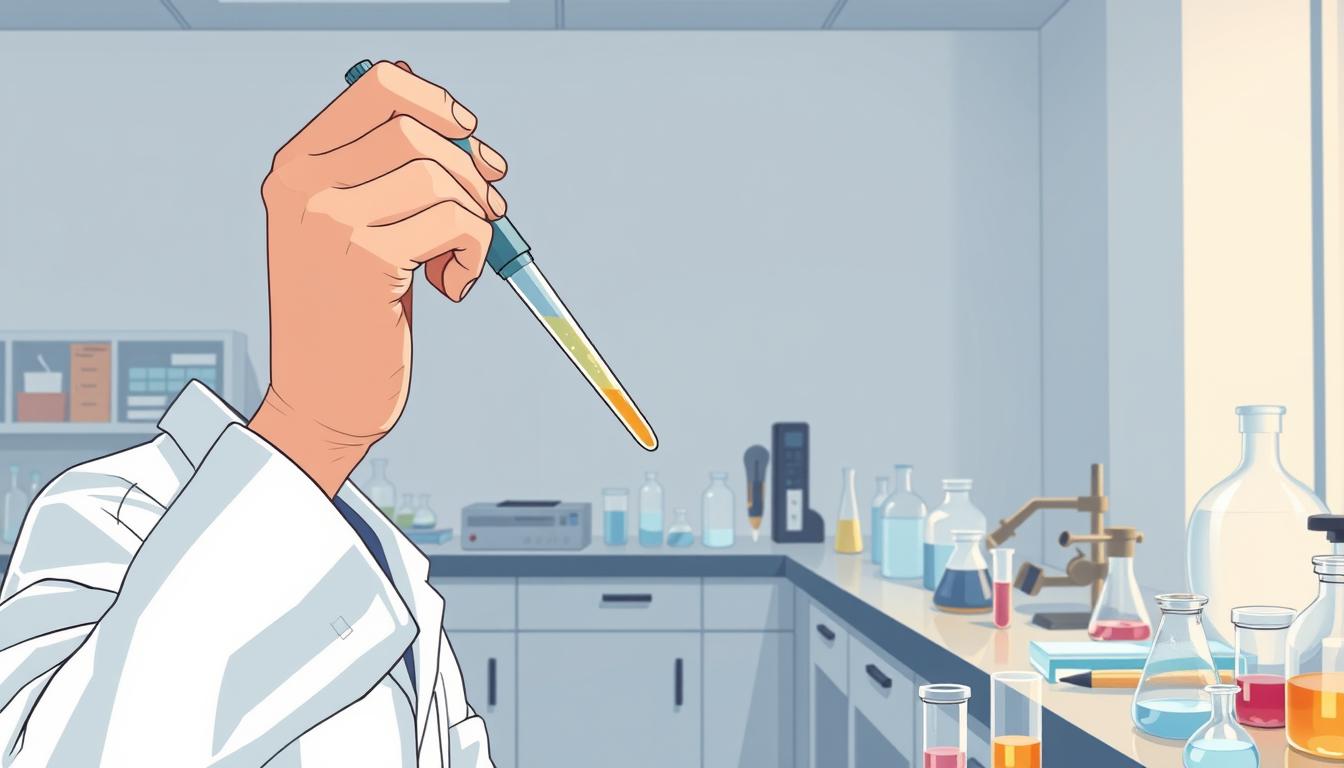
Ever wondered how scientists move tiny amounts of liquid with such precision? Pipetting is a key skill in labs, essential for scientific research.
Pipetting is a method for moving exact amounts of liquid using special tools called pipettes. Since Heinrich Schnitger created the micropipette in 1958, it has changed science in many fields.
In labs, getting pipetting right is crucial. Researchers spend a lot of time learning this skill, often over 80% of their day. Today, labs use both old-school manual methods and new electronic systems that can handle over 100 samples an hour.
The way pipetting has evolved has made science work much faster. Now, with tools like single-channel and multichannel pipettes, scientists can do complex tests quickly and accurately.
Key Takeaways
- Pipetting is a fundamental laboratory technique for precise liquid transfer
- Micropipettes were invented in 1958, transforming scientific research
- Different pipette types exist for various scientific applications
- Accuracy is crucial in laboratory liquid handling
- Modern pipetting techniques significantly reduce research time
Introduction to Pipetting
Laboratory skills are key in scientific research, with pipetting at the heart of precise sample prep. What is pipetting? It’s a vital technique for moving small liquid amounts with great accuracy and control in labs and medical settings.
Pipetting is a complex method of handling liquids that needs technical skill and attention to detail. Scientists and researchers use it to keep experiments consistent and results reliable.
Definition of Pipetting
Pipetting is about measuring and moving tiny liquid amounts using special tools called pipettes. These tools help researchers:
- Measure precise liquid amounts
- Move samples between containers
- Keep experiments accurate
- Reduce contamination risk
Importance in Laboratory Settings
Good sample prep relies on pipetting’s precision. Researchers know that tiny volume changes can greatly affect results.
Precision in pipetting is not just a skill—it’s a scientific necessity.
| Pipette Volume Range | Typical Applications |
|---|---|
| 0.5-10 µL | Molecular biology techniques |
| 20-200 µL | Cell culture experiments |
| 100-1000 µL | General laboratory work |
Modern labs suggest using up to 5 pipette tips for practice to save resources and keep technique high. The best distance from a surface for pipetting is about 2mm. This ensures the best control when moving liquids.
Types of Pipettes
Pipettes are key tools in science, helping to move liquids with great care. Knowing the different types helps scientists pick the best one for their work.
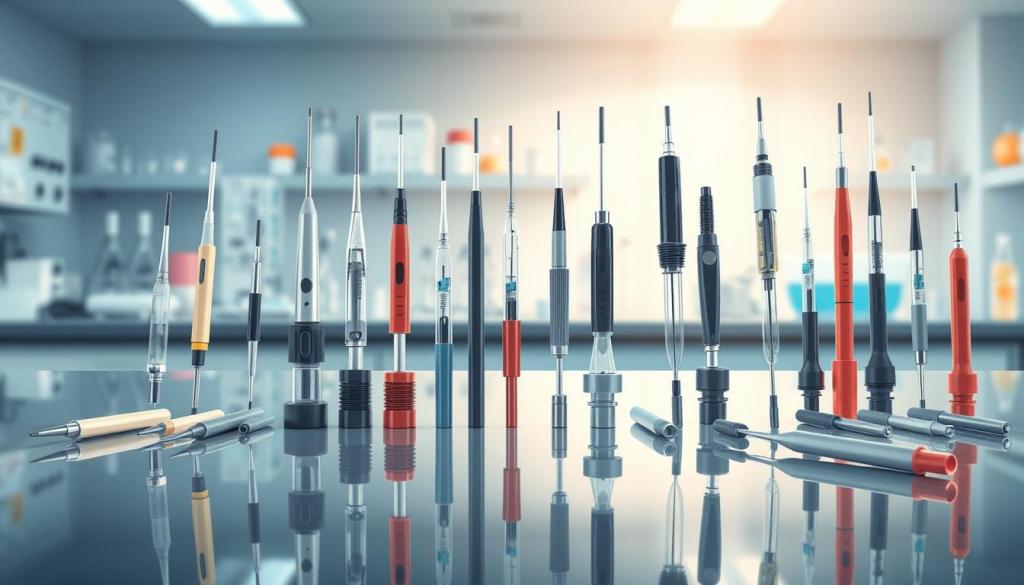
Today’s labs use many pipette types, each for its own task. There are air displacement and positive displacement pipettes. Each has special traits for different scientific needs.
Air Displacement Pipettes
Air displacement pipettes are the most used in labs. They can handle volumes from 0.1 μL to 1,000 μL. They are great for:
- Water-like solutions
- Adjustable volume
- Single or multichannel options
- High accuracy
Positive Displacement Pipettes
Positive displacement pipettes are for tough liquids. They’re best for:
- Thick liquids
- Evaporating substances
- Dense solutions
- Keeping samples clean
Manual vs. Electronic Pipettes
Scientists can pick between manual and electronic pipettes. It depends on what they need in the lab:
| Manual Pipettes | Electronic Pipettes |
|---|---|
| Need thumb effort | Uses a battery |
| Cost less at first | Is easier on the hands |
| Basic volume control | Has digital settings |
“Choosing the right pipette is key for accurate and reliable results.” – Scientific Research Standards
When picking a pipette, think about the liquid, needed precision, and how often you’ll use it.
Pipetting Techniques
Precision in liquid handling is key to successful scientific research. Pipette technique needs skill, knowledge, and practice for accurate results.
Good pipetting is more than just moving liquids. It involves many important factors that affect the results of experiments.
Proper Grip and Positioning
Keeping a good posture is vital for pipette technique. Researchers should:
- Hold the pipette comfortably with a relaxed grip
- Maintain a neutral wrist position
- Take short breaks during extended pipetting sessions
- Adjust working height to prevent strain
Advanced Liquid Handling Strategies
Professional liquid handling needs precise methods. Key strategies include:
- Immerse tip just below the liquid meniscus
- Use a consistent vertical approach angle
- Pre-rinse tips for improved volume accuracy
- Select appropriate tip for specific volume ranges
| Technique | Accuracy Impact | Recommended Practice |
|---|---|---|
| Tip Immersion | ±0.5% to 50% variation | Immerse 2-3mm below meniscus |
| Approach Angle | Significant precision loss | Maintain 90-degree vertical angle |
| Tip Pre-rinsing | Increased volume uniformity | Rinse 2-3 times before sampling |
“Mastering pipette technique is an art that combines scientific precision with practiced skill.” – Laboratory Research Quarterly
Electronic pipettes have advanced features for better liquid handling. They include digital displays and automated dispensing. Regular calibration and maintenance keep them working well in many scientific fields.
Calibration and Maintenance
Pipette calibration is key in labs for precise and reliable research. It ensures accurate liquid handling through regular checks and calibration.
- Regular performance checks
- Systematic cleaning protocols
- Professional servicing intervals
- Environmental condition monitoring
Importance of Regular Calibration
For labs, pipette calibration is a must, not a choice. Precision instruments need regular checks to stay accurate. Calibrating often stops mistakes and makes results reliable.
“Calibration is the foundation of reliable scientific measurement.”
Critical Maintenance Tips
Effective pipette care needs a few key steps:
- Do monthly volume checks
- Clean with the right solutions
- Keep them in good conditions
- Keep a maintenance log
| Maintenance Activity | Recommended Frequency | Purpose |
|---|---|---|
| Basic Cleaning | Daily | Remove surface contaminants |
| Calibration Verification | Monthly | Ensure volumetric accuracy |
| Professional Servicing | Annually | Comprehensive instrument assessment |
For labs aiming high, pipette calibration is more than upkeep. It’s a promise to uphold research quality and precision.
Common Pipetting Errors
Precision is key in labs. Pipette accuracy is vital for experiments. Knowing common mistakes is crucial for those in the field.
Labs face many challenges with liquid transfers. Pipetting mistakes can greatly affect results. These errors can harm the integrity of research.
Understanding Over and Under Pipetting
Pipetting errors come in two main types:
- Over Pipetting: Too much liquid is dispensed
- Under Pipetting: Not enough liquid is dispensed
Critical Factors Affecting Pipette Accuracy
Many factors can affect pipetting:
- Temperature changes can expand liquids
- Altitude changes affect air displacement
- Humidity levels impact liquid transfer
In dry and hot places like Death Valley, pipettes can underdeliver by up to 35 percent.
Tips to Minimize Pipetting Errors
To improve lab skills, try these tips:
- Pre-wet pipette tips at least five times
- Hold the pipette at the right angle
- Use top-quality pipette tips
- Keep plunger pressure consistent
- Calibrate equipment often
About 33% of pipetting errors come from poor training. Continuous learning and practice are key to keeping pipette accuracy high in research.
Applications of Pipetting
Pipetting is key in science and industry, making precise liquid transfers. It’s all about the accuracy in lab work and sample prep. This affects the quality of our scientific findings.

Biological Research Innovations
In molecular biology, pipetting is crucial. It’s used for:
- DNA sequencing
- Polymerase Chain Reaction (PCR)
- Protein analysis
Clinical Laboratory Dynamics
Clinical labs need precise sample prep for accurate tests. Pipettes help healthcare pros handle tiny liquid amounts with great care.
| Laboratory Type | Pipetting Application | Volume Range |
|---|---|---|
| Medical Diagnostics | Blood Testing | 1-100 μL |
| Microbiology | Culture Preparation | 0.1-10 mL |
| Genetic Research | DNA Extraction | 0.5-50 μL |
Industrial Applications
Industrial sectors use pipetting for quality control. Precision liquid handling is vital for pharma, food safety, and environmental checks.
Accurate pipetting is the cornerstone of reliable scientific research and industrial innovation.
Pipetting’s flexibility lets researchers handle tiny amounts with high accuracy. This is true across many scientific fields.
Troubleshooting Pipetting Issues
Laboratory professionals face many challenges with pipettes. Keeping pipette accuracy high and improving lab skills are key for good research. Knowing how to solve common pipetting problems can greatly help results.
Identifying Common Pipetting Problems
Getting liquids right is all about attention to detail. Scientists often run into issues that can mess up their work:
- Air bubble formation during liquid aspiration
- Inconsistent volume dispensing
- Tip leakage or improper sealing
- Difficulty maintaining vertical pipette positioning
Solutions for Effective Pipetting
To tackle pipetting problems, we need smart solutions. These improve lab skills and pipette accuracy:
- Implement reverse pipetting techniques to minimize air bubbles
- Calibrate pipettes every 6-12 months
- Use high-quality pipette tips
- Practice consistent plunger pressure
Accurate pipetting is not just a skill, but a critical scientific discipline.
| Problem | Potential Cause | Recommended Solution |
|---|---|---|
| Volume Variation | Incorrect technique | Retrain on proper pipetting method |
| Tip Leakage | Poor tip attachment | Ensure secure tip connection |
| Inconsistent Dispensing | Equipment wear | Regular maintenance and calibration |
Understanding these solutions helps lab pros improve pipetting skills. This reduces errors in experiments.
Best Practices for Pipetting
Effective laboratory procedures need precision and care in handling liquids. Researchers must follow strict protocols for accurate and clean experiments.
Hygiene and Contamination Prevention
Keeping a clean work area is key in labs. Experts suggest several strategies to lower contamination risks:
- Clean pipettes and surfaces before each use
- Wear gloves and lab coats
- Choose the right pipette tips for each task
- Check equipment daily

“Contamination prevention is not just a procedure, it’s a commitment to scientific integrity.”
Record-Keeping and Documentation
Keeping detailed records is vital in labs. Researchers should log:
- Pipette calibration dates
- Liquid handling protocols
- Equipment maintenance records
- Sample transfer histories
By following these best practices, scientists can improve their results’ reliability and reproducibility.
Key Recommendations
To improve liquid handling, consider these expert tips:
- Calibrate pipettes every 6-12 months
- Use tips suited for specific volumes
- Practice good pipetting technique
- Take breaks during repetitive tasks
Precision in pipetting is the foundation of successful scientific research.
Conclusion
Pipetting is key in scientific research, where precision is crucial. It’s not just about moving liquids. It’s a complex process that needs skill and focus. Labs use it for many things, from studying molecules to helping with health tests.
Key Takeaways
Using tools like micropipettes well takes a lot of practice. Scientists need to get good at handling tiny amounts of liquid. They also have to learn about different ways to transfer liquids.
Getting pipetting right means a few things. You have to know how deep to put the tip in. You also need to control the pressure and pick the right tip for your experiment.
The Future of Pipetting in Laboratories
New technology is changing lab tools, making them more automated and digital. Soon, pipetting systems will be better at tracking data and easier to use. These changes aim to cut down on mistakes and make results more reliable.
As science gets more complex, knowing how to pipette well is still vital. Those who learn about liquid handling and keep up with new tech will lead the way in scientific breakthroughs.
FAQ
What exactly is pipetting?
Pipetting is a precise technique used in labs. It involves moving liquids from one container to another. Special tools called pipettes are used to do this with great accuracy.
Why is accurate pipetting important in laboratory settings?
Accurate pipetting is key because small changes in liquid volume can affect results. It ensures reliable data and reduces errors in fields like biology and chemistry.
What are the main types of pipettes?
There are air displacement, positive displacement, and electronic pipettes. Air displacement pipettes are common. Positive displacement ones are best for thick or volatile liquids. Electronic pipettes are precise and reduce hand fatigue.
How often should pipettes be calibrated?
Pipettes need regular calibration, every 3-12 months. This depends on how often they’re used and the manufacturer’s advice. Calibrating often keeps measurements accurate.
What are common pipetting errors to avoid?
Mistakes include under or over pipetting, wrong tip choice, bad technique, and uneven handling. Using the right technique and consistent speed helps avoid these.
Where are pipetting techniques most commonly used?
Pipetting is used in many areas. This includes biological research, clinical diagnostics, and pharmaceutical development. It’s also used in genetic testing and quality control.
What are best practices for maintaining pipette accuracy?
To keep pipettes accurate, calibrate them often and store them right. Use the right tips and maintain a consistent technique. Avoid extreme temperatures and clean them carefully.
How can I improve my pipetting technique?
Practice steady movements and use the right pipette for your liquid. Make sure to immerse tips correctly and release liquids smoothly. Training and practice are key to getting better.
What safety precautions should be taken when pipetting?
Wear protective gear and use proper technique to avoid contamination. Work in a clean area and use tips correctly. Follow hygiene rules to stay safe and keep experiments reliable.
Are electronic pipettes better than manual pipettes?
Electronic pipettes are great for reducing strain and improving precision. But manual pipettes are simpler and cheaper. They’re good for many lab tasks.






Leave a Comment
Your email address will not be published. Required fields are marked *