



Ever wondered which single cell in the human body is the largest? The answer might surprise you and challenge what you thought you knew about human biology.
The female ovum, or egg cell, is the biggest cell in the human body. It measures about 120 micrometers in diameter. This makes it big enough to see with the naked eye, much larger than other cells.
Most human cells are between 10 to 100 micrometers. But the female egg cell is much bigger. Its size is key for reproduction, giving it room for genetic material and growth.
Our bodies have about 37.2 trillion cells. The egg cell is a standout, showing the amazing variety and complexity of human cells. Learning about the largest human cell gives us deep insights into how we reproduce and how cells work.
Key Takeaways
- The female egg cell is the largest cell in the human body
- Measures approximately 120 micrometers in diameter
- Visible to the naked eye, unlike most cells
- Critical for reproductive processes
- Represents unique cellular diversity in human biology
Understanding Cells in the Human Body
The human body is made up of tiny building blocks called cells. These tiny units of life are the foundation of our bodies. They work together to keep us alive.
Definition of Cells
Cells are the smallest parts of living things. Each cell has special parts that do different jobs. The size of a human egg cell is one amazing example of this.
Importance of Cell Size
Cell size is very important for how our bodies work. The size of an egg cell affects how we reproduce. Different cells are different sizes and shapes, each suited for its job.
- Tiny blood cells circulate through the body
- Large nerve cells can extend several feet in length
- Reproductive cells like the human egg cell have unique dimensions
Overview of Different Cell Types
Our bodies have about 200 different kinds of cells. They range from tiny platelets to big egg cells. Each cell is unique and plays a special role.
| Cell Type | Primary Function | Approximate Size |
|---|---|---|
| Blood Cells | Oxygen Transportation | 7-8 micrometers |
| Nerve Cells | Neural Communication | 100 micrometers |
| Egg Cell | Reproduction | 100 micrometers |
“Cells are the basic structural and functional units of living organisms.” – Scientific Consensus
Learning about cells helps us understand our bodies better. It shows us how life works at its most basic level.
The Largest Cell: An Overview
The human body has many types of cells, but one stands out for its size and importance. The female egg cell, or ovum, is a remarkable example of cell complexity and reproductive power.
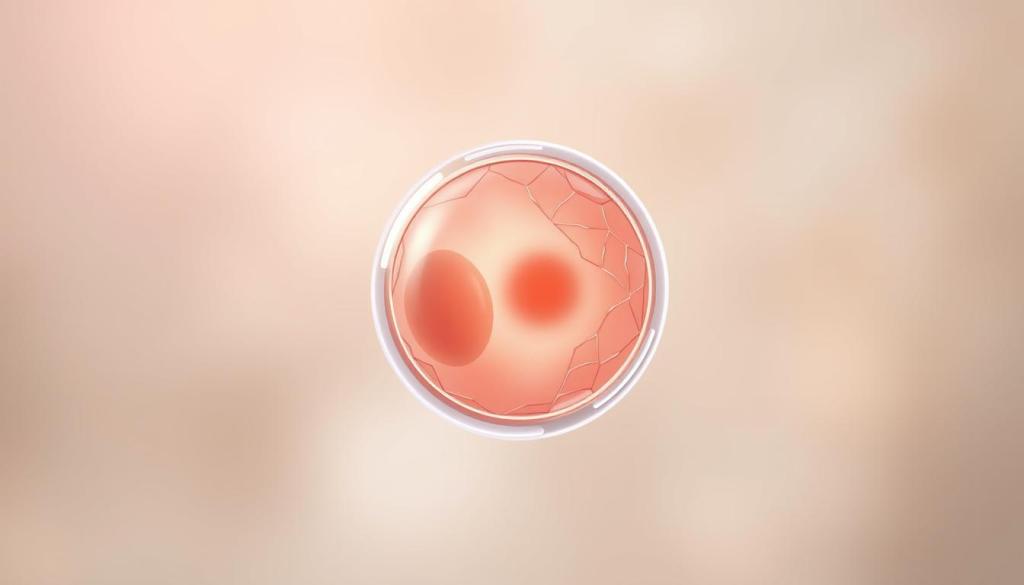
The egg cell’s anatomy is unique among human cells. It is the largest cell in the body. This female gamete has special features that make it different from other cells.
Characteristics of the Largest Cell
Female egg cells have unique traits that make them stand out:
- They are about 20 times bigger than sperm cells
- They can be seen with the naked eye
- They are round with a diameter of about 100 micrometers
- They have a single nucleus with 23 chromosomes
Location of the Largest Cell
The female gamete is found in the ovaries. It develops there and waits for fertilization. Each ovary has thousands of immature egg cells. Usually, one mature egg is released each month.
Function of the Largest Cell
The egg cell’s main job is to help reproduce. It carries genetic information and nutrients for early embryonic growth. Its large size allows it to store important resources for early cell divisions after fertilization.
“The egg cell represents nature’s most intricate and powerful cellular design for human reproduction.” – Reproductive Biology Research
| Cell Characteristic | Egg Cell Details |
|---|---|
| Size | Largest human cell (100 micrometers) |
| Chromosome Count | 23 (haploid) |
| Location | Ovaries |
| Reproductive Role | Potential embryo development |
Learning about the egg cell’s anatomy and function helps us understand human reproduction and cell biology.
Comparison with Other Types of Cells
The human body is full of different cells, each with its own job. From tiny reproductive cells to big tissue cells, it’s all very complex.
Cells in the human body come in all sizes. From small sperm cells to big reproductive cells like the human oocyte. Knowing these sizes helps us understand how cells work and what they do.
Size Variations Among Human Cells
Cells in the human body are all different sizes:
- Smallest cells: Sperm cells (about 4 micrometers)
- Largest cells: Human oocyte (around 120 micrometers in diameter)
- Average red blood cell: 7.5 micrometers
Specialized vs. General Cells
Reproductive cells are special. They are different from other cells because they are made for reproduction.
| Cell Type | Size | Primary Function |
|---|---|---|
| Sperm Cell | 4 µm | Male Reproduction |
| Human Oocyte | 120 µm | Female Reproduction |
| Red Blood Cell | 7.5 µm | Oxygen Transport |
Impact of Cell Size on Functionality
How big a cell is affects what it can do. Larger reproductive cells like the human oocyte have more genetic material. This lets them handle complex reproductive tasks.
“The size of a cell is not just a physical characteristic, but a critical determinant of its biological potential.” – Cellular Biology Research
Learning about cell sizes helps scientists understand complex biological processes. It also helps them find new ways to help people.
The Role of the Oocyte
The oocyte is a biological wonder that plays a key role in human reproduction. It is the largest cell in the human body. This egg mother cell is full of complexity and potential for new life.

The egg cell’s structure is special for reproduction. It has unique traits that set it apart from other cells.
Understanding the Oocyte
An oocyte is a female gametocyte vital for reproduction. It has several important features:
- Diameter of about 100 micrometers
- Significantly larger than other human cells
- Contains genetic material for potential offspring
Developmental Journey
The oocyte’s development is truly amazing. Females are born with about 1 million eggs. By puberty, only 300,000 eggs remain. These eggs go through many changes:
- Formed during fetal development
- Arrested in prophase I stage
- Potential maturation during ovulation
Reproductive Significance
The egg mother cell is crucial for reproduction. Human oocytes are about 10,000 times larger than sperm cells. This shows their unique importance. During fertilization, the oocyte gives essential genetic material and initial structures for the embryo.
“The oocyte represents the pinnacle of cellular complexity and reproductive potential.”
Learning about the egg cell structure shows a complex biological system for creating new life. The oocyte is indeed a marvel of human biology.
Factors Influencing Cell Size
Cell size is shaped by many factors. The biggest human cell, the female egg, shows unique traits. These traits make it stand out in the world of cells.
Genetic Influences on Cell Dimensions
Genes are key in deciding how big a cell can get. Certain genes help control how cells grow and develop. This includes:
- Gene expression patterns
- Chromosome stability
- Protein synthesis regulation
- Cell cycle control mechanisms
Environmental Impact on Cellular Growth
What’s outside a cell also matters a lot. Things like food, temperature, and stress can change how big a cell gets.
“Cells are not static entities but dynamic systems responsive to their environment.” – Cellular Biology Research
Biological Limitations of Cell Size
There are limits to how big a cell can be. As cells get bigger, it gets harder to move nutrients in and waste out. This is because:
- Nutrient transportation
- Waste removal
- Maintaining metabolic efficiency
- Ensuring proper genetic material distribution
Knowing these limits helps us understand why cells have certain sizes. The balance between genes, environment, and biology decides how big and how well cells work.
How the Largest Cell Affects the Body
The human egg cell, or ovum, is key in biological processes. Its unique features are crucial for reproductive success and early development. Learning about its size and shape gives us a peek into the world of cells.
- It stores vital nutrients for the growing embryo.
- It protects the genetic material.
- It supports the first cell divisions.
Contribution to Reproductive Success
The size of the ovum is important for reproductive success. A mature egg is about 100 micrometers in diameter, the largest cell in us. This size allows for storing lots of genetic information and nutrients.
Role in Embryonic Development
In early embryonic stages, the egg cell’s size is crucial. It has a huge amount of cellular components for the first stages of life. It provides nutrients and genetic instructions for cell growth and differentiation.
Implications for Health
The health of egg cells affects reproductive outcomes and genetic inheritance. Scientists are studying how the egg cell’s size and quality impact long-term health.
“The egg cell represents nature’s most sophisticated microscopic blueprint for human life.” – Reproductive Biology Research Team
| Egg Cell Characteristic | Measurement |
|---|---|
| Average Diameter | 100 micrometers |
| Nutrient Storage Capacity | High |
| Genetic Information Density | Extensive |
Scientific Research on Cell Size
Cell biology is a field that keeps revealing new and exciting things about cells. Today, scientists are really interested in how cell size affects our health.
They are studying how cells control their size, especially in egg cells and female gametes. This research shows that cell size is very important for many biological processes.
Recent Findings in Cell Biology
Recent studies have made some big discoveries about cell size:
- Changes in cell size can affect reproductive health.
- Genes play a big role in controlling cell size.
- There are special molecules that help cells grow.
Importance of Studying Cell Size
Studying cell size helps us understand:
- How our bodies develop.
- New ways to improve reproductive medicine.
- How to prevent diseases.
“Cell size is not just a measurement, but a window into understanding complex biological systems.” – Dr. Elizabeth Roberts, Cell Research Institute
Future Research Directions
Researchers are looking into new areas:
| Research Focus | Potential Impact |
|---|---|
| Genetic Manipulation of Cell Size | Therapeutic interventions |
| Female Gamete Development | Enhanced reproductive understanding |
| Cellular Growth Regulation | Disease prevention strategies |
The future of cell biology research is exciting. It could lead to big changes in how we understand health and how cells work.
Misconceptions About Cell Size
Learning about cells can be tough because of many myths and misunderstandings. Scientists have worked hard to clear up these complex ideas. They focus on reproductive cells and human oocyte characteristics.
Many people believe wrong things about cell size and what they do. These wrong ideas can really mess up our understanding of human biology and how we reproduce.
Common Myths About Cellular Dimensions
- All cells are the same size and shape
- Larger cells are always more important
- Cell size remains constant throughout life
- Microscopic cells have limited capabilities
Clarifying Scientific Misunderstandings
Research shows interesting facts about cell sizes. The human oocyte is the biggest cell in us, about 120 micrometers wide. It’s not true that all reproductive cells are the same size or do the same thing.
“Understanding cellular complexity requires dispelling simplistic notions about biological structures.” – Cellular Biology Research Institute
Importance of Accurate Information
Knowing the right science helps us get how complex cells are. By fighting wrong ideas about reproductive cells, scientists can help us understand human biology better.
- Cell sizes range from 0.2 to 120 micrometers
- Approximately 37.2 trillion cells exist in an adult human body
- Less than 1% of human cells are considered large
It’s key to keep teaching people about cells. This helps change how we see these tiny structures and their amazing abilities.
Conclusion: Significance of Cell Size in Biology
Exploring cell dynamics gives us deep insights into human biology. Learning about the egg mother cell and its structure is key to understanding reproduction and cell growth. Scientists keep finding out how cell size affects important biological processes.
Cell complexity goes beyond just structure. Proteins, nucleic acids, and lipids work together to keep cells running. The egg cell shows how cells can be highly specialized, carrying a lot of genetic and reproductive power.
Future research will likely look into how cell size, genetics, and environment interact. Breakthroughs in cell biology could lead to new treatments in regenerative medicine and genetic therapies. This will also help us understand human reproductive health better.
Our scientific journey keeps showing us the amazing world inside our cells. It brings hope for new medical treatments and a deeper understanding of our biology.
FAQ
What is the largest cell in the human body?
The largest cell in the human body is the female egg cell, or ovum. It measures about 0.1 millimeters in diameter. This size is big enough to see with the naked eye, much larger than other cells.
Why is the egg cell so much larger than other cells?
The egg cell’s size is key for early growth of the embryo. It has lots of nutrients, genetic material, and tools needed for the first stages of life before implantation.
How does the egg cell’s size compare to other human cells?
The egg cell is much bigger than most human cells. While most cells are too small to see, the egg cell is about 10 times larger than a sperm cell. You can see it without a microscope.
What makes the egg cell unique in human reproduction?
The egg cell is special because it has half the genetic material needed for reproduction. It also has nutrients and special structures for fertilization and early growth.
How many egg cells does a female typically have?
Females are born with about 1-2 million immature egg cells. But only 300-400 will mature and be released during their reproductive years.
Can the size of an egg cell affect fertility?
Yes, the size and quality of the egg cell are very important for fertility. Good size and health of the egg cell help with fertilization and healthy growth of the embryo.
Are there any medical conditions related to egg cell size?
Yes, some reproductive disorders can affect egg cell quality and size. For example, polycystic ovary syndrome (PCOS) can impact egg cell development and reproductive health.
How do scientists study egg cells?
Scientists use advanced tools like microscopy, genetic analysis, and reproductive technologies. They study the structure, genetics, and potential for fertilization and growth of egg cells.






Leave a Comment
Your email address will not be published. Required fields are marked *