


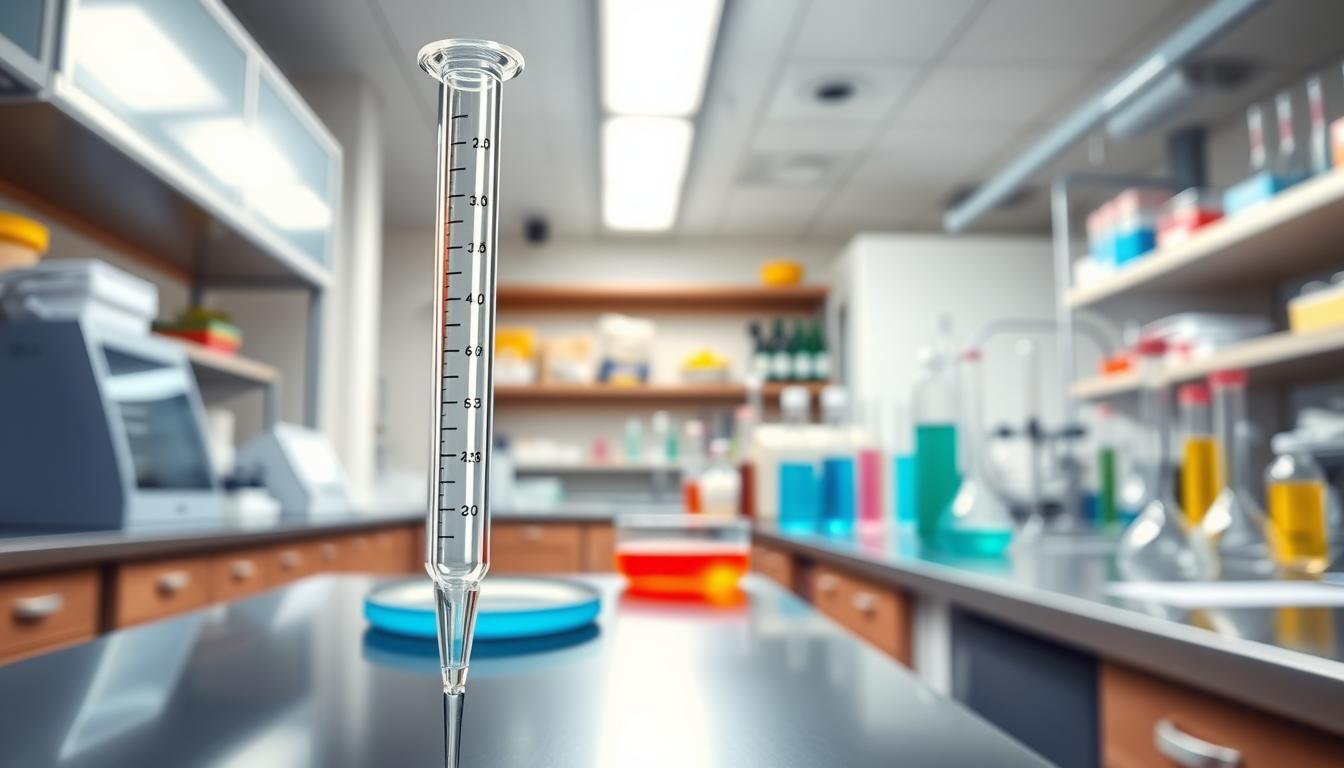
Ever thought about how scientists get so precise with tiny amounts of liquid? Serological pipettes are key to this, helping scientists measure and move liquids with great care.
These pipettes are special tools for handling liquids in labs. They help scientists measure and move liquids from less than 1 milliliter to 50 milliliters very accurately.
Labs use serological pipettes for many things. They’re important in clinical research and biochemical experiments. They help keep experiments consistent and reliable, with an accuracy of ±1% to ±2%.
Scientists count on these tools for many tasks. They’re used for preparing samples, working with cells, and analyzing chemicals. Their ability to adapt makes them essential in today’s science.
Key Takeaways
- Serological pipettes provide precise liquid measurement in laboratory settings
- Volume ranges typically span from 1 mL to 50 mL
- Used in approximately 70% of liquid handling tasks
- Can reduce contamination risk by up to 50%
- Critical for maintaining experimental accuracy
Overview of Serological Pipettes
Serological pipettes are key tools in labs for precise liquid handling. They help scientists measure and transfer liquids with great accuracy. This is crucial for many research tasks.
Labs use different types of serological pipettes for many tasks. These tools can measure from less than 1 milliliter to 50 milliliters. This range makes them vital for various experiments.
Definition and Core Purpose
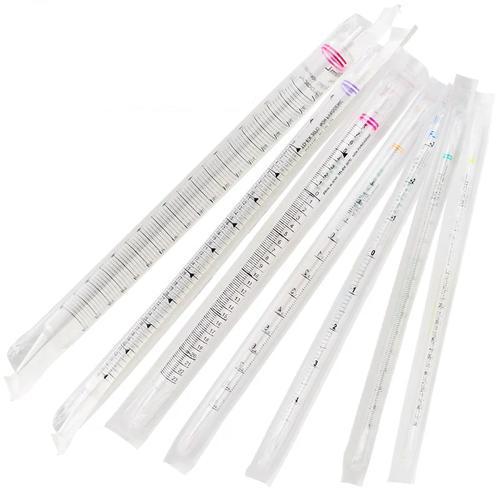
A serological pipette is a long tube with markings for precise volume. These markings help researchers handle liquids with high precision. The design lets scientists:
- Transfer liquids accurately
- Distribute cells evenly
- Mix chemical solutions
- Prepare density gradients
Common Laboratory Applications
Researchers use serological pipettes in many fields. Some main uses are:
- Cell culture techniques
- Chemical analysis
- Reagent preparation
- Microbiology experiments
To use serological pipettes well, scientists need to know certain techniques. They must read the liquid level correctly and handle the pipettes carefully. This keeps the samples safe and prevents contamination.
Precision and careful technique are fundamental to successful laboratory work with serological pipettes.
These tools are available in sterile and non-sterile versions. They can be made of disposable plastic or reusable glass. Their accuracy and versatility make them crucial for today’s science.
Types of Serological Pipettes
Laboratory experts use different serological pipettes for precise liquid handling. They pick the right tool based on their research needs. This ensures accurate results in various scientific fields.
Volume Classifications
Serological pipettes vary in volume, from 1 mL to 50 mL. These tools are crucial for many scientific tasks, offering high accuracy.
- Open-end pipettes: Available in sizes 1 mL, 2 mL, 5 mL, and 10 mL
- Bacteriological pipettes: Specialized sizes of 1.1 mL and 2.2 mL
- Standard volume ranges: 1 mL to 50 mL
Material Composition Options
Manufacturers offer two main materials: disposable plastic and traditional glass. Each has its own benefits for lab work.
| Material Type | Percentage | Key Characteristics |
|---|---|---|
| Polystyrene | 85% | Disposable, lightweight, cost-effective |
| Glass | 15% | Reusable, heat-resistant, precise |
Choosing the right pipette depends on the experiment, liquid type, and avoiding contamination.
- Disposable pipettes reduce contamination risks
- The material affects the experiment’s accuracy
- Plastic and glass have different sterilization methods
Precision in liquid handling starts with the right serological pipette for your research.
Key Features of Serological Pipettes
Serological pipettes are advanced lab tools for precise liquid measurements. They are key in scientific research, allowing for consistent and reliable handling of liquids.
These pipettes have important features that make handling and measuring liquids easier and more accurate:
- Clear, bold graduations for easy volume reading
- Volume range from 1 mL to 50 mL
- Accuracy within ±1% to ±2% of total volume
- Color-coded markings for quick size identification
Graduated Markings: Precision in Measurement
Graduated markings are vital for accurate measurements. They help researchers measure liquid volumes with great precision. The markings are in bold, contrasting colors for easy visibility during experiments.
Sterility and Packaging: Maintaining Research Integrity
Sterility is crucial in labs. Most serological pipettes are pre-sterilized to lower contamination risks. Plastic pipettes, made from polystyrene, have several benefits:
- Pre-sterilized packaging
- Lightweight design
- Cost-effective solution
- Reduced contamination potential
Researchers can pick between disposable and reusable pipettes, based on their needs. Glass pipettes can be autoclaved and reused. Plastic ones are easy to use once and throw away.
How to Use a Serological Pipette
Using a serological pipette needs precision and careful steps. Scientists use these tools for many experiments. They are crucial in labs.
Good serological pipette techniques involve several key steps. These steps help get reliable results and avoid contamination.
Step-by-Step Pipette Usage Instruction
- Choose the right pipette size for your needs
- Connect the pipette to a controller
- Pick a sterile, disposable pipette tip
- Calibrate the pipette to the correct volume
- Draw liquid a bit above the target mark
- Release extra liquid for the exact volume
Best Practices for Professional Handling
- Keep the pipette vertical during transfers
- Don’t touch the tip to container walls
- Use gentle, steady aspiration and dispensing
- Check pipettes for damage before use
- Follow cleaning rules for reusable glass pipettes
Accurate serological pipette handling demands attention to detail and consistent practice. Labs can move volumes from under 1 milliliter to 50 milliliters with these tools.
Precision is the foundation of scientific discovery.
Knowing these serological pipette techniques helps researchers keep high standards. This ensures accurate and reproducible results in experiments.
Importance of Accuracy in Measurements
Precision is key in scientific research. Serological pipette accuracy is crucial for reliable results. Researchers need exact liquid transfer for their work.
Small measurement errors can lead to big problems. Serological pipette calibration is essential for top-notch results.
Impact on Experimental Results
Minor errors can cause big issues in research. Scientists must understand the risks of inaccurate measurements:
- Compromised experimental reproducibility
- Unreliable data interpretation
- Potential research setbacks
- Increased experimental costs
Techniques for Ensuring Precision
There are ways to improve serological pipette accuracy:
- Regular pipette calibration checks
- Proper pipetting techniques
- Minimize environmental variations
- Perform multiple measurements
*Precision is not just about the instrument, but the skill of the person using it.*
| Technique | Accuracy Improvement |
|---|---|
| Consistent Angle | Reduces liquid volume variation |
| Controlled Aspiration Speed | Minimizes air bubble formation |
| Proper Tip Selection | Ensures optimal liquid transfer |
By focusing on serological pipette calibration and using careful techniques, researchers can improve their work’s reliability and reproducibility.
Maintenance and Cleaning of Pipettes
Keeping serological pipettes in good shape is key for accurate lab results. It also helps these tools last longer. Lab workers need to clean and store pipettes well to keep them precise and reliable.
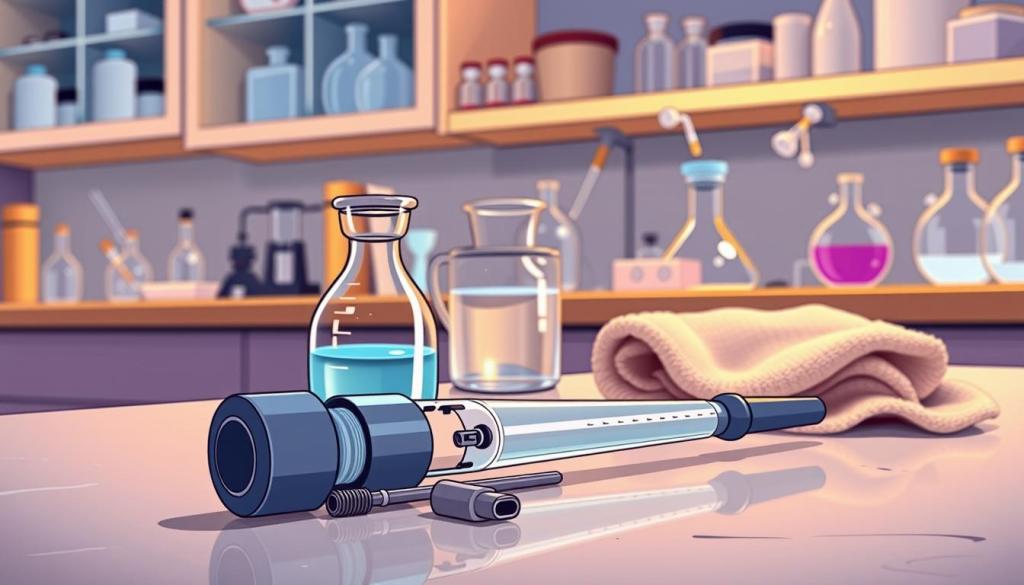
Handling serological pipettes right involves a few important steps. These steps help keep the tool and your experiments safe:
- Regular visual inspections for damage or wear
- Consistent cleaning protocols
- Appropriate storage techniques
- Periodic calibration checks
Recommended Cleaning Procedures
Cleaning pipettes well is crucial to remove germs and other contaminants. The right solution depends on the situation:
- Aqueous solutions: Rinse with distilled water and air dry
- Acidic or alkaline substances: Clean tip cone and ejector more frequently
- Organic solvents: Use specialized detergent solutions
Precision in cleaning directly correlates with experimental accuracy.
Storage Tips for Longevity
Storing pipettes correctly is vital for their maintenance. Experts suggest:
- Store pipettes vertically to prevent internal liquid contamination
- Keep in clean, dry environments
- Avoid extreme temperature fluctuations
- Use protective cases when not in use
Following a strict maintenance routine can make pipettes last up to 50% longer. It also cuts down on measurement errors a lot.
Comparison with Other Pipettes
Laboratory scientists use various pipettes for precise liquid handling. Knowing the special features of serological pipettes helps researchers pick the right tool for their work.
Serological pipettes are unique because of their design and wide range of uses. Unlike micropipettes, which handle small volumes, serological pipettes are great for moving larger amounts accurately.
Serological vs. Micropipettes: Key Differences
- Volume Range: Serological pipettes measure 1-50 mL, while micropipettes handle 0.1-1000 µL
- Design: Serological pipettes have longer barrels with graduated markings
- Material: Often made of disposable plastic for single-use
- Primary Applications: Cell culture, chemical analysis, molecular biology research
Advantages of Serological Pipettes
Serological pipette uses are widespread in science. Their main benefits are:
- Large Volume Transfers: They efficiently move large liquid amounts
- Precise Measurements: Graduated scales ensure accurate liquid dispensing
- Contamination Prevention: Single-use design minimizes cross-contamination risks
- Versatility: Suitable for diverse laboratory protocols
Researchers can choose between sterile disposable and reusable glass serological pipettes. This choice depends on their specific experimental needs, ensuring the best performance and reliability in scientific studies.
Safety Considerations
Laboratory safety is key in scientific research, especially with serological pipettes. It’s important to handle pipettes correctly to keep experiments safe and protect people.
Preventing Contamination Risks
Stopping contamination needs careful attention with serological pipettes. Lab workers should follow certain steps to avoid cross-contamination:
- Use filtered pipette tips to prevent aerosol transmission
- Maintain vertical positioning during liquid aspiration
- Avoid plunger depression while tip remains submerged
- Clean pipettes between different sample transfers
Personal Protective Equipment Protocols
Keeping lab workers safe requires good personal protective equipment (PPE) plans. About 50% of pipette users feel physical discomfort, showing the need for safety steps.
- Wear disposable gloves during all pipetting activities
- Use lab coats to prevent direct skin exposure
- Consider eye protection for potential splash risks
- Take micro-breaks every 20-30 minutes to reduce strain
Ergonomic Considerations
Ergonomic practices are also vital with serological pipettes. They help prevent long-term injuries. Work areas should be set up to reduce strain and improve comfort during long pipetting tasks.
Proper safety protocols protect both experimental results and researcher health.
By following these safety tips, lab workers can lower risks of contamination and health problems from handling serological pipettes.
Innovations in Serological Pipette Design
The world of lab equipment is always changing. Serological pipette makers are leading the way with new tech. They’ve brought in fresh ideas that make pipetting more precise and quicker.
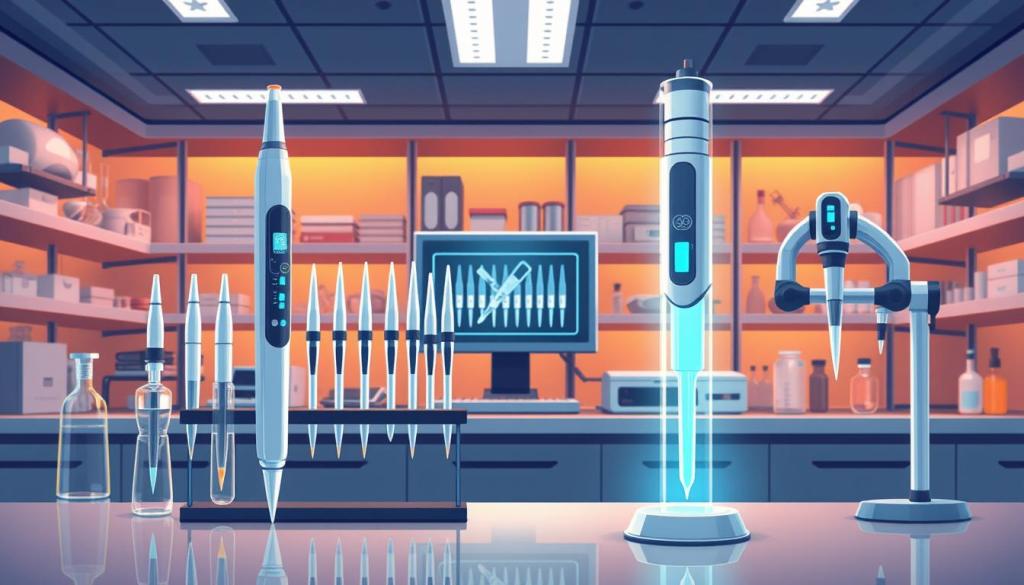
New types of serological pipettes are changing how labs work. The big changes include:
- Advanced electronics with smart sensors
- Computer controls for volume
- Designs that are easier on the hands
- Auto-calibration features
Emerging Design Trends
Today, pipette makers focus on smart design. They aim to solve big lab problems. The main goals are:
- High-precision engineering
- Designs that put the user first
- Adaptive tech
Future Technology Integration
Next-gen serological pipettes are becoming smart lab tools. Integrated electronic systems let you track performance live. They also fix errors and log data automatically.
| Innovation Category | Key Technological Advancement |
|---|---|
| Electronic Control | Microprocessor-based volume regulation |
| Material Science | Advanced lightweight, corrosion-resistant composites |
| User Interface | Intuitive digital displays and touch controls |
The future of serological pipettes looks bright. We can expect even better accuracy, speed, and ease of use. This will keep pushing tech forward.
Conclusion
Serological pipettes are key in scientific research, helping with precise liquid transfer. They are used in cell culture, clinical diagnostics, and biochemical testing. These tools come in sizes from 1 mL to 50 mL, making them versatile for accurate measurements.
These pipettes do more than just move liquids. Scientists use them to keep experiments clean and reliable. Choosing the right pipette, whether it’s sterile or not, and handling it correctly is crucial.
Lab workers must focus on precision and safety with serological pipettes. The right choice depends on the volume needed, if it must be sterile, and the research goals. By getting these techniques right, scientists can improve their work and advance knowledge.
Today, serological pipettes are seen as essential in labs. They help connect theory with practical science. As research needs grow, so does the need for better, easier-to-use lab tools.
FAQ
What is a serological pipette?
A serological pipette is a tool for precise liquid measurement and transfer. It has graduated markings and is used in many scientific fields. This includes cell culture, chemical analysis, and biological research.
What are the main types of serological pipettes?
Serological pipettes vary in volume from 1 mL to 50 mL. They are made of glass or plastic. Glass ones are reusable, while plastic ones are used once to avoid contamination.
How do I ensure accuracy when using a serological pipette?
To get accurate results, read the markings carefully and handle the pipette consistently. Calibrate it often and use the right technique to read the liquid level. Always keep your hands clean and steady.
What safety precautions should be taken when using serological pipettes?
Wear lab coats, gloves, and safety glasses as PPE. Keep the area clean and use separate pipettes for different solutions. Follow the right disposal rules for single-use pipettes.
How should serological pipettes be cleaned and maintained?
Reusable pipettes need cleaning with the right solutions. Rinse with distilled water, air dry, and store in a clean place. Throw away disposable pipettes after use. Check for damage and store properly to keep them working well.
What is the difference between serological and micropipettes?
Serological pipettes handle larger volumes (1-50 mL) with graduated markings. Micropipettes are for smaller volumes (under 1 mL) and have digital controls. Serological pipettes are best for bigger liquid transfers.
How do I choose the right serological pipette for my research?
Think about the volume you need, the liquid type, and whether you want disposable or reusable. Look at the pipette’s volume range, material, and sterility for your research.
What are the latest innovations in serological pipette design?
New designs include better materials, improved accuracy, digital features, and ergonomic shapes. These changes aim for more precise, user-friendly, and automated pipettes.





Leave a Comment
Your email address will not be published. Required fields are marked *