



Ever thought about how scientists make complex biological products with such precision? Bioreactors are key to this, offering a new way to control and improve biological processes in many fields.
Bioreactors do more than just lab work. They create special spaces for growing microorganisms, cells, and complex reactions. By controlling things like temperature, pH, and nutrients, they make production more efficient and reliable.
So, what do bioreactors aim to do? Simply put, they create the perfect conditions for biological changes. This helps in making medicines to cleaning the environment. They are essential for both scientific breakthroughs and making industries more efficient.
Key Takeaways
- Bioreactors provide controlled environments for biological processes
- Support diverse applications across biotechnology, pharmaceuticals, and food production
- Enable precise management of biological reactions
- Increase productivity and consistency in scientific research
- Facilitate advanced cellular and microbial cultivation techniques
Definition of Bioreactors
Bioreactors are advanced systems that help biological processes in many fields. They create special environments for living things to grow and make valuable products. This is done with great precision.
The heart of bioreactor tech is its ability to manage complex biological systems well. The design of bioreactors is key to making biological production processes work better.
Introduction to Bioreactor Technology
Bioreactors are classified based on a few important traits:
- Operational mode (batch, fed-batch, continuous)
- Culture support system (submerged or anchored)
- Cellular arrangement (suspension or immobilized)
Importance of Bioreactors in Biotechnology
Bioreactors have changed biotech research and production in four big areas:
- Biotechnology
- Pharmaceuticals
- Food production
- Wastewater treatment
*”Bioreactors enable precise control of biological processes, revolutionizing how we approach scientific and industrial production.”*
Using bioreactor tech wisely brings big benefits, like:
- Improved production efficiency
- Consistent product quality
- Lower costs
- Greener manufacturing
Advanced bioreactor design lets us control important factors like temperature, pH, and oxygen levels. These are crucial for the best growth and quality of biological products.
Types of Bioreactors
Bioreactors are key in many fields, from science to industry. They control biological reactions well. This helps in making medicines and studying the environment.
There are three main types of bioreactors. Each has its own strengths for different needs.
Batch Bioreactors: Controlled Cultivation Environment
Batch bioreactors are closed systems. They grow microorganisms in a fixed space. They are great for starting research and small projects.
- Finite nutrient supply
- Discrete processing stages
- Simplified operational parameters
- Ideal for initial research and small-scale productions
Continuous Bioreactors: Sustained Production Mechanism
Continuous bioreactors keep the process going without stopping. They have steady inputs and outputs. This makes them good for big productions.
- Steady nutrient replenishment
- Consistent product generation
- Extended operational duration
- Higher overall productivity
Fed-Batch Bioreactors: Hybrid Operational Strategy
Fed-batch bioreactors mix batch and continuous systems. They control nutrient addition well. This helps in growing cells better.
- Controlled nutrient addition
- Enhanced metabolic performance
- Flexible production strategies
- Optimized cellular growth conditions
“Bioreactor selection depends on specific process requirements and desired output characteristics.”
| Bioreactor Type | Primary Application | Key Advantage |
|---|---|---|
| Batch | Research/Small Scale | Controlled Environment |
| Continuous | Industrial Production | Sustained Output |
| Fed-Batch | Complex Biological Processes | Flexible Nutrient Management |
Knowing about these bioreactors helps in choosing the right one. This is for solving scientific and industrial problems.
Key Functions of Bioreactors
Bioreactors are key tools for complex biological processes. They help control and optimize these processes. They are used to grow microorganisms and make important medicines.
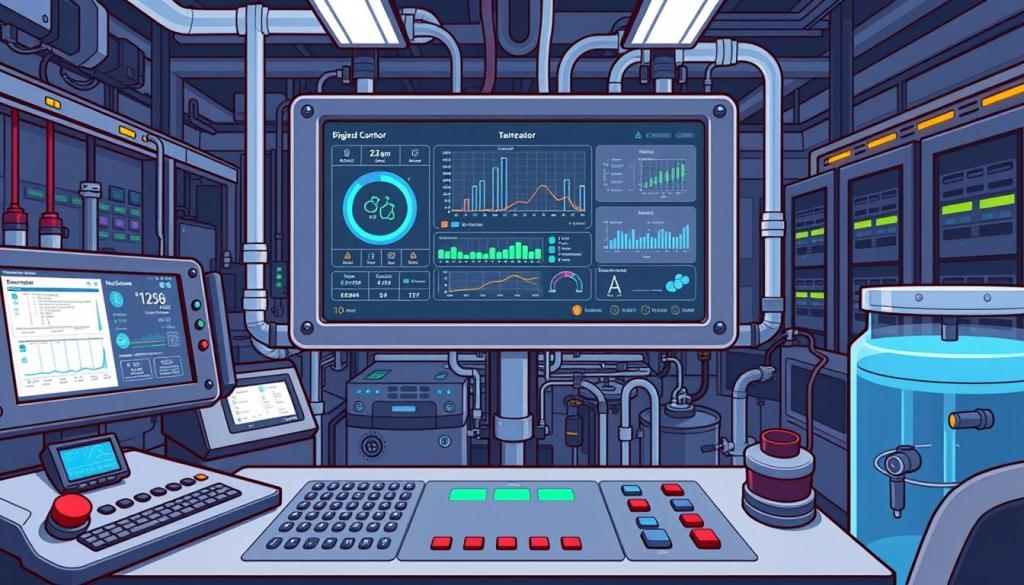
Bioreactors create the perfect environment for biological changes. They control growth conditions with great precision. This is thanks to their advanced control systems.
Cultivation of Microorganisms
Bioreactors are essential for growing microorganisms. They provide the best conditions for microbes to grow. This includes:
- Precise temperature regulation
- Controlled nutrient supply
- Monitored pH levels
- Managed oxygen concentration
Scientists use modeling to predict and improve microbial growth. This ensures high productivity and consistent results.
Production of Biopharmaceuticals
In the world of medicine, bioreactors are vital. They help make important drugs and vaccines. They produce:
- Vaccines
- Antibiotics
- Therapeutic proteins
- Enzymes
Bioreactors change how we make medicines. They offer better control and quality.
Advanced control systems in bioreactors help keep quality high. They also cut costs and time in production.
| Bioreactor Function | Key Benefits |
|---|---|
| Microorganism Cultivation | Optimized growth conditions |
| Biopharmaceutical Production | High-quality, consistent output |
| Environmental Monitoring | Precise parameter control |
Bioreactor modeling keeps getting better. It helps us understand and control biological processes in many fields.
Goals of Bioreactors in Industry
Bioreactor optimization is key in today’s industrial world. These advanced systems create perfect environments for biological changes. They work well in many fields.
- Maximize biological process efficiency
- Reduce operational expenses
- Ensure consistent product quality
- Enable complex biological manufacturing
Enhancing Production Efficiency
The main aim of bioreactors is to make biological manufacturing smoother. They help by keeping the best conditions for microbes to grow and produce products.
“Bioreactors transform complex biological processes into precise, controllable manufacturing environments.”
Efficiency metrics show big gains:
| Industry | Productivity Increase | Key Benefit |
|---|---|---|
| Pharmaceutical | Up to 90% yield | Vaccine Production |
| Food Processing | 50-80% consistency | Fermented Product Quality |
| Chemical Manufacturing | 40% cycle reduction | Faster Production |
Reducing Costs
Bioreactors aim to cut down on costs. They do this through advanced automation and precise control.
Cost-saving strategies include:
- Automating manual processes
- Minimizing resource waste
- Implementing intelligent monitoring systems
- Optimizing energy consumption
With smart sensors and predictive control algorithms, bioreactors cut labor costs by 20-30%. They keep product quality and consistency high.
Role of Bioreactors in Environmental Applications
Environmental sustainability is a big challenge worldwide. Bioreactors are a key solution for many ecological problems. They help change how we manage waste and restore the environment.
- Waste Treatment
- Bioremediation
Advanced Waste Treatment Technologies
Bioreactors offer advanced ways to treat waste, reducing pollution. They use microorganisms to break down waste efficiently. The controlled environment helps manage biological processes well, ensuring waste is fully broken down.
| Waste Treatment Method | Key Benefits |
|---|---|
| Membrane Bioreactors | High-efficiency contaminant removal |
| Moving Bed Biofilm Reactors | Enhanced microbial activity |
| Anaerobic Digesters | Energy generation from waste |
Bioremediation: Restoring Ecological Balance
Bioremediation is a new way to clean up the environment. It uses special microorganisms in bioreactors to clean contaminated areas. These systems are great at removing pollutants like:
- Oil spills
- Pesticide residues
- Industrial chemical contaminations
“Bioreactors transform environmental challenges into sustainable solutions through intelligent biological engineering.”
Bioreactors show great promise for solving global environmental problems. They offer efficient ways to treat waste and clean up polluted sites. These technologies are a big step forward in managing our environment sustainably.
Applications in Food and Beverage Industry
Bioreactors have changed the food and drink world. They make production better by controlling fermentation well. This leads to high-quality products every time.

Bioreactors can be used in many ways in food making. They help with old and new ways of making food. This makes food production more flexible and advanced.
Fermentation Processes
Fermentation is a big use of bioreactors. They help make many foods:
- Yogurt and cheese production
- Beer and wine brewing
- Bread and baked goods
“Bioreactors enable unprecedented precision in fermentation, transforming how we create food products.”
Production of Enzymes and Additives
Bioreactors are key for making food enzymes and additives. They help make:
- Flavor enhancers
- Preservation agents
- Nutritional supplements
Researchers are always looking to make food production better. They want to make it more efficient, high-quality, and green. The future of food making will rely on these new biotech ways.
Research and Development Goals
Bioreactors are key in scientific progress and innovation. They offer precise settings for studying complex biological processes. This helps in creating new solutions in many fields.
Supporting Novel Product Development
Bioreactor monitoring and control help scientists speed up product development. They use these systems to:
- Study how cells grow
- Test new biological substances
- Find new biotech solutions
“Bioreactors transform scientific imagination into tangible technological breakthroughs.”
Enabling Genetic Engineering
Advanced bioreactor tech opens new doors for genetic engineering. They allow for detailed control over cell environments. This supports important studies in:
- Genetic modification
- Organism engineering
- Studying biological processes
| Research Focus | Bioreactor Contribution |
|---|---|
| Cellular Process Analysis | Precise environmental control |
| Genetic Engineering | Controlled experimental conditions |
| Novel Product Development | Systematic testing and validation |
Today’s bioreactor monitoring lets researchers see tiny changes in cells. This gives them deep insights into biology. The use of advanced control systems gives scientists the tools to explore biotech’s limits.
Impact on Agriculture
Bioreactor technology is changing agriculture in big ways. It goes beyond old farming methods. It offers new ways to grow food and care for the environment.
Revolutionizing Biofertilizer Production
Bioreactors are key in making better biofertilizers. They help grow good microbes for soil and plants. Farmers use bioreactors to:
- Make special microbial helpers
- Improve how nutrients get to plants
- Use less chemical fertilizers
Developing Pest-Resistant Crop Strategies
Genetic engineering and new crops are the future of farming. Bioreactors help in making plants that fight pests better. Research shows genetic changes can make crops stronger.
“Bioreactors are changing how we do research in farming by giving us better places to grow things.” – Agricultural Biotechnology Research Institute
Numbers show how important bioreactors are: the world’s population will hit 10 billion by 2050. One in nine people are already hungry. Bioreactors are a key answer for growing food in a green way.
Sustainable Agricultural Practices
Bioreactors help farmers in many ways:
- They make crops grow better
- They cut down on harm to the environment
- They lead to new farming ideas
The aim of bioreactors in farming is clear. They want to make farming more efficient, green, and able to feed more people. This way, we can grow food for everyone without harming our planet.
Factors Influencing Bioreactor Performance
Bioreactor performance is shaped by key environmental factors. These factors directly affect how cells grow and produce products. To model and optimize bioreactors well, we must control many factors carefully.

Optimizing bioreactors means knowing and managing important variables. These variables greatly affect biological processes.
Temperature Control Strategies
Temperature is vital for bioreactor success. Each microorganism grows best within a certain temperature range. Keeping the temperature just right ensures:
- Cells work consistently
- Enzymes function well
- Biological systems face less stress
pH and Oxygen Level Regulation
Keeping pH and oxygen levels right is key in bioreactor modeling. These factors directly affect how cells work and what they produce.
| Parameter | Optimal Range | Impact on Performance |
|---|---|---|
| pH | 6.8-7.4 | Enzyme function stability |
| Oxygen Levels | 20-50% saturation | Cellular respiration efficiency |
“Precision in bioreactor control transforms biological potential into measurable scientific outcomes.”
Advanced bioreactor optimization uses advanced monitoring systems. These systems track and adjust critical parameters in real-time. This helps create the perfect environment for biological processes.
Advanced Monitoring Techniques
Modern bioreactor modeling uses cutting-edge technologies. These technologies offer:
- Continuous tracking of parameters
- Quick adjustments to the environment
- Analysis of performance ahead of time
By using precise control strategies, scientists can boost bioreactor performance. This is true for both research and industrial uses.
Future Trends in Bioreactor Design
The world of bioreactor design is changing fast. New technologies and the need for more biotech research are driving these changes. Scientists are now using new methods to design and scale up bioreactors.
New bioreactor designs are breaking old manufacturing limits. Scientists are working on systems that can handle complex biological processes better.
Automation and Monitoring Technologies
Modern bioreactor design uses advanced automation to improve precision and control. Some key advancements include:
- Real-time sensor integration for continuous monitoring
- Artificial intelligence-driven process control
- Machine learning algorithms for predictive maintenance
- Advanced data analytics for performance optimization
Scale-Up Challenges in Bioreactor Technology
Scaling up bioreactors is a big challenge in biotech. New strategies are being developed to tackle these challenges:
- Developing flexible single-use bioreactor systems
- Implementing modular design approaches
- Creating adaptive control mechanisms
“The future of bioreactor design lies in creating intelligent, adaptable systems that can seamlessly transition from laboratory to industrial production.” – Biotechnology Research Insights
New trends in bioreactor design show the need for scalability. Now, bioreactors can handle volumes from 10^2 to 10^3 liters. This shows big progress in scaling up bioreactors.
Next-generation bioreactors will focus on being flexible, cost-effective, and automated. The aim is to create systems that are both standardized and adaptable. These systems will meet the varied needs of biotech research and industry.
Regulatory Considerations
Bioreactor technologies face strict rules that need careful safety and quality checks. To follow these rules, they must have detailed monitoring and control systems. These systems must meet the needs of each industry.
Bioreactor rules cover many important areas in different fields. It’s crucial to have strong quality control to keep products safe and good.
Safety Standards and Compliance Requirements
There are key things to think about when monitoring bioreactors:
- Following Good Manufacturing Practices (GMP)
- Checking if processes work as they should
- Keeping records of quality control steps
- Having solid plans for keeping data safe
Quality Control Protocols
Control systems for bioreactors need to be very precise. Rules usually say:
- Testing biological processes carefully
- Checking if sensors and probes work right
- Watching important process variables all the time
- Writing down all qualification steps
Precision in bioreactor monitoring is not just a recommendation—it’s a regulatory requirement.
The pharmaceutical and biotech fields have very strict rules. Moving from small tests to big production can be tricky. Success rates are between 75% and 90%.
Companies need to invest in good bioreactor control systems. These systems must ensure consistent results, accurate data, and follow changing rules worldwide.
Summary of Bioreactor Goals
Bioreactors are changing many industries in big ways. They help make important products in new ways. These systems are key to solving big problems with new tech.
Bioreactors are used in many areas, like making medicines and cleaning the environment. They help make things better and more efficient. The main goal is to create a perfect place for tiny living things to work well.
Overall Contribution to Society
Bioreactors help us a lot in many areas. They help find new medicines and make food better. They also help us solve big environmental problems.
These systems let experts work better and make things more reliable. They make sure we can make things in a way that’s good for the planet.
Future Directions and Innovations
The future of bioreactors looks very promising. We will see more use of smart tech and new ways to make things. There will be big advances in making bioreactors better and more efficient.
Experts think we will see new ways to use bioreactors. They will help solve big problems in health, farming, and the environment. It’s going to be exciting to see what happens next.
FAQ
What is the primary goal of bioreactors?
Bioreactors aim to create a controlled space for biological processes. They help produce substances efficiently in fields like biotech, pharma, and food. By managing temperature, pH, and nutrients, they boost productivity and yield.
How do bioreactors differ from traditional production methods?
Bioreactors offer a controlled and monitored setting for biological processes. They differ from old methods by allowing for precise growth conditions and microbial control. This leads to more efficient and consistent production of complex biological products.
What are the main types of bioreactor systems?
There are mainly three bioreactor types: batch, continuous, and fed-batch. Each is designed for specific processes, varying in nutrient addition and product harvesting.
In which industries are bioreactors most commonly used?
Bioreactors are key in many sectors. They’re used in pharma, biotech, food, environmental cleanup, agriculture, and research. They help make medicines, enzymes, biofuels, and food additives, and treat industrial waste.
How do bioreactors contribute to environmental sustainability?
Bioreactors aid in environmental sustainability by treating waste, bioremediation, and eco-friendly product production. They break down pollutants, treat wastewater, and support sustainable production, reducing environmental harm.
What are the key challenges in bioreactor design?
Designing bioreactors faces challenges like maintaining optimal conditions and scaling up. Ensuring product quality, managing complex systems, and overcoming economic and tech hurdles are also key issues.
How are modern bioreactors incorporating advanced technologies?
Modern bioreactors use AI, machine learning, real-time monitoring, and automation. These advancements enhance precision, efficiency, and the ability to predict and optimize biological processes.
What role do bioreactors play in agricultural biotechnology?
In ag biotech, bioreactors help develop biofertilizers, cultivate beneficial microbes, and produce pest-resistant crops. They improve soil health, crop yield, and support genetic engineering research.
How do regulatory considerations impact bioreactor operations?
Regulations are crucial in bioreactor use, especially in pharma and food. They ensure safety, quality, and compliance with Good Manufacturing Practices (GMP). This is vital for product safety and consistency.
What are the future trends in bioreactor technology?
Future trends include advanced automation, single-use bioreactors, better monitoring, scale-up improvements, and AI integration. These advancements will lead to more precise control and optimization of biological processes.
Related posts

Low-Bind Filter Tip Pipettes Optimizing Protein and Nucleic Acid Workflows

How 100mL Anti-spill Serological Pipettes Eliminate Cross-Contamination in Labs
Low Retention Pipette Tips for Protein & Enzyme Solutions

Optimizing Cell Staining Protocols with 8-Well Chambered Slides


Leave a Comment
Your email address will not be published. Required fields are marked *