


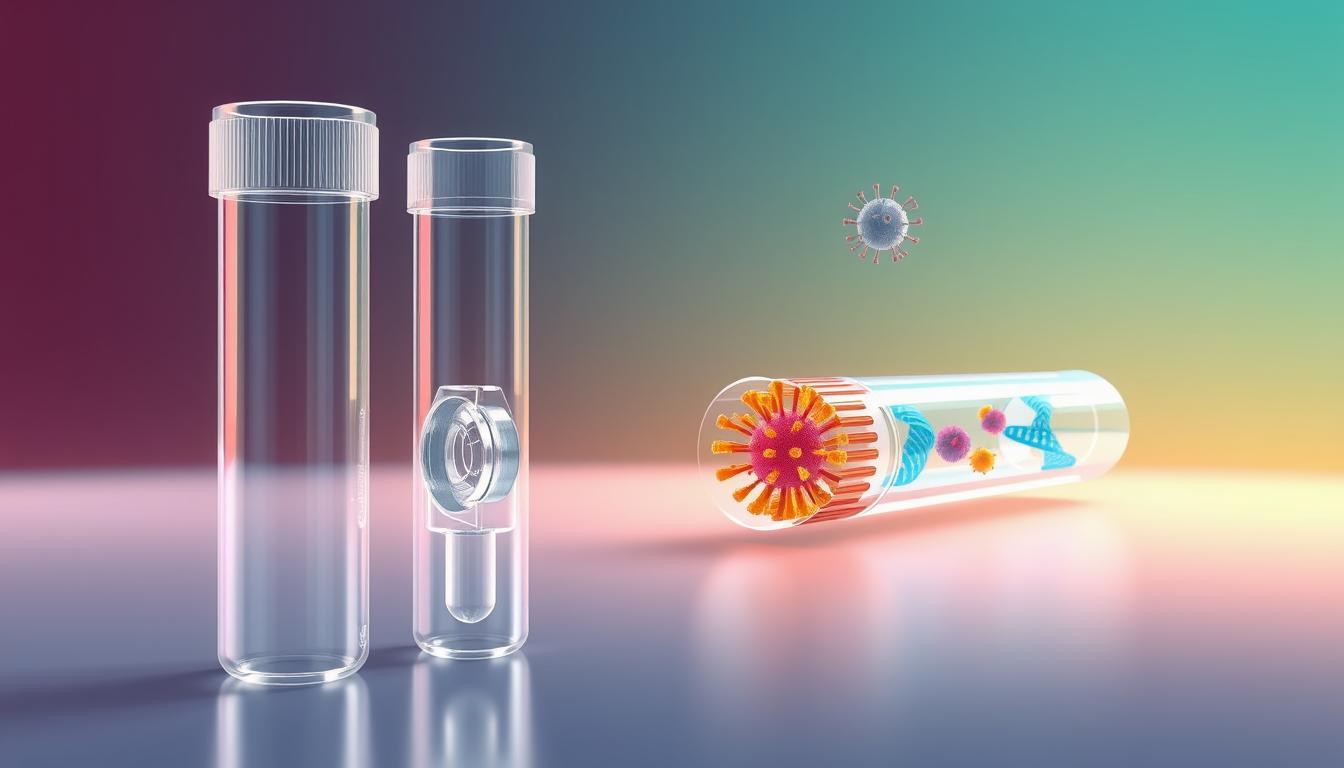
Ever thought about how tiny tubes can change genetic research? PCR tubes are a top achievement in molecular biology. They’re made with care to turn small DNA samples into big scientific wins.
The design of PCR tubes shows off scientific creativity. They can handle big temperature changes without harming DNA. This makes them key for important molecular studies.
PCR tubes are more than just containers. Their thin walls help heat spread fast, making genetic tests more efficient. They hold small amounts of liquid, saving reagents and ensuring accurate results.
Key Takeaways
- PCR tubes support temperature ranges from 4°C to 95°C
- Thin-walled design enables rapid heat transfer
- Small volume capacity optimizes reagent use
- Engineered for genetic material integrity
- Critical tool in molecular biology research
Introduction to PCR Tube Design
Polymerase chain reaction (PCR) tubes are key in molecular biology. They help in precise genetic research with their special design. These containers are crucial for DNA amplification, using advanced materials and smart designs.
PCR tube materials are vital in science, with heat-resistant polypropylene being the main choice. The thinwall design of PCR tubes ensures fast and even heat transfer. This is important for complex molecular processes.
Key Design Characteristics
- Temperature resistance up to 121°C
- Uniform heat distribution through thin-walled construction
- Multiple format options including single tubes and strip tubes
- Specialized base reinforcement for centrifuge compatibility
Significance in Molecular Biology
Scientists depend on well-designed PCR tubes for their research. The thinwall technology lets them work with small amounts of genetic material. This is important for keeping the integrity of their experiments.
Tube Volume Considerations
- 0.2 ml tubes: Ideal for limited samples
- 0.5 ml tubes: Standard for routine experiments
- 1.5 ml tubes: Accommodating larger sample volumes
The design of PCR tubes meets the complex needs of modern molecular biology. They give researchers reliable tools for exploring genetics and making new discoveries.
Materials Used in PCR Tube Manufacturing
Choosing the right PCR tube materials is key in molecular biology. These containers are vital for genetic analysis and amplification in scientific research.
Medical-grade polypropylene is the main material for PCR tubes. It has special properties that make it perfect for science:
- Exceptional thermal stability
- Superior chemical resistance
- Minimal molecular interference
- High durability during temperature cycling
Types of Plastic in PCR Tube Production
Quality control in PCR tubes means picking the right material. Medical-grade polypropylene is chosen for its unique features:
- Standard polypropylene: Most common material
- High-performance polypropylene: Better heat resistance
- Specialized polymer blends: Tailored for specific research
Heat Resistance Properties
The heat resistance of PCR tubes is vital for molecular experiments. Important specs include:
- Temperature tolerance up to 121°C
- Consistent performance between 4°C and 95°C
- Minimal thermal expansion
- Rapid and uniform heat transfer
Selecting the right PCR tube materials ensures reproducible and reliable scientific results.
Researchers must carefully choose PCR tube materials. This is to keep experiments consistent and get accurate genetic analysis.
Shape and Structure of PCR Tubes
PCR tubes are made with care for important molecular biology work. Their design helps in successful genetic amplification. Labs use these containers to keep samples safe and get the best results.
The design of PCR tubes shows advanced engineering for research. They come in sizes from 0.1 mL to 0.2 mL. This lets researchers work with small amounts and get better results.
Standard Tube Configurations
PCR tubes are made for different research needs:
- Individual tubes for single-sample analysis
- Tube strips with 8 or 12 connected tubes
- Comprehensive PCR plates with 96 or 384 wells
Specialized Sample Loading Features
Modern PCR tubes have special features for better lab work. They are thin-walled for fast and even heat transfer. This is key for precise temperature control.
They can handle temperatures from 4°C to 95°C without breaking. This makes them reliable for many experiments.
Design features include:
- Pre-sterilized surfaces
- DNase and RNase-free certifications
- Transparent materials for easy tracking
- Precise volume markings
Researchers can pick the right tube for their experiments. This ensures the best results in molecular biology.
Seal Integrity and Closure Mechanisms
PCR tube caps are key to precise molecular biology experiments. Their design affects DNA amplification success by stopping contamination and keeping samples in.
Scientists use advanced closures to safeguard their genetic samples during heating and cooling. The right seal is crucial for good results.
Types of Seals in PCR Tubes
- Flat optical caps for real-time PCR
- Dome-shaped snap caps
- Screw-top caps with secure threading
- Soft-touch closure mechanisms
Benefits of Secure Closures
Innovative pcr tube caps offer many benefits to lab researchers:
- Prevent sample evaporation
- Reduce contamination risks
- Ensure uniform heat distribution
- Minimize potential sample loss
| Cap Type | Evaporation Rate | Temperature Resistance |
|---|---|---|
| Standard Flat Caps | 15-20% | Up to 100°C |
| Expell PCR Caps | 5% | Up to 121°C |
| Optical Caps | 10% | Up to 110°C |
The right PCR tube caps are vital for precise results. Researchers need to pick closures that offer optimal protection for various molecular biology tasks.
Volume Capacity and Variability
PCR tube sizes are key in molecular biology research. They allow for precise volume control, which is vital for different experiments. The right volume ensures the best handling and amplification of samples.
Laboratory experts need pcr tube features that offer flexibility in managing samples. PCR tubes come in volumes from 0.2 ml to 1.5 ml. Each size is designed for specific research needs.
Standard Volume Configurations
- 0.2 ml Tubes: Ideal for small-volume reactions
- Perfect for quantitative PCR (qPCR)
- Minimal sample requirements
- Rapid heat transfer capabilities
- 0.5 ml Tubes: Versatile mid-range option
- Suitable for standard amplification
- Supports genotyping studies
- Robust chemical resistance
- 1.5 ml Tubes: Large-volume research applications
- Accommodates whole genome amplification
- Supports multiplex PCR techniques
- Graduated markings for precise measurements
Customization for Specific Research Needs
Now, pcr tube features include specialized designs for unique research needs. Researchers can choose from individual tubes, strip tubes, and 96-well plates. This matches their specific workflow demands.
Selecting the appropriate PCR tube volume is crucial for maintaining experimental integrity and achieving reproducible results.
The variety in pcr tube sizes lets scientists fine-tune their molecular biology protocols. This ensures precision and confidence in their work.
Compatibility with Thermal Cyclers
PCR tube thinwall design is key for top performance in various thermal cyclers. Its precise engineering boosts the efficiency and accuracy of molecular biology research.
When choosing PCR tubes, several important features must be considered:
- Precise tube height matching cycler specifications
- Material thermal conductivity
- Uniform heat transfer capabilities
- Temperature resistance range
Design Considerations for Heat Transfer
Thin-walled PCR tubes help in quick and even heat transfer. This is vital for effective temperature cycling. The tube’s thickness affects how fast heat moves, with thinner walls leading to quicker changes.
Ensuring Proper Fit in Various Models
Thermal cyclers need specific tube profiles. Fast PCR thermocyclers use low-profile tubes, 15.6-16.6 mm tall. Standard cyclers prefer regular profile tubes, 20.9-21.8 mm tall. Using the wrong tube can cause problems and affect results.
- Fast cyclers: Need precise low-profile tube dimensions
- Standard cyclers: Work best with regular profile tubes
- Compatibility: Essential for reliable results
Today’s PCR tubes are made to fit many thermal cycler models. This lets researchers easily switch between different models without losing sample quality or precision.
UV Transparency and Light Protection
PCR tube features are key in keeping sensitive molecular biology samples safe. The design of scientific plastics has improved to tackle specific challenges in lab research. This includes managing light and UV interactions.
Researchers need special PCR tubes for precise light management. These tubes offer important protection to keep samples safe during various molecular biology procedures.
Understanding UV Transparency in PCR Applications
UV transparency is a key quality control for PCR tubes. It affects the results of research. Different studies need specific optical properties:
- Spectrophotometric analysis requirements
- Fluorescence-based detection methods
- Sensitive genetic material preservation
Light Degradation Prevention Strategies
Advanced PCR tube designs use special materials to prevent light damage. Strategic material selection helps protect samples in different research settings.
| Tube Type | UV Protection Level | Recommended Application |
|---|---|---|
| Clear Tubes | Low | Standard PCR |
| White Tubes | High | qPCR Experiments |
| Specialized UV-Resistant Tubes | Maximum | Light-Sensitive Protocols |
“Precision in sample protection determines the reliability of molecular research outcomes.” – Laboratory Research Principles
Modern PCR tubes use advanced engineering to reduce light interference. Thin-walled designs with special coatings prevent photochemical reactions. This protects delicate genetic materials during important research.
Color Coding and Marking Features
In molecular biology, knowing exactly what you’re working with is key. PCR tube labeling helps keep things straight and avoids mistakes. Today’s labs use smart ways to keep track of their samples.
PCR tubes have changed a lot to help manage samples better. Now, scientists use new labeling methods that are more than just writing on tubes.
Purpose of Advanced Marking Systems
Modern PCR tube labeling brings many benefits:
- Less chance of mistakes in tracking samples
- Better management of data
- Works well with fast, big experiments
Innovative Labeling Technologies
New PCR tube labeling tech includes:
- 2D Data Matrix Barcodes: Carry lots of info
- Color-coded tubes for easy spotting
- Durable, customizable labels
Studies show advanced barcoding can create 4.29 × 10^9 unique codes. This greatly lowers the chance of mix-ups in complex tests.
Strategic Labeling Approaches
Labs can make the most of PCR tubes by using:
- Barcode systems that work together
- Auto-tracking tools
- Custom color schemes
By using advanced PCR tube labeling, scientists can greatly boost the reliability and quality of their results.
Environmental Considerations in Design
The biological research community is now focusing more on sustainable lab practices. This includes the use of PCR tube materials and how they are made. Labs around the world are seeing the harm plastic waste can cause and are looking for ways to cut down.
Now, makers are choosing pcr tube materials that are better for the planet. They are using several strategies to make labs greener:
- Creating PCR tubes that can be recycled
- Developing lab items that can break down naturally
- Starting recycling programs for labs
- Lowering plastic use in molecular biology studies
Biodegradability Innovations
Today, PCR tube quality control looks at how green they are. Scientists are looking for new materials that are precise but also kind to the environment.
| Material Type | Environmental Impact | Recyclability Rating |
|---|---|---|
| Traditional Polypropylene | High Environmental Load | Low |
| Biodegradable Polymers | Reduced Environmental Impact | High |
| Recycled Plastic | Moderate Environmental Load | Medium |
Recycling Initiatives
Companies making lab gear are starting recycling programs for PCR tubes. These efforts aim to make science more sustainable by cutting down on plastic waste.
The future of lab supplies is about being good for science and the planet.
Conclusion: The Significance of Effective PCR Tube Design
PCR tubes have made a big leap in molecular biology research. With so many plastic items out there, these tubes stand out. They are designed with precision for complex genetic studies.
These tubes have evolved to meet the needs of scientists. They offer tools for handling samples accurately. This helps in detailed genetic analysis.
Now, scientists can pick from different PCR tube types. They can choose individual tubes or strips of 8 or 12. This makes handling easier and cuts down on contamination risks.
The design focuses on key aspects like thermal stability and material durability. This ensures they work well in various tests, like disease detection and genetic studies.
Key Design Innovations
Future PCR tube designs will likely get even better. Companies like Thermo Scientific are already making strides. They’ve created the Armadillo PCR plates with polycarbonate frames for top-notch stability.
This shows how molecular biology tech is always improving. The design of PCR tubes is constantly evolving.
Looking Forward
As research gets more complex, PCR tube design will keep up. It will focus on better materials, precise engineering, and special features. This will be key for major breakthroughs in medicine, genetics, and diagnostics.
FAQ
What are PCR tubes primarily used for in molecular biology?
PCR tubes are special containers for PCR experiments. They help in DNA amplification. They keep samples safe during genetic research and tests.
Why are PCR tubes typically made of polypropylene?
Polypropylene is used because it’s very stable and safe. It handles temperature changes well and keeps samples safe from contamination.
What makes the thin-walled design of PCR tubes important?
The thin walls help in quick and even heating. This makes DNA amplification more precise and faster. It ensures all samples are amplified well.
What volume ranges are typical for PCR tubes?
PCR tubes usually hold between 0.2 mL and 0.5 mL. The most common size is 0.2 mL. This size is good for saving reagents and efficient heating.
How do PCR tube caps contribute to experimental success?
Caps protect samples from contamination and keep them from drying out. They also seal the tube well. Different caps are used for different needs.
What environmental considerations are being explored in PCR tube manufacturing?
Manufacturers are now making biodegradable tubes and recycling. They want to be green while keeping the tubes good for science.
How are PCR tubes typically marked or labeled?
Tubes have labels like pre-printed ones, writable surfaces, and colors. These help scientists keep track of samples and avoid mistakes.
Are PCR tubes compatible with different thermal cycler models?
Yes, tubes fit most cycler models. Their design ensures good heat transfer and fit in different instruments.
What quality control measures are used in PCR tube production?
Tubes go through strict testing and cleaning. They check for material quality, wall thickness, and resistance to heat and chemicals. This ensures they work well in labs.
Do PCR tubes offer UV transparency?
Many tubes are clear for UV light. This is good for tests that need light. Some tubes also block light for sensitive samples.





Leave a Comment
Your email address will not be published. Required fields are marked *