



Are you ready to unlock the precision behind every critical scientific measurement? The 10 ml serological pipette is a key player in laboratory work. It makes transferring liquids a precise science.
Scientists and researchers count on this tool for precise liquid transfers. It’s used in many fields, from molecular biology to microbiology. The 10 ml serological pipette is more than just equipment; it’s a path to accurate scientific discovery.
Laboratory professionals know that reliable tools are the start of successful experiments. A 10 ml serological pipette offers unmatched accuracy. It lets researchers conduct experiments with confidence and get the same results every time.
Key Takeaways
- Critical tool for precise liquid transfer in scientific research
- Essential for multiple laboratory disciplines
- Enables reproducible experimental results
- Supports various scientific applications
- Plays a pivotal role in modern laboratory workflows
Introduction to 10 ml Serological Pipettes
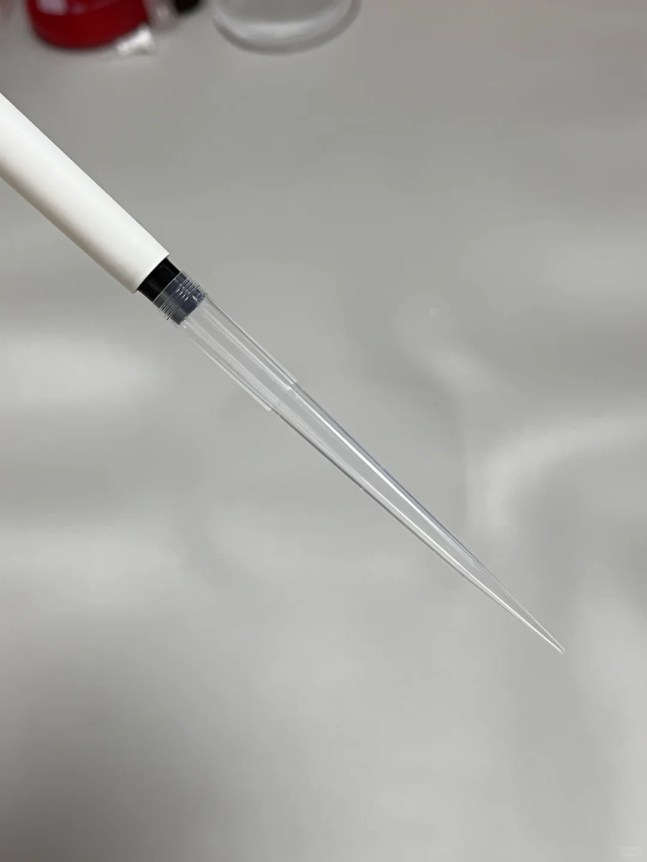
Serological pipettes are key tools in labs, helping with precise volume transfers. They are used in many scientific fields, like research and medicine.
The 10 ml serological pipette is a common size for many research needs. It’s made from USP Class VI polystyrene. This ensures it works well and keeps samples safe.
Definition and Purpose
A 10 ml serological pipette is made for exact liquid handling. It’s used for:
- Accurate liquid transfers
- Reducing contamination risks
- Supporting different research methods
- Ensuring consistent measurements
“Precision in liquid handling is the foundation of reliable scientific research.”
Key Features and Specifications
The 10 ml serological pipette has important features:
- Nominal Volume: Always 10 mL
- Graduations: Detailed 0.1 mL – 1 mL markings
- Material: USP Class VI polystyrene
- Sterilization: Gamma-sterilized
- Tip Opening: 1.57 mm inner diameter
Its design makes it accurate for many lab tasks. This includes cell culture, molecular biology, and microbiology research.
Types of 10 ml Serological Pipettes
Laboratories use special serological pipette tips for precise work. It’s important to know the different types of 10 ml serological pipettes. This helps choose the right tool for research needs.
Graduated vs. Non-Graduated Pipettes
Serological pipettes are mainly two types:
- Graduated Pipettes: Have visible markings for measuring
- They offer precise volume measurements
- Graduations range from 0.1 mL to 1 mL
- They are more accurate for scientific work
- Non-Graduated Pipettes: Don’t have visible lines
- Good for simple liquid transfers
- Perfect for general dispensing tasks
- They are simpler to use
Sterile vs. Non-Sterile Options
When doing cell culture pipetting, sterility is key:
| Sterile Pipettes | Non-Sterile Pipettes |
|---|---|
| Gamma-sterilized | Not pre-sterilized |
| Individually wrapped | Bulk packaging |
| Contaminant-free materials | Needs extra sterilization |
| Best for sensitive research | Good for less critical tasks |
Choosing between graduated and sterile pipettes depends on lab needs. It ensures precise and clean cell culture pipetting.
Materials Used in 10 ml Serological Pipettes
The choice of materials in lab tools is key for accurate research. Serological pipettes are vital for precise liquid handling. The material used affects the sample’s quality and how well it works.
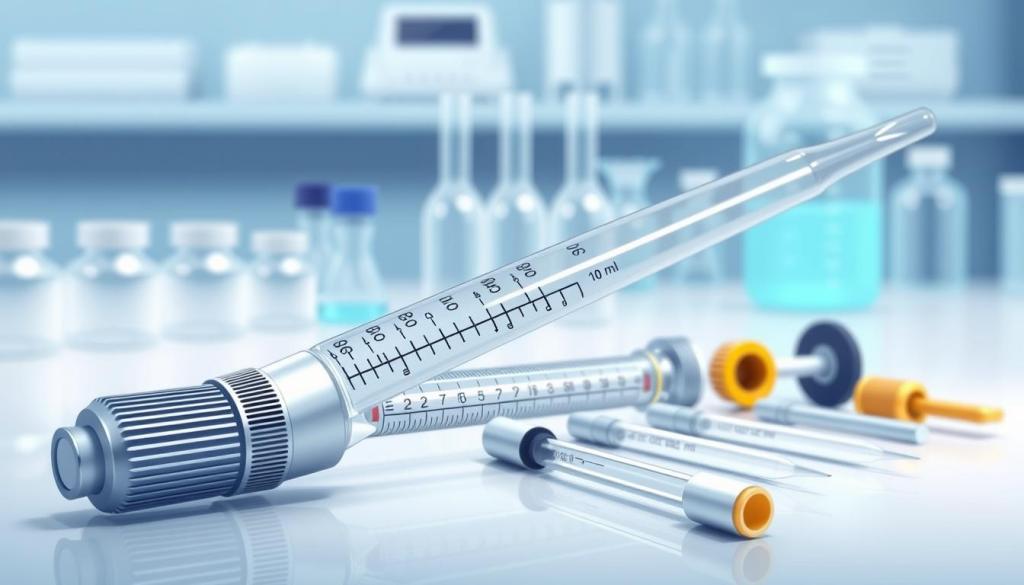
Mostly, USP Class VI polystyrene is used to make 10 ml serological pipettes. This material has great qualities that meet strict scientific standards.
Plastic vs. Glass Construction
Plastic serological pipettes have many benefits over glass ones:
- They are light and simple to handle
- Less chance of breaking
- More consistent quality
- Better chemical resistance
Impact on Sample Integrity
The type of material used affects pipette calibration and research results. Polystyrene pipettes ensure:
- They are free from contaminants
- They are sterile and meant for single use
- They protect against RNase/DNase contamination
Choosing the right material helps get consistent results in many scientific fields.
| Material Property | Polystyrene Pipette Characteristics |
|---|---|
| Chemical Resistance | Excellent resistance to most aqueous solutions |
| Optical Clarity | High transparency for precise volume measurements |
| Sterilization Method | Gamma-sterilized |
| Contamination Protection | Polyester fiber plug prevents cross-contamination |
Scientists can trust these advanced lab tools for important research.
Important Applications of 10 ml Serological Pipettes
Serological pipettes are key in many scientific fields. They help with precise work in labs. Their use is vital in research and testing.
Scientists use these pipettes for many tasks. They are crucial for detailed studies. This makes them essential for new scientific discoveries.
Biological Sample Collection
Serological pipettes are great for collecting biological samples. They are very accurate. Researchers use them for:
- Transferring delicate cell colonies
- Making precise serial dilutions
- Mixing complex cell suspensions
- Transferring sensitive DNA and RNA solutions
Reagent Dispensing
In tissue culture pipetting, these pipettes perform well. They help with clean liquid transfers. They have big advantages:
- Gamma-irradiated sterilization
- RNase and DNase-free design
- Consistent volume accuracy
- Rapid fill and release capabilities
Their design fits with many lab tools. This makes work in cell culture pipetting better and more reliable everywhere.
Selecting the Right 10 ml Serological Pipette
Choosing the right pipette volume is key for lab precision and success. Researchers need to look at several factors when picking a 10 ml serological micropipette. This ensures it works well and reliably.
Laboratory experts should think about a few important things when picking a serological pipette:
- Volume accuracy needs
- How often it will be used in the lab
- If it fits with the lab’s equipment
- The sensitivity of the samples
Critical Evaluation Criteria
When looking at micropipette options, researchers should check the technical details. The volume range is crucial for fitting different lab protocols.
- Precision measurements between 1-50 mL
- Graduation intervals of 0.1 mL – 1 mL
- Works with various pipette controllers
Equipment Compatibility Considerations
Choosing a serological pipette means looking at how it fits with lab equipment. It’s important to make sure it works with the lab’s aspirators and controllers. This makes the workflow more efficient.
Matching pipette specs with lab needs ensures consistent results.
The best 10 ml serological pipettes have features that make them easy to use and reliable. These include:
- Color-coded size identification rings
- Clear ascending and descending graduations
- Polyester fiber plugs to prevent contamination
- Sterile, individually wrapped packaging
Experts should choose pipettes made from high-quality materials like USP Class VI polystyrene. This ensures the experiments are safe and reliable, reducing contamination risks.
Proper Handling and Use
Liquid handling is key in labs, needing precision and care. Serological pipettes are advanced tools that require attention for accurate measurements and to keep samples safe.
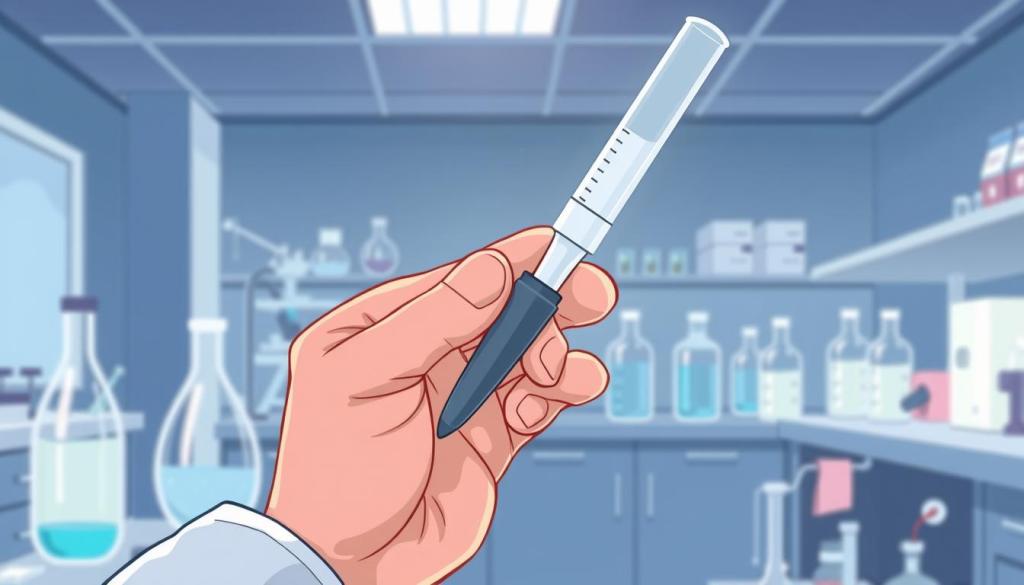
To use pipettes well, researchers must know a few important things. These skills help get reliable results in experiments.
Pre-Use Inspection Procedures
Before using a serological pipette, a detailed check is vital. Researchers should look for:
- Visible damage or structural defects
- Proper packaging integrity
- Sterility certification
- Absence of contamination
Techniques for Accurate Measurement
Learning how to handle liquids well is crucial for exact volume transfer. It helps avoid mistakes in experiments. Important steps include:
- Keep a steady vertical pipetting angle
- Avoid air bubbles when taking in liquid
- Use smooth, controlled plunger movements
- Check the liquid depth (10-20mm is best)
Precision in liquid handling starts with careful attention and the right technique.
Calibration Best Practices
Regular pipette calibration is key for keeping measurements accurate. Labs should have a plan for checking pipette performance:
| Calibration Frequency | Recommended Action |
|---|---|
| Annually | Professional calibration |
| Monthly | Internal accuracy checks |
| Daily | Visual inspection and basic performance test |
Tip: Always wash the pipette three times with the solution before taking the final measurement to ensure optimal accuracy.
Cleaning and Sterilization Procedures
Keeping pipettes clean is key for accurate lab results. Serological pipettes need careful cleaning and sterilization. This stops contamination and keeps samples safe.
Labs must follow strict cleaning rules. These rules depend on the type of contamination and the material of the lab tools. Each type of plasticware needs a special way to be sterilized to work best.
Recommended Cleaning Methods
- Use neutral cleaning solutions with pH 7 for slight contamination
- Apply alkaline solutions (pH up to 12) for heavy contamination
- Rinse with distilled water for aqueous solution residues
- Utilize detergent solutions for protein and organic solvent removal
Sterilization Techniques
| Sterilization Method | Applicable Plastics | Temperature/Conditions |
|---|---|---|
| Autoclaving | PMP, Polypropylene | 121°C for 20 minutes |
| UV Radiation | All plastics | 30-60 minutes |
| Gas Sterilization | Multiple plastic types | Varied gas treatments |
Good sterilization means a Sterility Assurance Level (SAL) of 10^-3. This greatly reduces the chance of contamination in science.
Precision in cleaning and sterilization is not just a procedure, but a cornerstone of reliable scientific investigation.
Researchers must pick the right sterilization method for each plasticware type. This keeps samples pure and instruments accurate.
Common Mistakes in Using 10 ml Serological Pipettes
Liquid handling needs precision and careful technique. Lab professionals often face challenges with 10 ml serological pipettes. These issues can affect experimental results. Knowing these mistakes helps improve pipette volume accuracy and scientific methods.
Researchers often make critical errors during pipetting. These mistakes can greatly impact experimental outcomes. They range from small technique issues to big handling problems.
Overfilling Pipettes: A Critical Error
Overfilling serological pipettes can cause several problems:
- Risk of sample contamination
- Decreased measurement precision
- Potential liquid spillage
- Compromised experimental integrity
Improper Pipetting Techniques
Incorrect pipette volume management can lead to big experimental errors. Key technique mistakes include:
- Inconsistent aspiration speed disrupts accurate liquid transfer
- Incorrect tip immersion depth affects volume collection
- Failure to pre-rinse pipettes reduces measurement accuracy
- Neglecting to hold pipettes vertically during dispensing
Professionals should regularly train and practice proper liquid handling techniques. This minimizes common errors. Consistent technique ensures reliable scientific results.
Safety Guidelines for 10 ml Serological Pipettes
Working with serological pipettes in the lab is serious business. It’s all about keeping everyone safe and the lab clean. We need strict safety rules and careful steps to follow.
Personal Protective Equipment
Protecting yourself is key when using lab tools. You need the right gear to stay safe:
- Chemical-resistant gloves
- Safety goggles or face shields
- Long-sleeved lab coats
- Closed-toe shoes
Waste Disposal Considerations
Getting rid of used lab tools the right way is crucial. It keeps everyone safe and the planet clean. Here’s how to handle different types of waste:
- Put biohazardous stuff in red sharps containers
- Chemical waste goes in special containers for disposal
- Throw away single-use pipettes in biohazard waste bins
Used pipettes can be dangerous. Don’t just throw them away in regular trash. Always follow the rules for safe waste disposal.
Safety is not an option in scientific research—it is an absolute requirement.
Innovations in Serological Pipette Design
Laboratory technology keeps getting better, leading to amazing changes in scientific tools. Serological pipettes have seen big improvements, especially in how they feel and what they’re made of.
Today’s research needs precision and comfort. Scientists get to use new designs that make their work better and easier on their bodies.
Advancements in Material Science
New materials have changed how micropipettes are made. These changes aim to make pipettes better in several ways:
- They’re more resistant to chemicals
- They’re clearer to see through
- They last longer
- They’re made of lighter materials
Ergonomic Designs for Ease of Use
Now, making pipettes easy to use is key in lab equipment design. Makers focus on making things better for the user:
- They add grips that are comfy for your hands
- They make sure the pipettes feel balanced
- They use colors to help you tell them apart
- They make the markings easier to read
These updates help scientists get more accurate results and feel less tired. By focusing on both how well they work and how comfortable they are, today’s serological pipettes are a big step up in science.
Regulatory Standards and Compliance
Serological pipettes are key in scientific research. They need strict rules to be accurate and reliable. Labs must follow certain standards for pipette calibration and plasticware quality.
Scientific and clinical areas need precise tools. These tools must meet high quality standards. The rules for serological pipettes involve many certifications and compliance levels.
FDA Guidelines for Serological Pipettes
The Food and Drug Administration sets detailed guidelines for lab equipment. Important parts include:
- Strict manufacturing process controls
- Mandatory quality assurance protocols
- Comprehensive performance testing
- Traceability of production materials
ISO Certifications for Pipette Performance
ISO certifications are key for pipette accuracy and reliability. The ISO 8655 standard focuses on piston-operated volumetric apparatus.
| Certification Standard | Key Requirements |
|---|---|
| ISO 9001:2008 | Quality management system compliance |
| ISO 8655 | Volumetric performance standards |
| Accuracy Certification | +/- 2% at full volume |
Labs must follow strict pipette calibration to meet these standards. Following these rules ensures reliable scientific results and keeps research protocols intact.
Conclusion: The Essential Role of 10 ml Serological Pipettes in Laboratories
The 10 ml serological pipette is key in today’s science and medicine. It helps scientists handle liquids with great precision. This is crucial for getting reliable results in many fields of study.
Thanks to new pipette tech, managing samples and research has gotten better. These pipettes are vital in finding new things in fields like microbiology and clinical research. They’ve also become easier to use, thanks to better design and automation.
The future of serological pipettes looks bright. New tech will make them even better at handling liquids. This includes improvements in materials, digital features, and automation. As science gets more complex, these pipettes will keep being essential in labs around the world.
Key Takeaways
It’s important for scientists and lab workers to understand the value of serological pipettes. They need to keep learning, follow best practices, and stay up-to-date with new tech. This will help them excel in their work.
FAQ
What is a 10 ml serological pipette?
A 10 ml serological pipette is a tool for precise liquid handling. It’s made of plastic or glass and measures 10 milliliters accurately. These pipettes are key in cell culture, microbiology, and clinical research.
How do I choose between graduated and non-graduated serological pipettes?
Graduated pipettes have markings for measuring different volumes. Non-graduated pipettes are for transferring all the liquid. Choose graduated for specific measurements and non-graduated for full transfers.
What is the difference between sterile and non-sterile serological pipettes?
Sterile pipettes are clean and safe for cell culture and sensitive work. Non-sterile pipettes are for general lab use where sterility isn’t needed.
How often should serological pipettes be calibrated?
Calibrate serological pipettes every 3-6 months or as the maker suggests. Use, environment, and measurement importance affect how often.
What are the most common materials used in serological pipettes?
Polystyrene (plastic) and borosilicate glass are common. Plastic is light and cheap, while glass is better for certain tasks needing clarity.
How can I prevent contamination when using serological pipettes?
To avoid contamination, use sterile pipettes and wear protective gear. Keep tips clean and avoid touching non-sterile surfaces. Always check pipettes before use and throw away damaged ones.
What safety precautions should be taken when using serological pipettes?
Wear gloves, lab coats, and eye protection. Don’t mouth pipettes and work in a well-ventilated area. Dispose of waste properly and follow safety rules.
Can serological pipettes be reused?
Disposable pipettes are for one-time use to prevent contamination. Reusable glass pipettes need cleaning and sterilizing but require careful handling.
What are the key applications of 10 ml serological pipettes?
10 ml serological pipettes are used in many areas. They’re for collecting samples, mixing reagents, and in cell and tissue culture, microbiology, and research.
How do I properly handle and store serological pipettes?
Keep pipettes in a clean, dry place away from sunlight and extreme temperatures. Handle them gently and follow storage and handling guidelines to keep them accurate.




Leave a Comment
Your email address will not be published. Required fields are marked *