


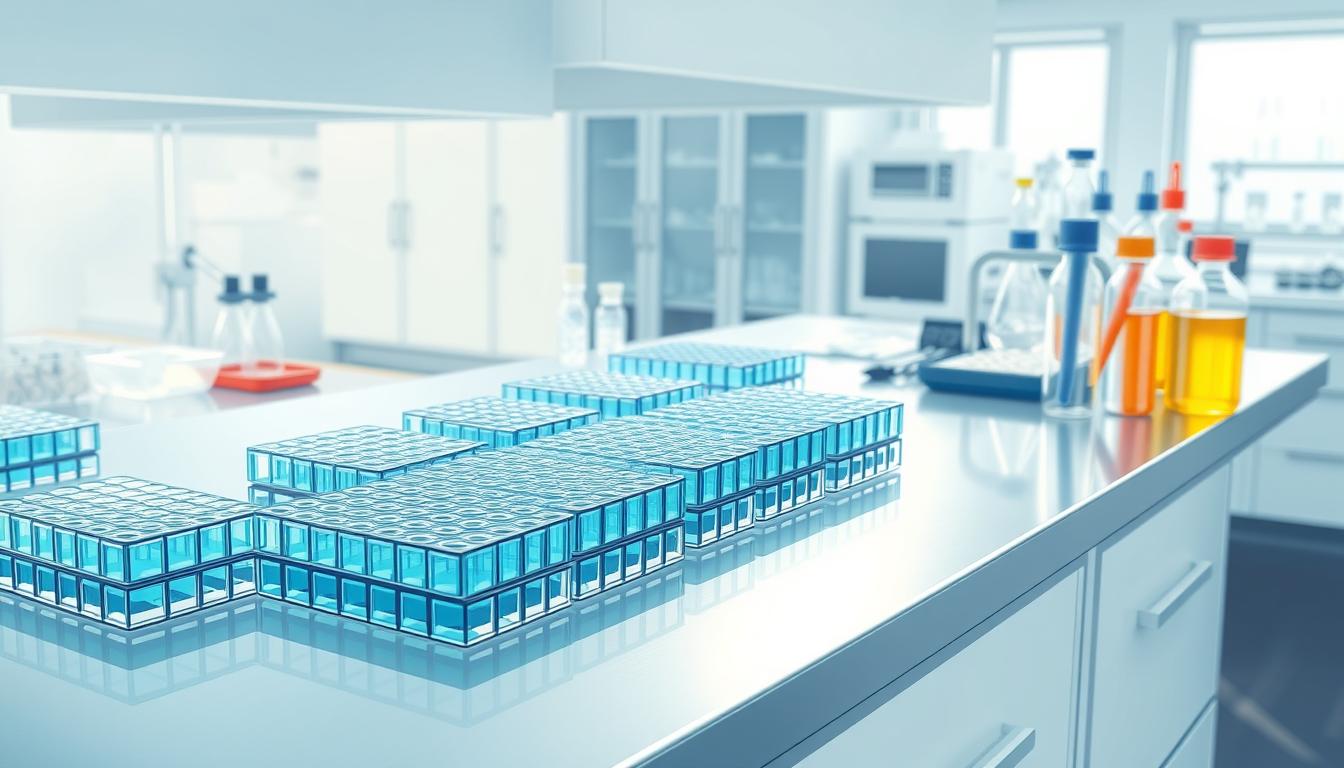
Are you ready to explore the microscopic world that drives scientific breakthroughs? 96-well plates are a key tool in modern labs. They change how researchers do complex experiments, making them more precise and efficient.
These microplates give scientists a standard way to run many tests at once. There are three types: U (round bottom), V (conical bottom), and flat bottom. Each is made for different research needs.
Researchers use these plates in many fields, from cell culture to high-throughput screening. Their 12 x 8 well setup helps organize and analyze samples. This makes them crucial for today’s scientific research.
Key Takeaways
- 96-well plates enable simultaneous multi-sample testing
- Available in three distinct bottom configurations
- Standard 12 x 8 well arrangement supports systematic research
- Essential for cell culture and screening applications
- Supports advanced scientific methodology
Introduction to 96-Well Plates
96-well plates are a big step forward in lab work. They are key for cell culture and change how we do science. These plates let scientists run many tests at once, making their work faster and more accurate.
These plates are made in a standard 12 x 8 layout. They have special markings for easy tracking. They’re made from top-notch polystyrene, which lets light pass through well and keeps them cool.
Plate Characteristics and Functionality
Scientists love 96-well plates for many reasons. They have:
- A standard 12 x 8 well setup
- High-quality polystyrene
- Work well with many research methods
- Help manage sample sizes well
Critical Laboratory Applications
These plates are vital in many fields. They’re used for:
- Cell culture studies
- High-speed testing
- ELISA tests
- Work in molecular biology
The 96-well plate is a huge leap in lab work. It lets scientists do complex tests with great detail.
These plates can handle tiny to big amounts of liquid. They’re a must-have for today’s science.
Historical Development of 96-Well Plates
The story of microplates is a thrilling journey in laboratory history. It shows how simple tools became advanced instruments. This change was thanks to scientific progress.
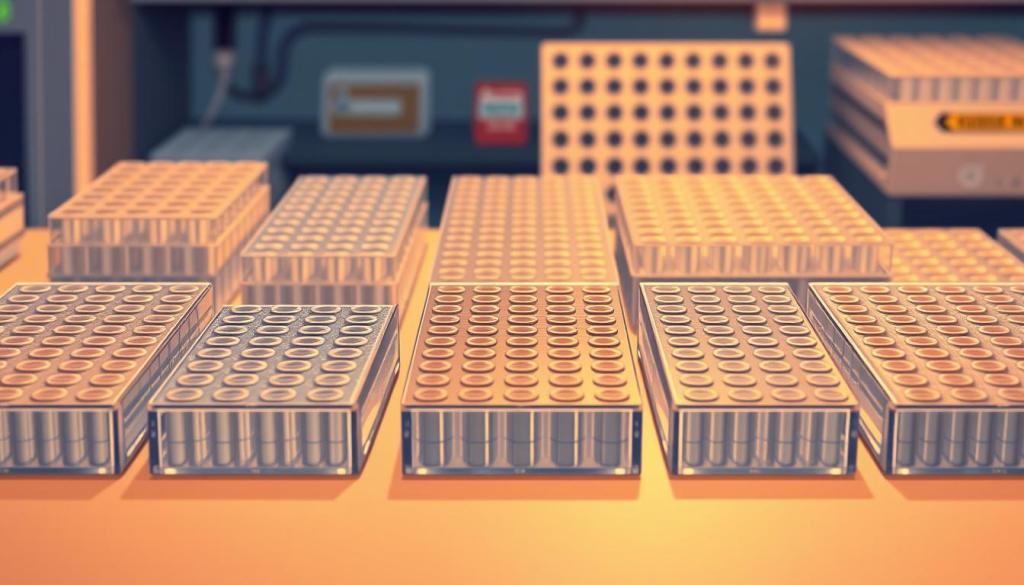
In 1951, Dr. Gyula Takatsy made a big leap with his invention. He created a 72-well plate that changed how scientists work.
Early Innovations in Laboratory Equipment
Here are some key moments in 96-well plate history:
- 1951: First 72/100 well acrylic plate invented
- 1953: First vacuum-formed 96-well microplate created
- 1974: First use in enzyme-linked immunosorbent assay (ELISA)
- 1996: Introduction of 1,536 well plates
Evolution of Material and Design
The evolution of 96-well plates saw big changes in materials. Scientists moved from acrylic to polystyrene. This change brought better chemical resistance and more consistent results.
“The development of 96-well plates represents a quantum leap in scientific research efficiency.”
These new designs let scientists do many experiments at once. This saved a lot of time and resources. The ongoing improvement of 96-well plates shows the fast pace of scientific progress.
Types of 96-Well Plates Available
Research labs use different 96-well plates for various experiments. These include cell culture and assay plates, each designed for specific needs.
There are many plate types to choose from, based on material, shape, and surface treatment. Each is made for a particular research goal.
Standard Plate Configurations
Most 96-well plates follow strict size rules set by ANSI/SLAS:
- Length: 127.76mm ± 0.25mm
- Width: 85.48mm ± 0.25mm
- Working volumes: 350µl, 1ml, 1.6ml, and 2ml
Bottom Shape Variations
There are different well shapes for various uses:
- U-Bottom: Makes pipetting easy and clean
- V-Bottom: Great for precise pipetting and storing samples
- Flat-Bottom: Best for optical tests
- F-Bottom: Good for microscopic work
Material Considerations
Researchers can pick from several materials for their plates:
- Polystyrene
- Polypropylene
- Cycloolefin
“The right 96-well plate can significantly enhance experimental precision and reproducibility.”
Each plate type has its own benefits for cell culture and screening. This lets scientists improve their research with the right tools.
Applications of 96-Well Plates in Research
96-well plates have changed scientific research a lot. They offer a flexible way to do many kinds of experiments. These plates are key in many areas of research, making complex tests easier and more accurate.
Cell Culture Practices
Scientists use 96-well plates a lot in cell culture studies. The plates help because they:
- Make sure cells grow the same way
- Let researchers track many experiments at once
- Need less sample to start with
- Make results more reliable
High-Throughput Screening Techniques
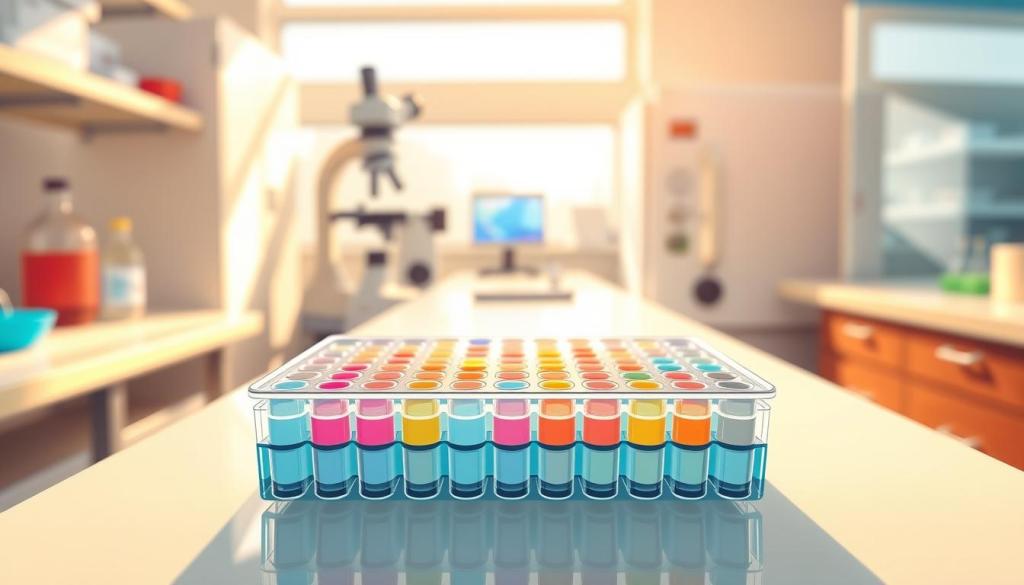
Plate readers have changed high-throughput screening a lot. They help collect data fast from many samples. Now, researchers can:
- Quickly test thousands of compounds
- Study how things interact biologically
- Do less manual work
- Speed up finding new drugs
Assay Development
Microtiter plates are very important for making detailed scientific tests. Their design helps with complex tests in many fields.
| Research Domain | Key Applications |
|---|---|
| Immunology | ELISA testing |
| Microbiology | Biofilm resistance studies |
| Molecular Biology | Protein interaction analysis |
“96-well plates represent a fundamental breakthrough in laboratory research, enabling unprecedented experimental precision and efficiency.” – Research Innovations Journal
Choosing the Right 96-Well Plate
Choosing the right microplates for lab research is important. Scientists need to think about many factors. This ensures the best results in their experiments.
Critical Factors in Plate Selection
When picking assay plates, scientists should look at a few key things:
- Well shape and geometry
- Material composition
- Surface treatment
- Optical properties
- Experimental requirements
Material Comparison: Polypropylene vs. Polystyrene
Choosing between polypropylene and polystyrene microplates matters a lot. Each material has its own benefits for different studies.
| Characteristic | Polypropylene | Polystyrene |
|---|---|---|
| Optical Clarity | Lower transparency | High optic transmission |
| Temperature Resistance | Higher range | Limited range |
| Chemical Compatibility | Broader solvent resistance | More limited |
Think about these features when picking microplates for your study. The right choice depends on the unique needs of each research project.
Precision in plate selection can dramatically improve experimental reliability and reproducibility.
Special treatments can help cells stick or prevent bad interactions. High-quality lab plasticware leads to consistent results in complex studies.
Maintenance and Care for 96-Well Plates
Keeping laboratory plasticware in good shape is key for reliable science. 96-well plates are a big deal in today’s research. They need careful handling to stay good.
Best Practices for Cleaning Microplates
Cleaning 96-well plates right is important to avoid contamination. Here are some must-do steps:
- Choose the right cleaning solution for the job
- Use approved cleaning agents:
- 70% ethanol
- Mild detergent
- Bleach solution
- 1M HCl
- Soak the plates as suggested, then rinse well
- Use autoclaving for sterilization
Storage Recommendations for Laboratory Plasticware
Storing microplates right is key to keeping them working well. Each material has its own storage needs:
| Material | Dry Storage Temp | Reagent Storage Temp |
|---|---|---|
| Polypropylene | -20°C to 25°C | -20°C to -80°C |
| Polystyrene | -20°C to 25°C | -20°C to -80°C |
| Polycarbonate | -20°C to 30°C | -20°C to -80°C |
*”Proper maintenance of 96-well plates is not just a protocol, it’s a scientific discipline.”*
When working with delicate lab items, remember:
Clean them carefully, control the temperature, and keep track of storage.
Advantages of Using 96-Well Plates
Researchers in many fields have found big benefits in using 96-well plates. These tools have changed how experiments are done, especially in high-throughput screening and bioassays.
Improved Efficiency in Experiments
96-well plates make experiments more efficient in several ways:
- They let you work on many samples at once.
- They help get more consistent results.
- They make complex research easier to manage.
High-throughput screening lets you test thousands of compounds fast, speeding up discoveries a lot.
Consistency in Sample Analysis
96-well plates offer unmatched consistency in analyzing samples. They let researchers use plate readers to get exact measurements for many samples at once.
| Experimental Advantage | Impact on Research |
|---|---|
| Parallel Sample Processing | Reduces experimental time by 70% |
| Minimal Sample Volume | Conserves precious research materials |
| Standardized Well Positioning | Enhances reproducibility of results |
Bioassays with 96-well plates give researchers unmatched precision. The alpha-numeric markings make it easy to identify samples, supporting systematic research.
The use of 96-well plates is a game-changer in science. It makes research more efficient, accurate, and thorough.
Common Mistakes When Using 96-Well Plates
Researchers often face challenges when working with cell culture plates. It’s important to know and avoid these mistakes to keep research quality high.

Precision in Pipetting Techniques
Pipetting errors can greatly affect results. Common mistakes include:
- Inconsistent pipetting volume
- Incorrect pipette calibration
- Poor technique leading to sample contamination
- Improper angle during liquid transfer
“Precision is the hallmark of excellent scientific technique” – Laboratory Research Principles
Critical Sterility Protocols
Ignoring sterility protocols can ruin cell culture experiments. It’s vital to handle lab plasticware carefully to avoid contamination.
| Common Sterility Mistakes | Potential Consequences |
|---|---|
| Inadequate surface disinfection | Microbial contamination |
| Improper personal protective equipment | Cross-contamination risks |
| Inconsistent aseptic technique | Experimental data invalidation |
Strategic preparation and consistent methodology are key to minimizing errors in cell culture plates and maintaining research quality.
Preventative Strategies
- Regular equipment calibration
- Comprehensive staff training
- Implementing standardized protocols
- Systematic documentation of procedures
The Future of 96-Well Plates in Scientific Research
Scientific research is always changing, thanks to new ways to use microtiter plates and high-throughput screening. New designs in 96-well plates are making labs more efficient and precise. Scientists are looking into advanced materials and microfluidic systems to boost cell culture and screening.
New 96-well plates come with advanced microfluidic tech. This tech lets researchers set up complex experiments. The HT-μUPS system is a big step up, allowing for flexible perfusion of whole microplates. It can handle many wells at once, with channels for better liquid flow and less error.
Innovations on the Horizon
The next 96-well plates will have better materials and tech. Scientists are working on plates that last longer, like PDMS, which is strong and reliable. They’re also using computer simulations to make sure plates work best for cells and experiments.
Potential Impact on Laboratory Efficiency
New 96-well plate tech will change science by making experiments faster and less prone to mistakes. With advanced microfluidics, precise cell tools, and flexible designs, research will get more detailed and reliable. Labs will soon have better tools for their most important work.
FAQ
What are 96-well plates and why are they important in scientific research?
96-well plates are special microplates with 96 wells in an 8×12 grid. They are key for running many experiments at once. They help scientists work more efficiently and accurately in labs.
What materials are typically used to manufacture 96-well plates?
Polystyrene and polypropylene are the main materials for 96-well plates. Polystyrene is good for cell culture and optical tests. Polypropylene is better for molecular biology and protein studies because it’s more resistant to chemicals.
How do different well shapes impact research procedures?
Well shapes matter for different studies. Flat-bottom wells are best for cell cultures. U-bottom wells work well for suspension cells and immune tests. V-bottom wells help with liquid handling and reduce sample loss.
What factors should researchers consider when selecting a 96-well plate?
Choosing the right 96-well plate is important. Consider the well shape, material, surface treatment, and sterility. The plate must match the research needs and protocols.
How can researchers prevent contamination when using 96-well plates?
To avoid contamination, follow strict sterile techniques. Use sterile plates and work in laminar flow hoods. Wear proper gear and use aseptic pipetting. Also, store and handle plates correctly.
What are the primary applications of 96-well plates in scientific research?
96-well plates are used in many areas. They are great for cell culture, high-throughput screening, and ELISA tests. They are also used in drug discovery, genomics, proteomics, and microbiology. They save reagents and time.
How have 96-well plates evolved over time?
96-well plates have gotten better over the years. They now have better materials, surface treatments, and optical clarity. Modern plates work better with new research tools.
What are common mistakes researchers should avoid when using 96-well plates?
Avoid mistakes like bad pipetting, contamination, and wrong storage. Also, don’t ignore plate compatibility and equipment calibration. Paying attention to detail is crucial.
Can 96-well plates be used for different types of scientific analyses?
Yes, 96-well plates are very versatile. They can be used for many tests, like spectrophotometry, fluorescence, and protein studies. They are useful in many scientific fields.
What future innovations are expected in 96-well plate technology?
Future advancements might include better surface treatments and materials. There could also be integrated sensors and improved optical properties. These changes will make 96-well plates even more useful in labs.




Leave a Comment
Your email address will not be published. Required fields are marked *