


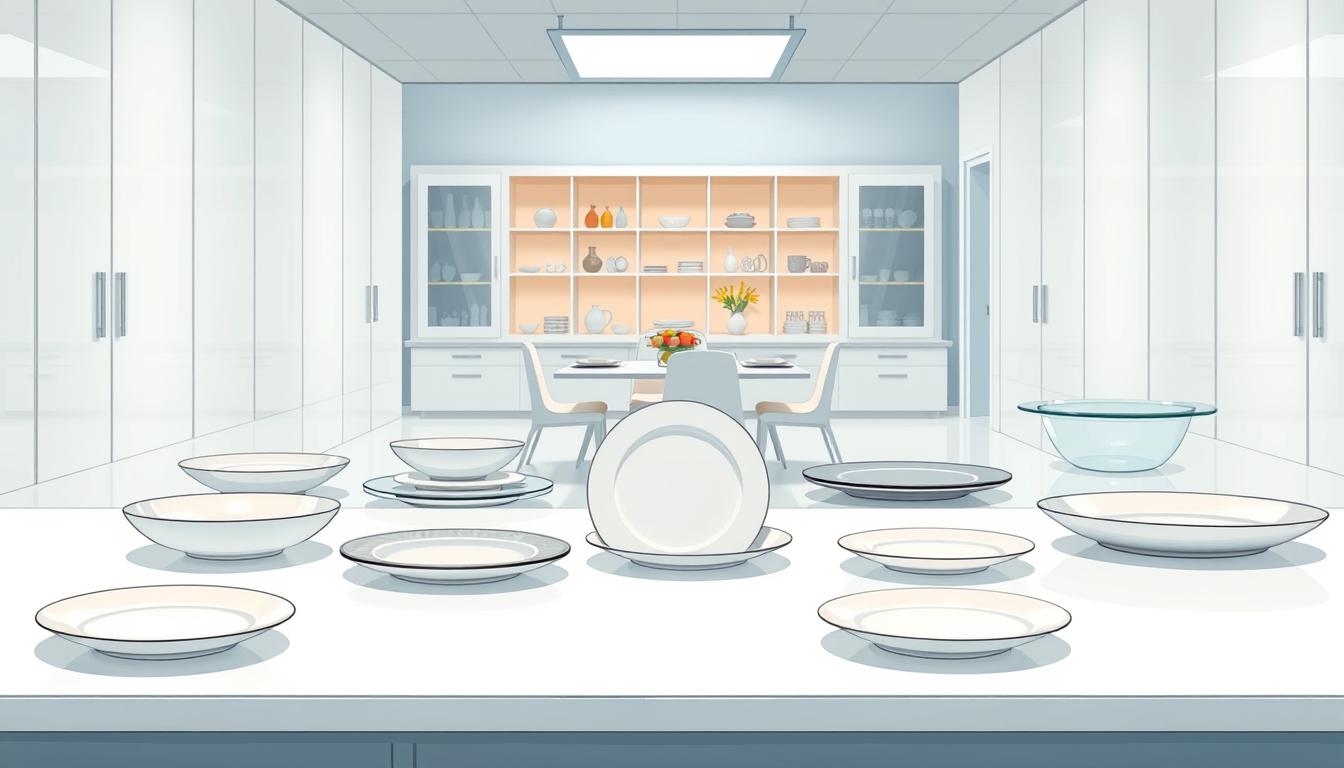
Are you ready to change how you see versatile dinnerware? Non skirted plates are a game-changer in science and cooking. They offer great function and design flexibility.
These plates are key in many places, from precise labs to fancy dinners. They are made of ceramic, which is strong and looks good. They meet tough needs while still being beautiful.
The design of non skirted plates makes them fit many uses. They work well in science and in serving food. These plates are top-notch in both areas.
Key Takeaways
- Non skirted plates offer versatility across scientific and dining environments
- Ceramic plates provide superior durability and performance
- Suitable for multiple applications from laboratory work to elegant table settings
- Enhances presentation and functional capabilities
- Cost-effective solution for diverse professional needs
Introduction to Non Skirted Plates
Non skirted plates are key in today’s tableware and science. They work well in many places, like kitchens and labs. Their design makes them useful in different ways.
These plates stand out because of their design and materials. They are made to be precise and functional.
Definition and Characteristics
Non skirted plates have a flat surface without edges. Their design has many benefits:
- They have a smooth surface
- Cleaning them is easy
- They are versatile for many uses
- They transfer heat well
Popular Materials Used
Many materials are used to make non skirted plates. Porcelain and stoneware are favorites because they last long and look good.
| Material | Key Properties | Primary Applications |
|---|---|---|
| Polypropylene | Low fluorescence, extreme uniformity | Laboratory research |
| Ceramic | Heat resistant, elegant appearance | Culinary settings |
| High-grade Plastic | Lightweight, chemical resistant | Medical and scientific use |
Benefits of Using Non Skirted Plates
Non skirted plates have many benefits. They are loved by researchers and chefs. They perform well in many areas.
- They reduce adsorption
- They conduct heat well
- They lose less liquid
- They can be divided easily
In labs and kitchens, non skirted plates are a must. They help professionals work better and more efficiently.
Applications in Various Settings
Non-skirted plates are key in many places, showing their flexibility and usefulness. They are used in science and cooking, proving their value in different areas.
Dining Environments
In dining, flat and round plates are perfect for food display. They are used in restaurants and homes to make meals look great. Their smooth look helps highlight dishes without any clutter.
Medical and Laboratory Use
Science needs non-skirted plates for cell culture and experiments. Rimmed plates are essential for many research tasks:
- Biological sample preparation
- Microscopic analysis
- Precise cell growth monitoring
Scientists like these plates for their ability to fit into complex lab work. They work well with modern lab tools.
Catering and Events
Caterers use non-skirted plates for big events. They are easy to use and look good. Durability and versatility make them top picks for event planning.
Advantages of Non Skirted Plates
Non skirted plates are great for both dinnerware and lab use. They offer benefits that make them essential in many fields. These plates, including square and ceramic types, are perfect for those who need efficient tools.
The design of non skirted plates has unique advantages. Researchers and chefs love them for their special features.
Ease of Cleaning and Maintenance
Non skirted plates are easy to keep clean. They have smooth surfaces that catch less debris. This makes cleaning them simple and fast.
- Smooth surfaces that minimize debris accumulation
- Simplified cleaning processes
- Reduced risk of bacterial growth
- Quick drying capabilities
Versatility in Presentation
Non skirted plates are versatile. They work well in kitchens and labs. Their design makes them flexible for different needs.
| Environment | Key Advantages |
|---|---|
| Culinary | Elegant plating, stackable design |
| Laboratory | Precise sample handling, compatibility |
| Catering | Efficient transport, uniform presentation |
Cost-Effectiveness
Non skirted plates are cost-effective. They last long and need little upkeep. This saves money in the long run for many users.
Cost-effectiveness comes from their simple design and less material use. Labs and hospitality can save money without sacrificing quality.
Comparison with Skirted Plates
Understanding the difference between non-skirted and skirted plates is key in laboratory tableware. Scientists and professionals in biological sciences need to pick the right dishes and bowls for their work.
Key Differences in Design and Functionality
Non-skirted plates have unique features that make them different from skirted ones. They offer benefits in certain lab settings:
- They work well with most thermal cyclers
- They are more flexible in equipment use
- They have less mechanical complexity
Situations Favoring Non-Skirted Plates
Stoneware bowls and PCR plates without skirts are great for precise and adaptable work. They are the top choice when:
- You need to use standard thermal cycling equipment
- You want minimal mechanical interference
- You’re doing experiments that don’t need much automation
Preferred Uses in Biological Research
Lab professionals often pick non-skirted plates for specific tasks. Quantitative PCR experiments and flexible plate needs benefit from these versatile options.
While skirted plates are common in high-throughput labs, non-skirted ones offer unique perks for precise research. It’s important for researchers to consider their needs to pick the best plate design.
Design Options for Non Skirted Plates
Non skirted plates open up a world of design possibilities. They cater to both scientific and culinary needs. You can find innovative plate configurations that boost performance and function.
Designers have come up with many looks and functions for flat, rimmed, and round plates. These designs meet specific needs in different industries.
Aesthetic Choices
Non skirted plates come in stunning designs. You can choose from:
- Minimalist smooth surfaces
- Textured edge treatments
- Sleek monochromatic finishes
- Precision-engineered contours
Functional Designs
Scientific and lab settings need special plate designs. Round plates with specific wells are perfect for experiments. Precision engineering adds details like grid patterns and coatings for better cell culture.
Customization Possibilities
Institutions can get plates tailored to their needs. You can ask for:
- Custom well depths
- Specialized surface treatments
- Specific material compositions
- Unique geometric configurations
These custom designs ensure non skirted plates fit exact experimental needs. It shows how modern plate tech is flexible.
Choosing the Right Non Skirted Plates
Choosing the right dinnerware is important. You might be looking for square plates or ceramic ones. Knowing what to look for can help you make a good choice.
Both professionals and home cooks need to think about a few key things. They must consider the right non skirted plates for different uses.
Size and Shape Considerations
Plate size and shape matter a lot. They affect how well the plates work and how they look. Here are some important things to think about:
- How you plan to use the plates
- How much space you have to store them
- The size of the meals you usually serve
- What you think looks good
Material Selection
Different materials have their own benefits for plates and other dinnerware:
| Material | Durability | Heat Resistance | Aesthetic Appeal |
|---|---|---|---|
| Porcelain | High | Excellent | Classic |
| Stoneware | Very High | Good | Rustic |
| Bone China | Medium | Moderate | Elegant |
Environmental Factors
When picking plates, think about the environment too:
- Can they go in the dishwasher?
- Are they safe for the microwave?
- Can they handle hot temperatures?
- Are the materials good for the planet?
Pro tip: Always check the manufacturer’s specs. This ensures your plates meet your needs.
Safety and Compliance Standards
Understanding safety rules for tableware and lab equipment is key. Non-skirted plates are vital in medical and research fields. Here, precision and safety are top priorities.
Regulations for Food Contact Materials
Choosing the right tableware for science needs strict rules. Important points include:
- Material composition verification
- Chemical resistance testing
- Potential contaminant screening
- Temperature stability assessment
Biocompatibility in Medical Applications
Medical non-skirted plates face tough tests for safety. They go through special making steps to ensure:
- Minimal chemical leaching
- Consistent performance across temperature ranges
- Resistance to bacterial contamination
Advanced qPCR 96-well plates set high standards. Made from top-quality polypropylene, they have no background fluorescence. They also have thin walls for better heat transfer and antistatic properties to reduce reagent adsorption.
Safety in scientific equipment is not just a requirement—it’s a commitment to precision and reliability.
Today’s plates offer great flexibility. Researchers can choose from 16 to 48 well configurations. They also work with over 30 thermal cycler models, showing their adaptability in tough lab settings.
Sustainability of Non Skirted Plates
The world of science is changing fast, and we need new ways to protect our planet. Non-skirted plates are key in making labs more eco-friendly. They help reduce harm to the environment without losing quality.
Today’s labs are all about being green, and non-skirted plates are a big part of that. These flat plates are made to be kind to the earth. They use special materials that care for our planet.
Eco-Friendly Materials
Now, makers of non-skirted plates are using methods that are good for the earth. They make round and rimmed plates from:
- Medical-grade polypropylene from renewable sources
- Recycled plastics that meet strict science standards
- Biodegradable polymers that cut down on carbon emissions
Recyclability and End-of-Life Options
Non-skirted plates have a long life, even after they’re used. Scientists can choose plates that are easy to recycle or compost. This includes:
- Chemical recycling
- Industrial composting
- Special waste management for labs
Green lab practices are changing science, with non-skirted plates at the forefront of innovation.
Maintenance Best Practices
Keeping ceramic plates and square plates in good shape is key. They last longer and work better in many places. It’s important to clean and store them right to keep them looking and feeling great.
Good maintenance is more than just cleaning. It’s about knowing how to care for different types of plates. This way, you protect your investment.
Cleaning Methods
Cleaning ceramic and square plates needs a careful plan:
- Use soft, non-abrasive sponges to prevent surface scratching
- Choose mild, pH-neutral detergents
- Avoid extreme temperature changes that could cause cracking
- Hand wash delicate dinnerware when possible
Storage Recommendations
Storing your plates right keeps them safe and looking new:
- Stack plates with protective padding between each piece
- Store in cool, dry environments
- Avoid direct sunlight to prevent color fading
- Use plate separators for delicate ceramic surfaces
Advanced Care Techniques
For special dinnerware, try these extra care tips:
| Material Type | Cleaning Frequency | Special Considerations |
|---|---|---|
| Ceramic Plates | After each use | Avoid harsh chemicals |
| Square Plates | Weekly deep clean | Check for edge damages |
Regular care turns basic dinnerware upkeep into a skill. It keeps your plates beautiful and useful.
Future Trends in Non Skirted Plates
The world of tableware and scientific tools is changing fast. Non skirted plates are seeing big improvements in many fields. Scientists and makers are working hard to make better, greener options for advanced lab work.
Emerging Material Technologies
New ideas in making porcelain dishes and stoneware bowls are changing plate design. Some big advances include:
- Nano-engineered surface treatments
- Biocompatible ceramic composites
- Enhanced thermal resistance materials
- Sustainable manufacturing processes
Revolutionary Industry Applications
Non skirted plates are now used in many new ways. They’re important in different areas:
| Industry | Innovative Application |
|---|---|
| Medical Research | Advanced diagnostic screening |
| Biotechnology | High-precision cell culture |
| Food Science | Molecular gastronomy techniques |
Sustainability and Performance
Today’s non skirted plates are made with the environment in mind. They use green manufacturing and are better in many ways. The future looks bright for plates that are good for science and the planet.
Conclusion
PCR plates are a key tool in today’s science, offering high precision and flexibility. The Twin.tec series shows top-notch engineering with 96 and 384 wells. This allows scientists to do detailed molecular studies with great accuracy.
Labs use non skirted plates for their special features. These plates, inspired by ceramic dinnerware, offer sterile packaging and PCR clean certification. They work well with many experiments, handling volumes from 150 µl to 250 µl.
Modern PCR plates have cool tech like 2D SafeCode systems and clear labels. This makes it easier to identify and track samples. They can handle temperatures from -86 °C to 100 °C, making them useful in many fields.
Scientists can trust PCR plates to meet high standards of cleanliness and performance. These tools are changing how we do science, making complex studies possible.
FAQ
What are non-skirted plates and how do they differ from traditional dinnerware?
Non-skirted plates are made for science labs, not dinner tables. They have a flat top and no edges. This makes them perfect for precise scientific work, unlike regular plates.
What materials are commonly used in manufacturing non-skirted plates?
These plates are made from strong materials like polystyrene and special ceramics. They’re picked for being tough, resistant to chemicals, and keeping things clean in labs.
How are non-skirted plates used in biological research?
In labs, they’re key for growing cells and preparing samples. They help with microscopy and studying cell growth. Their flat surface is ideal for detailed scientific work.
What advantages do non-skirted plates offer in laboratory settings?
They’re easy to clean, work well with machines, and stay even in temperature. They also resist chemicals well. This makes them great for handling samples and keeping things clean.
How do non-skirted plates compare to skirted plates?
Non-skirted plates have no edges, unlike skirted ones. They’re better for machines and easier to use in some lab tasks. They’re also good for certain types of microscopy.
What design considerations are important when selecting non-skirted plates?
Look at the surface, grid patterns, material, and how they handle temperature. Each lab has its own needs, so choose plates that fit your work.
Are non-skirted plates environmentally friendly?
Yes, many are made from recyclable materials. Some are designed to be recycled or disposed of responsibly. This helps the environment.
What maintenance practices are recommended for non-skirted plates?
Clean them well with lab-approved methods. Handle them carefully to avoid damage. Store them in clean places to keep them in good shape.
What future innovations are emerging in non-skirted plate technology?
New things include nano-coatings and smart materials. These help with cell growth and make plates more precise for science.
Can non-skirted plates be used outside of laboratory settings?
Yes, they can be used for special food or art needs. Their flat surface is great for presentations that need to be precise and clean.





Leave a Comment
Your email address will not be published. Required fields are marked *