


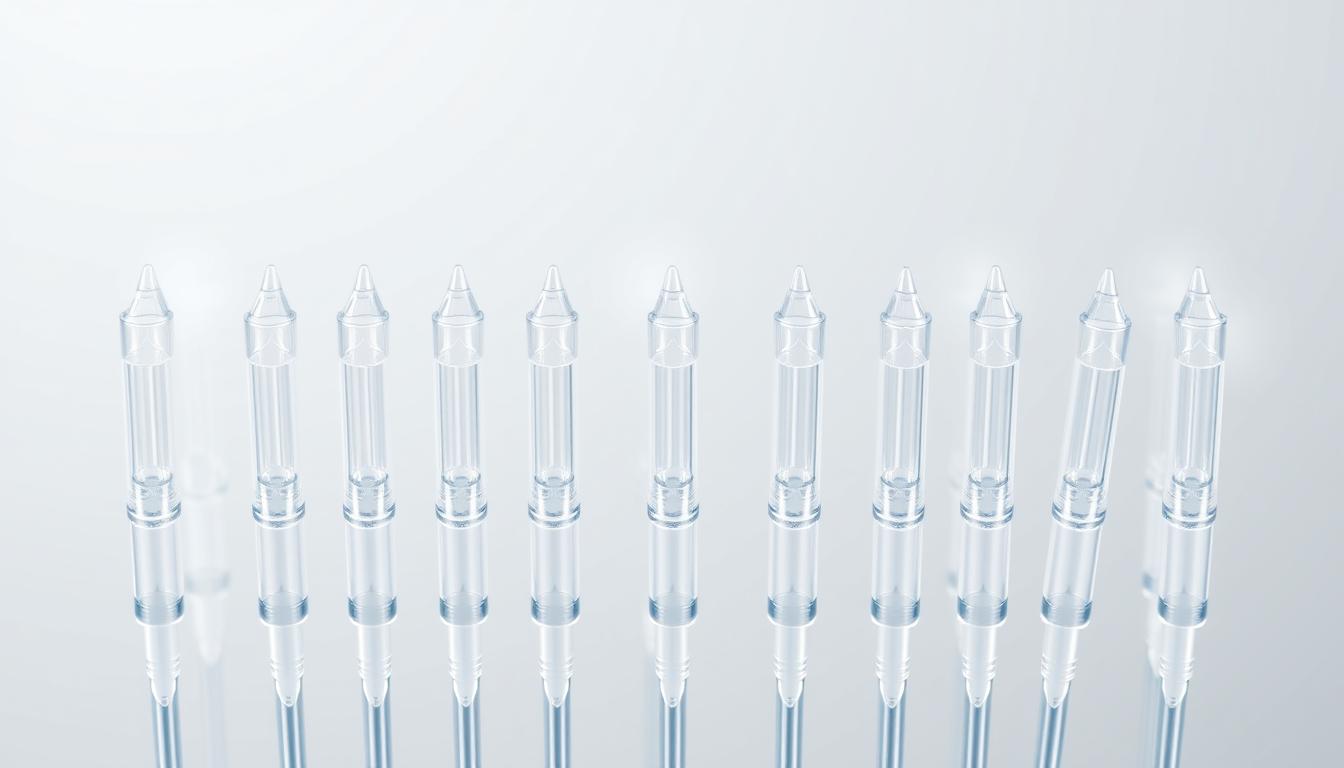
Are your lab experiments safe from hidden contamination? Filtered pipette tips are a key defense in science, stopping 99% of aerosol cross-contamination. This is crucial for keeping experiments reliable.
Scientists use sterile filter tips for precise liquid handling. They protect sensitive biological samples. These tools are vital for top-notch work in molecular biology, cell culture, and chemistry.
Today’s labs need top-notch disposable tools. Filtered pipette tips from brands like BRAND offer advanced protection. They let researchers work with confidence, knowing their samples are safe.
Key Takeaways
- Filtered pipette tips block 99% of potential aerosol contamination
- Available in multiple volume ranges from 10 µL to 1000 µL
- Manufactured using ultra high-density polyethylene (HDPE)
- Compatible with major pipette brands like GILSON®, Thermo Scientific, and Eppendorf®
- Certified free of RNase, DNase, DNA, and pyrogens
Understanding Filtered Pipette Tips
Laboratory research needs precision and keeping samples clean. Filtered pipet tips are key for scientists to keep samples pure and experiments accurate. These tools block contaminants during liquid handling.
Filtered pipette tips are a smart choice for working with delicate samples. Their design stops cross-contamination, keeping samples safe.
Definition and Core Purpose
Filtered pipet tips block contaminants during liquid transfer. They do several important things:
- Prevent aerosol spread during pipetting
- Block particles from entering pipette shafts
- Keep sensitive experiments safe from contamination
- Help get consistent research results
Types of Filtered Pipette Tips
There are many filtered pipette tip designs for different needs:
| Tip Type | Key Characteristics | Recommended Applications |
|---|---|---|
| Hydrophobic Filter Tips | Ultra-dense polyethylene filter | PCR, DNA sequencing |
| Standard Aerosol Barrier Tips | Basic contamination protection | General laboratory work |
| Advanced Sterile Tips | Pre-sterilized, DNase/RNase-free | Cell culture, sensitive molecular research |
“The right filtered pipette tip can make the difference between experimental success and failure.” – Laboratory Research Expert
Choosing the right filtered pipet tips is crucial. It depends on the research, sample sensitivity, and contamination risks. Scientists must pick the best aerosol barrier pipette tips for their experiments.
The Importance of Filtered Pipette Tips in the Laboratory
Laboratory research needs precision and must avoid contamination. Filtered pipette tips are key for scientists aiming at the highest standards. They help keep samples and experiments accurate.
Scientists use pipette tip filters to block contamination. These tips offer several layers of protection for samples and lab equipment.
Contamination Prevention Strategies
Filtered pipette tips protect in several ways:
- They stop aerosol formation during liquid handling.
- They block tiny particles from getting into pipette mechanisms.
- They lower the risk of cross-contamination in delicate experiments.
*”Contamination can destroy months of research in an instant.”* – Laboratory Safety Expert
Precision in Liquid Handling
Contamination-free pipette tips are vital for precise experiments. This is especially true for:
- Quantitative PCR (qPCR)
- Molecular biology techniques
- Cell culture research
The design of pipette tip filters offers maximum protection against contamination. Labs doing critical research see the importance of using top-quality filtered pipette tips.
These tips come pre-sterilized, are non-pyrogenic, and certified DNase/RNase-free. They are a vital defense for keeping science pure.
Key Features of High-Quality Filtered Pipette Tips
Laboratory research needs precision and reliability. Choosing high-quality filtered pipette tips is key for successful experiments. These tools are crucial for keeping samples safe and preventing contamination in many scientific fields.
Researchers look for filter-protected pipette tips that perform well and protect against contamination. Here are the main features of top pipette tips in today’s labs:
Material Composition
Top aerosol-resistant pipette tips are made from premium polypropylene. This material ensures:
- Chemical resistance
- Low protein binding properties
- Minimal sample retention
- Consistent dimensional accuracy
Volume Range Options
Filter-protected pipette tips are available in various volume ranges. This meets different research needs:
- 0.1-10 μL for microscale applications
- 10-200 μL for standard laboratory work
- 200-1000 μL for larger volume transfers
Sterility and Packaging
Advanced pipette tips focus on sterility through:
- Pre-sterilization processes
- DNase/RNase-free certification
- Individually sealed packaging
- Contamination prevention mechanisms
By choosing high-quality aerosol-resistant pipette tips, researchers can greatly improve their experiments’ accuracy and reliability.
Applications of Filtered Pipette Tips in Life Science Research
Filtered pipette tips have changed lab work a lot. They help scientists handle liquids carefully and keep them clean. Researchers use universal filtered pipette tips to keep their work accurate.
These tips are very useful in many research areas. Labs in the U.S. use them to get better results.
Molecular Biology Techniques
In molecular biology, filtered pipette tips are key for many tasks. They help with:
- PCR (Polymerase Chain Reaction)
- DNA sequencing
- Gene expression analysis
- Genetic engineering techniques
They stop contamination, keeping genetic materials safe. About 85% of labs say they get better results with these tips.
Cell Culture Applications
Cell culture needs to be very precise and clean. Filtered pipette tips block contamination, protecting cells. They are very helpful for stem cell, cancer, and developmental biology research.
Analytical Chemistry
Analytical chemistry needs exact liquid handling and clean samples. Filtered tips reduce sample loss and contamination risks. 90% of users say their samples are purer with these tips.
Filtered pipette tips are not just tools, but critical instruments that safeguard the reliability of scientific research.
Compatibility with Different Pipette Models
Choosing the right filtered pipette tips is key for precise liquid handling. It’s important to know the compatibility needs for the best results. This ensures your work is accurate and reliable.
Sterile filter tips are vital in today’s labs. They work with many pipette types and scientific tasks. These tips fit different volumes and channel setups.
Standard Pipette Design Compatibility
Labs use pipettes with various features. The main things to look for are:
- Volume ranges from 0.1 μL to 1200 μL
- Single and multichannel setups
- How well the tips fit
Specialized Pipetting Systems
Researchers can find tips that work with many pipette brands. This makes their experiments more flexible.
| Pipette Brand | Volume Range (μL) | Channel Configurations |
|---|---|---|
| Eppendorf | 0.1 – 1200 | 1-12 channels |
| Gilson | 0.2 – 1000 | 1-12 channels |
| Sartorius | 0.1 – 1000 | 1-12 channels |
| Finnpipette | 0.2 – 1200 | 1-12 channels |
When picking filtered pipette tips, think about your pipette’s needs. Look at the tip material, how accurate it is, and if it’s sterile. This keeps your experiments reliable.
Selecting the Right Filtered Pipette Tips
Choosing the right filtered pipette tips is key for reliable scientific research. Lab professionals need to look at many factors. This ensures the best results in experiments.
When picking filtered pipette tips, researchers should think about a few important things:
- Compatibility with specific research protocols
- Volume range requirements
- Sample sensitivity
- Potential contamination risks
Considerations for Research Needs
Different research needs call for unique pipette tips. Specialized lab settings need careful tip evaluation to keep experiments sound.
| Tip Type | Best Applications | Key Features |
|---|---|---|
| Aerosol Barrier Tips | PCR, Molecular Biology | Prevents cross-contamination |
| Low Retention Tips | Protein Research | Minimizes sample loss |
| Extended Length Tips | Deep Well Plates | Reaches vessel bottoms |
Compatibility with Reagents
Choosing filtered pipet tips means knowing about reagents. Important factors include chemical compatibility, potential interactions, and sample preservation needs.
- Verify tip material resistance to specific chemicals
- Check sterilization requirements
- Assess potential sample retention risks
Investing in top-notch filtered pipette tips boosts research accuracy. It also cuts down on experiment variability.
Benefits of Using Filtered Pipette Tips
Scientific research needs precision and reliability. Filtered pipette tips are key for labs aiming high in sample quality and experiment accuracy.
Scientists use contamination-free pipette tips to guard their experiments from contamination risks. These tools bring many benefits that make lab work smoother.
Enhanced Sample Integrity
Pipette tip filters are a must for protecting samples from contamination. They offer several key advantages:
- Blocking 99% of aerosols during liquid transfer
- Preventing cross-contamination in sensitive experiments
- Maintaining sample purity in critical research applications
Improved Workflow Efficiency
Contamination-free pipette tips boost lab productivity. They cut down on time for repetitive tasks and lower the chance of experiment failure.
| Application | Contamination Risk | Filter Tip Effectiveness |
|---|---|---|
| qPCR | High | Excellent Protection |
| Clinical Diagnostics | Critical | Superior Sterility |
| Forensic Testing | Sensitive | Maximum Reliability |
Cost-Effective Solutions
Investing in high-quality filtered pipette tips cuts down on long-term lab costs. They prevent contamination, saving money on experiment repeats and equipment replacements.
Labs can improve their research by choosing the right filtered pipette tips for their needs.
Troubleshooting Common Issues with Filtered Pipette Tips
Laboratory researchers often face problems with aerosol-resistant pipette tips. Knowing how to solve these issues can make experiments more accurate and efficient.
Clogging Challenges in Pipette Tips
Filter-protected pipette tips can get clogged for many reasons. Narrow parts are especially prone to blockages from salt and solutes. These problems can make it hard to transfer liquids accurately.
- Check tip immersion depth based on volume:
- 2-10μL: 1-2mm depth
- 20-50μL: 2-3mm depth
- 100-300μL: 3-4mm depth
- Inspect filter integrity before use
- Avoid excessive handling that might introduce contaminants
Managing Air Bubbles During Liquid Transfer
Air bubbles can mess up liquid handling with aerosol-resistant pipette tips. Researchers need to use certain methods to avoid these bubbles.
- Pre-wet tips to reduce surface tension
- Maintain consistent pipetting angle
- Use filter-protected pipette tips with hydrophobic filters
Lab experts should think about tip pore size, which is usually between 25-45 microns. Air flow restriction occurs below 20 microns, which can affect liquid transfer.
Proper technique and tip selection are crucial for minimizing transfer inconsistencies.
By understanding these common issues, researchers can improve their pipetting skills. This helps keep experimental results high-quality.
Best Practices for Using Filtered Pipette Tips
Laboratory researchers need precise liquid handling to succeed. Filtered pipette tips are key to keeping samples safe and clean. They are used in many scientific fields.
Using universal filtered pipette tips right is important. Researchers must follow certain steps to protect samples and equipment. These steps are crucial for success.
Essential Handling Techniques
- Always check low retention filtered tips for damage before use
- Keep tips in sealed containers to stay sterile
- Use clean, dry hands or gloves when handling tips
- Avoid touching the inside or outside of the tip’s functional area
- Choose tips that fit your pipette model
Contamination Prevention Strategies
Stopping cross-contamination is key in lab work. Low retention filtered tips help block contamination from sample transfer and aerosols.
- Use filter barriers to block aerosol spread
- Replace tips between different samples or reagents
- Choose sterile tips for critical molecular biology applications
- Follow strict pipetting technique protocols
Laboratory professionals should focus on high-quality universal filtered pipette tips. This ensures reliable experiments and reduces errors in research.
Sustainability and Environmental Considerations
The biological research industry is changing fast. It’s focusing more on being green, with filtered pipette tips leading the way. Scientists are working hard to cut down on plastic waste and lessen their impact on the environment.
Labs are finding new ways to tackle the environmental issues with sterile filter tips. Studies show big chances for cutting down waste and being more eco-friendly:
- Refill systems for pipette tips can cut plastic use by up to 85%
- Now, 40% of labs use pipette tips that can be recycled
- Switching to eco-friendly tips has led to a 15% drop in plastic waste
Biodegradable Options
New tech is changing the game for filtered pipette tips. TipOne is a big step forward. It offers a refillable tip system that greatly reduces plastic waste.
| Material | Recycling Efficiency | Environmental Impact |
|---|---|---|
| Polypropylene (PP) | Low (Requires 400°F processing) | High energy consumption |
| Polyethylene Terephthalate (PET) | High (Recyclable at 200°F) | Lower environmental footprint |
Waste Reduction Strategies
Labs are working hard to find green solutions. They’re using:
- Waste audits to learn about their disposal habits
- Advanced filtration tech
- Recyclable and compostable materials
The future of filtered pipette tips is looking bright. With 70% of makers focusing on green products, scientists will soon have more eco-friendly options. These options won’t sacrifice scientific accuracy.
Innovations in Filtered Pipette Tip Technology
Laboratory research is getting better with new advancements in filtered pipette tip technology. Scientists now have aerosol barrier pipette tips that make handling samples and research more precise.
Advances in Material Science
New materials in science have changed filtered pipet tips. Now, researchers use materials that perform better and protect samples better:
- Enhanced barrier technologies preventing cross-contamination
- Advanced polymers reducing sample retention
- Optimized filter designs minimizing liquid interference
Smart Pipetting Solutions
New smart pipetting solutions are changing lab work. These advanced aerosol barrier pipette tips have smart designs. They make research more accurate and cut down on mistakes.
| Innovation | Key Benefit |
|---|---|
| Advanced Filter Materials | Improved sample protection |
| Precision Engineering | Reduced contamination risks |
| Ergonomic Design | Enhanced user comfort |
These new technologies are a big step forward in filtered pipet tips. They let researchers do their work with more precision and reliability.
Conclusion: The Role of Filtered Pipette Tips in Future Research
Scientific research needs precision and keeping samples clean. Pipette tip filters are key for this. They help keep samples safe in fields like molecular biology and chemistry.
TipOne filter tips are a big step forward. They help researchers do their work without worrying about contamination. This is crucial for their experiments.
Modern pipette tip filters solve big problems in labs. They stop aerosols and prevent contamination. This means researchers can trust their results more.
These filters are a game-changer for science. As research gets more complex, we’ll need better tools. New materials and technologies will make pipette tips even better.
Ensuring Reliable Results
Using advanced pipette tip filters is a smart move. They help make research more reliable. This is because they reduce contamination risks.
Supporting Scientific Advancements
Improving pipette tip technology shows science’s drive for progress. Each update gives researchers better tools. This helps them make more accurate discoveries.
FAQ
What are filtered pipette tips and why are they important in laboratory research?
Filtered pipette tips are special tools for labs. They have filters to stop contamination when moving liquids. This keeps samples safe and results accurate in fields like biology and chemistry.
How do filtered pipette tips prevent contamination?
These tips have filters that block contaminants. They stop tiny droplets from spreading. This is key when working with sensitive samples and precise research.
What types of filtered pipette tips are available?
There are many types of filtered pipette tips. You can find universal tips, low retention tips, and more. Each is made for different lab needs, like biology or chemistry.
Are filtered pipette tips compatible with all pipette models?
Most filtered pipette tips fit standard pipettes. But, always check the fit and volume to avoid mistakes.
How do I select the right filtered pipette tips for my research?
Choose tips based on volume, sterility, and filter type. Think about your research and what you need to protect. Make sure they work with your materials and protocols.
What are the primary benefits of using filtered pipette tips?
Using these tips keeps samples clean and experiments reliable. They protect sensitive materials and improve lab work. This leads to more accurate research.
How can researchers prevent common issues with filtered pipette tips?
To avoid problems, use the right techniques and handle tips carefully. Store them properly and choose the right tips for your work. Training and following best practices helps a lot.
Are there environmentally friendly options for filtered pipette tips?
Yes, there are eco-friendly tips and refill systems. These options help reduce waste. You can find tips made from recycled materials or designed to use less plastic.
What recent technological innovations exist in filtered pipette tip design?
New designs include better materials for filters and smart tips to reduce mistakes. These advancements improve how tips prevent contamination while still working well.




Pingback: What Are the Key Features of Filters for Pipette Tips? - ANTITECK