


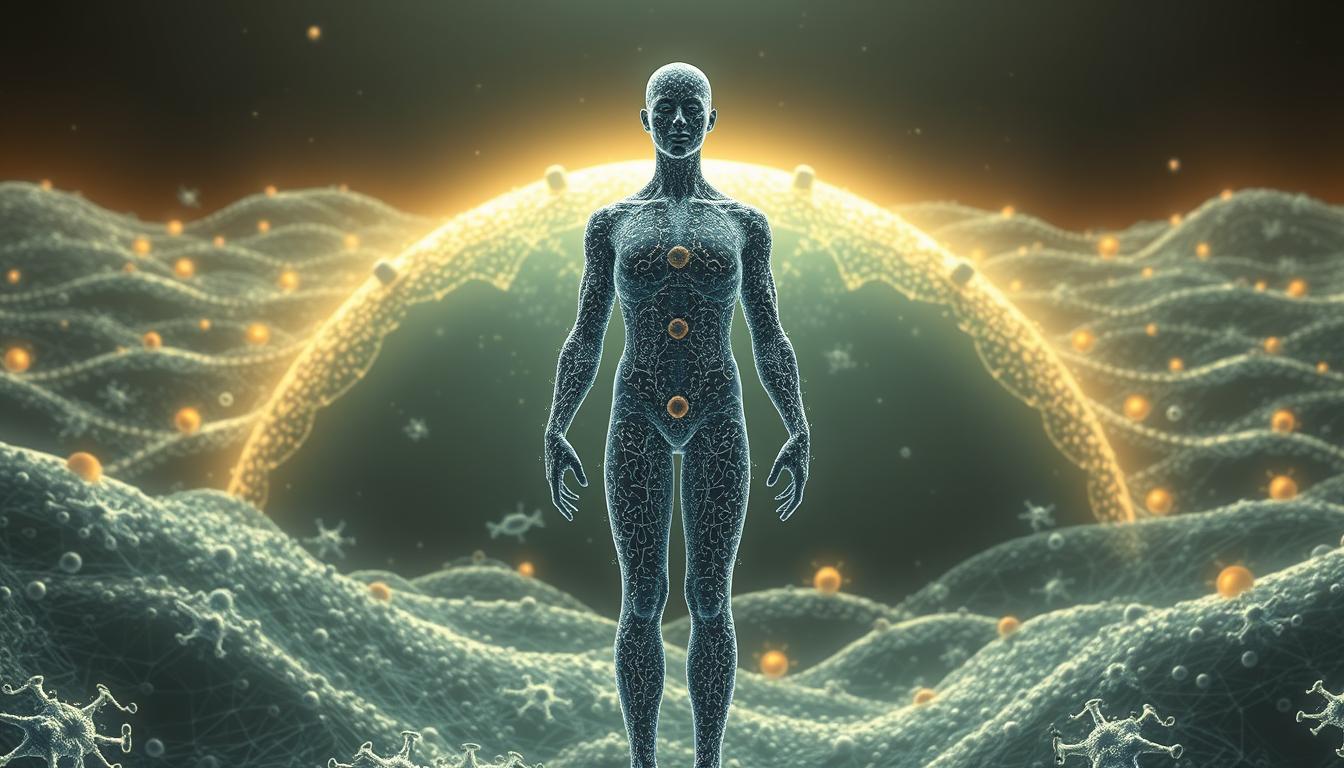
Ever thought about how many cells are in your body? It’s like a tiny universe inside you, full of trillions of tiny living units working together. The number of cells in a human is a mind-blowing scientific mystery.
Scientists say an average human body has about 30 to 40 trillion cells. This huge number shows how our bodies are made up of tiny building blocks. Knowing how many cells you have shows how amazing our bodies are.
Experts use special ways to figure out how many cells are in us. They look at body weight, volume, and how dense cells are. These methods help scientists learn more about our cells and how our bodies work.
Key Takeaways
- The human body contains approximately 30-40 trillion cells
- Cell count varies based on individual factors like age and weight
- Scientific estimates use multiple calculation methods
- Different cell types contribute uniquely to total cell numbers
- Cell count provides insights into overall health and biological complexity
Understanding Cell Basics
The human body is made up of tiny building blocks called cells. These tiny units are the foundation of life, creating a complex system that keeps us alive. About 37.2 trillion body cells work together in perfect harmony.
Cells come in many types, each with its own job. Scientists have found around 200 different cell types in us. Each one plays a special role in keeping us healthy and alive.
What Makes a Cell Special?
A cell is like a tiny factory with many parts working together. It has key features like:
- Ability to reproduce and divide
- Specialized functions within the body
- Capacity to communicate with other cells
- Unique structural design
Exploring Cell Varieties
Our body cells are not all the same. They form a rich mix of specialized units. Some main cell types include:
- Nerve cells: Transmit electrical signals
- Muscle cells: Enable movement and strength
- Blood cells: Support immune function and oxygen transport
- Skin cells: Provide protection and regulate temperature
Each cell type has a specific mission, working tirelessly to maintain our body’s intricate balance.
Estimating Total Cell Count
Understanding the human body’s cells is a complex task. Scientists have come up with detailed methods to figure out how many cells we have. They know that our bodies are made up of many different types of cells.
To find the total number of cells, researchers use different strategies. Each method has its own challenges and levels of accuracy:
- Volumetric calculations based on average cell size
- Weight-based estimations using cell mass
- Advanced computational modeling techniques
- Tissue-specific cell counting methods
Scientific Calculation Approaches
Studies suggest our bodies have about 37.2 trillion cells. These numbers come from complex math models that consider many biological factors.
| Estimation Method | Cell Count Range | Reliability |
|---|---|---|
| Volumetric Calculation | 16 Trillion Cells | Moderate |
| Mass-Based Estimation | 70 Trillion Cells | High |
| Computational Modeling | 37.2 Trillion Cells | Very High |
Factors Influencing Cell Count
Many things affect how many cells we have:
- Age: Our cell count changes as we grow
- Body Size: Bigger people usually have more cells
- Health Conditions: Illnesses can change our cell numbers
- Genetic Variations: Our genes also play a role
Learning about these methods helps us understand how complex our bodies are. It shows how amazing our cellular makeup is.
Average Cell Count in Adults
Learning about the number of cells in our bodies is really interesting. It shows how different we all are. Scientists have found out how many cells are in each of us.

Studies have shown big differences in cell count between men and women, and at different ages. On average, a man has about 36 trillion cells. A woman has around 28 trillion. These numbers highlight how complex our bodies are.
Cellular Variations by Demographics
There are many factors that affect how many cells we have:
- Age changes the number of cells a lot
- Being male or female also affects cell count
- How heavy we are is linked to cell numbers
- How fast we metabolize affects cell growth
Developmental Cell Count Differences
Newborns and adults have very different cell counts. A baby has about 17 trillion cells. This number grows a lot as we get older. This growth is key to our body’s changes.
Researchers keep studying how cell numbers change as we age. They find it really interesting.
Major Cell Types and Their Functions
The human body is made up of many different cells. Each cell has a special job to keep us healthy and working right. Knowing about these cells helps us see how amazing our bodies are.
There are about 200 main types of cells in our bodies. Each type has its own job and looks different from others.
Red Blood Cells: Oxygen Delivery Specialists
Red blood cells are the most common in our bodies, making up over 80 percent of all cells. They are key for life, carrying oxygen everywhere in our blood. This helps our bodies work properly.
- Diameter: 6-8 micrometers
- Primary function: Oxygen transportation
- Lifespan: Approximately 120 days
White Blood Cells: Defenders of the Immune System
White blood cells are vital for keeping us safe. They search for and fight off harmful germs in our blood.
| Cell Type | Function | Percentage |
|---|---|---|
| Neutrophils | Bacterial infection response | 55-70% |
| Lymphocytes | Immune memory and antibody production | 20-40% |
| Monocytes | Tissue repair and inflammation | 2-8% |
Skin Cells: The Body’s Protective Layer
Skin cells protect us from the outside world. They grow back fast to keep us safe from harm and germs.
The average human body contains approximately 37.2 trillion cells, with skin cells playing a crucial protective role.
The Role of Stem Cells
Stem cells are amazing cells in our bodies. They are like the master builders, helping our bodies fix and grow. These cells are key to keeping our bodies healthy and strong.
Stem cells are special because they can do many things. They have two main abilities that are important for our health:
- Self-renewal: They can make more of themselves
- Differentiation: They can turn into different types of cells
Understanding Stem Cell Basics
There are different types of stem cells in our bodies. Adult stem cells are found in places like:
- Bone marrow
- Muscle tissue
- Brain tissue
- Skin
- Umbilical cord
The Significance of Stem Cell Count
Even though there are not many stem cells, they are very powerful. Scientists think adult stem cells can turn into over 200 different cell types. This makes them very important for fixing and growing tissues.
Stem cells represent nature’s most versatile cellular building blocks, capable of transforming and healing the human body.
Doctors are studying how stem cells can help treat diseases. This research could change how we treat many illnesses.
Cell Turnover and Lifespan
The human body is always changing, thanks to cells dividing and dying. To understand how many cells we have, we need to look at these processes. Every day, our body goes through amazing changes to keep us healthy and working well.

Your body makes an incredible 330 billion new cells every day. That’s over 3.8 million cells every second. This helps our body keep regenerating and working right.
How Cells Divide and Die
Cell division is a key part of how many cells we have. Different types of cells live and grow at their own pace:
- Skin cells grow back every few weeks
- Skeletal muscle cells take up to 15 years to fully grow back
- Blood cells have a short life
Impact on Overall Cell Count
The way cells are replaced affects how many cells we have. Looking at daily cell replacement gives us interesting facts:
- 86% of cell turnover is blood cells
- 12% is gastrointestinal epithelial cells
- Skin cells make up 1.1% of cell turnover
It’s interesting that by mass, blood cells make up 48.6% of cell turnover. Gastrointestinal cells make up 41%. This balance is key to our body’s function and keeps our biological system in check.
Common Misconceptions About Cell Count
The human body’s cells are much more complex than we thought. Recent studies have changed our views on how many cells we have and how many bacteria live inside us.
Scientists have cleared up many myths about our body’s cells. One big myth was that bacteria far outnumber human cells.
Dismantling Popular Cell Count Myths
Recent studies have given us new insights into our body’s cells:
- The old 10:1 bacteria-to-human cell ratio is now considered inaccurate
- A more precise estimate suggests a near 1.3:1 ratio of microbial to human cells
- A “reference man” contains approximately 30 trillion human cells
- The same individual hosts about 39 trillion bacteria
Clarifying Cellular Estimates
Researchers have greatly improved our understanding of human cells. Old estimates were based on guesses, not solid science. The size of places like the colon is key to these new numbers.
“Scientific progress means constantly challenging our existing understanding and being willing to revise our assumptions.” – Modern Cell Biology Research
Knowing the real number of human cells helps doctors and scientists. It helps them create better models of our bodies and health.
Implications of Cell Count on Health
Understanding how cells work in our bodies is key to knowing our health. The cells in our body help keep us balanced and can show if we’re sick.
Our cells are like a map for doctors to check our health. If there are too many or too few cells, it can mean we have a health problem.
Immunity and Cell Count Connections
How well our immune system works is linked to certain cell counts. White blood cells, for example, are very important for fighting off infections.
- Normal white blood cell range: 4,500 to 11,000 cells per microliter
- Neutrophils represent 55% to 70% of total white blood cells
- Lymphocytes comprise 20% to 40% of white blood cell population
Health Conditions Linked to Abnormal Cell Counts
Changes in cell counts can point to health issues. Specific cell count anomalies might reveal underlying conditions such as:
- Anemia (low red blood cell count)
- Infections
- Immune system disorders
- Potential blood cancers
Doctors use blood tests to check these cell counts. This helps them find and keep track of health problems.
Future Research and Discoveries
The search to know how many cells are in our bodies is ongoing. The Human Cell Atlas project has mapped about 62 million cells out of 37.2 trillion. This has led to exciting discoveries about cell numbers and types.
Scientists used to think there were about 200 cell types. Now, they know there are thousands of unique cells in our bodies. This knowledge is changing how we see human systems.
New imaging and single-cell analysis methods are changing how we understand our bodies. Over 3,600 scientists from 100 countries are working together. They aim to create detailed cell count maps that could change medical research.
This effort is like the Human Genome Project. It promises to give us new insights into human health and how cells work.
New research is showing us more about cells and their roles. Scientists have found new cell types, like the gut metaplastic cell. They are also mapping complex biological networks.
This research could lead to big advances in human health. Scientists hope to use cell count knowledge to treat diseases like inflammatory conditions and genetic disorders.
As technology gets better, scientists want to learn more about the 37 trillion cells in our bodies. The future of cell biology research is full of promise. Each new discovery brings us closer to understanding the complex world of cells that make up our bodies and health.
FAQ
How many cells are actually in the human body?
Scientists think an average adult has about 30-40 trillion cells. This number can change based on age, gender, size, and health. New research is helping us count cells more accurately.
Do different people have different total cell counts?
Yes, people can have different cell counts. Body size, gender, age, muscle, and health all play a role. Bigger people usually have more cells, and body composition can also affect the count.
What are the most common types of cells in the human body?
Red blood cells make up about 84% of blood cells. White blood cells and platelets follow. Skin, muscle, and nerve cells also make up a big part of our cells.
How often do human cells regenerate?
Regeneration rates vary by cell type. Skin cells renew every 2-4 weeks. Red blood cells last about 120 days. Liver cells can regrow fast, but nerve cells take longer.
Can cell count indicate overall health?
Cell count can show health status. Odd counts might mean infections, immune problems, or chronic diseases. Doctors use cell counts to diagnose and assess health.
How do stem cells contribute to total cell count?
Stem cells are special because they can become different cell types. They’re a small part of our cells but crucial for tissue repair and growth.
Do cell counts change with age?
Yes, cell counts change with age. As we get older, cells regenerate slower, and their numbers decrease. This affects how our bodies work and our health.
Are cell counting methods 100% accurate?
Current methods are advanced but not perfect. Scientists use models and samples to estimate cell numbers. While good, achieving 100% accuracy is still a goal.
How do environmental factors impact cell count?
Diet, stress, exercise, toxins, and lifestyle affect cell production and count. A healthy lifestyle can help keep cells healthy and regenerating well.
What future technologies might improve cell counting?
New tech like single-cell sequencing, advanced imaging, and AI models will change cell counting. These advancements will give us deeper insights into cells and their behavior.





Leave a Comment
Your email address will not be published. Required fields are marked *