


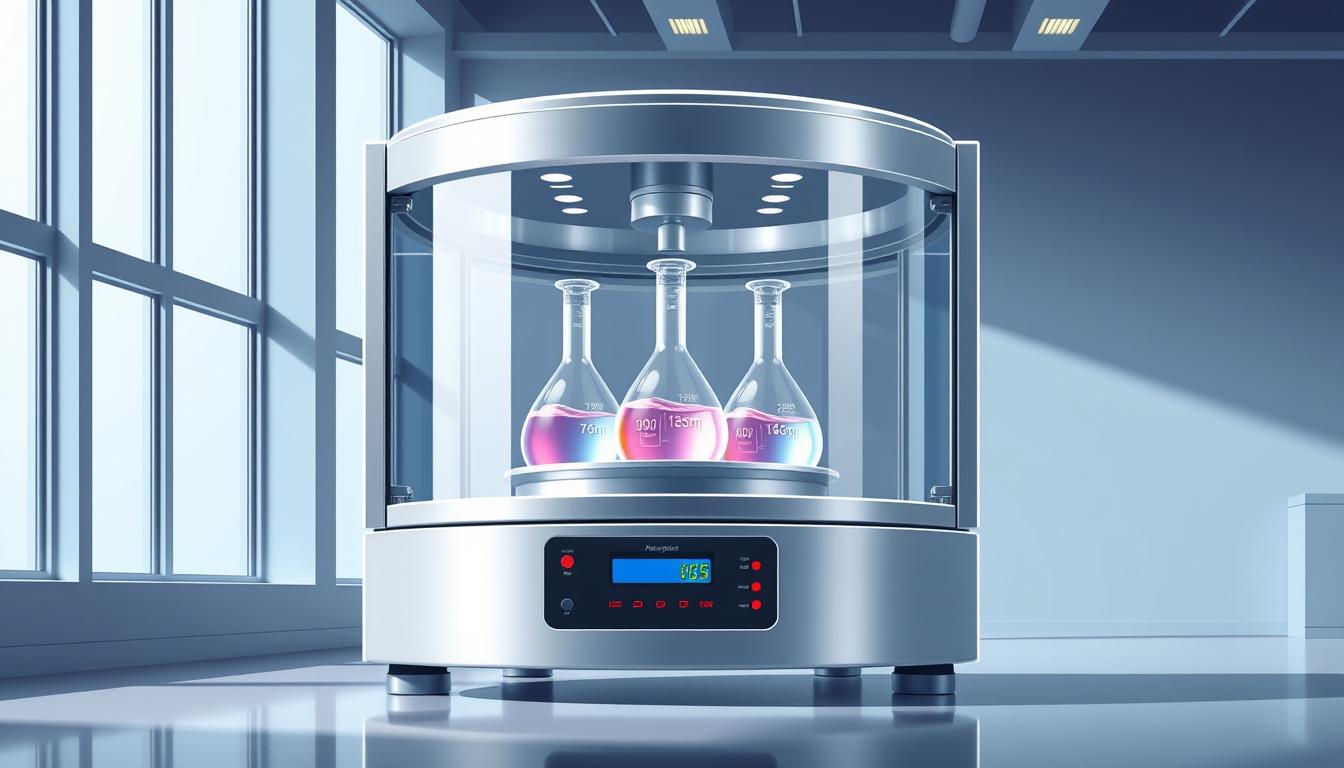
Are you ready to unlock the hidden potential of precision mixing in scientific research? What if a single piece of laboratory equipment could revolutionize your experimental outcomes?
A lab orbital shaker is a key tool in modern science. It helps researchers mix samples consistently and accurately. These tools are vital for many scientific fields.
Orbital shakers are great for cell culture and protein studies. They keep samples safe and ensure results are the same every time. They are a must-have in labs around the world.
Key Takeaways
- Lab orbital shakers are crucial for consistent sample mixing
- Supports diverse research applications across scientific disciplines
- Enables precise control of mixing speeds and conditions
- Enhances experimental reproducibility
- Fundamental equipment for modern research laboratories
Introduction to Lab Orbital Shakers
Laboratory orbital shakers are key in today’s science. They mix samples with precision in many fields. These shakers move in a circle, mixing gently but thoroughly.
Shaking incubators work by moving in a circle. This keeps samples safe while mixing them. They are vital in labs for biology and chemistry.
Core Functionality Explained
Orbital shakers work in several ways:
- Circular motion with adjustable speed ranges
- Precise control over agitation intensity
- Ability to accommodate multiple sample sizes
- Minimal sample disruption during mixing
Critical Laboratory Applications
Labs use orbital shakers for many important tasks. They are crucial for:
- Cell culture maintenance
- Protein expression studies
- Enzyme research
- Chemical solution preparation
| Shaker Type | Speed Range | Temperature Range |
|---|---|---|
| Bench Top Model | 15-500 rpm | 4-80°C |
| Floor Model | 25-450 rpm | 0-60°C |
Orbital shakers are vital for precise research. Continuous technological advancements improve their performance in science.
Key Features of Lab Orbital Shakers
Laboratory research needs precise tools that fit complex experiments. Lab orbital shakers are key for scientists looking for reliable mixing solutions in many fields.
Today’s lab orbital shakers have advanced features that set them apart from basic vortex mixers. They come in various designs to meet different research needs.
Speed Range and Adjustability
Mixing with precision is crucial in science. Lab orbital shakers offer a wide range of speed options:
- Low-speed settings for gentle mixing (25-100 RPM)
- Medium-speed ranges for standard applications (100-250 RPM)
- High-speed configurations for vigorous agitation (250-500 RPM)
Load Capacity and Platform Size
Choosing the right lab orbital shaker means knowing about platform sizes and weight limits.
| Platform Size | Load Capacity | Typical Applications |
|---|---|---|
| Small (15×15 cm) | Up to 2 kg | Microplate experiments |
| Medium (30×30 cm) | 5-10 kg | Standard laboratory research |
| Large (45×45 cm) | 20-50 kg | Large-volume sample processing |
Safety and Stability Features
Advanced lab orbital shakers have important safety features to protect research materials:
- Non-slip platform surfaces
- Overload protection systems
- Digital speed monitoring
- Automatic shut-off capabilities
These features help researchers keep precise experimental conditions and avoid equipment risks.
Types of Lab Orbital Shakers
Laboratory researchers use different benchtop shaker models for their needs. Each type of lab orbital shaker has special features. These features help improve scientific work and research accuracy.
Today’s labs use various orbital shaker setups for different research tasks. The design and function of these tools are key. They help get consistent and reliable results.
Fixed-Speed Shakers
Fixed-speed shakers shake at a steady pace. This is great for following the same steps in research. They are especially good for:
- Microbiology experiments
- Bacterial culture preparation
- Uniform mixing of samples
Variable-Speed Shakers
Variable-speed shakers let researchers change the shaking speed. They can adjust the shaking to fit their research needs. This allows for:
- Precise control over mixing intensity
- Adaptation to different sample volumes
- Optimization of experimental conditions
Multi-Tiered Shakers
Multi-tiered shakers are great for labs with little space. These cell culture shakers can shake many samples at once. This makes research more efficient and productive.
Advanced multi-tiered designs maximize laboratory workspace while maintaining consistent performance across different experimental setups.
Applications of Lab Orbital Shakers
Laboratory research needs precise and consistent handling of samples. Microplate shakers and multi-purpose shakers are key tools in many scientific fields. They offer versatile mixing solutions for complex experiments.
Digital orbital shakers change how labs work. They provide uniform mixing, which is vital for many scientific tasks.
Biological and Chemical Research
Researchers use multi-purpose shakers for many important tasks:
- DNA and RNA extraction
- Protein expression studies
- Cell culture preparation
- Chemical reaction mixing
Cell Culture and Protein Expression
Microplate shakers are crucial in cell biology. They ensure optimal agitation conditions. This prevents cell clumping and ensures even nutrient distribution, keeping cell cultures healthy.
Sample Preparation and Mixing
Advanced orbital shakers offer precise control for different samples:
| Sample Type | Mixing Requirements | Shaker Capability |
|---|---|---|
| Liquid Samples | Uniform Distribution | High-Speed Orbital Motion |
| Suspension Samples | Consistent Agitation | Adjustable Speed Settings |
| Semi-Solid Samples | Gentle Mixing | Programmable Parameters |
Digital orbital shakers give researchers unmatched flexibility. They enable precise sample preparation across various scientific areas.
How to Choose the Right Lab Orbital Shaker
Choosing the right lab orbital shaker is important. It depends on your research needs. Different experiments need different shaking styles.
When picking a lab orbital shaker, look at a few key things. These ensure it works well with your experiments.
Key Considerations for Laboratory Needs
The right shaker depends on several factors:
- Sample volume and container types
- Required shaking speed range
- Specific research application
- Temperature sensitivity of experiments
Platform Size and Performance Metrics
Understanding platform specs is crucial:
| Orbital Diameter | Recommended Application |
|---|---|
| 3 mm | Microplates and microcentrifuge tubes |
| 15-25 mm | Cell culture dishes and flasks up to 2 L |
| 30+ mm | Large vessels above 2 L |
Space and Power Requirements
Think about your lab’s space and power needs. Compact benchtop models fit small spaces. Floor-standing units are better for big research setups.
“The right orbital shaker transforms experimental precision from good to exceptional.”
Today’s lab orbital shakers have cool features. They include programmable settings, precise speed control, and temperature management. Matching the equipment to your needs boosts your research’s quality and speed.
Maintaining Your Lab Orbital Shaker
Keeping your lab equipment in top shape is key for its long life and performance. Orbital shakers are precise tools that need regular care. This care ensures they work well in scientific studies.

There are important steps to take to keep your shaking incubator running smoothly. These steps help prevent sudden problems and keep your equipment reliable.
Routine Maintenance Best Practices
- Clean the shaker platform and surfaces monthly using 70% ethanol
- Inspect platform mounting and clamp screws for secure attachment
- Check belt tension and wear periodically
- Verify speed accuracy through regular calibration
Critical Maintenance Considerations
| Maintenance Area | Recommended Frequency | Key Actions |
|---|---|---|
| Cleaning | Monthly | Disinfect surfaces, remove spills immediately |
| Mechanical Inspection | Quarterly | Check belts, screws, and platform alignment |
| Calibration | Annually | Verify speed and temperature accuracy |
Troubleshooting Common Issues
Researchers should watch out for issues with their shaking incubators. Unusual vibrations, shaking speed problems, or temperature issues mean it’s time for maintenance. Always follow the manufacturer’s advice and check your equipment often to avoid problems.
Looking after your lab equipment well not only makes it last longer. It also makes sure your scientific work is reliable and consistent.
The Advantages of Using Lab Orbital Shakers
Laboratory research needs precision and consistency. Lab orbital shakers are key tools that change how we mix samples in biological research. They offer better mixing than traditional vortex mixers.
Lab orbital shakers do more than just mix. They help researchers get better results because of their design and features.
Enhanced Mixing Efficiency
Orbital shakers mix samples well with special features:
- Uniform circular motion for even sample distribution
- Speed ranges from 1,000 to 3,000 rpm for different needs
- Control over shaking intensity and time
“Consistency is the hallmark of quality scientific research.” – Laboratory Research Institute
Improved Reproducibility of Results
Getting the same results is key in science. Lab orbital shakers help by:
- Providing consistent and controlled horizontal motion
- Reducing the need for manual help
- Using the same mixing methods every time
High-capacity shakers can handle up to 25 x 250 ml flasks at once. This boosts lab work and ensures reliable results for many samples.
Comparing Lab Orbital Shakers with Other Mixing Equipment
Laboratory mixing equipment is key in scientific research. Different technologies serve different purposes. Knowing the differences helps researchers pick the right tool for their needs.
Scientists use special tools like cell culture shakers and microplate shakers for precise mixing. Each device has its own benefits based on lab needs.
Key Differences from Vortex Mixers
Orbital shakers and vortex mixers mix in different ways:
- Mixing Motion: Orbital shakers move in circles, while vortex mixers make fast circular movements
- Sample Volume: Orbital shakers handle big volumes (flasks, bottles), vortex mixers are for small tubes
- Speed Control: Orbital shakers have adjustable speeds, vortex mixers have high-speed bursts
- Application Range: Orbital shakers are good for gentle mixing; vortex mixers are best for quick agitation
Advantages Over Heat Stirrers
Cell culture shakers have big advantages over heat stirrers:
- Gentler mixing for temperature-sensitive samples
- More uniform material distribution
- Works well in many research areas
- Keeps samples safe during mixing
Microplate shakers are great for small-volume experiments. They offer precise control and consistent results in various fields.
Innovations in Lab Orbital Shaker Technology
The world of lab equipment is always changing. Multi-purpose shakers are now key in research. New tech has made these shakers smarter and more helpful for scientists.

Today’s environmental shakers use the latest digital tech. This makes research more efficient and precise. Scientists can now use advanced systems for better control and monitoring.
Digital Control Integration
Lab experts now have better control over their work. Thanks to new features, experiments are easier to manage. Some key improvements include:
- Large touchscreen interfaces for easy programming
- Remote monitoring options
- Customizable routines and settings
- Tools for tracking data
Enhanced User Experience Features
New multi-purpose shakers aim to make life easier for users. They focus on less maintenance and better performance.
| Feature | Benefit |
|---|---|
| Compact Design | Saves space on the bench |
| Temperature Range | Works from 5-40°C |
| Humidity Tolerance | Handles 20-80% humidity without condensation |
A 2018 Lab Manager survey found that 20 percent of lab workers use their shaker for over seven hours daily. This shows how crucial reliable, easy-to-use tools are in today’s labs.
Environmental shakers now offer unmatched precision. They come with features like triple heavy-duty drives and long warranties. This lets scientists concentrate on their work without worrying about their equipment.
Safety Measures When Using Lab Orbital Shakers
Laboratory equipment, such as orbital shakers, needs careful handling. This is to avoid accidents and protect research samples. It’s important to follow safety rules to keep the work area safe.
Knowing the risks of lab orbital shakers is key. It helps prevent damage to the equipment and keeps people safe.
Proper Usage Guidelines
- Always wear the right personal protective equipment when using the shaker
- Turn off the power cord if there’s an unexpected stop
- Don’t use flammable products near the shaker
- Keep loose clothes and hair away from moving parts
- Don’t overfill flasks to avoid damage to the drive assembly
Personal Protective Equipment (PPE) Recommendations
When using a lab orbital shaker, safety comes first. Here’s the protective gear you should wear:
- Safety gloves
- Face masks
- Lab coat
- Safety glasses
If you see smoke or burning, stop right away. Only do maintenance after turning off the shaker and unplugging it.
Cleaning regularly and checking the equipment yearly is vital. It keeps the orbital shaker safe and working well.
Conclusion: The Value of Lab Orbital Shakers in Research
The lab orbital shaker is a key tool in biological research. It has made mixing more precise and experiments more efficient. Scientists in many fields use these shakers for reliable results in cell culture and molecular biology.
New technologies in lab orbital shakers are helping science move forward. Features like digital controls and safety measures have improved research. The market for these shakers is growing fast, expected to hit over USD 3.68 billion by 2032.
Research Impact and Future Potential
Today’s lab orbital shakers are very versatile for biological studies. They handle everything from small microplates to big flasks. This lets scientists focus on their research, not on mixing.
The future of orbital shakers looks even more exciting. They will have even more advanced features. This will help scientists do even more detailed and complex research.
Strategic Research Investment
Buying top-notch lab orbital shakers is a smart choice for research labs. They help reduce errors and make results more reliable. As research gets more complex, these tools will be even more vital for making new discoveries.
FAQ
What is a lab orbital shaker?
A lab orbital shaker is a key tool in labs. It moves in a circle to mix samples. This helps in mixing without harming the samples, which is important in biology.
How do orbital shakers differ from vortex mixers?
Orbital shakers move in a steady circle, unlike vortex mixers which mix fast. They are better for delicate samples like cells and proteins. This makes them great for mixing big volumes.
What factors should I consider when selecting an orbital shaker?
When picking an orbital shaker, think about speed, orbit size, and how much it can hold. Also, consider the space you have and what you need it for. Things like temperature control matter too.
What are the main applications of lab orbital shakers?
Orbital shakers are used in many ways in labs. They help with cell cultures, protein studies, and preparing samples. They’re also used in enzyme tests, growing microbes, and screening microplates.
How do I maintain my lab orbital shaker?
To keep your shaker in good shape, clean it often and check it regularly. Follow the maker’s instructions and watch for wear. Make sure it’s level and quiet to keep your work reliable.
What safety precautions should be taken when using an orbital shaker?
Be safe by wearing the right gear and securing containers. Stick to the speed limits and don’t overload it. Check the wires and place it on a stable surface.
Can orbital shakers accommodate different container types?
Yes, they can handle many types of containers. This makes them very useful for different kinds of experiments.
What recent technological innovations exist in orbital shaker design?
New features include digital screens, precise speed control, and remote monitoring. They also have data logging and environmental control. These updates make the shakers better and easier to use.
How do I choose between a benchtop and floor-standing orbital shaker?
Choose based on your space, how much you need to mix, and what you’re working on. Benchtops are good for small volumes, while floor-standing ones can handle more.
What are the key advantages of using an orbital shaker?
Orbital shakers mix well, reduce errors, and keep samples even. They control the mixing, work with sensitive temperatures, and handle many types of samples.






Leave a Comment
Your email address will not be published. Required fields are marked *