



Ever wondered how researchers handle hundreds of samples quickly and accurately? The answer is the multi channel pipette. It’s a lab tool that changes how we handle liquids.
Laboratory pipettes have evolved, with multi channel pipettes becoming key for research. These tools let researchers pour liquids into many wells at once. This makes experiments much faster.
Modern science needs fast and accurate work. Multi channel pipettes meet this need. They let labs work on samples faster, reducing errors.
Scientists in fields like molecular biology and microbiology are using these pipettes more. They make research more reliable and efficient. This is crucial for advanced studies.
Key Takeaways
- Multi channel pipettes increase laboratory throughput by up to 50%
- Precision pipetting accuracy can reach ±1% for volumes between 1-1000 µL
- Reduces sample handling time by 40%
- Minimizes risk of repetitive strain injuries
- Essential for high-throughput screening and complex scientific research
Understanding Multi Channel Pipettes
A multi channel pipette is a key tool in today’s science labs. It allows for handling liquids in many channels at once. This makes lab work faster and more efficient for researchers.
These pipettes are a big step forward in lab tech. They can handle liquids with great accuracy. They have 8 to 12 tips for transferring liquids from 0.5 µL to 300 µL.
Key Design Features
- Precise volume control capabilities
- Multiple channel configurations
- Ergonomic design for reduced user strain
- High accuracy within ±1 percent measurement
Performance Characteristics
Multi channel pipettes are vital in many scientific fields. They help labs work faster by handling many samples at once. This leads to:
- 50% more work done than with single-channel pipettes
- 30-40% fewer mistakes in handling liquids
- Better results in experiments
- More efficient lab work
Scientists in fields like molecular biology and pharmaceuticals love these pipettes. They save time and effort while keeping results consistent. This makes them a must-have in today’s labs.
Benefits of Using Multi Channel Pipettes
Laboratory researchers are always looking for ways to work more efficiently and accurately. Multi channel pipettes are key tools that change how we handle liquids in science.
Increased Efficiency in Liquid Handling
Using multi channel pipettes makes lab work faster. Here’s how they improve efficiency:
- A manual single channel pipette needs 672 steps for a 96-well PCR plate
- An 8-channel pipette cuts steps to 84
- A 12-channel pipette reduces steps to 56
Electronic multi channel pipettes take efficiency even higher. They can do up to 3,000 pipetting cycles on one charge. This lets researchers finish complex tests quickly.
Consistency and Precision in Experimentation
Handling samples needs to be very accurate. Multi channel pipettes help by reducing mistakes and making liquid transfers consistent. They are vital for many scientific areas:
- Molecular biology experiments
- Immunology assays
- Genetic research
- Pharmaceutical testing
These tools are crucial for getting reliable results in today’s advanced labs.
Applications of Multi Channel Pipettes in Biology
Multi channel pipettes have changed the game in biological research. They make high-throughput labs more efficient and precise. These tools help scientists work faster and more accurately in complex studies.
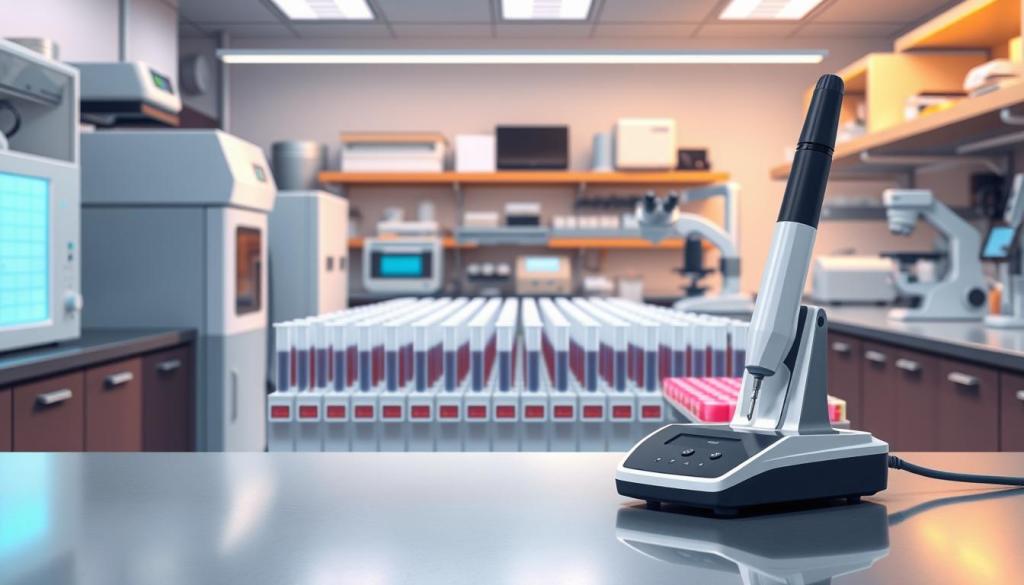
Scientists use multichannel pipettors in many areas, especially in molecular and microbiological research. Their design lets them process samples at the same time. This saves time and cuts down on mistakes.
Molecular Biology Applications
In molecular biology, multi channel pipettes are key for several important tasks:
- PCR setup and preparation
- DNA/RNA extraction protocols
- Protein assay screenings
- Genomic and proteomic research
Microbiology Research Techniques
Microbiological studies also benefit a lot from these pipettors. They help with:
- Microbial culture preparation
- Antimicrobial susceptibility testing
- High-throughput microbial sample screening
| Research Area | Pipette Channels | Volume Range |
|---|---|---|
| Molecular Biology | 8-12 Channels | 0.5-1000 μL |
| Microbiology | 16-384 Channels | 0.2-1000 μL |
Modern multichannel pipettes make research much faster. They cut down processing time while keeping accuracy high, between 99% and 101%.
Types of Multi Channel Pipettes
Laboratory experts use multi channel pipettes to make their work easier. These tools come in many types to fit different needs in science.
These pipettes help with handling liquids in various research areas. Scientists can pick from different types to boost their work’s speed and accuracy.
Fixed Volume vs. Variable Volume Pipettes
There are two main types of multi channel pipettes:
- Fixed Volume Pipettes: Set to measure a specific volume
- Variable Volume Pipettes: Can adjust volume for different experiments
“Choosing the right pipette can greatly improve research accuracy and efficiency.”
Manual vs. Electronic Multi Channel Pipettes
Today, pipette sets include advanced tech options:
| Pipette Type | Key Characteristics | Best Applications |
|---|---|---|
| Manual Multi Channel Pipettes | Traditional, precise | Common lab tasks |
| Electronic Multi Channel Pipettes | Programmable, digital control | Advanced research, high-volume tests |
Electronic multi channel pipettes are a big step forward in lab tech. They have programmable settings, can dispense in multiple ways, and are very accurate for detailed research.
Studies show that these pipettes can make labs work 50% faster and cut sample prep time by 40%. The demand for these tools keeps growing, showing how vital they are for today’s science.
Selecting the Right Multi Channel Pipette
Choosing the right multi channel pipette is key for lab experts. It boosts sample handling and experiment accuracy. The right tool makes a big difference.
Choosing a multi channel pipette needs careful thought. Scientists must think about their lab needs. This ensures the pipette works well and is easy to use.
Critical Selection Considerations
When picking a multi channel pipette, consider these important points:
- Volume range needed for experiments
- How often you’ll use the pipette
- The types of liquids you’ll handle
- If it fits with your lab’s standard practices
Ergonomic Design Factors
Ergonomics are vital in choosing a pipette. Look for tools that reduce fatigue and support comfort during use.
| Ergonomic Feature | Benefit |
|---|---|
| Lightweight Construction | Reduces wrist strain during extended use |
| Low-Force Plunger | Decreases user fatigue |
| Comfortable Grip | Improves handling precision |
| 360-Degree Rotating Manifold | Enhances user flexibility |
Choosing the right multi channel pipette improves lab work. It cuts down on errors and ensures consistent sample handling.
Lab experts should weigh these factors carefully. This ensures they pick a pipette that fits their needs. It should also offer comfort and precision.
Maintenance Best Practices for Multi Channel Pipettes
Keeping laboratory pipettes in good shape is key for precise research. Multi channel pipettes need regular care to work well in different experiments.
There are important steps to keep multi channel pipettes working right. Lab experts must follow these to ensure the best results.
Cleaning and Sterilization Techniques
Cleaning well is vital to avoid contamination and keep samples safe. Here’s what scientists should do:
- Clean the outside of pipettes every day with 70% ethanol
- Change tip cone filters often
- Use the right ways to decontaminate
- Follow strict sterilization steps
Regular Calibration and Performance Checks
Calibration keeps your pipette set accurate. The right calibration process includes detailed tests:
| Calibration Step | Details |
|---|---|
| Weighing Points | 4×2 measurements (low and high volumes) |
| Extended Measurements | 10×2 data points for better stats |
| Testing Procedures | Leakage Test, Functional Test, Calibration Check |
Regular upkeep can make your pipettes last longer. This includes complete disassembly, piston polishing, re-greasing, and replacing seals when needed.
- Calibration services usually take 24 hours
- Automated emails remind you of maintenance
- Calibrate each channel for the most precise work
By following these maintenance tips, scientists can keep their multi channel pipettes accurate and ready for important research.
Training and Best Practices for Users
Multi channel pipettes are complex tools that need special training. They are key for precise pipetting and handling many samples at once. Lab experts must learn these tools well to get accurate results.
Learning to use multi channel pipettes well involves mastering several important techniques. These skills help in handling liquids better. Through structured learning and practice, researchers can get better at using these pipettes.
Importance of Proper Training
Getting the right training is crucial for reliable results in science. It’s important to understand how multi channel pipettes work. This includes knowing about their precise piston mechanism.
- Learn the basic of liquid handling
- Know how pipettes work and how to use them
- Practice the right way to handle different samples
- Build muscle memory for better performance
Tips for Improving Liquid Handling Techniques
Getting good at pipetting many samples at once takes focus and practice. To improve, follow these tips:
- Keep the right posture to avoid getting tired and stay accurate
- Use the right depth when dipping tips into samples
- Use the same pressure when sucking up and pouring out liquids
- Rinse tips before use for better accuracy
- Take short breaks when pipetting for a long time
By spending time on training and improving techniques, experts can handle samples more precisely. Staying consistent and following best practices leads to reliable results in science.
Innovations in Multi Channel Pipette Technology
The world of lab equipment is always changing, with multi channel pipettes leading the way. These tools now help scientists handle liquids with much more precision and speed.
Today’s multi channel pipettes are changing science with new tech. They make it easier for scientists to do complex experiments.
Recent Design Advancements
New multi channel pipettes have some amazing features:
- Electronic volume control mechanisms
- Programmable dispensing protocols
- Enhanced ergonomic designs
- Precision tip spacing adjustment
Laboratory Automation Integration
Multi channel pipettes are now working with automation to change how research is done. Some big steps include:
- Robotic pipetting systems for faster work
- Smart tip management tech
- Auto sample transfer
- Easy connection with digital lab tools
Scientists can now save up to 70% of their time on pipetting. Electronic multi channel pipettes cut down on mistakes and make results more reliable.
Regulatory Compliance for Multi Channel Pipettes
Laboratory pipettes are key in scientific research. They must meet high standards of precision pipetting. The management of liquid transfer devices requires careful attention and strict quality control.

Research shows that compliance is essential in labs. Important regulatory points include:
- Gravimetric evaluation of all channels in critical experiments
- Comprehensive leak testing procedures
- Systematic calibration and accuracy verification
- Detailed documentation of maintenance processes
Importance of Standards in Laboratory Equipment
Regulatory bodies set strict rules for multi-channel pipettes. Precision is not optional – it’s a must. Labs must ensure:
- 100% channel consistency
- Accurate volume dispensing
- Regular performance checks
- Comprehensive record-keeping
Documentation and Record-Keeping Practices
Keeping good records is vital for lab integrity. Stats show 70% of labs face pipetting accuracy issues. This highlights the need for detailed record management.
Precision in liquid handling is the cornerstone of reliable scientific research.
Important documentation practices include tracking calibration results and maintaining equipment logs. Labs must also conduct regular performance assessments. They need strong systems for traceability and compliance with standards.
Future Trends in Multi Channel Pipette Development
The world of multi channel pipettes is changing fast, thanks to new discoveries in biology. Today’s lab tools are getting smarter, making it easier to handle lots of samples at once. Companies like Thermo Fisher Scientific and Eppendorf are leading the way with better designs and digital controls.
New trends in pipette tech include making them smaller and more automated. Soon, we’ll see pipettes with more channels, like 24 or 48, thanks to microfluidics. The market is expected to grow a lot, reaching USD 2 billion by 2033 at a 5.6% annual rate.
The next big thing in pipettes is using non-contact methods to handle tiny amounts of liquid. You’ll see digital screens that show how much liquid you’re using and pipettes that are lighter to hold. These changes will help scientists work more efficiently in fields like genomics and proteomics.
As single-cell genomics and synthetic biology grow, multi channel pipettes will be key to finding new things. They’ll work with cloud-based software and advanced sensors to make lab work easier. This will change how scientists do their jobs, making experiments more precise and efficient.
FAQ
What is a multi channel pipette?
A multi channel pipette is a tool for labs. It can move liquid in 8 to 12 channels at once. This makes handling many samples fast and cuts down on mistakes.
How do multi channel pipettes differ from single channel pipettes?
Single channel pipettes handle one sample at a time. But, multi channel pipettes can move the same amount of liquid to many places at once. This makes them great for quick, high-volume tests.
What volume ranges are typically available in multi channel pipettes?
You can find multi channel pipettes that handle from 0.5 µL to 1000 µL. They come in fixed or variable volume types. This lets researchers pick the right one for their needs.
Are electronic or manual multi channel pipettes better?
It depends on what you need. Electronic pipettes have cool features like setting up protocols and doing many tasks at once. Manual ones are cheaper and good for everyday use. Electronic ones are best for doing the same thing over and over.
How often should multi channel pipettes be calibrated?
Labs should calibrate them every year or after 5,000 uses. This keeps them working right and stops mistakes in important research.
What are the key applications of multi channel pipettes?
They’re used a lot in biology. For example, in PCR, DNA/RNA work, protein tests, and checking how microbes grow. They’re also used in testing how well drugs work.
How can researchers improve their multi channel pipetting technique?
To get better, keep your back straight, dip tips right, and press the plunger the same way every time. Also, learn how the pipette works and what can go wrong.
What maintenance practices are essential for multi channel pipettes?
Keep them clean and sterilized often. Make sure to check how well they’re working. Also, oil the parts that move and store them in a cool, dry place.
What factors should be considered when selecting a multi channel pipette?
Think about the volume you need, how often you’ll use it, and what liquids you’ll be working with. Also, consider how easy it is to use, its weight, and if it fits with your lab’s needs.
What future innovations are expected in multi channel pipette technology?
We’re expecting more automation, better designs, and more precise work. They might also work with other lab tools and be made of new materials for better comfort and efficiency.





Leave a Comment
Your email address will not be published. Required fields are marked *