


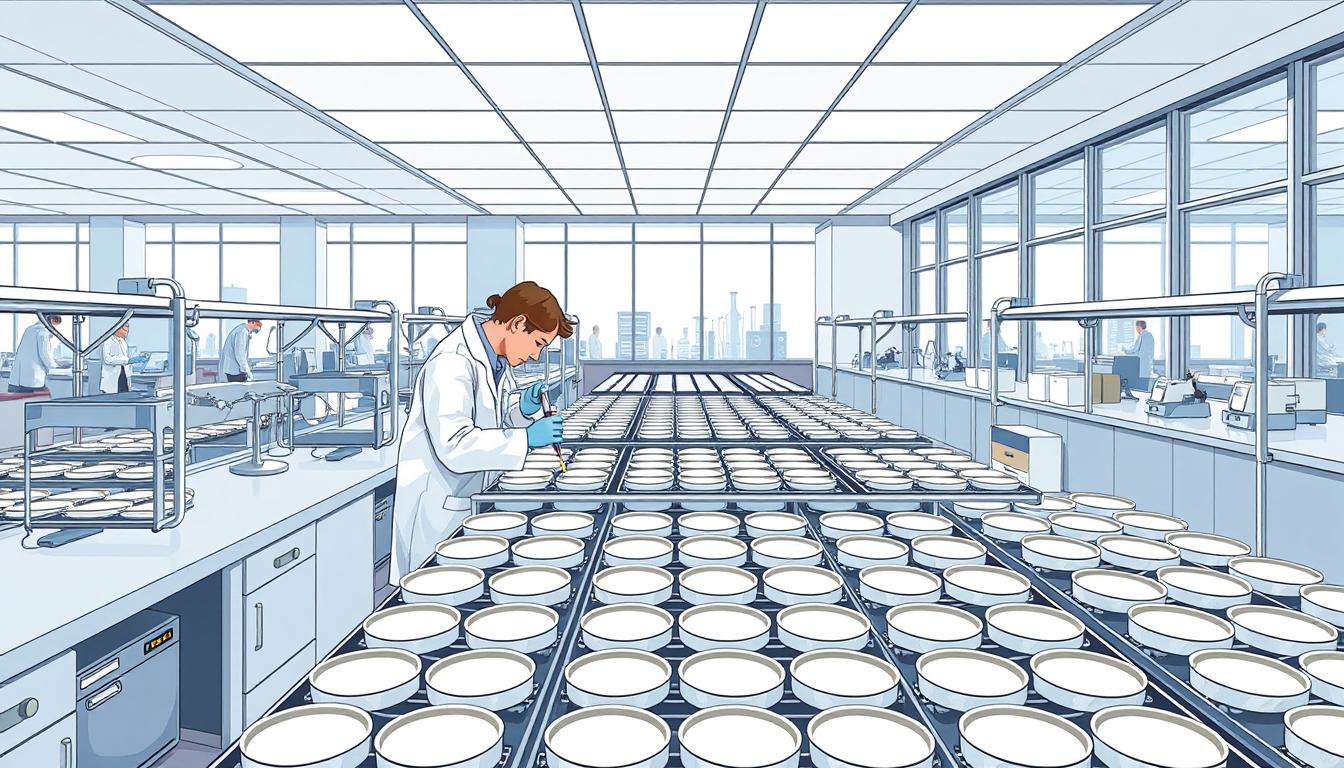
These innovative platforms are now key in modern labs. They let researchers work on many samples at once with great precision. The 96-well plate is especially popular in chemical, biological, and pharmaceutical research. It offers an efficient way to run complex experiments.
Microplates are very versatile. They support fast screening of thousands of samples. Their small size helps researchers work more efficiently and use less reagent, making them essential in advanced scientific studies.
Key Takeaways
- Wellplates enable simultaneous processing of multiple samples
- 96-well formats are most commonly used in research
- High-throughput screening becomes significantly more efficient
- Reduces experimental costs and reagent consumption
- Supports diverse research applications across scientific disciplines
Introduction to Wellplates in Scientific Research
Scientific research needs precise and efficient tools. Multiwell plates are key in today’s labs, changing how we do complex studies. They help in many fields.
A cell culture plate is a basic tool for many experiments. It has many wells in a set pattern. This lets researchers work on many samples at once with great accuracy.
What Defines a Wellplate?
Wellplates are flat, rectangular platforms with many cylindrical wells. Each well is the same size and shape. Common sizes include:
- 96-well plates (most popular format)
- 24-well plates
- 384-well plates
- 6-well plates
Critical Importance in Laboratory Research
Multiwell plates do more than hold samples. They offer big benefits for research, like:
- Standardizing experiments
- Using less material
- Doing many tests at once
- Managing volumes accurately
“Wellplates have transformed scientific research by allowing simultaneous investigation of multiple experimental variables.” – Laboratory Research Quarterly
| Well Configuration | Typical Applications | Volume Capacity |
|---|---|---|
| 96-well | ELISA, Drug Screening | 50-300 µL |
| 24-well | Cell Culture, Initial Screening | 500-1000 µL |
| 384-well | Genomics, Proteomics | 10-100 µL |
Researchers in virology, microbiology, and clinical labs use these plates. They help do complex experiments well and save money.
Types of Wellplates Available
Scientists use many types of wellplates to make their work easier. These tools help manage samples well and support advanced research in many fields.
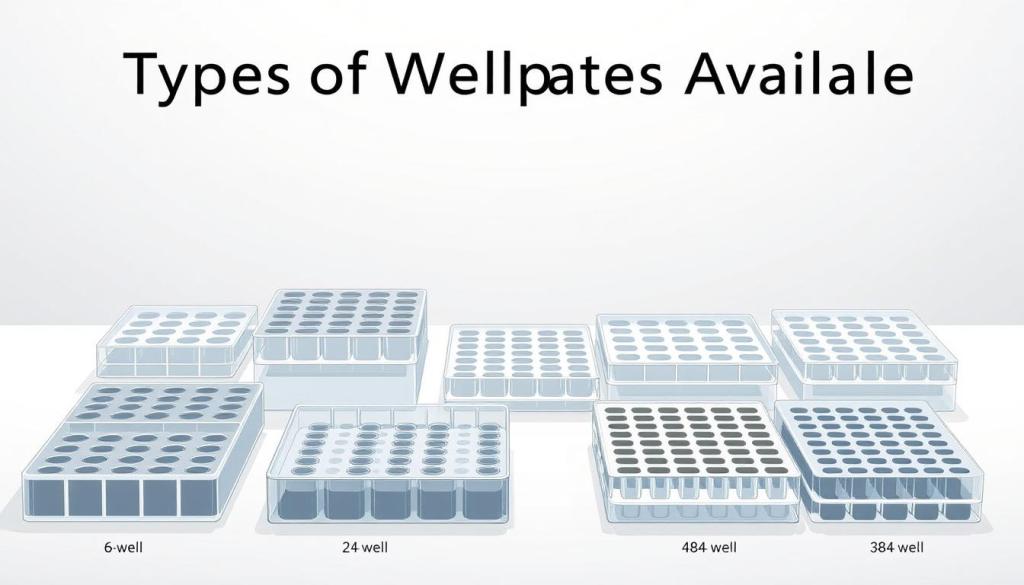
Standard Wellplate Formats
There are several standard wellplate sizes, each for different needs. Here are the most common ones:
- 6-well plate: 3-4 ml volume capacity
- 12-well plate: 1-2 ml volume capacity
- 24-well plate: 0.5-1.0 ml volume capacity
- 48-well plate: 0.25-0.35 ml volume capacity
- 96-well plate: 0.1-0.2 ml volume capacity
Specialized Tissue Culture Plates
There are special tissue culture plates for certain research needs. For example, black-walled 96-well plates reduce background light. Glass bottom plates are great for high-quality images.
The right tissue culture plate can significantly enhance experimental precision and reliability.
| Plate Type | Well Diameter | Typical Application |
|---|---|---|
| 6-well plate | 20 mm | Large cell culture volumes |
| 96-well assay plate | 5 mm | High-throughput screening |
| Glass bottom plate | Varies | Microscopy and imaging |
Choosing the right assay plate is key. It depends on the volume needed, imaging requirements, and the experiment’s specifics. Each type of wellplate has its own benefits for different studies.
Material Composition of Wellplates
Scientific research depends a lot on the right choice of microtiter plate materials. Polystyrene and polypropylene are key options. Each has its own impact on results and data trustworthiness.
Polystyrene: The Primary Material
Most microplates are made from high-quality polystyrene (PS). It’s known for its great optical qualities. The main benefits are:
- High transparency for colorimetric assays
- Optimal optical measurement capabilities
- Surface modification potential
Polypropylene: Specialized Applications
Polypropylene (PP) is vital for certain research needs. Its special features make it perfect for specific experiments.
| Material | Key Characteristics | Recommended Use |
|---|---|---|
| Polystyrene | High optical clarity | Colorimetric and fluorescence assays |
| Polypropylene | Heat-resistant and inert | Temperature-sensitive sample storage |
Chemical Compatibility Considerations
Researchers must think about material properties when picking microtiter plates for microarray experiments. Chemical resistance and thermal stability are key to keeping samples safe.
The right wellplate material can make the difference between reliable research results and compromised data.
Quality standards ensure microplates meet strict requirements. Clean room manufacturing, from ISO class 5 to 8, ensures consistent performance in various research areas.
Features to Consider When Choosing a Wellplate
Choosing the right wellplate is key for good scientific research. It’s especially important for high-throughput screening and in vitro testing. Researchers need to look at certain features to get the best results.
Volume Capacity Considerations
How much volume a wellplate can hold is very important. Different studies need different well sizes and shapes. Scientists must pick wellplates that fit their research needs.
- 96-well format with typical volume ranges of 50-300 µL
- 384-well format supporting 10-100 µL volumes
- 1536-well format for ultra-low volume experiments
Surface Treatment Options
How a wellplate’s surface is treated can greatly affect research. Different treatments can help or hurt the results of studies. This is true for both high-throughput screening and in vitro testing.
| Surface Type | Recommended Application |
|---|---|
| Tissue Culture Treated | Cell adhesion and growth |
| High-Binding | Protein and antibody assays |
| Low-Binding | Sensitive biomolecule studies |
“The right wellplate can make the difference between successful and compromised research.” – Laboratory Research Quarterly
When picking wellplates, think about color-coding, shape, and material. BRANDplates® microplates have nine surface types. This makes them useful for many kinds of research.
Choosing the best wellplate means knowing about temperature, stacking, and system compatibility. By picking wisely, researchers can avoid mistakes and work more efficiently.
Applications of Wellplates in Research
Scientific research uses wellplates as key tools for advanced experiments. These microplates have changed many research areas. They make scientific studies more precise, efficient, and large-scale.
Drug Development Testing
In drug research, wellplates are vital for high-throughput screening (HTS). Researchers use these special microplates to quickly check thousands of drug candidates against certain biological targets.
- Screen millions of compounds quickly
- Identify potential therapeutic molecules
- Reduce time and resource investment
Environmental Microbiology Studies
Wellplates are key in environmental research, especially for water and soil studies. Scientists can test many environmental samples at once with these standardized microplates.
| Research Area | Wellplate Application |
|---|---|
| Water Quality | Microbial contamination detection |
| Soil Analysis | Bacterial diversity assessment |
Clinical Diagnostics
Modern labs rely on wellplates for tests. Enzyme-Linked Immunosorbent Assay (ELISA) uses these microplates to find antibodies, antigens, and other important biomarkers with great accuracy.
Wellplates make complex diagnostic processes simpler and more reliable.
Wellplates keep pushing the limits of science, helping in research and diagnostic advancements.
Wellplates in High-Throughput Screening
High-throughput screening (HTS) has changed scientific research a lot. Multiwell cell culture plates are key in speeding up discovery. They let researchers do lots of experiments quickly and efficiently.
Benefits of High-Throughput Screening
High-throughput screening brings big benefits to science. It lets researchers test many samples at once. This saves a lot of time and money.
- Rapid sample processing
- Increased experimental reproducibility
- Cost-effective research methodologies
- Enhanced data collection capabilities
“High-throughput screening represents a quantum leap in scientific research efficiency.” – Research Innovation Journal
Automation and Robotics Integration
Today’s cell culture plates work well with robots. This makes experiments more precise and consistent. The growth of multiwell plates has made complex screenings easier and more reliable.
| Plate Type | Wells | Screening Capacity |
|---|---|---|
| Standard Multiwell | 96 | High |
| High-Density | 384 | Very High |
| Ultra-Density | 1536 | Extremely High |
Robots and cell culture plates together have changed screening in many fields. This mix of technology is helping scientists discover new things faster.
Innovations in Wellplate Technology
Scientific research is making big strides with new tissue culture plate technologies. Modern labs are seeing big changes in how experiments are done. This is thanks to advanced wellplate designs that make things more precise and efficient.
Researchers are now using sophisticated wellplate solutions to get better results. These new tools help solve big problems in cell culture and assay plate methods.
Microfluidic Wellplates: Precision at Microscale
Microfluidic wellplates are a big step forward in lab tech. They let scientists control tiny amounts of fluids. This means they can do experiments with much less material.
- Enable precise fluid manipulation
- Reduce sample volume requirements
- Enhance experimental reproducibility
3D Cell Culture Wellplates: Bridging Laboratory and Biological Realism
Three-dimensional cell culture wellplates are changing research. They let cells grow in a way that’s more like real life. This makes experiments more realistic.
| Feature | 2D Wellplates | 3D Wellplates |
|---|---|---|
| Cell Interaction | Limited | Comprehensive |
| Cellular Behavior | Simplified | Complex |
| Research Applicability | Basic | Advanced |
New microfluidic and 3D wellplate techs are changing science. They give scientists new ways to study how cells work and interact.
Best Practices for Using Wellplates
Laboratory professionals use microtiter plate technologies to make research easier. Learning how to handle wellplates well can make experiments better and cut down on mistakes.
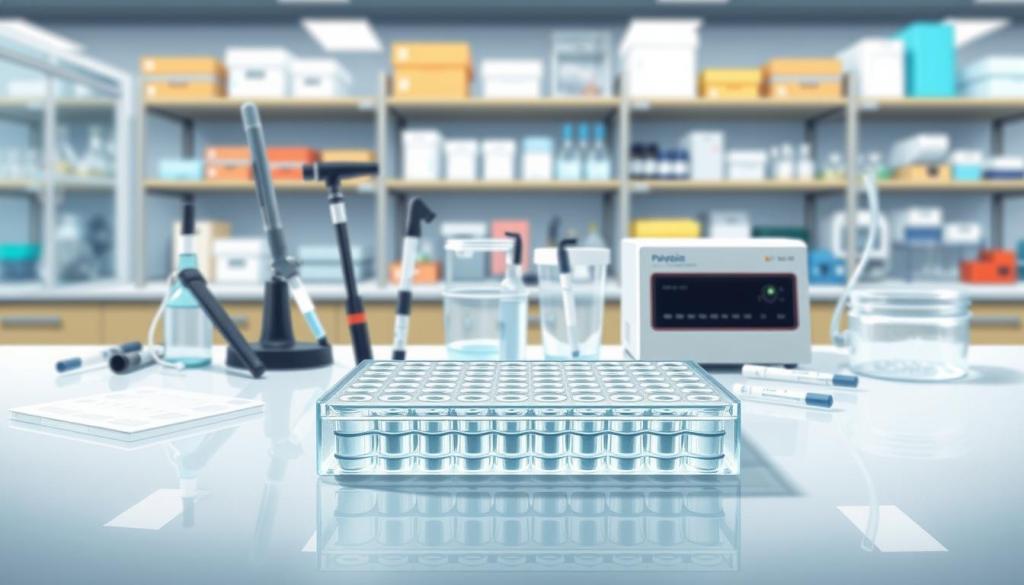
Those working with microarray platforms need to know how to manage wellplates. This is key for the best results and to make sure experiments can be repeated.
Sterilization Techniques for Wellplates
Keeping experiments clean is very important. Here are some ways to sterilize wellplates:
- Autoclave sterilization at 121°C for 15 minutes
- Ethanol surface disinfection (70% concentration)
- UV light exposure for surface decontamination
- Chemical sterilization using hydrogen peroxide
Efficient Usage Tips
To get the most out of wellplates, pay close attention and use smart strategies:
- Use a 10 µL pipette for small volumes (3 µL) for better accuracy
- Change gloves every 45 minutes to stay clean
- Prop up plate backs for better viewing in tight spaces
- Divide 384-well plates into 16 sections for easier handling
“Precision in wellplate handling determines the quality of scientific research” – Laboratory Best Practices Guide
When using special microarray platforms, remember the needs of your experiment. Being precise can greatly enhance the reliability and reproducibility of your work.
By following these best practices, researchers can get the most out of their microtiter plate technologies. This helps reduce mistakes and improves the success of their experiments.
Regulatory Compliance for Wellplates
Understanding complex regulatory standards is key for labs doing high-throughput screening and in vitro testing. Wellplates must meet strict rules to ensure accurate and reliable research.
Research places and pharma companies must follow specific rules for wellplates in labs.
FDA Regulatory Framework
The Food and Drug Administration (FDA) sets important standards for wellplate making and use. Key things to consider include:
- Material safety and biocompatibility
- Consistent manufacturing processes
- Quality control mechanisms
- Performance verification protocols
ISO Standards for Wellplate Quality
The International Organization for Standardization (ISO) offers detailed guidelines for wellplate making and use worldwide.
| ISO Standard | Primary Focus | Significance for High-Throughput Screening |
|---|---|---|
| ISO 9001 | Quality Management | Ensures consistent manufacturing processes |
| ISO 13485 | Medical Device Quality | Validates safety for diagnostic applications |
| ISO 15189 | Medical Laboratory Competence | Supports precision in clinical testing |
“Regulatory compliance is not just about following rules, but ensuring the highest standards of scientific integrity and research reliability.” – Research Laboratory Standards Association
Labs doing in vitro testing must pick wellplates that meet strict rules. Following these rules ensures reliable results and keeps scientific work trustworthy.
Cost Considerations for Wellplates
Laboratory researchers have to make big financial choices when picking wellplates for their experiments. Knowing the cost of microplate technologies can really affect their budgets and how well they can do their research.
The cost of wellplates changes a lot because of several important things:
- Material composition
- Well density
- Surface treatment
- Sterility requirements
Pricing Variability Across Wellplate Types
Each type of wellplate has its own price tag for research labs. Looking closely at the prices shows some interesting patterns:
| Wellplate Type | Average Cost | Typical Applications |
|---|---|---|
| 96-well plate | $25-$50 | Standard screening |
| 384-well microplate | $50-$100 | High-throughput screening |
| 1536-well plate | $100-$200 | Advanced research |
Budgeting Strategies for Laboratory Supplies
Researchers can cut down on wellplate costs by using smart strategies:
- Bulk purchasing discounts
- Comparing vendor pricing
- Evaluating long-term research needs
- Considering reagent consumption
Choosing wellplates wisely can cut costs by up to 40% by using resources better.
Modern microplates are designed to save money. Smaller well volumes mean less reagent needed. This is a smart choice for labs with tight budgets.
Conclusion: The Importance of Wellplates in Advancing Scientific Research
Multiwell plate technology has changed the game in science. It lets researchers test thousands of samples at once, making their work much faster. These plates are key for labs looking to do more with less, especially in finding new drugs and testing them.
The tech behind wellplates has come a long way. Now, they can hold from 1 ml to over 50 ml of liquid. This helps find new drugs up to 30% faster. Plus, they work well with machines, cutting down on mistakes and making labs more efficient by up to 40%.
Wellplates are a big deal in science, used in many fields like genetics and medicine. They help scientists do their work better and faster. As tech keeps getting better, these plates will keep helping scientists discover new things.
The market for these plates is growing fast, worth USD 1.5 Billion now. This shows how much people need these tools for their research. We can look forward to even better plates that will make science even more precise and productive.
FAQ
What is a wellplate?
A wellplate is a tool used in labs. It has many small wells in a grid. It’s for doing experiments, storing samples, and screening many things at once. You can find them in 96-well or 384-well sizes, helping with research in many fields.
What materials are wellplates typically made from?
Wellplates are made from polystyrene or polypropylene. Polystyrene is clear, good for cell culture and seeing things clearly. Polypropylene is strong against chemicals and works well with solvents or high temperatures.
How do I choose the right wellplate for my research?
Choosing the right wellplate depends on your research. Think about what you need, like how much liquid, the surface treatment, and the conditions. Look at the well size, if it’s treated for cells, and if it’s safe for your materials.
What are the main applications of wellplates?
Wellplates are used in many areas. They help in finding new drugs, testing in clinics, checking the environment, studying cells, and screening many things at once. They’re key for drug tests, PCR, cell studies, enzyme tests, and studying microbes.
How are wellplates used in high-throughput screening?
In high-throughput screening, wellplates let researchers test many samples at once. This makes testing faster and more efficient. They work well with robots for quick, precise tests, especially in finding new drugs.
What are some recent innovations in wellplate technology?
New things in wellplates include microfluidic plates for better fluid control and 3D cell culture plates. These help with more detailed cell studies. They make experiments more realistic and useful.
How do I ensure proper sterilization of wellplates?
How you sterilize wellplates depends on the material and use. You can use autoclaving, gamma rays, ethylene oxide, or chemicals. Always follow the maker’s advice and keep things clean to avoid contamination.
What regulatory considerations are important for wellplate use?
When using wellplates, follow FDA rules and ISO standards. These ensure the products are safe and work the same everywhere. This is important in places like labs for drugs and clinics.
Are specialized wellplates available for specific research needs?
Yes, there are special wellplates for different needs. You can find plates for cell culture, sensitive molecules, and specific tests. They’re made for certain cell types or experiments.
How can I minimize costs when purchasing wellplates?
To save money, think about what you really need. Look at prices, buy in bulk, and choose the right plates for your work. Don’t spend too much on features you don’t need.






Leave a Comment
Your email address will not be published. Required fields are marked *