



Imagine a single tool changing science in many fields. The 96 well plate is a key piece of lab equipment. It changes how scientists do complex tests.
This microplate is a big step forward in lab work. It gives scientists a way to do many tests at once. Made from top-quality materials, these plates help scientists work more efficiently.
The 96 well plate fits perfectly in labs, with a 12 x 8 setup. It’s used in many areas like microbiology and biochemistry. It’s a must-have for getting precise and reliable results.
Key Takeaways
- 96 well plates enable advanced scientific research across multiple disciplines
- Standardized 12 x 8 configuration provides consistent experimental design
- Made from high-quality virgin polystyrene for optimal performance
- Available in multiple configurations for diverse research needs
- Supports various assay types including colorimetric and fluorescence-based experiments
Overview of 96 Well Plates
Laboratory researchers use 96 well plates for many experiments at once. These plates are key in science, helping with precise and quick sample work. They are used in many fields.
Definition and Purpose
A 96 well plate has 96 wells in an 8×12 grid. It’s made for doing lots of tests and analyses at once. Scientists use these plates for:
- ELISA plate testing
- Cell culture experiments
- High-throughput screening
- Molecular biology research
Common Applications in Research
96 well plates are very useful in many areas of research. Scientists use them for:
- Immunological studies
- Drug discovery processes
- Genetic research
- Microbiological investigations
Types of 96 Well Plates Available
There are different types of 96 well plates for different needs. The main types are:
- Flat bottom plates: Great for cell cultures that stick to the plate
- U-bottom plates: Best for cell studies that don’t stick
- V-bottom plates: Good for experiments where things settle at the bottom
“The 96-well plate format represents a quantum leap in laboratory efficiency and precision.” – Scientific Research Journal
These special plates help scientists do complex experiments well and reliably.
Materials Used in 96 Well Plates
Choosing the right material for 96 well plates is key in high-throughput screening and microarray research. Lab experts must pick carefully to get the best results in bioassays.
Polystyrene vs. Polypropylene: Material Characteristics
Polystyrene and polypropylene are the top choices for making 96 well plates. Each has special features for different lab needs.
- Polystyrene: Excellent optical clarity
- Polypropylene: Superior chemical resistance
- Temperature range compatibility varies between materials
Surface Treatments: Coated vs. Uncoated Plates
Surface treatments can greatly affect results. Researchers have many options:
| Surface Treatment | Primary Use |
|---|---|
| Tissue Culture | Cell adhesion |
| High Bind | Protein capture |
| No Bind | Minimal protein interaction |
Selecting the Right Material for Your Experiment
When picking a 96 well plate, think about these key points:
- What your experiment needs
- How clear you need the plate to be
- How well it will handle chemicals
- The temperature range it can handle
Pro tip: Now, you can find microplates in many materials like polypropylene, polystyrene, glass, and special polymers. This meets many research needs.
The right material can make your results more reliable and accurate.
Advantages of Using 96 Well Plates
Researchers in bioanalysis have found big benefits in using microplate technologies, especially the 96 well plate. These plates have changed lab work by offering many advantages. They make science work better and faster.
High Throughput Screening Capabilities
The 96 well plate makes experiments much faster. Scientists can do many tests at once, saving time and effort. This way, they can:
- Test compounds quickly
- Do many experiments at once
- Finish research faster
Space Efficiency in Laboratory Settings
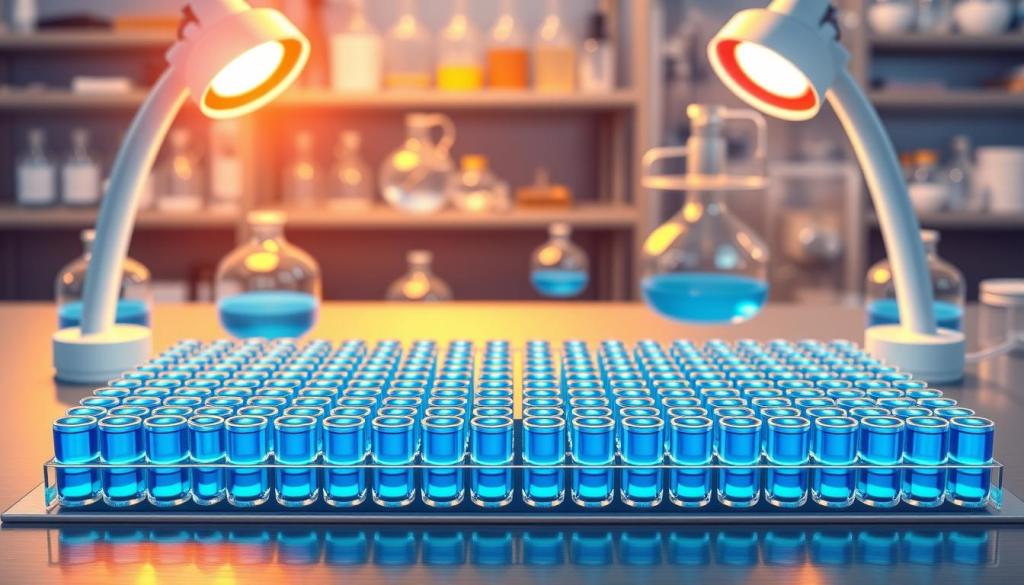
Microplates save space in labs. One 96 well plate can replace many test tubes. This makes labs more organized and efficient.
Cost-Effectiveness of 96 Well Plates
96 well plates are also good for the budget. They use less reagent and waste, saving money. This is a big plus for labs.
| Cost Factor | Savings Potential |
|---|---|
| Reagent Usage | Up to 70% reduction |
| Sample Processing | Increased efficiency |
| Equipment Optimization | Lower operational costs |
*”Efficiency is doing things right; effectiveness is doing the right things.”* – Peter Drucker
Using 96 well plates is a big step forward in lab research. It gives scientists new ways to discover things.
Key Features of 96 Well Plates
Laboratory researchers use 96 well plates for complex scientific experiments. These assay plates offer precise, standardized platforms for analyzing multiple samples. They are essential in many research areas.
Well Design and Shape
The design of 96 well plates is key to success in experiments. Different designs suit different research needs:
- U-bottom wells for better liquid retention
- Flat-bottom wells for best optical measurements
- V-bottom wells for better sample concentration
Optical Clarity
Optical clarity is crucial in cell culture and ELISA plates. High-quality 96 well plates are made from virgin polystyrene. This ensures they are very transparent for precise measurements.
| Well Type | Optical Properties | Recommended Applications |
|---|---|---|
| Clear Wells | Highest Light Transmission | Colorimetric Assays |
| Black Wells | Minimal Background Interference | Fluorescence Assays |
| White Wells | Enhanced Signal Amplification | Luminescence Measurements |
Compatibility with Assay Types
Modern 96 well plates support many experimental protocols. They are used in immunology and molecular diagnostics. These plates work well with various assays.
“The versatility of 96 well plates has revolutionized scientific research, enabling high-throughput screening and complex analytical techniques.” – Laboratory Research Quarterly
Researchers can choose specialized 96 well plates for their needs. This ensures the best performance in different scientific fields.
Choosing the Right 96 Well Plate for Your Application
Choosing the right 96 well plate is key for high-throughput screening and microarray research. It’s important to look at several factors for the best results in bioassay experiments.
Critical Factors for Plate Selection
Scientists need to think about a few important things when picking a 96 well plate:
- Material composition
- Surface treatment
- Well shape and design
- Compatibility with automated systems
- Specific research application requirements
Plate Characteristics Overview
| Plate Type | Best Used For | Recommended Surface |
|---|---|---|
| Transparent Plates | Bottom fluorescence measurements | Transparent bottom |
| Black Plates | Top fluorescence measurements | Minimizes reflections |
| White Plates | Luminescence measurements | Enhances light sensitivity |
Popular Brands and Specialized Offerings
Top makers offer special surfaces for different research needs:
- Non-treated surfaces: pureGrade™ (non-sterile and sterile options)
- Immunoassay surfaces: immunoGrade™, hydroGrade™, lipoGrade™
- Cell culture surfaces: cellGrade™ variants with different specifications
“Selecting the right 96 well plate can significantly impact experimental outcomes and research precision.” – Laboratory Research Experts
It’s a good idea for researchers to ask for sample plates. This helps find the best plate for their needs, ensuring good results and avoiding contamination.
Preparation and Handling of 96 Well Plates
Successful bioanalysis depends on careful preparation and handling of 96 well plates. These microplates are key tools in scientific research. They need careful management to ensure accurate and reproducible results.
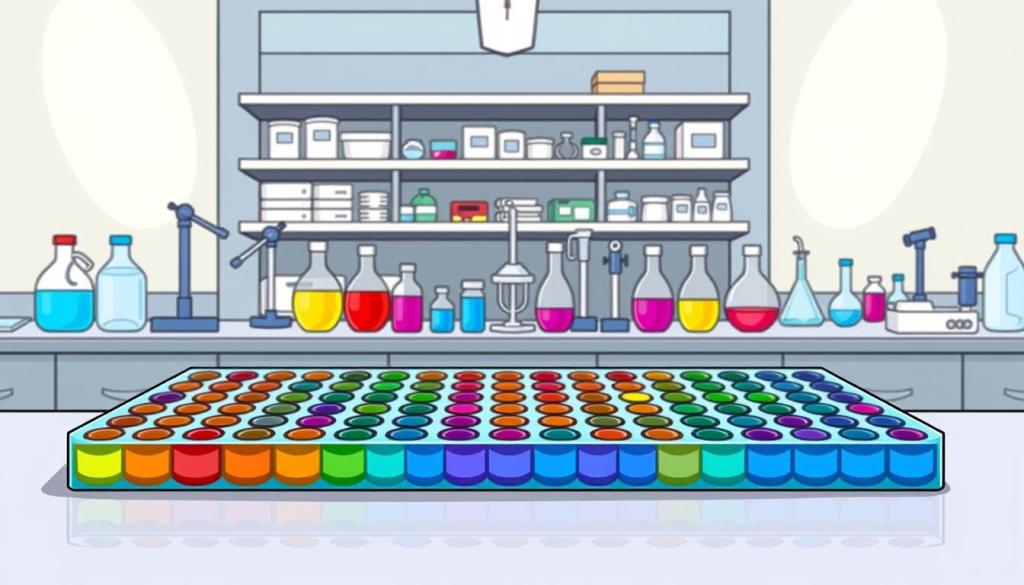
Researchers must follow specific protocols to keep their 96 well plates in good condition. This is important for various scientific procedures.
Sterilization and Cleaning Protocols
Proper sterilization is crucial for reliable experiments. Different methods are suggested based on the plate material and its intended use:
- Disposable plates: Use directly from sterile packaging
- Reusable microplates: Employ rigorous cleaning methods
- Autoclave for heat-resistant plates
- Use 70% ethanol for surface disinfection
Proper Storage Techniques
Storage is key to keeping 96 well plates in good condition. Important factors include:
- Store plates in sealed containers
- Maintain consistent temperature
- Protect from direct sunlight
- Avoid humidity and extreme conditions
Handling Volumes and Liquid Transfers
Precision is crucial when working with microplates. Here are some guidelines for optimal liquid handling:
- Use multichannel pipettes for consistent transfers
- Typical cell culture volumes range from 200-350 µL per well
- Recommended cell densities: 5 x 10^4 to 25 x 10^4 cells/mL
- Employ gentle pipetting techniques to prevent cell damage
“Attention to detail in 96 well plate handling can significantly impact research outcomes.”
Assays Conducted with 96 Well Plates
Microtiter plates are key in today’s science. They help researchers do many tests at once. This makes it easier to find new discoveries and analyze data accurately.
Enzyme-Linked Immunosorbent Assay (ELISA)
ELISA is a big deal in medical research. It uses 96 well plates for many tests at once. The main types of ELISA are:
- Sandwich ELISA for high accuracy
- Indirect detection methods
- Competitive antigen screening
*About 65% of immunology research uses ELISA to find specific antigens and antibodies.*
Polymerase Chain Reaction (PCR)
PCR turns 96 well plates into top tools in molecular biology. It helps amplify DNA quickly. This is great for studying genes, finding pathogens, and more.
Cell Culture Applications
Modern microtiter plates are great for cell culture studies. They help scientists with:
- Studying how cells grow
- Testing how toxic substances are
- Finding new drugs
The XTT-reduction assay shows how well cells are doing. It gives exact numbers on how cells interact in these special plates.
Automation Compatibility with 96 Well Plates
Modern lab research has changed a lot with automated systems. 96 well plates are key in high-throughput screening and microarrays. They help researchers work faster and more accurately.
Robotics and Liquid Handling Innovations
Now, robots can handle 96 well plates better than ever. New automation tech offers amazing features:
- 8 fully-independent liquid handling channels
- Volume range from 0.5 μL to 1000 μL
- Transfer precision as low as 5% coefficient of variation
- Rapid plate processing (6 minutes per cell plate)
Software Integration for Enhanced Research
Lab info management systems have changed data tracking for ELISA plates. Now, researchers can use software that:
- Collects data in real-time
- Analyzes results automatically
- Documents experiments fully
- Manages workflows smoothly
Improved Reproducibility Through Automation
Automated systems cut down on human mistakes. By using precise robots, labs can:
Get more consistent results and reliable science
| Automation Feature | Performance Metric |
|---|---|
| Plate Processing Time | 7.5 minutes per 96-well plate |
| Carryover Rate | 0.5% contamination |
| Plate Format Flexibility | Single-click conversion between 96 and 384 well formats |
These advanced automation tools are changing science. They make experiments more complex and efficient in many fields.
Environmental Considerations in 96 Well Plate Use
Laboratory researchers are now looking at the environmental impact of their tools, like 96 well plates. These plates are key in bioassay and bioanalysis. The push for sustainability has made them examine how to use these tools better.
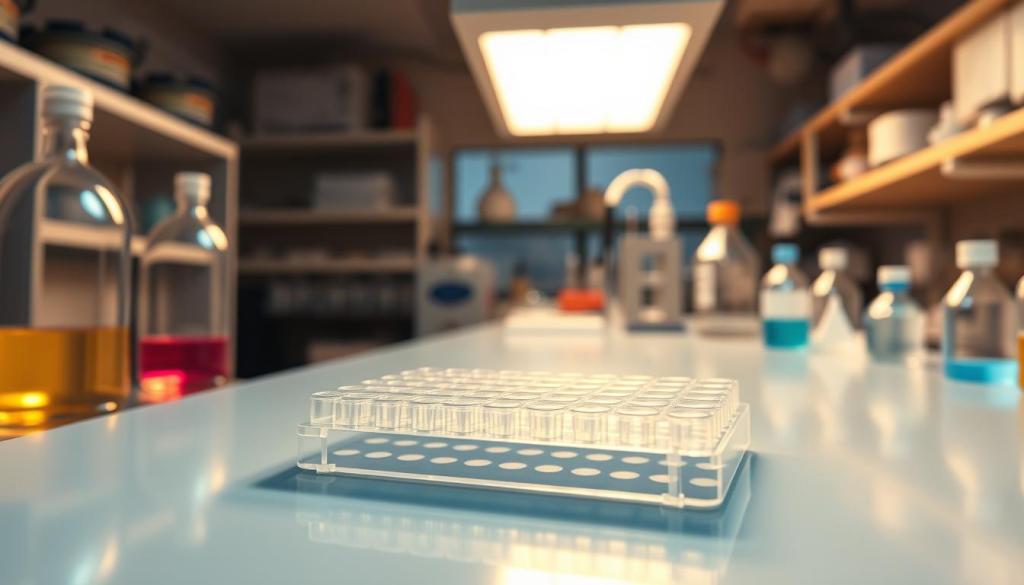
96 well plates create a lot of plastic waste in labs. It’s a challenge to keep research efficient while being eco-friendly. Researchers are finding ways to lessen their environmental impact.
Recycling and Material Disposal
Getting rid of 96 well plates right is important. Here are some key steps:
- Sort plates by material
- Start recycling programs for lab plastics
- Work with certified waste disposal services
Eco-Friendly Alternatives
New options are coming up in lab supplies. Biodegradable 96 well plates are made from green materials. They keep the quality needed for bioanalysis but are better for the planet.
Impact on Laboratory Sustainability
Today’s research places focus on being green. Labs are choosing recyclable 96 well plates and better waste management. This cuts down on carbon emissions without hurting research quality.
“Sustainability in research is not just an option—it’s a responsibility.” – Environmental Research Institute
Switching to greener 96 well plate practices is a big step. It helps reduce the environmental cost of science while keeping experiments precise.
Innovations in 96 Well Plate Technology
The world of lab research is changing fast. New technologies are making old microplate methods better. Scientists are adding new features to microtiter plates, making them do more.
Microfluidics Integration
Microfluidics is changing how we design assay plates. Innovative 96 well plates now use tiny fluid control systems. These plates allow for:
- Precise liquid handling
- Less sample needed
- Better control over experiments
Smart Well Plate Concepts
The new microplates are smarter. They have features like:
- Sensors for live monitoring
- Tracking of experiment conditions
- Auto data collection
Future Trends in Laboratory Equipment
New trends are shaping lab equipment. We can look forward to:
| Innovation | Potential Impact |
|---|---|
| 3D-Printed Custom Plates | Custom experimental designs |
| Sustainable Materials | Less harm to the environment |
| Smart Surface Modifications | Better cell interactions |
“The future of lab research is in smart, adaptable plate tech that meets needs instantly.”
These new ideas mark a thrilling time for microplate tech. They promise more advanced, efficient, and accurate research methods.
Common Issues and Troubleshooting
Researchers often face problems when working with cell culture and ELISA plates. These issues can affect the accuracy of their work. It’s important to know these common problems to keep experiments reliable and precise.
Surface Tension Challenges
Surface tension can cause problems with liquid distribution in 96 well plates. These issues include:
- Uneven liquid spreading
- Inconsistent sample volumes
- Potential measurement inaccuracies
To solve these problems, researchers can:
- Use specialized surfactants
- Choose plates with hydrophobic or hydrophilic coatings
- Use precise pipetting techniques
Cross-Contamination Prevention
Cross-contamination is a big risk in labs. Preventing unintended sample mixing needs careful attention.
“Precision in sample handling is the cornerstone of reliable scientific research.” – Laboratory Research Quarterly
Strategies for Ensuring Experimental Accuracy
To keep cell culture and ELISA plate experiments accurate, researchers should follow these steps:
- Use sterile technique
- Seal plates properly
- Control temperature consistently
- Minimize evaporation
- Standardize mixing protocols
By tackling these common issues, scientists can greatly enhance the reliability and reproducibility of their experiments.
Conclusion: Importance of 96 Well Plates in Research
The 96 well plate has changed science a lot. It helps with things like microarray analysis and bioassay development. These tools make labs work better by letting them test many things at once with just a little bit of sample.
Thanks to 96 well plates, research is cheaper and faster. Scientists can test up to 90 different things in one go. This makes their work easier. The design of these plates, improved in 1998, works well with today’s lab tools.
Summary of Applications
96 well plates are key in medical, pharmaceutical, and biological research. They’re used for many things like ELISA tests, cell studies, and molecular diagnostics. They help save resources and make research more accurate.
The Future of Laboratory Automation and Efficiency
As lab tech gets better, 96 well plates will keep leading the way. They’ll work with robots and new software to do even more. We can look forward to better designs and materials for these plates.
FAQ
What is a 96 well plate?
A 96 well plate is a tool used in labs. It’s a plastic plate with 96 wells in an 8 x 12 grid. It’s used for cell culture, ELISA, PCR, and more.
What materials are typically used to manufacture 96 well plates?
Most 96 well plates are made of polystyrene or polypropylene. Polystyrene is good for cell culture and optical uses. Polypropylene is better for molecular biology because it’s more resistant to chemicals.
How do I choose the right 96 well plate for my experiment?
Think about the material, well shape, and surface treatment. Also, consider the optical properties and assay type. Your choice should match your experiment’s needs.
What are the different types of 96 well plates?
There are many types of 96 well plates. For example:
– Flat bottom plates are great for cell cultures.
– U-bottom plates work well for immunological assays.
– V-bottom plates are best for precipitation and sedimentation.
– Clear and black plates are for different optical measurements.
– Treated and untreated surfaces are for specific interactions.
How can I prevent cross-contamination in 96 well plates?
To avoid cross-contamination, seal plates properly and work in a clean area. Use multichannel pipettes carefully. Avoid splashing and aerosols. Specialized sealers or films can also help.
Are 96 well plates compatible with automated systems?
Yes, 96 well plates work well with automated systems. They’re perfect for high-throughput screening and fit with robots, automated readers, and LIMS.
What types of assays can be performed using 96 well plates?
96 well plates are very versatile. They can be used for ELISA, cell studies, PCR, protein assays, drug screening, enzyme kinetics, and immunology.
How should I store and handle 96 well plates?
Keep 96 well plates in their packaging in a clean, dry place away from sunlight. Handle them carefully to avoid damage. Use sterile techniques and follow storage guidelines based on the material and use.
What are some environmental considerations for 96 well plates?
Consider using eco-friendly plates and recycling. Follow safe disposal guidelines for contaminated materials. Some manufacturers offer sustainable options to help the environment.





Leave a Comment
Your email address will not be published. Required fields are marked *