


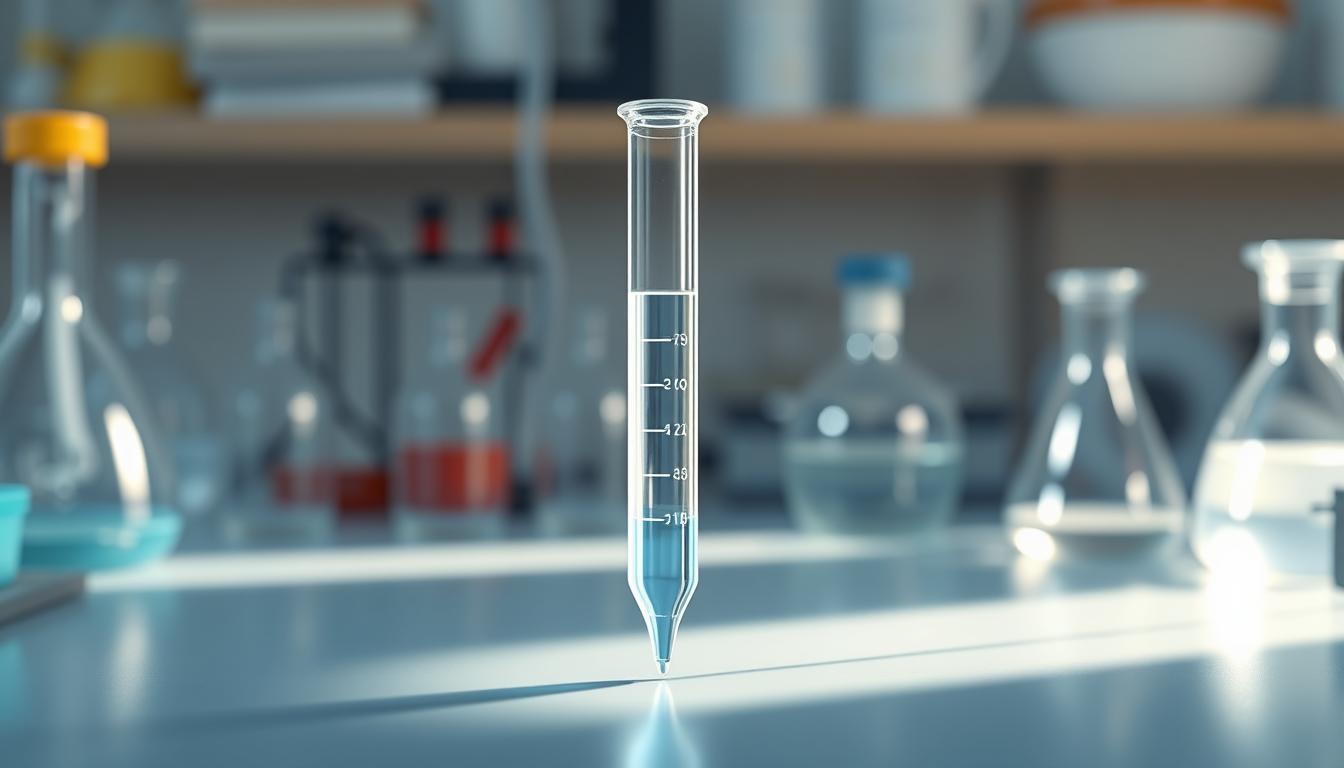
Have you ever wondered how scientists achieve mind-blowing precision in liquid handling? This precision can make or break critical experiments.
The serological pipette is a key tool in scientific research. It lets researchers transfer liquid volumes with amazing accuracy. This precision lab equipment is vital in many scientific fields, like molecular biology and microbiology.
Serological pipettes can handle liquid volumes from 1 mL to 50 mL. They are the top choice for liquid handling. Scientists use these tools to keep their experiments consistent and reliable.
Serological pipettes are not just for simple liquid transfers. They are also key in complex lab tasks. These include cell culture, sample dilution, and making reagents.
Key Takeaways
- Serological pipettes handle liquid volumes from 1 mL to 50 mL
- Essential for maintaining precision in scientific experiments
- Used across multiple scientific disciplines
- Available in both glass and plastic variants
- Critical for maintaining experimental consistency
Introduction to Serological Pipettes
Precision instruments are key in science, and serological pipettes are vital for measuring volumes accurately. These tools are made for precise liquid handling in many fields.
Serological pipettes are a big step forward in lab tech. They let researchers move liquids with great precision. They come in sizes from 1 mL to 100 mL, making them useful for many experiments.
What is a Serological Pipette?
A serological pipette is a long tube with precise markings. It’s made for accurate liquid transfer. It comes in different sizes and is very accurate.
- Designed for accurate liquid transfer
- Available in multiple volume ranges
- Calibrated for exceptional precision
- Made from materials like polystyrene or polypropylene
Importance in Laboratory Settings
These tools are vital for measuring volumes in science. They are used in about 30% of lab tasks. They are important in many areas, like:
- Cell culture research
- Microbiology experiments
- Chemical analysis
- Biochemical investigations
Scientists trust serological pipettes for their accuracy. They can measure volumes with an error of ±1% to ±2%. This helps get the same results in different experiments.
| Pipette Size | Volume Range | Typical Accuracy |
|---|---|---|
| Small | 1-5 mL | ±1% |
| Medium | 10-25 mL | ±1.5% |
| Large | 50-100 mL | ±2% |
Knowing how serological pipettes work helps scientists improve their experiments. It ensures they get reliable results every time.
Types of Serological Pipettes
Serological pipettes are key tools in biochemistry labs. They help prepare samples for various experiments. Knowing the different types is important for choosing the right one for your needs.
Plastic vs. Glass Serological Pipettes
There are mainly two materials for serological pipettes: plastic and glass. Each has its own benefits for preparing samples:
- Plastic Pipettes
- They’re made of polystyrene
- Light and disposable
- They’re sterilized by gamma irradiation
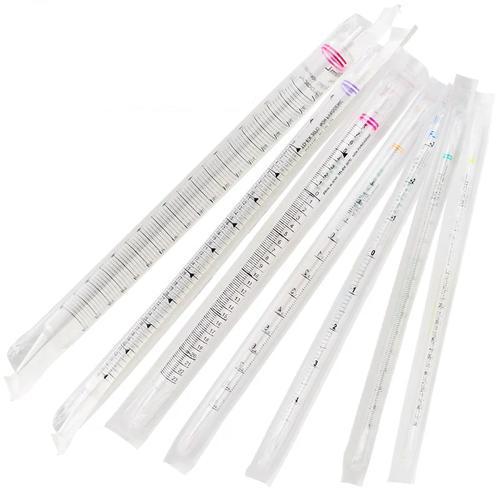
- They come in different colors for easy identification
- Glass Pipettes
- They can be reused and sterilized
- More durable for frequent use
- Need to be cleaned by hand
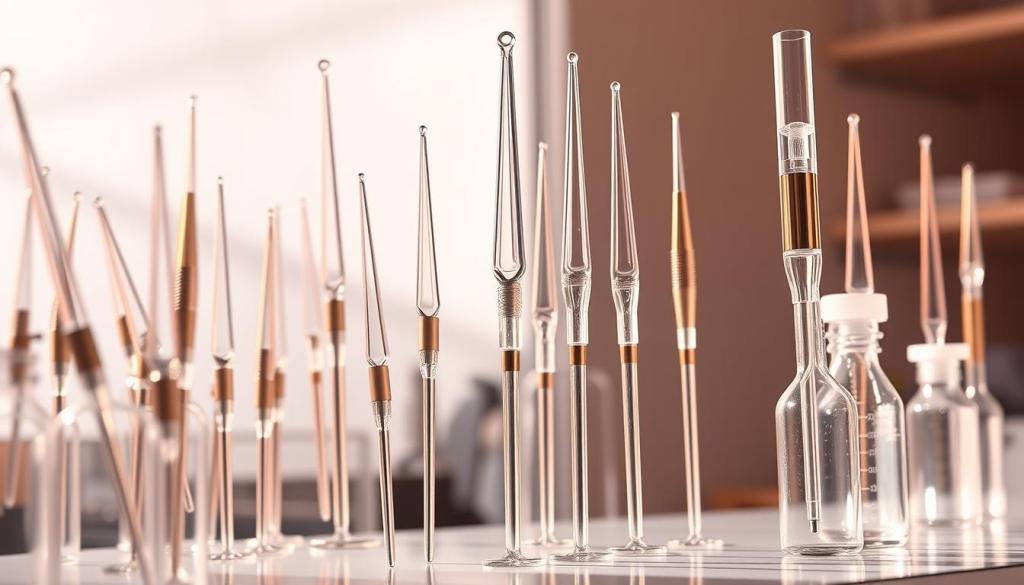
Graduated vs. Non-Graduated Pipettes
Serological pipettes have two main designs. Each affects how they work in biochemistry labs:
- Graduated Pipettes
- They have markings for measuring volumes
- Great for accurate volume measurements
- Range from 1 mL to 50 mL
- Non-Graduated Pipettes
- They have a smooth surface without markings
- Best for transferring a single volume
- Used in certain sample preparation methods
Choosing the right pipette depends on your lab’s needs, the experiment, and how precise you need to be with liquids.
Key Features of Serological Pipettes
Serological pipettes are key tools in labs for precise measurements. They have special features that make them crucial in science and medicine.
These pipettes work well because of several important features. They help handle liquids accurately and reliably.
Volume Range and Precision
Serological pipettes are versatile in measuring liquids:
- They can measure from 1 mL to 50 mL.
- They are accurate to within ±1% to ±2% of the total volume.
- Graduation marks are at 0.1 mL intervals.
“Precision is the hallmark of effective scientific research.” – Laboratory Research Standards
Sterility and Compatibility
The sterility of these pipettes is key for keeping experiments clean:
- More than 90% of labs use disposable pipettes to avoid contamination.
- Materials like polystyrene and polypropylene are chemically safe.
- Color-coded bands help identify the volume range fast.
Lab experts see these tools as vital for precise liquid transfers in many fields.
Choosing the right serological pipette is crucial for research success and precision.
How to Use a Serological Pipette
Using a serological pipette needs careful handling for accurate liquid transfer. Knowing the right techniques helps avoid mistakes and keeps samples safe.

Lab experts must learn specific skills for reliable results with micropipettes. Here are tips for using serological pipettes well.
Step-by-Step Pipetting Instructions
- Choose the right serological pipette for your needs
- Check the pipette for damage or dirt
- Use a pipette controller for precise liquid handling
- Hold the pipette straight up at a 90-degree angle
- Draw liquid carefully to the right volume without air bubbles
- Dispense liquid smoothly against the container wall
Common Mistakes to Avoid
- Don’t touch the pipette tip to container walls
- Avoid air bubbles during liquid transfer
- Use the correct pipette for the right volume
- Keep the pipette at a proper vertical angle
About 70% of pipetting errors come from bad technique, not the equipment. With practice and focus, you can greatly improve your accuracy.
| Technique | Impact on Accuracy |
|---|---|
| Proper Vertical Angle | Reduces volume measurement errors by up to 2% |
| Consistent Speed | Minimizes liquid viscosity variations |
| Avoiding Tip Contamination | Prevents cross-contamination risks |
Getting good at using serological pipettes takes time, patience, and careful following of scientific rules. Labs can cut down on mistakes by training regularly and sticking to guidelines.
Maintenance and Care for Serological Pipettes
Keeping lab equipment in good shape is key for precise liquid handling. It also helps serological pipettes last longer. Regular care reduces mistakes and keeps scientific measurements accurate.
- Do regular visual checks
- Clean pipettes after each use
- Store them right
- Check for calibration
Cleaning and Sterilization Techniques
Each material needs its own cleaning method. Glass pipettes can be autoclaved, but plastic pipettes are usually single-use and pre-sterilized.
- Rinse glass pipettes with distilled water
- Use 70% ethanol for disinfecting
- Autoclave glass pipettes at 121°C for 20 minutes
- Dispose of plastic pipettes as per lab rules
Inspecting for Damage
Checking for damage is vital for keeping equipment in top shape. Watch out for these signs:
- Cracks or chips in glass pipettes
- Deformations in plastic pipettes
- Clouding or discoloration
- Inconsistent volume measurements
By sticking to these maintenance tips, labs can keep their serological pipettes reliable. This supports top-notch scientific and clinical work.
Applications of Serological Pipettes
Serological pipettes are key tools in science and medicine. They help scientists and doctors measure liquids with great precision. This is important in many fields of study.

Scientists use serological pipettes for many important tasks. They are designed for precise handling of liquids in complex settings.
Clinical Laboratory Applications
In hospitals, serological pipettes are vital for many tests:
- Blood work analysis
- Disease screening
- Diagnostic test preparation
- Pathology specimen handling
Research Environment Utilization
Research labs use serological pipettes in many areas:
- Cell culture maintenance
- Molecular biology experiments
- Chemical reagent preparation
- Microbial studies
| Laboratory Type | Primary Applications | Volume Range |
|---|---|---|
| Clinical Lab | Diagnostic Testing | 1-10 mL |
| Research Lab | Cell Culture | 5-25 mL |
| Microbiology Lab | Microbial Analysis | 1-50 mL |
Researchers pick serological pipettes for their needs. This ensures accurate samples and reliable results in different studies.
Advantages of Using Serological Pipettes
Serological pipettes are key tools in science, offering unmatched precision for measuring volumes. They are crucial for various lab tasks. These tools give scientists the accuracy and flexibility they need for handling liquids.
- Exceptional accuracy with less than 2% inaccuracy at full volume
- Wide volume range from less than 1 mL to 50 mL
- Compatibility with multiple laboratory equipment
- Versatile liquid handling capabilities
Precision in Measurement
Analytical pipettes are known for their precise volume measurements. Their design ensures scientists can accurately transfer liquids. The color-coded markings meet ASTM E1380 standards, making measurements reliable.
Versatility in Liquid Handling
Serological pipettes are flexible in different lab settings. They work well with both thin and thick liquids, fitting various scientific needs.
| Pipette Size | Volume Range | Key Feature |
|---|---|---|
| 1 mL | 0.1-1 mL | Smallest inside diameter (1.56 mm) |
| 25 mL | 1-25 mL | Largest inside diameter (4.50 mm) |
Each serological pipette meets high quality standards, including ISO 9001:2008. They are sterilized through gamma irradiation. This makes them safe for delicate scientific work.
Environmental Considerations
Scientific labs are now focusing more on being green. This includes using eco-friendly lab equipment and dispensing devices. The impact of serological pipettes on the environment is a big concern for those trying to reduce their ecological footprint.
Reducing Plastic Waste in Scientific Research
Labs produce a lot of plastic waste from single-use items. To tackle this, labs are adopting sustainable strategies:
- Starting recycling programs
- Looking into biodegradable materials
- Choosing reusable lab tools when it’s possible
Innovations in Sustainable Materials
Scientists are working on green solutions for serological pipettes. They aim to meet lab needs while being kind to the planet. Glass pipettes are a good example, as they can be used many times and reduce waste.
Some of the latest green lab equipment includes:
- Bioplastics
- Recyclable composites
- Methods to use less material in making things
The scientific world is making a big push for being more eco-friendly. They’re doing this without sacrificing the accuracy and dependability needed in research. By working together, manufacturers and researchers are making dispensing devices more sustainable.
Frequently Asked Questions
Precision tools in labs often lead to questions about serological pipettes. Knowing how to pick and use these tools can greatly improve research results.
How to Choose the Right Pipette?
Choosing the right serological pipette involves several important factors:
- Volume range (from less than 1 mL to 100 mL)
- Material type (plastic or glass)
- Sterility requirements
- Compatibility with pipette controllers
Researchers need to think about their lab needs when picking a pipette. The accuracy of these tools can be up to 99% when they’re calibrated right.
Understanding Pipette Limitations
Every serological pipette has its own limits that researchers need to know:
- Lower precision for very small volumes
- Challenges with thick liquids
- Calibration needs
- Material-specific limits
Experts know that measuring liquids can be very accurate, as low as 1% with the right skills and care.
| Pipette Type | Volume Range | Typical Accuracy |
|---|---|---|
| Plastic Disposable | 1-50 mL | ±1-2% |
| Glass Reusable | 1-100 mL | ±0.5-1% |
Selecting the right serological pipette is key for keeping experiments reliable and getting exact measurements.
Lab experts can get the most out of their tools by following these tips. They should match pipette features to their research needs carefully.
Conclusion
Serological pipettes are key tools in today’s science, known for their precision in handling liquids. They can move volumes from 0.5 to 50 milliliters with great accuracy. This helps scientists in many fields to innovate and rely on their work.
These tools have evolved with new technology in labs. They are now vital in cell culture, microbiology, and biochemistry. Better designs and ways to keep them clean have made them even more useful.
Emerging Technological Innovations
Future serological pipettes will likely be more automated and smart. Scientists hope for systems that use advanced sensors and are easier to use. Electronic pipettes with special features and less risk of injury will soon be common in top labs.
Sustainable Research Practices
Science is moving towards being more green, and so are serological pipettes. The focus will be on using materials that are good for the planet and reducing harm to the environment. This push for green science will keep driving improvements in these important lab tools.
FAQ
What is a serological pipette?
A serological pipette is a tool for precise liquid measurement and transfer. It has markings to measure volumes from 1 to 50 mL. These pipettes are key in fields like microbiology and biochemistry for handling liquids.
What are the main differences between plastic and glass serological pipettes?
Plastic pipettes are disposable and affordable. They don’t break easily. Glass pipettes are durable and can be sterilized. They’re better for repeated use in labs.
How do I choose the right serological pipette?
Choose based on your lab needs. Think about the volume, liquid type, and sterility. Graduated pipettes are for precise measurements, while non-graduated are for general use.
What are common mistakes to avoid when using serological pipettes?
Avoid wrong pipette angles and touching container walls. Don’t forget to pre-rinse and hold the pipette vertically. Use smooth techniques and avoid air bubbles.
How should serological pipettes be maintained?
Keep them clean and check for damage. Sterilize glass pipettes and dispose of plastic ones as directed. Always inspect for any damage that could affect accuracy.
What are the limitations of serological pipettes?
They’re not as precise for small volumes as micropipettes. They’re not best for very thick liquids or sensitive measurements. Accuracy can vary based on conditions and technique.
Are there environmentally friendly options for serological pipettes?
Yes, there are eco-friendly options like biodegradable and recyclable materials. Labs are also exploring reusable options and waste reduction to lessen environmental impact.
Where are serological pipettes most commonly used?
They’re used in clinical labs, research, and biochemistry. Their precision makes them vital in medical research and scientific studies.




Leave a Comment
Your email address will not be published. Required fields are marked *