



Are you truly mastering liquid handling precision in your laboratory experiments? Serological pipettes are key tools that can greatly affect scientific research accuracy.
In labs, precise volume measurements are crucial for success. Serological pipette techniques allow researchers to accurately transfer liquid volumes from 0.1 ml to 25 ml.
These tools are vital in many scientific fields, like microbiology and chemistry. Knowing how to use them well can improve the quality and trustworthiness of research results.
Key Takeaways
- Serological pipettes deliver precise liquid volumes between 0.1 ml and 25 ml
- Multiple calibration marks enable flexible volume measurements
- Liquid handling precision depends on proper pipette selection
- Different pipette sizes accommodate various research requirements
- Accurate technique is as important as the instrument itself
Understanding Serological Pipettes
Scientific labs need precise tools for handling liquids. Serological pipettes are key for transferring liquids with great precision and reliability.
These pipettes measure and transfer liquids from 1 mL to 50 mL. Their special design and graduation markings are vital for many scientific tasks. They help ensure accurate results in complex research.
Definition and Core Purpose
A serological pipette is made for transferring liquids in labs. It has:
- Precise volume measurements between 1-50 mL
- Graduated markings spaced at 0.1 mL intervals
- Accuracy levels within ±1% to ±2%
Types of Serological Pipettes
Scientists have various serological pipettes for different needs:
- Graduated Pipettes: Have incremental volume markings
- Blow-out Pipettes: Can expel all remaining liquid
- Disposable Pipettes: Used in over 90% of labs
“Precision in liquid handling is the cornerstone of reliable scientific research.” – Laboratory Research Standards Association
Applications in Laboratory Settings
Serological pipettes are vital in many scientific fields, including:
- Cell culture preparation
- Sample dilution processes
- Biological and chemical research
- Environmental testing protocols
Knowing the unique features of serological pipettes helps researchers choose the right tool. This choice improves the quality and reliability of their work.
Key Characteristics of Volumetric Measurements
Precision in lab work is key for scientific success. Volumetric dispensing needs careful attention for accurate results. Scientists use advanced methods to ensure top-notch measurements.
It’s important to know the difference between precision and accuracy in micropipette calibration. While they seem similar, they are crucial for lab work.
Importance of Volume Accuracy
Volume accuracy is affected by several factors:
- Atmospheric pressure
- Humidity levels
- Temperature variations
These factors create a Z factor during calibration. This helps find the exact water volume and pipette accuracy. Researchers must consider these factors to keep measurements reliable.
Precision vs. Accuracy
Precision is about the consistency of measurements. Accuracy is how close a measurement is to the real value. Lab experts focus on both to get reliable results.
| Measurement Characteristic | Precision Range | Accuracy Indicator |
|---|---|---|
| Micropipette Measurement | 1-1000 μL | Up to 4 significant digits |
| Electronic Pipette | 0.1-10 mL | Reduces human error |
| Calibration Frequency | Every 3-6 months | Ensures measurement reliability |
Regular calibration is vital for top-quality volumetric measurements. By understanding these aspects, lab experts can improve their research and get better results.
Choosing the Right Serological Pipette
Choosing the right serological pipette is key for lab work success. Lab experts must look at many factors for the best results.

When picking a serological pipette, researchers should think about a few important things. These things can really affect how well an experiment goes.
Key Selection Factors
- Volume range requirements (from 0.1 ml to 50 ml)
- Material compatibility with different liquids
- Precision and accuracy needs
- Sterilization method
- Intended laboratory application
Material Considerations
There are two main materials for serological pipettes: glass and plastic. Each has its own benefits for lab work.
| Material | Characteristics | Best Uses |
|---|---|---|
| Glass | Autoclavable, chemically resistant | Reusable applications, harsh chemical environments |
| Polystyrene | Lightweight, disposable, pre-sterilized | Single-use experiments, cell culture, molecular biology |
Calibration and Precision
Calibrated pipette tips are crucial for precise measurements. It’s important to choose instruments that meet ISO 8655 requirements.
Choosing the right serological pipette is about finding the best balance. It’s about performance, cost, and what you need for your experiment. By carefully considering these, you can get reliable and consistent results.
Proper Use of Serological Pipettes
Laboratory experts need precise liquid handling to get accurate results. Serological pipetting is key to keeping science reliable and cutting down on mistakes.
Knowing how to use serological pipettes right can make your work more precise and reliable. It’s important for researchers to learn these skills well.
Step-by-Step Pipetting Guide
- Choose the right pipette size for your liquid volume
- Check the pipette for damage or dirt
- Rinse the pipette with the solution before use
- Hold the pipette straight up at a 90-degree angle
- Don’t touch the bottom of the container when transferring
- Keep your pipetting speed steady and consistent
Tips for Accurate Measurements
- Read the meniscus at the bottom of the liquid column
- Try to avoid air bubbles when you suck up the liquid
- Use the right technique for different liquid types
- Practice pipetting at the same speed every time
Studies show about 30% of mistakes come from bad pipetting. By getting good at these techniques, scientists can cut down on errors by up to 15%.
Precision in liquid handling is not just a skill—it’s a scientific necessity.
Using electronic pipettes can also make your work more precise. They can cut down on mistakes by 25% compared to manual methods. It’s important to keep your pipettes calibrated and to train regularly to stay at the top of your game.
Cleaning and Maintenance Practices
Keeping serological pipettes precise requires strict cleaning and care. Lab experts must follow detailed steps to keep instruments accurate and prevent contamination.
Good pipette care involves several key steps. These steps help keep lab tools working well and lasting longer.
Best Practices for Cleaning
Cleaning serological pipettes needs careful attention and specific methods:
- Use lint-free tissues with alcohol solutions for external cleaning
- Implement different decontamination methods based on specific contaminants
- Perform regular visual inspections for damage or wear
- Clean pipettes immediately after use to prevent residue buildup
Contamination Management Strategies
Lab contaminants need special cleaning methods:
- Radioactive compounds: Ultrasonic bath with detergent
- Viruses and bacteria: UV radiation for 15 minutes
- DNA/RNA: 10% bleach solution or 30-60 minutes UV exposure
- Aqueous solutions: Distilled water cleaning
Storage Recommendations
Proper storage is key for keeping pipettes precise:
- Store pipettes in upright positions
- Use dedicated pipette stands or racks
- Keep away from direct sunlight and heat sources
- Protect from dust and moisture
Lab pros should do regular calibration checks. They should also follow the maker’s guidelines. This ensures pipettes work well and experiments are accurate.
Calibration and Quality Assurance
Laboratory precision relies on accurate scientific instruments. Micropipette calibration is key to reliable results and top research standards.
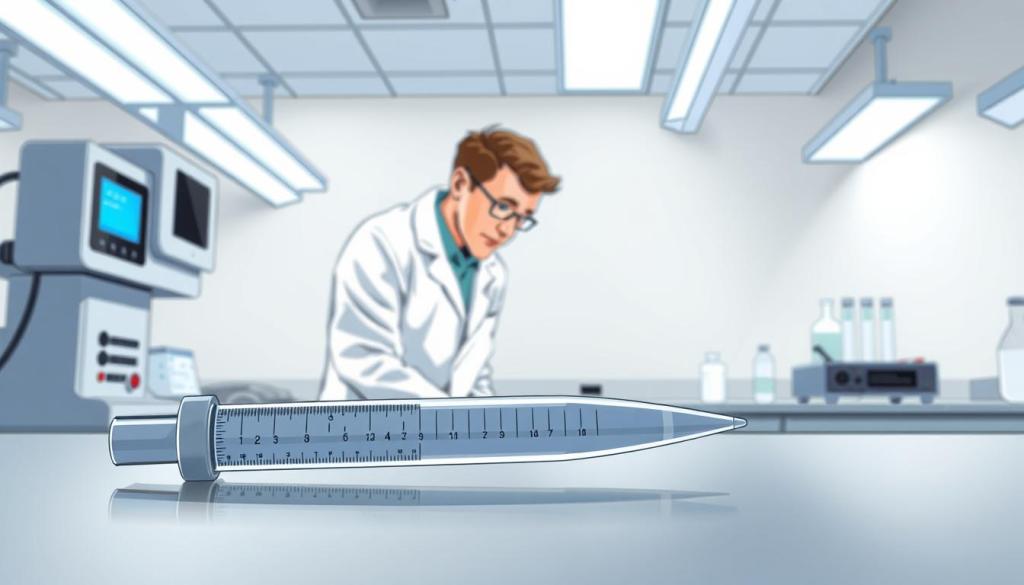
Pipette accuracy is crucial for scientific measurements. Labs know regular calibration is vital to avoid errors and keep instruments reliable.
Why Calibration Matters
Calibration stops measurement mistakes that could ruin research. The Clinical and Laboratory Standards Institute suggests calibration times:
- Single-channel pipettes: Every 3-6 months
- Multi-channel pipettes: Every 3-6 months
- Automated pipettes: Every 3-6 months
Calibration Procedure Steps
- Clean the pipette well
- Check the room’s temperature and humidity
- Use calibration weights or water to measure
- Record any measurement changes
- Adjust the pipette if needed
Professional labs keep detailed records of calibration to track performance and accuracy.
Quality Assurance Techniques
Quality assurance goes beyond just calibration. It includes regular checks, documenting calibration, and training on micropipette care.
Precision in scientific measurement starts with careful instrument calibration.
Troubleshooting Common Issues
Laboratory professionals face many challenges in keeping liquid handling precise. Serological pipetting needs careful attention to avoid errors and get accurate results.
It’s key to know and fix common pipetting problems. This keeps research and experiments reliable.
Identifying Measurement Errors
Several factors can mess up liquid handling in labs:
- Air bubble formation during liquid aspiration
- Inconsistent pipette tip sealing
- Operator technique variations
- Equipment calibration discrepancies
Common Problem Solutions
Labs can tackle serological pipetting challenges with smart strategies:
- Perform pre-wetting techniques for viscous liquids
- Use reverse pipetting methods
- Maintain consistent immersion depths
- Regularly calibrate pipetting equipment
| Issue | Potential Cause | Solution |
|---|---|---|
| Air Bubbles | Improper technique | Pre-wet tips, adjust aspiration speed |
| Volume Inaccuracy | Calibration drift | Regular equipment calibration |
| Tip Leakage | Poor tip quality | Use high-quality, compatible tips |
Keeping up with training and staying alert is vital for top-notch liquid handling in labs.
Regulatory Standards and Compliance
Laboratory precision depends on strict rules for scientific tools and methods. Pipette upkeep is key for accurate research in many fields.
Scientific groups have set up detailed rules for top measurement quality. The International Organization for Standardization (ISO) has made clear guidelines for calibrating lab gear.
Key Regulatory Guidelines
- ISO 8655:2022 standard provides nine comprehensive parts for pipette measurement
- Acceptable temperature range for calibration: 15-30°C with ±0.5°C tolerance
- Relative humidity requirements exceed 50% for compliant measurements
- Mandatory environmental condition monitoring during calibration
Compliance Requirements
Labs must follow strict rules for pipette tips to meet science standards. Checking measurement uncertainty is vital for research trustworthiness.
| Standard | Key Requirements |
|---|---|
| ISO 8655 | Comprehensive pipette performance evaluation |
| ISO 17025 | Accreditation for calibration service providers |
| FDA Guidelines | Regular audits for data integrity |
Meeting these standards shows a lab’s dedication to precision and science excellence. Researchers must stay updated on changing rules to keep experiments accurate.
Precision is not just a measurement—it’s a fundamental principle of scientific discovery.
Future Trends in Serological Pipetting
The world of serological pipettes is changing fast with new tech. Labs are getting better at handling liquids thanks to digital tools and smart designs. New pipettes are getting smarter, with advanced sensors and tracking systems.
Electronic pipettes are making labs more accurate and less prone to mistakes. They can record data, adjust themselves, and give feedback right away. This smart tech helps scientists get more precise results.
Automation is key in pipetting tech too. Labs are using systems that do complex tasks with little help from humans. These systems make work flow better, cut down on boring tasks, and lower the chance of errors. The future of pipettes will be about being smaller, more flexible, and easy to use.
There’s also a push for eco-friendly pipettes. Labs want tools that are good for the planet, cutting down on plastic and energy use. Soon, pipettes will be top-notch performers that also help the environment.
FAQ
What is a serological pipette and how does it differ from other types of pipettes?
A serological pipette is a tool for precise liquid transfer. It has longer stems and graduated markings. This makes it perfect for transferring large volumes in labs.
Unlike micropipettes, serological pipettes are used for bigger volumes. They are made from glass or plastic and are very accurate.
How often should serological pipettes be calibrated?
Experts say to calibrate serological pipettes every 3-12 months. This depends on how often you use them and the manufacturer’s advice. Daily use, lab conditions, and the importance of your research also play a role.
Calibration keeps your pipettes accurate. It’s key for reliable lab work.
What are the key factors to consider when selecting a serological pipette?
When picking a serological pipette, think about a few things. First, what volume do you need? Also, consider the liquid’s viscosity and if it’s safe for the pipette.
Think about the precision you need for your experiments. The material, like glass or plastic, is also important. Plus, the lab environment and the tips you’ll use matter.
How can laboratory professionals prevent common pipetting errors?
To avoid pipetting mistakes, keep your technique consistent. Use calibrated pipettes and the right tips. Try to avoid temperature changes and air bubbles.
Practice good aspiration and dispensing. Clean your equipment regularly. And, get training on precise liquid handling.
What are the primary cleaning and maintenance protocols for serological pipettes?
For cleaning, wash with lab detergent and rinse well. Dry them properly to avoid contamination. Store them upright and away from extreme temperatures.
Check them regularly for damage or wear. Follow a maintenance schedule. Use cases to protect them when not in use.
What technological innovations are emerging in serological pipetting?
New tech in serological pipetting includes electronic pipettes and automated systems. There are also smart pipettes and pipettes with built-in calibration checks.
These advancements offer better data tracking and ergonomic designs. They also integrate with lab systems and use advanced sensors.
How do precision and accuracy differ in volumetric measurements?
Precision means getting the same results over and over. Accuracy is about how close those results are to the true value. Both are crucial for reliable lab results.
Professionals need to focus on both precision and accuracy. This ensures the accuracy of their work.






Leave a Comment
Your email address will not be published. Required fields are marked *