


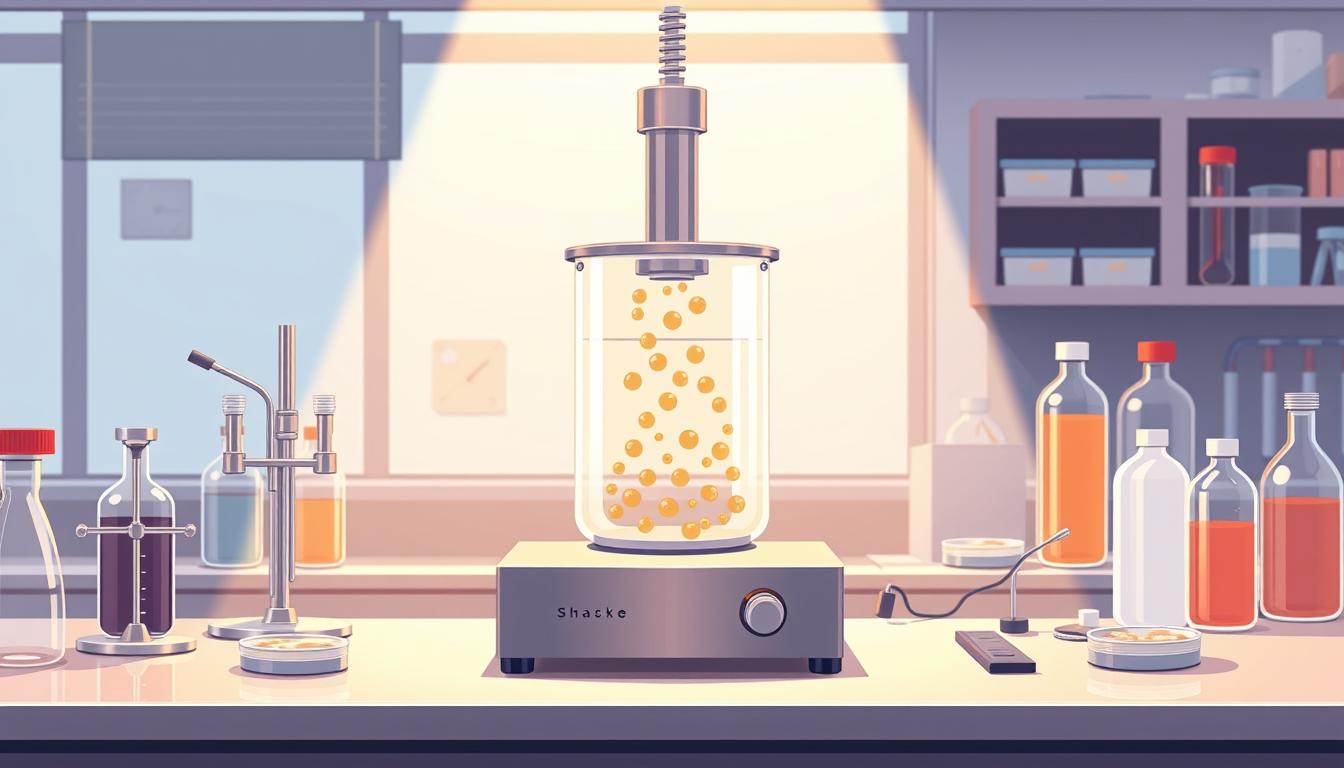
Imagine a single tool changing how we grow cells in biotechnology and research. The shake flask is that game-changer. It’s a key piece of equipment that makes growing cells easier and more effective.
Shake flasks are vital for growing cells in labs. They help scientists create the best conditions for studying microbes and cells. These containers let scientists control growth by adjusting conditions.
Shake flasks are made for different research needs. They help with mixing, gas exchange, and nutrient distribution. This is crucial for cell growth experiments to succeed.
Key Takeaways
- Shake flasks are versatile laboratory tools for cell cultivation
- Critical for suspension culture and media preparation
- Support controlled experimental environments
- Enable precise monitoring of cellular growth conditions
- Essential for biotechnology and research applications
What Is a Shake Flask?
Shake flasks are key tools in labs for growing microorganisms, cells, and biological samples. They are vital for scientific studies. They help researchers create the best conditions for growing and studying different biological systems.
A shake flask helps cells grow by moving them and keeping them aerated. Scientists use these containers to mimic the best conditions for their research.
Definition and Core Purpose
The main goal of a shake flask is to:
- Ensure cells mix evenly
- Keep oxygen levels consistent
- Make experiments repeatable
- Support growing research
Common Materials in Shake Flask Construction
Shake flasks are made from materials that help with scientific studies. Polyethylene terephthalate glycol (PETG) is a common choice. It’s strong and clear.
| Material | Key Properties | Research Applications |
|---|---|---|
| PETG | High clarity, chemical resistance | Cell culture, microbial studies |
| Polycarbonate | Strong, autoclavable | Long-term experimental setups |
| Glass | Heat-resistant, non-reactive | Precise biochemical research |
“A shake flask transforms simple liquid cultures into dynamic research environments.” – Laboratory Research Quarterly
Shake flasks come in sizes from 125 mL to 5,000 mL. This lets researchers work on different scales. The right material and size depend on the research and how cells are grown.
The Importance of Shake Flasks in Biotechnology
Shake flasks are key in biotech research. They help with microbial fermentation and studying how microbes grow. These tools let scientists study complex biological processes with great detail and speed.
Scientists use shake flasks for many important tasks in biological research. The main benefits are:
- Supporting suspension culture techniques
- Facilitating media preparation
- Enabling preliminary process screening
- Providing cost-effective experimental platforms
Role in Cell Culture
Shake flasks are vital in cell culture research. They help with microbial fermentation. They shake constantly, which helps aerobic microorganisms grow and work well.
Impact on Experimental Outcomes
Shake flasks do more than just grow cells. They let researchers watch important things during experiments, like:
| Parameter | Monitoring Capability |
|---|---|
| Microbial Growth | Real-time tracking |
| Metabolite Production | Frequent sampling |
| pH Levels | Continuous assessment |
With over 20,000 publications each year, shake flasks are crucial in biotech research. They help move from initial tests to big industrial uses.
Different Types of Shake Flasks
Scientific research needs versatile tools, and shake flasks are key for growing cells and microbes. These containers are made for different needs in cell culture.
There are many shake flask types to choose from. They help with cell growth, gas exchange, and making experiments more efficient.
Standard Shake Flasks
Standard shake flasks are basic but useful for many research areas. They have:
- Capacities from 25 mL to 5,000 mL
- Typical fill volume of about 20% of the flask’s total
- Good for first tests and early stages of experiments
Baffled Shake Flasks
Baffled shake flasks are a step up for better cell growth. Their special design at the bottom improves:
- Aeration and gas exchange
- Less stress on cells
- Better oxygen transfer
Specialized Shake Flasks
Specialized shake flasks meet specific research needs. They have features for different cell types and experiments.
| Flask Type | Capacity | Key Features |
|---|---|---|
| Ultra Yield Flask | 500-1,000 mL | More surface area for cells |
| Mammalian Culture Flask | 250-500 mL | Low shear (≤150 rpm) |
| High Oxygen Transfer Flask | 125-2,800 mL | Best baffles for air |
Choosing a shake flask depends on the cell type, culture size, and what you want to achieve. This ensures the best results.
Advantages of Using Shake Flasks
Shake flasks are key in cell cultivation, offering many benefits for research. They help make cell culture easier and improve research results.
Enhanced Mixing Capabilities
Shake flasks are great for mixing cell cultures well. The shaking helps:
- Spread nutrients evenly
- Keep cells mixed well
- Stop cells from settling
Improved Oxygen Transfer and Aeration
Shake flasks are designed to improve oxygen and air exchange. Researchers can control:
- Shaking speed (350-1500 rpm)
- Flask shape
- How full the flask is
Under the best conditions, shake flasks can transfer up to 200 mmol/L/h of oxygen. This supports strong cell growth and activity.
| Parameter | Optimal Range | Impact on Oxygen Transfer |
|---|---|---|
| Shaking Diameter | 3-50 mm | Higher diameter increases OTR |
| Filling Volume | 0.6-8 mL | Lower volume enhances gas exchange |
| Shaking Frequency | 350-1500 rpm | Higher frequency improves aeration |
Scalability in Research
Shake flasks are a cost-effective and adaptable platform for early research. They work well for growing bacteria, fungi, and cells. This makes them essential for starting research and development.
Key Features of an Effective Shake Flask
Creating a top-notch shake flask is key for success in biological research. The right features can greatly affect the results and how well cells grow.
Volume Capacity Considerations
Shake flasks vary in size, from 125 mL to 5,000 mL. It’s important to pick the right size for your needs. Considerations include:
- Matching flask volume to culture volume requirements
- Ensuring adequate space for cell growth and mixing
- Preventing culture overflow or insufficient growth environments
Neck Design and Closure Specifications
The neck design is vital for flask cultivation. The best necks have:
- Wide mouths for easy sampling
- Precise closure mechanisms
- Ventilation options for gas exchange
Media Compatibility Features
Modern shake flasks are made to work with different media in batch culture. Important features include:
| Feature | Importance |
|---|---|
| Chemical Resistance | Prevents material degradation |
| Sterility Maintenance | Reduces contamination risks |
| Temperature Tolerance | Supports diverse cultivation conditions |
Researchers should look closely at these features to make sure their flask experiments work well.
Best Practices for Shake Flask Use
Successful cell cultivation needs careful techniques and management. Researchers must use strategic methods for the best results in shake flask experiments.

Sterilization Techniques
Keeping experiments clean is key. Follow these important steps:
- Autoclave shake flasks at 121°C for 15-20 minutes
- Use sterile filtration for heat-sensitive media
- Implement laminar flow hood practices during inoculation
- Utilize disposable sterile barriers when possible
Optimal Filling Ratios
Knowing the right filling ratios is vital for growth. Typical recommendations suggest:
- 20-30% total flask volume for maximum oxygen transfer
- Avoid overfilling to prevent reduced gas exchange
- Consider specific organism requirements
Monitoring Cell Growth
Tracking cell growth needs consistent and precise methods. Key strategies include:
- Regular optical density measurements
- Frequent sampling without contamination
- Using spectrophotometers for quantitative analysis
“Precision in cell culture begins with rigorous monitoring and controlled conditions.” – Laboratory Research Handbook
Shake Flask vs. Other Cultivation Methods
Scientists in biological sciences are always looking for the best ways to grow cells. They compare shake flasks and other methods like bioreactors. This choice affects how well research goes and the quality of the results.
Comparison with Bioreactors
Shake flasks and bioreactors grow cells in different ways. Bioreactors have more control but are more complex and expensive. Shake flasks are simple and cheaper.
- Bioreactors allow precise parameter monitoring with OD600 reaching 14-20 in batch overnight cultures
- Shake flasks typically achieve OD600 of 4-6 in similar conditions
- Bioreactors enable advanced control of cultivation parameters
Advantages over Petri Dishes
Shake flasks beat Petri dishes in mixing and aeration. This is key for growing microbes well. The shaking helps cells grow more evenly.
Use Cases in Research
Scientists use shake flasks for early studies, testing, and small experiments. They are great for starting biotech research.
| Cultivation Method | Overnight OD600 | Control Level |
|---|---|---|
| Shake Flask | 4-6 | Limited |
| Bioreactor | 14-20 | High |
For those balancing complexity and practical needs, shake flasks are key in growing cells.
Materials and Maintenance for Shake Flasks
Keeping shake flasks in good shape is key for successful experiments. It’s important to clean and care for them well. This ensures they last long and work right.
Good maintenance of shake flasks is crucial. It keeps the equipment and research safe.
Recommended Cleaning Procedures
Cleaning shake flasks needs careful attention. Here are the main steps:
- Rinse flasks right after use with purified water
- Use special lab detergents for glassware
- Clean thoroughly with lab brushes
- Rinse well with deionized or distilled water
*Proper cleaning prevents contamination and ensures reproducible results in flask cultivation.*
Long-term Care Tips
Looking after shake flasks is more than just cleaning. It’s about keeping them precise:
- Check for tiny damage before each use
- Keep them in a clean, controlled area
- Use the right fill amounts:
- For microbes: Up to 1/5 of the flask
- For mammals: 30-40% of the flask
- Change the closures often to avoid contamination
By following these care tips, scientists can make sure their shake flasks work well. This is vital for their research.
Innovations in Shake Flask Design
The world of science is always changing, with new tech making old lab tools better. Shake flasks are getting a big upgrade, with new features that help a lot with growing microbes and moving oxygen around.
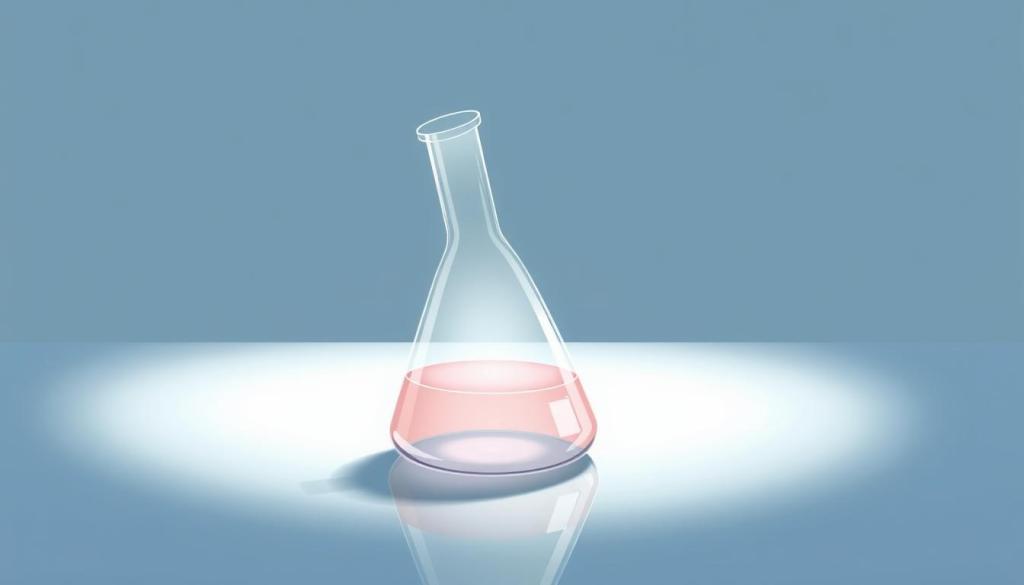
New shake flask designs are making them smarter tools for scientists. Companies like Scientific Bioprocessing, Inc. are leading the way. They’re solving big problems in growing cells.
Advancements in Materials
Today’s shake flasks use the latest materials to work better. Some big improvements include:
- Enhanced gas exchange cartridges
- Specialized chemosensors for real-time monitoring
- Gamma-irradiated, aseptic configurations
Integration with Technology
Shake flasks are now connected to tech in new ways. The latest changes include:
- MPS readers enabling simultaneous parameter monitoring
- Single-use DO sensor pills for dissolved oxygen tracking
- Advanced software platforms for comprehensive data analysis
The future of shake flask technology lies in its ability to provide precise, real-time insights into microbial fermentation processes.
These new features aim to make research faster, cheaper, and more accurate. Scientists can now do complex experiments with more ease and precision.
Troubleshooting Common Issues with Shake Flasks
Researchers often face problems when working with seed culture and batch culture. These issues can affect the results of their experiments. It’s important to know how to solve these problems to keep cell cultivation processes reliable.
When using shake flasks, it’s key to watch out for contamination and mixing problems. These are the main issues that can affect your work.
Preventing Contamination in Cell Cultures
Contamination is a big risk in seed culture. To avoid it, researchers can take a few steps:
- Follow strict sterilization methods
- Wear sterile personal protective equipment
- Keep the workspace clean
- Check and clean equipment often
Addressing Mixing Inefficiencies
Good mixing is vital for batch culture success. Here are some tips:
- Check the shaking speed (200-250 min⁻¹ is best)
- Use the right fill volume (10-15% of total)
- Keep the temperature just right
Improper handling can lead to contamination. It’s wise to have a cleaning schedule and keep records of equipment care and any spills.
Precise environmental control can reduce growth variations and improve experimental reproducibility in cell cultivation processes.
By tackling these common shake flask problems, researchers can make their biological experiments more reliable and successful.
Future Trends in Shake Flask Usage
The world of science is changing fast, with shake flasks at the forefront. New technologies are making these tools better for growing microbes. Scientists are exploring new ways to use shake flasks to improve their work.
Synthetic biology is a big area where shake flasks are making a difference. Now, we can watch biomass, oxygen, and carbon dioxide levels in real time. This lets us track up to 16 bioreactors at once, which is a big step forward.
People are also making shake flasks more eco-friendly. They’re using better materials and designing them to use less. This helps in making research more efficient and green. Shake flasks are key in biotech research, helping us learn more about microbes.
Emerging Applications in Synthetic Biology
Shake flasks are getting better at handling complex microbial processes. They’re being made to work better, with faster gas transfer and more accurate monitoring. This meets the high standards of the pharmaceutical industry.
Environmental Considerations in Design and Use
Shake flask research is also about being green. Scientists are working to cut down waste and make things more efficient. They’re using new sensors and models to get the most out of these tools.
FAQ
What exactly is a shake flask used for in scientific research?
A shake flask is key in labs for growing cells and microbes. It helps in studying how cells grow and making biological compounds. It also supports various experiments that need mixing and air.
What materials are typically used to manufacture shake flasks?
Shake flasks are made from PETG, glass, and polycarbonate. These materials are strong, clear, and safe for use in labs. They can also be sterilized without losing their shape or function.
How do shake flasks differ from bioreactors?
Shake flasks are for small-scale research and early experiments. They are cheaper and more flexible than bioreactors. Bioreactors, however, control things like temperature and oxygen better, making them good for big industrial processes.
What are the key advantages of using shake flasks?
Shake flasks mix well, transfer oxygen well, and are easy to scale up. They are also affordable and versatile. They help create controlled growth conditions and are easy to monitor and adjust.
How do researchers prevent contamination in shake flask experiments?
To avoid contamination, flasks are sterilized well, and aseptic techniques are used. Working in a clean area and using sterile tools and media is also key. Keeping the flask clean and following strict protocols is essential.
What factors should be considered when selecting a shake flask?
When picking a shake flask, think about its size, neck shape, and how it’s closed. Also, consider the material, how it breathes, and what you need for your experiment. The right flask depends on your microorganism and research goals.
How often should shake flasks be maintained and cleaned?
Shake flasks need cleaning after each use and sterilizing before the next. They should also be checked for damage. Keeping them clean and dry helps them work well and prevents contamination.
What are emerging trends in shake flask technology?
New trends include better materials for gas transfer and smart monitoring. There’s also work on improving aeration and making flasks for specific research areas like synthetic biology.




Leave a Comment
Your email address will not be published. Required fields are marked *